Best Places to Travel in Southeast Asia by Style
I have been travelling through Southeast Asia for years, and the one question I hear more than any other is: where should I go? Not because people do not know the names. Everyone has heard of Bali, Bangkok, and Halong Bay. The problem is that the region is so dense with incredible places to travel that it paralyzes people. Eleven countries, thousands of islands, dozens of mountain ranges, and food cultures that change every hundred kilometres. You cannot do it all, and trying to will leave you exhausted and shallow in every place you touch.
So I am not going to give you a top ten list. Instead, I am going to break down the best places to travel in Southeast Asia by what kind of traveller you are. If you are here for the food, there is a clear answer. If you want mountains and motorcycle roads, there is a different one. If you want culture and ancient temples, another. I have spent months on the ground in these places, sometimes on a motorcycle, sometimes on a bus, sometimes on a slow boat, and what follows is the honest version of what I keep recommending to friends, expats, and fellow travellers who ask me where to go next.
Why Southeast Asia Keeps Pulling Me Back
No other region I have travelled hits the senses the way Southeast Asia does. The smell of charcoal and lemongrass at a morning market in Laos. The green flash of rice terraces as you round a hairpin in northern Vietnam. The sound of call to prayer mixing with temple bells in Malaysian Borneo. The first time I rode a motorcycle from Bangkok into the northern mountains, I understood what people meant when they said this region gets under your skin. It is not one thing. It is the accumulation of small, specific moments that do not exist anywhere else.
What makes Southeast Asia different from every other travel destination is the density. You can cross a border and be in a completely different food culture, language group, religious landscape, and climate zone within a few hours. Thailand’s Theravada Buddhist temples give way to Cambodia’s Khmer stonework, then Laos’s slower, more syncretic Buddhism, then Vietnam’s Confucian-tinged society. The food shifts from chili-laden curries to herb-forward broths to sticky rice and jeow dips. You are not just checking off countries. You are tasting a continent’s gradient, and that is what keeps me coming back.
After years of crisscrossing this region, I have stopped trying to see everything. These days, I recommend people pick one or two themes for their trip, choose the destinations that do those themes best, and go deep instead of wide. Here is how I would sort the best places to travel in Southeast Asia based on what kind of experience you are actually after.
Northern Thailand and Laos: Mountains, Temples and Slow Travel
If you want mountain roads, temple towns, and a pace of travel that forces you to slow down, northern Thailand and Laos are the answer. This is the part of Southeast Asia I keep recommending to travellers who want depth over spectacle, who are happy to spend four days in one town instead of four hours, and who appreciate that the journey between places matters as much as the destinations themselves.
Chiang Mai, Chiang Rai and Pai
Chiang Mai is where I usually tell people to start. It has the infrastructure of a city but the pace of a town. The Old City is a square of temple-studded streets you can walk in an afternoon, and the food scene, from khao soi stalls to the Sunday Walking Street market, is reason enough to stay a week. I have done three cooking classes here and every one taught me something different. Doi Suthep, the mountain temple overlooking the city, is worth the climb at sunrise when the fog sits in the valley below.
North of Chiang Mai, Chiang Rai feels quieter and less touristy. The White Temple (Wat Rong Khun) is the headline attraction, but the real reason to come here is as a jumping-off point for the Golden Triangle and the mountain roads toward the Lao border. If you are on a motorcycle, the route from Chiang Rai to Chiang Khong, where you cross into Laos, is one of the best rides in northern Thailand.
Pai is the small mountain town three hours northwest of Chiang Mai that backpackers have been discovering for years. It has hot springs, a canyon that glows at sunset, and a lazy river you can float down on a tube. The 762 curves on the road from Chiang Mai to Pai are a rite of passage for motorcycle travellers, and the riding through the mountains here is genuinely beautiful. Pai is not a place to go for sights. It is a place to go to slow down, eat cheap northern Thai food, and let a few days blur into each other.
Crossing into Laos: Luang Prabang, Vang Vieng and the Bolaven Plateau
The overland route from northern Thailand into Laos is one of the great travel corridors in the region. You cross at Chiang Khong and take the two-day Mekong slow boat to Luang Prabang, which is a journey I have done twice and would do again tomorrow. The boat is uncomfortable, the bench seats are hard, and you should bring your own food. But the Mekong widens through limestone gorges, villages appear and disappear on both banks, and somewhere around hour five on the second day you stop caring about the discomfort because the landscape is so vast.
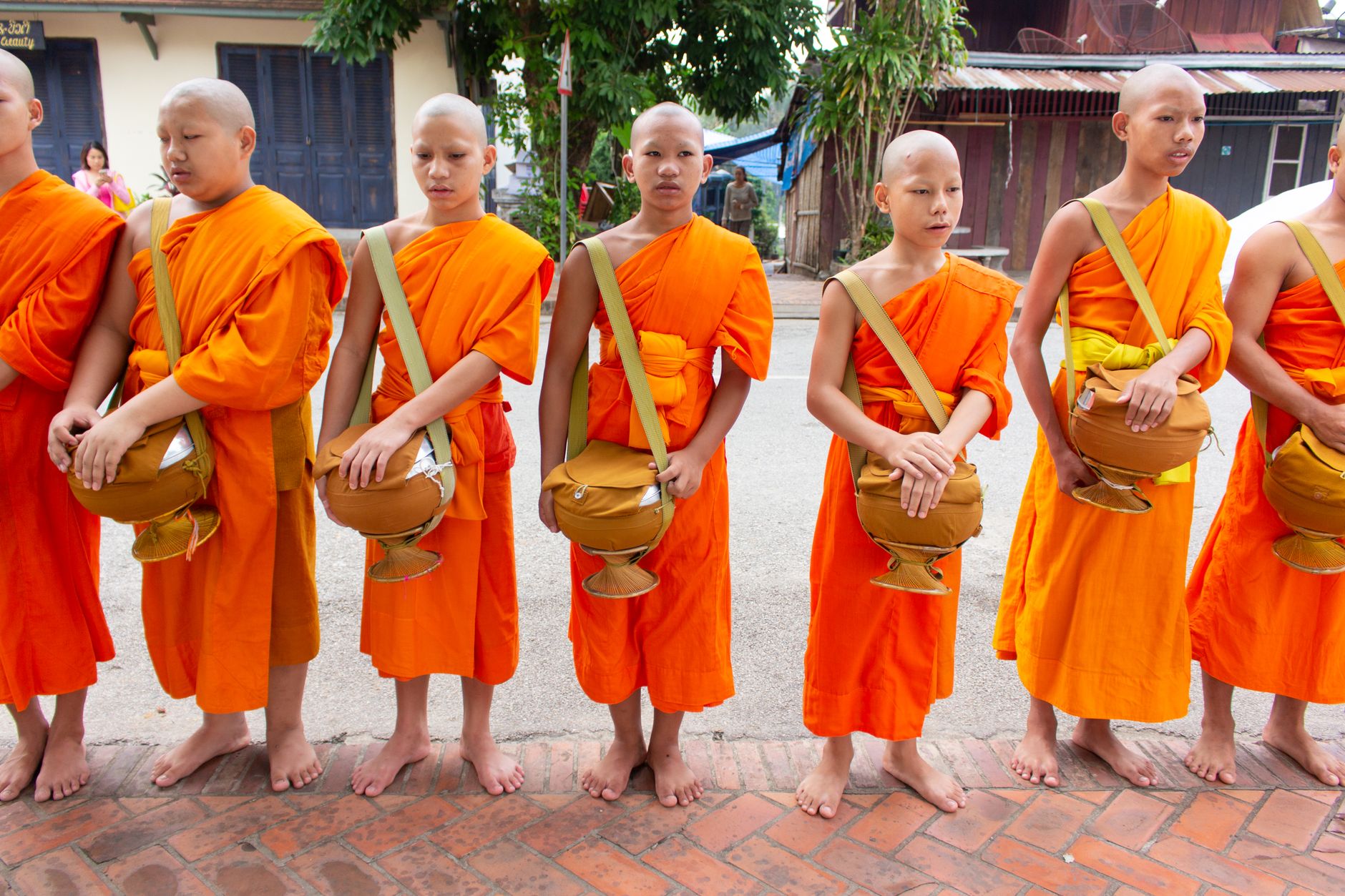
Luang Prabang itself is the town I tell people about when they ask for one place in Southeast Asia that genuinely changed how I think about travel. It is a UNESCO World Heritage site where French colonial architecture meets gilded Buddhist temples, and the whole peninsula slows to the rhythm of two rivers. Wake at 5:30 AM for the alms-giving ceremony, but do it on a side street, not the crowded tourist section on Sakkaline Road. Eat Or Lam, the slow-cooked stew with sakhan vine that you cannot find anywhere else. Swim at Kuang Si Falls before the minivans arrive. Give it at least four days, because Luang Prabang punishes rushing.
South of Luang Prabang, Vang Vieng has reinvented itself from its tubing-party reputation into a genuine adventure hub surrounded by karst peaks. The landscape is dramatic, with limestone cliffs rising directly from rice paddies, and the caving, kayaking, and rock climbing are legitimately good. Further south, the Bolaven Plateau near Pakse is where Lao coffee grows, and the waterfalls and village trails here feel like a country that most travellers have not yet discovered.
The contrast between northern Thailand’s mountain towns and Laos’s slower, less-touristed equivalents is the point. Northern Thailand has better infrastructure, more food variety, and easier logistics. Laos has a rawness that Thailand has largely lost. If you have time for both, do the overland route and let the transition happen naturally. If you only have time for one and want comfort, choose northern Thailand. If you want to feel like you are seeing something before the crowds arrive, choose Laos.
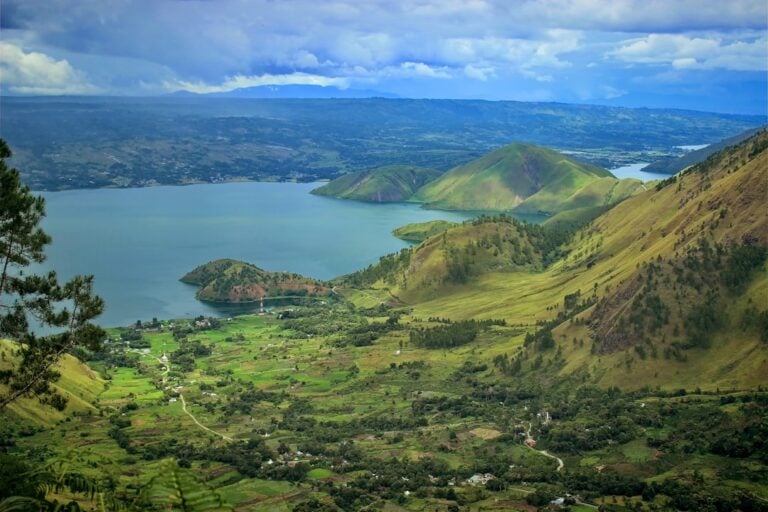
Indonesia: Volcanoes, Islands and Surf Culture
Indonesia is the country I keep returning to most, and it is also the one I find hardest to summarise because it is not really one country. It is thousands of islands spread across an area wider than the United States, with hundreds of distinct cultures, languages, and landscapes. If you want volcanoes, world-class diving, surf culture, and island-hopping, Indonesia has no equal in the region. The trick is understanding that Bali is the gateway, not the destination.
Bali: Gateway, Not Destination
Bali is where most people start, and it is easy to see why. Direct flights, cheap accommodation, and a tourist infrastructure that works. Ubud is the cultural heart of the island, surrounded by rice terraces and Hindu temples, and the food scene has grown well beyond the standard tourist fare. But Bali is also the most crowded island in Indonesia, and the traffic in Canggu and Seminyak can make you forget you came to a tropical island.
My honest advice: use Bali as your entry point, spend three or four days in Ubud, and then head east. The real magic of Indonesia is further out, on islands where the tourist footprint is smaller and the landscapes are more dramatic.
Lombok, Flores and the Komodo Region
East of Bali, Lombok is what Bali was thirty years ago. Quieter, less developed, with better beaches and far fewer crowds. Mount Rinjani, the active volcano at the centre of the island, is one of the best multi-day treks in Indonesia. The summit climb is tough, cold, and worth every step for the sunrise over the crater lake. The Gilis, three tiny islands off Lombok’s northwest coast, are where you go for snorkelling with turtles and no cars, no motorbikes, and no stress.
Beyond Lombok, Flores is the island that keeps surprising me. Labuan Bajo at the western tip is the gateway to Komodo National Park, and the boat trips here are genuinely world-class. Whether you do a day trip or splurge on a liveaboard, the combination of Komodo dragons, Padar Island’s three-bay viewpoint, and snorkelling with manta rays is one of the best single experiences in Southeast Asia. Go further east on Flores and you find the spider-web rice fields at Cancar, the crater lakes of Kelimutu, and the traditional village of Wae Rebo, which is one of the most atmospheric places I have been anywhere in the country.
Raja Ampat and the Far East
If you want the absolute frontier of Indonesian travel, Raja Ampat is it. Off the northwest tip of West Papua, this archipelago has the highest marine biodiversity on the planet. The diving and snorkelling are on another level, the karst island landscapes are otherworldly, and the tourist infrastructure is minimal. It is not cheap or easy to reach, but if you are a diver or want to see what the most remote corner of Indonesia looks like, nothing else compares.
For culture and history, I would also point you toward Yogyakarta on Java, where the Borobudur and Prambanan temple complexes are two of the most extraordinary ancient sites in Southeast Asia. Java does not get the love that Bali gets, but it has deeper history, better food variety, and far fewer tourists per square kilometre.
Vietnam: Coastlines, Karst Mountains and Incredible Value
If I had to send a first-time traveller to one country in Southeast Asia based purely on bang for your buck, it would be Vietnam. The food is extraordinary, the landscapes range from rice terraces to karst bays to white-sand coastline, and your money goes further here than almost anywhere else in the region. Vietnam is also the best country in Southeast Asia for motorcycle travel, and the Ha Giang Loop in the far north is the single best riding route I have done anywhere.
Hanoi, Ha Long and the Northern Highlands
Hanoi is the base camp for northern Vietnam, and it is a city that hits you the moment you step into the Old Quarter. Narrow streets, motorbikes everywhere, steam rising from pho stalls at 6 AM, and a street food culture that is arguably the best in the country. Give it at least two full days. Walk the Old Quarter, eat bun cha, drink egg coffee, and let the chaos wash over you. Book a Ha Long Bay or Lan Ha Bay overnight cruise for one night, but know that the bay is crowded and the experience depends heavily on which boat you choose.
The real reason to go north in Vietnam is the Ha Giang Loop. This is a three to four day motorcycle route through the most dramatic mountain landscape in the country, right up against the Chinese border. The roads are carved into cliffsides, the rice terraces are staggering, and the ethnic minority villages along the way give you a perspective on Vietnam that Hanoi cannot. You can rent a bike in Ha Giang town or hire an easy-rider to drive you. Either way, it is the best place to travel in Vietnam if you want adventure.
Da Nang, Hoi An and the Central Coast
Central Vietnam is where the country shifts from mountain north to tropical south, and the transition is beautiful. Da Nang is the modern, comfortable base, with a long beach, good food, and easy access to the Marble Mountains and the Golden Bridge at Ba Na Hills. Just south, the Hai Van Pass between Da Nang and Hue is one of the most scenic coastal stretches in Vietnam, and if you ride a motorbike it is an absolute must.
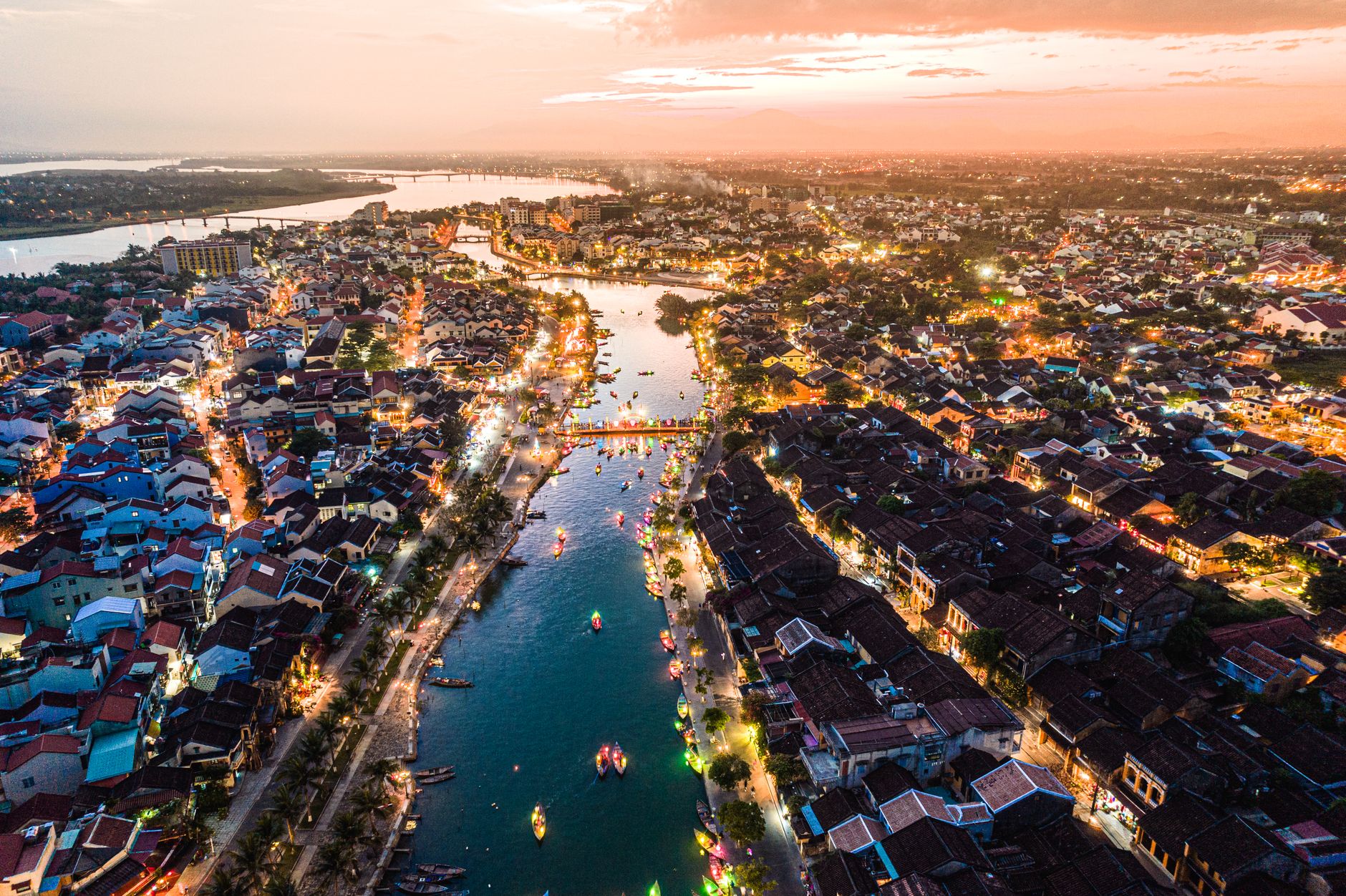
Hoi An is the jewel of the central coast. Its lantern-lit old town is a UNESCO World Heritage site, and at night the river glows with floating candles. It is touristy, yes, but it is also genuinely beautiful, and the food scene here is outstanding. The cao lau noodles, the white rose dumplings, and the banh mi are all worth seeking out. The beaches at An Bang and Cua Dai are a short bike ride away. Three nights is the sweet spot.
Ho Chi Minh City and the South
Ho Chi Minh City is the economic engine of southern Vietnam, faster, louder, and more commercial than Hanoi. It is worth two days for the War Remnants Museum, the Ben Thanh Market, and some of the best food in the country. From here, the Mekong Delta stretches west, and a two-day trip into the delta gives you a completely different Vietnam: floating markets, fruit orchards, and river life.
Vietnam is the kind of country where you can travel for a month and not run out of places to go. If you are planning a multi-country loop through mainland Southeast Asia, the route through Thailand, Cambodia, Laos, and Vietnam is the classic overland circuit, and our four-country itinerary guide breaks down how to do it in three, four, or six weeks.
| Destination | Best For | How Long | Vibe |
|---|---|---|---|
| Hanoi | Street food, culture | 2 to 3 days | Intense, old-world, electric |
| Ha Giang Loop | Motorcycle adventure | 3 to 4 days | Remote, dramatic, unforgettable |
| Ha Long Bay | Scenery, cruising | 1 to 2 nights | Crowded but stunning |
| Da Nang | Beach, city base | 2 to 3 days | Modern, comfortable, coastal |
| Hoi An | Old town, food | 3 days | Beautiful, atmospheric, touristy |
| Ho Chi Minh City | Urban energy, history | 2 days | Fast, commercial, dynamic |
Malaysia and Borneo: Where I Call Home
Malaysia is where I am based, so I will be upfront about my bias. But I also think it is the most underrated country in Southeast Asia for travellers, and the one I keep urging people to spend more time in. It has the best food in the region (I will fight anyone who disagrees), genuinely diverse cultural layers, and a split personality that gives you two completely different countries in one: the peninsula and Borneo.
Kuala Lumpur, Penang and the Peninsula
Kuala Lumpur is my home base, and it is a city that grows on you. The Petronas Towers are the postcard, but the real KL is in the hawker stalls, the mamak restaurants open 24 hours, the neighbourhoods like Bangsar and Kampung Baru where Malay, Chinese, and Indian cultures sit side by side. KL is also one of the best launch points for day trips in the region, and the day trips I keep coming back to range from the Batu Caves to the hill station of Fraser’s Hill.
If you are a food traveller, George Town, Penang is the answer. I have eaten my way through much of Southeast Asia, and no other city compresses this much culinary density into a walkable heritage core the way George Town does. Char kway teow fried over charcoal, assam laksa with its pungent fish broth, nasi kandar flooded with mixed curries at midnight. The UNESCO heritage zone is a living multicultural trading port where mosques, Chinese temples, Indian temples, and churches sit on a single street. Three days here is the sweet spot, but if you are a serious eater, you could stay a week.
Borneo: Sabah, Sarawak and the Rainforest
East Malaysia is where the contrast hits. Fly an hour from KL to Borneo and you are in a different country. Kuching in Sarawak is laid-back, walkable, and the best base in Malaysian Borneo for wildlife. Within an hour of the city centre, I was watching proboscis monkeys crash through the canopy at Bako National Park. Semenggoh Wildlife Centre gives you a chance to see semi-wild orangutans, and the food in Kuching, especially Sarawak laksa and kolo mee, is entirely its own thing.
Kota Kinabalu in Sabah is the other gateway to Borneo, and from here you can climb Mount Kinabalu, dive at Sipadan (one of the best dive sites in the world), or explore the rainforests of the Danum Valley. The contrast between peninsular city life and Borneo wilderness is the whole point of visiting Malaysia. You get the food and culture of the peninsula and the raw nature of Borneo in one country, connected by cheap domestic flights.
Cambodia, Philippines, Myanmar, Brunei and Timor-Leste: The Deeper Cuts
Beyond the main circuit of Thailand, Vietnam, Indonesia, and Malaysia, there is a second tier of Southeast Asian destinations that fewer travellers reach but that reward the effort. Some require more planning, some carry more risk, and one or two are for the truly adventurous. Here is my honest take on each.
Cambodia: Angkor Wat and Beyond
Siem Reap and Angkor Wat are the obvious draw, and they are worth it. The temple complex is the largest religious monument in the world, and three days exploring the small and grand circuits gives you a sense of the Khmer Empire’s scale. But Cambodia has more to offer beyond Angkor. Battambang is an underrated colonial-era town with great architecture and a growing art scene. Kampot and Kep in the south are small, relaxed riverside towns where you can eat pepper crab, watch fireflies, and experience a Cambodia that has nothing to do with temples. The Cardamom Mountains in the southwest are one of the last true wilderness areas in mainland Southeast Asia, with trekking, wildlife, and eco-tourism projects that are doing real conservation work.
Philippines: Palawan, Siargao and Island-Hopping
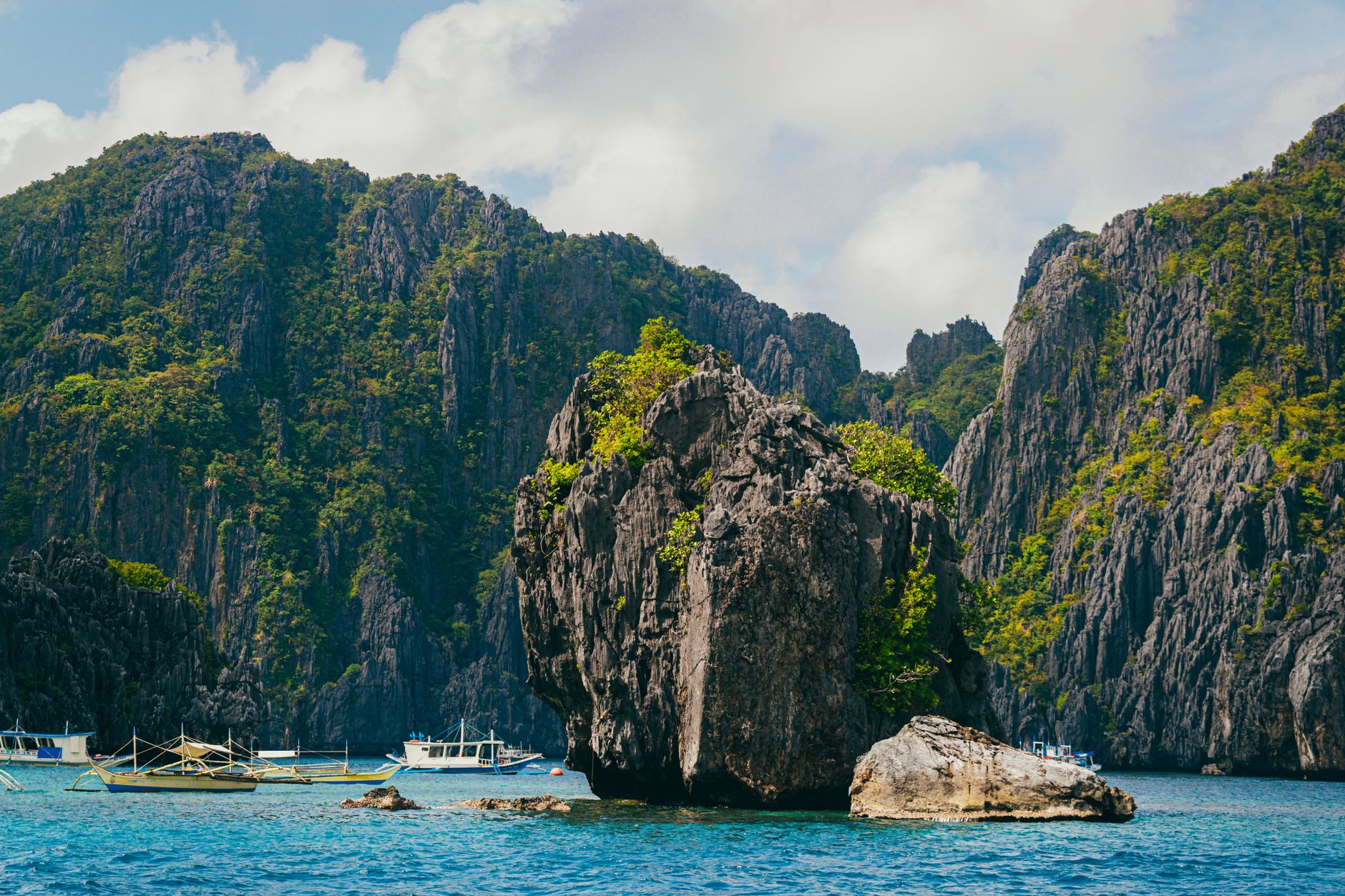
The Philippines is the beach and island-hopping capital of Southeast Asia, and it does not get the attention it deserves from travellers who focus on the mainland. Palawan is the headline: El Nido has the dramatic karst cliffs and lagoon tours, and Coron has World War II wreck diving and lakes that feel like nowhere else on earth. Siargao is the surf island, with a laid-back bar-and-cafe culture that has exploded in recent years. The Philippines has over 7,000 islands, and the island-hopping possibilities are genuinely endless. The trade-off is that getting between islands requires flights or ferries, so it is less of an overland destination than the mainland countries.
Myanmar, Brunei and Timor-Leste
Myanmar is the one country in Southeast Asia where I have to be honest about the caveats. Yangon and Bagan are extraordinary: the temples of Bagan are among the most spectacular archaeological sites in the world, and Yangon has a colonial-era core and a street food culture that feels untouched by mass tourism. However, parts of Myanmar remain under travel advisories due to ongoing conflict, and the situation can change quickly. Check your government’s current advisory, avoid border regions, and make an informed decision about whether the risk level is acceptable for you. I have written about my honest take on Myanmar, and I do not sugarcoat the complexity.
Brunei is the underrated stop that almost nobody includes in their itinerary. It is a tiny, oil-rich sultanate on Borneo’s north coast, and it has the most opulent mosque architecture in the region, pristine rainforest in Ulu Temburong National Park, and a calm, orderly atmosphere that feels completely different from its neighbours. You can see it in two days as a stopover between Sabah and Sarawak, or as a detour from Miri in Malaysian Borneo.
Timor-Leste is for the truly adventurous. It is the newest country in Southeast Asia, and it has some of the best untouched diving in the region, particularly at Atauro Island, which has been measured as having some of the highest reef fish diversity on record. Dili, the capital, is small and sleepy, and the infrastructure is basic. There are very few tourists, which is either the appeal or the deterrent, depending on what kind of traveller you are. If you want to go somewhere that almost no one you know has been, this is it.
How to Choose Where to Go First
If you have read this far and are still paralysed by the choice, here is my decision framework. I have organised it by what kind of traveller you are, because that is the filter that actually matters.
If you love food
Go to George Town, Penang, or Hanoi. George Town gives you the most concentrated food culture in Southeast Asia, with Malay, Chinese, Indian, and Peranakan traditions in a few walkable blocks. Hanoi gives you the most intense street food experience, with pho, bun cha, and banh mi at a level that no other city in Vietnam can match. If you have time for both, do them in one trip and compare. The contrast between Malaysian hawker culture and Vietnamese street food is one of the great culinary conversations in the region.
If you want beaches and islands
Head to the Philippines or Thailand’s islands. Palawan in the Philippines has the most dramatic island scenery in the region, with karst cliffs, lagoons, and clear water. El Nido and Coron are the highlights. In Thailand, Phuket and Krabi are the accessible options, but Koh Samui and the Gulf coast islands have a different character and are better during the July to September window when the Andaman coast is wet. If you want beaches with fewer crowds, go to the Philippines. If you want beaches with better infrastructure and more nightlife, go to Thailand.
If you want adventure and motorcycling
Northern Thailand or Vietnam’s Ha Giang Loop. The Mae Hong Son Loop from Chiang Mai through Pai and back is a classic motorcycle route with mountain roads, hot springs, and enough infrastructure to make it comfortable. The Ha Giang Loop in northern Vietnam is more remote, more dramatic, and more challenging, with cliffside roads and ethnic minority villages. Both are world-class riding. If you are planning to ride in either country, you need a valid International Driving Permit, and our complete IDP guide covers which version you need and how to avoid the most common pitfalls.
If you want culture and history
Cambodia or Yogyakarta. Angkor Wat is the obvious choice, and it deserves its reputation. Three days among the Khmer temples is a profound experience, and Cambodia beyond Angkor, in Battambang and Kampot, adds depth. Yogyakarta on Java gives you Borobudur, the largest Buddhist temple in the world, and Prambanan, a Hindu temple complex of staggering scale, plus a living kraton (royal court) culture that is still active. Both destinations deliver culture and history at a level that most other places in the region cannot match.
If you want wildlife and nature
Borneo. Sabah and Sarawak in Malaysian Borneo give you orangutans, proboscis monkeys, rainforest trekking, and world-class diving at Sipadan, all within a single trip. Kuching is the best base for a first visit, and you can build from there. If you want to go deeper, the Danum Valley in Sabah is one of the most pristine rainforest experiences in Southeast Asia.
If you want slow travel and to get off the tourist trail
Laos, East Flores, or Timor-Leste. Laos is the slow-traffic heart of mainland Southeast Asia, and Luang Prabang, the Bolaven Plateau, and the Mekong slow boat reward travellers who are willing to sit still. East Flores in Indonesia is where the tourist trail thins out and the landscapes get more dramatic. Timor-Leste is the frontier, with diving that almost no one has done and a country that almost no one has visited.
Where to Go Next
Southeast Asia is not a checklist. It is a region that rewards going deep in a few places rather than shallow in many. Pick the travel style that resonates with you, choose two or three destinations that do it best, and give them the time they deserve. The best places to travel are not the ones with the most Instagram posts. They are the ones that change something in you while you are there and stay with you after you leave.
Have you been to any of these destinations, or are you in the planning stages? Drop your questions or your own tips in the comments. I would genuinely love to hear where you are heading and what kind of traveller you are. Every conversation about this region teaches me something new, and the list keeps evolving as I explore more of it myself.
Frequently Asked Questions
What are the best places to travel in Southeast Asia for first-timers?
Thailand and Vietnam are the easiest entry points. Bangkok offers comfortable infrastructure and direct flights, while Vietnam delivers incredible value, amazing food, and a clear north-to-south route. Bali is also beginner-friendly with good tourist infrastructure and English widely spoken.
Which Southeast Asia destinations are best for motorcycle travel?
Northern Thailand (Chiang Mai to Pai and the Mae Hong Son Loop), Vietnam’s Ha Giang Loop, and the Thakhek Loop in Laos are the standout riding routes. You need a valid International Driving Permit, ideally the 1968 Vienna Convention version, and should check current road conditions before setting out.
Is it safe to travel in Myanmar in 2026?
Parts of Myanmar remain under travel advisories due to ongoing conflict. Bagan and Yangon have seen periods of relative calm, but the situation can change quickly. Check your government’s current travel advisory, avoid border regions, and consider whether the risk level is comfortable for you before planning a trip.
How much does it cost to travel in Southeast Asia?
Southeast Asia is one of the most affordable regions in the world for travel. Budget travellers can get by on USD 25 to 40 per day in Vietnam, Laos, and Cambodia, and USD 30 to 50 in Thailand and Malaysia. Indonesia and the Philippines vary widely depending on how remote you go. Mid-range travel typically runs USD 50 to 100 per day.
What is the best time of year to travel in Southeast Asia?
November to February is the cool dry season across most of mainland Southeast Asia and is the most popular time to visit. The Gulf of Thailand islands have a different rain pattern, with good weather from July to September. Indonesia and the Philippines have their own seasonal patterns, so check each destination individually.