Vang Vieng Travel Guide: Karst, Caves & River Floats
I rolled into Vang Vieng on a rented Honda from Vientiane, expecting the ghost of the party town I had heard about for years. What I found instead was a small town pressed between walls of limestone karst, rice paddies running to the base of cliffs, and a river so clear I could see the bottom from the bridge. The tubing bars are mostly gone. The backpacker chaos that defined this place in the 2000s has been gutted, regulated, and replaced with something I did not expect to enjoy as much as I did. This Vang Vieng travel guide is for independent travelers and motorcycle riders who want substance over party hype: the karst landscape, the Blue Lagoon swimming holes, the viewpoint hikes that make your legs burn, and the road south toward the Thakhek Loop.
Vang Vieng sits about 130 kilometers north of Vientiane and 180 kilometers south of Luang Prabang, making it a natural midpoint for anyone traveling through Laos. If you are coming from the north, our Luang Prabang travel guide covers the slow approach by river and road. If you are building a longer route through the region, our Thailand, Cambodia, Laos, and Vietnam itinerary places Vang Vieng within the broader overland loop. Here, I want to go deep on Vang Vieng itself and what it offers travelers who are willing to look past the old reputation.
The History Of Vang Vieng
Vang Vieng was a quiet farming town on the Nam Song River until the late 1990s, when a local farmer named Thanongsi Sorangkoun started lending tractor tire inner tubes to his workers so they could float the river after a day in the fields. Travelers found out. Within a few years, tubing became the thing to do in Laos, and Vang Vieng transformed into one of Southeast Asia’s most notorious backpacker party destinations.
By the mid-2000s, the river was lined with makeshift wooden bars blasting Bob Marley and serving alcohol in buckets, with rope swings, ziplines, and mud slides built over shallow water and sharp rocks. Drugs were sold openly on bar menus. The town’s main street became a strip of guesthouses and restaurants playing Friends reruns on loop. It was, by all accounts, out of control. In 2011, the town’s hospital recorded 27 deaths from drowning and trauma, a figure that did not include patients taken directly to Vientiane. Foreign ambassadors pressured the Lao government, and in 2012, ahead of a regional summit, authorities shut down the riverside bars, dismantled the death slides, and arrested bar owners. Tubing was banned entirely, then later reintroduced in a heavily regulated form.
The rebrand was deliberate. The government repositioned Vang Vieng as an outdoor adventure destination, and operators began offering kayaking, caving, rock climbing, and hot air balloon rides. The 2021 opening of the Laos-China Railway connected Vang Vieng to Luang Prabang in under an hour and to Vientiane in about the same time, bringing a new demographic of families, couples, and Asian tour groups who had no interest in tubing culture. According to a BBC Travel report, local business owners say new visitors are now drawn by outdoor activities and scenery rather than the party scene. The town is still expanding, with development pushing onto the west bank of the Nam Song in quieter, more rural settings.
What this means for you today is that Vang Vieng is a town caught between its past and its future. A few vestiges of the party era remain, including a couple of bars that still serve vodka in buckets and restaurants still screening Friends. But the dominant experience now is adventure, nature, and landscape. If you come expecting a rave, you will be disappointed. If you come for karst peaks and river floats, you will find plenty.
Best Things To Do In Vang Vieng
The best things to do in Vang Vieng fall into three categories: nature (the Blue Lagoons, caves, and karst viewpoints), adventure activities (kayaking, rock climbing, hot air balloons), and the cultural remnants of the old town center. Within a 15-kilometer radius of the tiny town center, you have limestone caves of varying scale, multiple spring-fed swimming holes, river routes for kayaking and tubing, rock faces for climbing, and viewpoints ranging from 20-minute walks to half-day hikes.
Nature: The Blue Lagoons
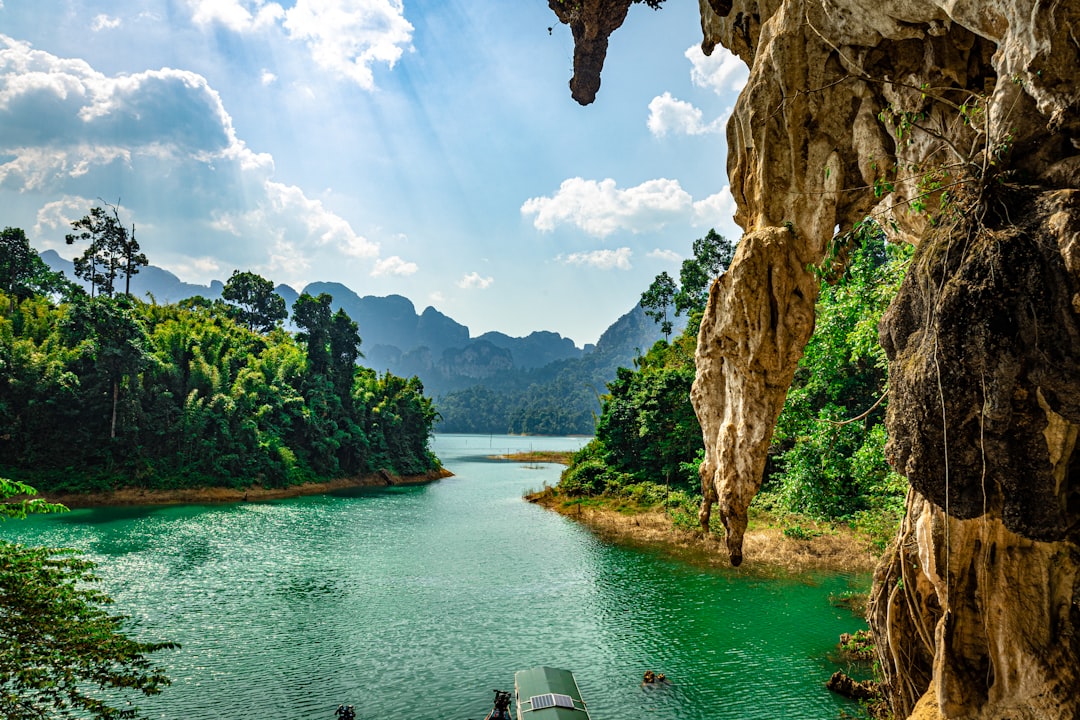
The Blue Lagoons are the headline attraction, and they are genuinely worth the hype. These are spring-fed pools at the base of limestone cliffs, and the mineral content gives the water a vivid turquoise color that looks almost artificial against the green jungle. There are several lagoons, each with a different character, and choosing the right one depends on what you want from the experience.
Blue Lagoon 1, also known as Tham Phu Kham, is the closest to town, about 7 kilometers west. It has a rope swing, a jump platform, and a zip line, and it gets crowded by midday when the tour vans arrive. The cave above it, Tham Phu Kham, is a steep climb up a staircase to a cavern containing a bronze reclining Buddha. The contrast between the cool, dark cave and the bright, lively lagoon below is part of what makes this spot work. Entry costs 20,000 kip, roughly $1, which covers both the lagoon and the cave. If you only have time for one lagoon, go early or late to avoid the crowds.
Blue Lagoon 3 is my personal favorite. It is farther from town and requires a motorbike or a long bicycle ride to reach, which naturally filters out the bus crowds. The setting is more secluded, the water equally clear, and there is a zip line across the lagoon. Entry is 10,000 kip. Lagoons 2 and 5 are even quieter, tucked further into the countryside. If you have your own wheels and want a peaceful swim without the sound of rope swings and tour guides, head for these.
Timing matters as much as choice. Go early, right when the kiosks open, or in the late afternoon when the day-trip crowds have thinned. The dry season from November to April offers the clearest water. During the rainy season, from roughly June to October, the lagoons can become muddy and the dirt roads to the more remote ones can be difficult.
Nature: Viewpoint Hikes
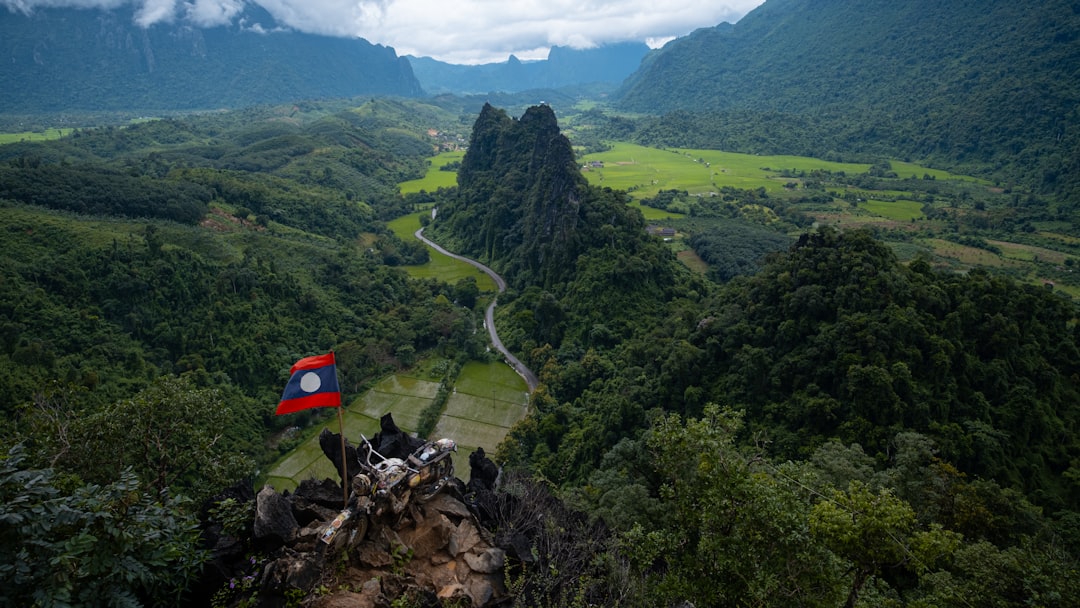
The karst peaks surrounding Vang Vieng are not just a backdrop. They are climbable, and several viewpoints offer panoramic looks over the valley, the river, and the town that will make you understand why hot air balloon operators set up shop here.
Pha Ngern is the most popular viewpoint hike, and for good reason. There are three levels, and the climb takes anywhere from 45 minutes to 90 minutes depending on your fitness and how far you go. The trail is steep, with some sections of rough stairs cut into the rock, and the payoff is a sweeping view of the karst valley laid out below you. Bring plenty of water and start early to beat the heat. Entry is 20,000 kip. The lower viewpoint is reachable for most fitness levels. The upper viewpoint is a proper scramble.
Pha Ngeun is a quieter alternative, less frequented by day-trippers. The trail is steeper and less developed, which means fewer people and a more raw experience. If you want to feel like you earned the view rather than walked to it, this is the one.
Nature: Caves
The limestone karst around Vang Vieng is riddled with caves, and exploring a few of them is essential to understanding the landscape. Tham Chang is the most accessible, located just across the river from the town center via a footbridge. Steps lead up to the entrance, and the interior is well-lit with walkways. A natural spring inside the cave feeds a swimming pool at the base, and the view from the cave mouth over the valley is one of the best in town. Entry is 20,000 kip.
Tham Nam, also known as the water cave, involves tubing through an underground river on a small inflatable tube while pulling yourself along a rope line fixed to the cave ceiling. It is not claustrophobic in the terrifying sense, but it is dark, cold, and genuinely adventurous. Bring a headlamp. Most operators in town include this in a combined tour with kayaking and a lagoon visit.
Tham Loup is a longer, deeper cave for those who want more than a casual stroll. It requires a guide and headlamps, and the interior chambers are large enough to make you feel very small. If you have done Tham Chang and Tham Nam and want more, ask at any adventure shop in town about guided Tham Loup trips.
Theme Parks & Adventures: Kayaking, Climbing, and Balloons
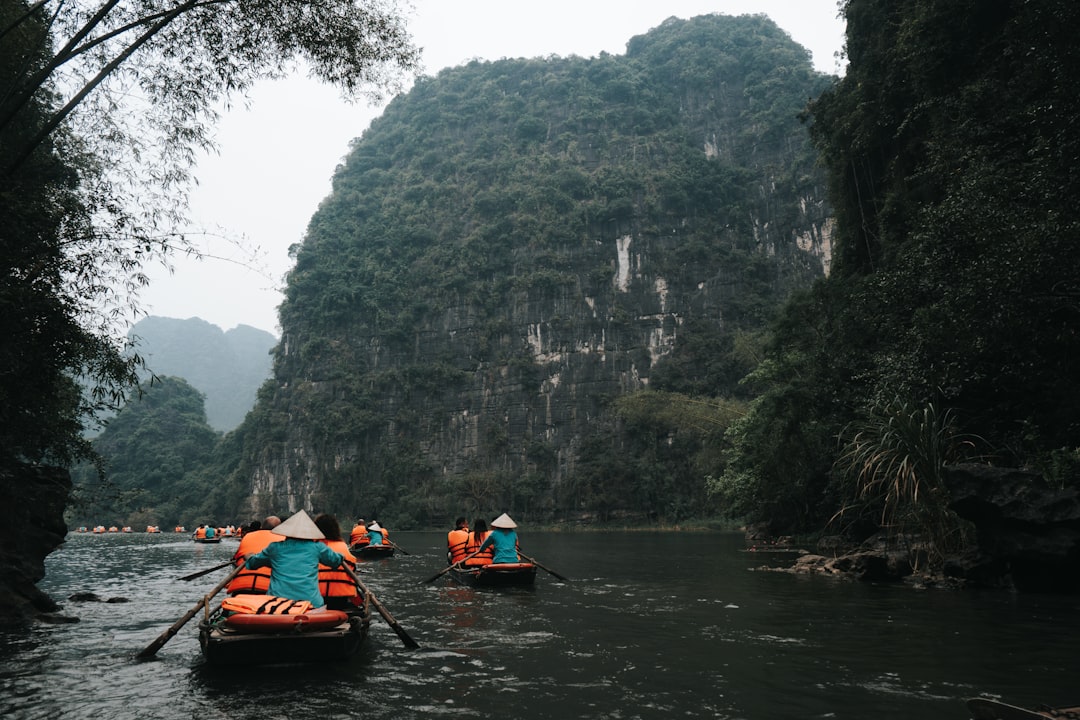
Kayaking the Nam Song River is the activity I recommend most to travelers who want to experience the landscape without the party connotations of tubing. The river is generally calm, class I to II, suitable for beginners. Half-day and full-day guided trips are available from operators all over town, often combined with cave visits and village stops. A half-day guided kayak trip costs roughly 200,000 to 400,000 kip ($10 to $20). You paddle between karst walls rising straight out of the water, pass villages where children wave from the bank, and get a perspective on the valley that you cannot get from a motorbike or on foot.
Tubing still exists, but in a form that would be unrecognizable to anyone who was here before 2012. A limited number of tubes are sent out each day (reportedly capped at around 150, compared to 500 in the peak party years), life jackets are mandatory and provided, and the riverside bars operate on a rotation system where only a few are open on any given day. A tube rental costs about 60,000 kip plus 60,000 kip for the tuk-tuk to the starting point upstream. The float takes two to three hours depending on water levels. It is a pleasant river experience, not a party. If you want a quiet float through karst scenery, tubing is fine. If you want the old Vang Vieng, it is gone.
Rock climbing on the karst is available through several operators. The limestone faces around town offer routes for beginners through to experienced climbers, and the setting, climbing above rice paddies with the river below, is hard to beat. If you have never climbed before, a half-day beginner session will get you on the rock safely.
Hot air balloon rides are the splurge activity, and they are worth it. Tethered rides cost about 600,000 kip ($30), while free-flight rides start at 1,600,000 kip ($80 and up). Early morning flights catch the best light and the calmest air. Seeing the karst landscape from above at dawn, the peaks casting long shadows across the misty valley, is one of the most memorable experiences you can have in Laos. Book at least a day in advance through your hotel or directly with operators in town.
Cultural Experiences: The Town and Surrounding Villages
Vang Vieng’s town center is not beautiful. It is a strip of guesthouses, restaurants, tour shops, and convenience stores. But it has its own kind of energy, and the walking street night market is worth an evening stroll. The market sells the usual Southeast Asia souvenirs plus Lao textiles, hill tribe crafts, and cheap street food. It is not as refined as the Luang Prabang night market, but it has a scrappy, authentic feel.
Beyond town, the surrounding villages are where the cultural texture lives. Ban Pha Tang and other settlements along the river and in the karst valleys are home to Lao and ethnic minority communities. Many adventure tours include village stops, but you can also visit independently by motorbike. Be respectful: these are living communities, not tourist exhibits. If you are riding through, slow down, smile, and buy something from a local stall if there is one.
Where & What To Eat And Drink In Vang Vieng
Vang Vieng is not a food destination in the way that Luang Prabang or Hanoi is. The town’s restaurant scene was built for backpackers, not food lovers, and the legacy of that era is a strip of places serving pad thai, burgers, and banana pancakes alongside the Lao staples. But if you look past the backpacker menus, there is real food to be found.
Start with the Lao staples. Sticky rice (khao niew) is the foundation of every meal here, steamed in a conical bamboo basket and eaten with your fingers. Sai oua, Lao pork sausage packed with herbs and grilled over charcoal, is everywhere and consistently good. Tam mak hoong, the Lao version of green papaya salad, is punchier and more pungently fermented than its Thai cousin, som tam. Look for stalls with a mortar and pestle and a queue of locals.
The dish most worth seeking out is or lam, a slow-cooked stew made with meat, lemongrass, galangal, dill, eggplant, and a wild vine stem called sakhan that gives it a distinctive peppery, slightly numbing heat. It is earthy, warming, and complex. If you find a restaurant that makes it properly, order it. Mok pa, fish mousse steamed in banana leaves with lemongrass and coconut milk, is another dish worth asking for.
For a sit-down meal, the restaurants along the river on the east bank have better food and a better atmosphere than the backpacker strip in the center. Several places serve Lao cuisine alongside the standard tourist menu, and the riverside setting at sunset is genuinely pleasant. The night market food alley offers grilled Mekong fish, Lao stews, and vegetarian buffet stalls at budget prices.
For coffee, Vang Vieng has a growing cafe scene, partly a legacy of the French colonial period and partly driven by the Bolaven Plateau coffee industry in southern Laos. You will find decent espresso in the center, and the morning ritual of sitting with a coffee and watching the karst peaks emerge from the mist is one of the best ways to start a day here.
Shopping In Vang Vieng
Shopping in Vang Vieng is modest compared to Luang Prabang, but the night market on the walking street is the main event. Open every evening from about 5 PM to 10 PM, it has stalls selling woven textiles, embroidered bags, wood carvings, ceramics, and hill tribe crafts. The quality is mixed, so look carefully. Handwoven silk and cotton scarves from Lao and ethnic minority weavers are the standout purchase, and prices are reasonable by international standards, though you should bargain politely.
The morning market, running along the streets behind the main road from early morning, is where locals buy food and daily supplies. It is not a tourist market. Walk through it to see the raw ingredients of Lao cooking: foraged herbs, river fish, bamboo shoots, and vegetables you may not recognize. If you are heading out on a motorcycle, this is the place to stock up on fruit, bread, and snacks for the road.
For packaged goods to take with you, several shops along the main road sell Lao coffee from the Bolaven Plateau, tea, and lao-lao rice whisky. The coffee is genuinely good and makes a practical souvenir. If you are riding south, pick up some here because the selection thins out as you get further from the tourist hubs.
Bars & Nightlife In Vang Vieng
Let me be direct about this. Vang Vieng still has a nightlife scene, but it is a shadow of what it was. The riverside bars operate on a rotation system where only a few are permitted to open each day, and the two late-night clubs alternate as well. The effect is that the town never reaches the critical mass of party energy it once had, which is either a disappointment or a relief depending on what you came for.
The bars that remain along the river are pleasant enough. Cold Beerlao, cushioned seating, and the Nam Song flowing past. A few places still serve vodka in buckets and play loud music, and the Friends reruns have not entirely disappeared from the restaurant screens. But the dominant vibe has shifted. You are more likely to share a bar with kayakers comparing the day’s paddle than with backpackers on their tenth bucket.
If you want a quieter evening, the riverside bars on the east bank are calmer than the center. Grab a Beerlao, watch the karst peaks go dark against the sky, and call it a night. Vang Vieng is an early-morning town now. The best experiences, the lagoons, the hikes, the balloon flights, all happen before the heat builds. Plan accordingly.
When Is The Best Time To Visit Vang Vieng?
The best time to visit Vang Vieng is November through February, when the weather is dry, cool, and clear. Daytime temperatures sit between 24 and 30 degrees Celsius, dropping to 14 to 18 degrees at night, which is cool enough that you will want a light layer. The lagoons are at their clearest turquoise, the roads are dry, and the hiking and riding conditions are ideal.
March and April are hot season. April can hit 38 degrees or more, and agricultural burning across the region in March creates hazy air quality. That said, mid-April is Lao New Year, Boun Pi Mai, a three-day water festival that is one of the most vibrant cultural events in the country. If you can tolerate the heat and book accommodation in advance, it is an incredible time to be here.
The rainy season runs from roughly May through October, with August being the wettest month. Rain typically falls in heavy afternoon downpours rather than all day, and the landscape turns vivid green. The lagoons can become muddy, and dirt roads to the more remote lagoons may be difficult. Hotel prices drop significantly, and you will have the trails largely to yourself. The trade-off is that river levels rise, which can make tubing and kayaking more exciting but also more dangerous.
October and November are shoulder months that combine the end of the rains with recovering weather, strong river flow, and fewer crowds than peak winter. If I had to pick one month, it would be November: the air clears, the lagoons are clearing back to turquoise, the roads are dry, and the worst of the heat and crowds are both still weeks away.
| Season | Months | Weather | Crowds | Best For |
|---|---|---|---|---|
| Peak / Dry | Nov to Feb | Cool, dry, clear | High | Hiking, swimming, riding, photography |
| Hot | Mar to Apr | Very hot, hazy from burning | Moderate (surge for Lao New Year) | Boun Pi Mai festival, lagoon swimming |
| Rainy / Green | May to Sep | Hot, humid, afternoon downpours | Low | Budget travel, green landscapes, solitude |
| Shoulder | Oct to Nov | Improving, occasional rain, clearing skies | Low to moderate | Fewer crowds, strong river flow, recovering lagoon clarity |
How Many Days Do You Need In Vang Vieng?
You need at least three full days in Vang Vieng. Two is not enough to do the karst landscape justice, and four is better if you want a slower pace. The travelers who arrive on the high-speed train from Vientiane, do one lagoon and one cave in a single afternoon, and leave the next morning are seeing a fraction of what this place offers.
Here is a three-day framework. Day one is for arriving, settling in, and getting your bearings. Rent a motorbike, ride out to Blue Lagoon 1 and Tham Phu Kham Cave in the late afternoon when the crowds thin, and explore the night market in the evening. Day two is the big outdoor day. Start early for the Pha Ngern viewpoint hike, spend the middle of the day at a quieter lagoon like Blue Lagoon 3, and finish with a late afternoon kayak on the Nam Song. Day three is for the deeper experiences: a guided cave trip to Tham Loup or Tham Nam, a visit to a surrounding village, or a sunrise hot air balloon flight if your budget allows.
If you have a fourth day, use it as a rest and explore day. Ride west into the karst valleys with no agenda, find a lagoon you have not been to, eat at a roadside stall, and let the landscape do the work. Vang Vieng rewards unhurried exploration. The karst peaks look different at every hour of the day, and the river changes character with the light.
Where To Stay In Vang Vieng
Vang Vieng has a wide range of accommodation, from $5 dorm beds to boutique resorts. The key decision is whether to stay in the town center or out toward the river and countryside. The center is where the restaurants, tour shops, and night market are, but it is noisy and lacks atmosphere. The riverside and west bank areas are quieter, more scenic, and increasingly where the better accommodations are being built.
Here is how I would break it down across budgets:
Budget
- Hostels and guesthouses in the town center: dorm beds from $5 to $10, private rooms from $15 to $25. Close to everything but noisy at night.
- Guesthouses slightly out of center along the river: $10 to $20 for simple rooms, quieter, and a 10-minute walk to town.
Mid-Range
- Riverside bungalows and boutique guesthouses on the east bank: $40 to $80 per night, with river or karst views and a quieter setting.
- Resort-style guesthouses with pools: $50 to $100, good for families and travelers who want comfort after a day of hiking.
Upscale
- Boutique resorts on the west bank with full karst views: $120 to $300+, with pools, spa facilities, and restaurant. These are the properties that represent the new Vang Vieng.
If I were staying on a mid-range budget, I would look for a riverside bungalow on the east bank. You get the karst view from your room, you are a short walk from town, and the river sound at night replaces the noise of the center. The west bank is even quieter but requires a motorbike or a boat crossing to reach town.
How Do You Get Around In Vang Vieng?
The town center is walkable, but almost everything worth doing is 5 to 15 kilometers outside of town. You need wheels. Here are the options.
Motorbike rental is the best option for independent travelers. Shops around the center rent scooters for 80,000 to 120,000 kip per day ($4 to $6). The roads to the lagoons and caves are mostly flat and paved, though some stretches to the more remote lagoons are dirt and can be rough in the rainy season. Always wear a helmet and carry your International Driving Permit, as police checkpoints do happen and enforcement has become more consistent in recent years. The 1968 Vienna Convention version is the one recognized in Laos.
Bicycles are a good option for the closer lagoons and the river area. Many guesthouses rent them for 20,000 to 40,000 kip per day. The terrain is flat enough that cycling is easy, and the ride to Blue Lagoon 1 through rice paddies and villages is one of the most pleasant short rides in Laos.
Tuk-tuks are available for hire everywhere and are the standard option if you do not want to ride. Agree on the price before you get in. A round trip to Blue Lagoon 1 costs about 100,000 to 150,000 kip. You can also hire one for a half-day to visit multiple sites.
The Motorcycle Route South: Vang Vieng to Vientiane and Beyond
For motorcycle riders, this is where Vang Vieng gets really interesting as a staging point. The town sits 130 kilometers north of Vientiane on Highway 13, the main north-south road through Laos. The ride south takes about four hours and is one of the better stretches of road in the country.
Here is the critical thing nobody tells you: the Lao-China Expressway, which runs parallel to Highway 13 between Vientiane and Vang Vieng, does not allow motorcycles. Google Maps will try relentlessly to route you onto the expressway, and you will be turned away at the toll gate. Ignore it. Set your navigation to avoid tolls, or simply follow Highway 13 south. The road is well-maintained, scenic, and passes through the kind of karst and river landscape that makes riding in Laos worthwhile. The expressway gets cars there in 90 minutes, but riders do not have that option.
Heading north, the road from Vang Vieng to Luang Prabang via Kasi is one of the most scenic motorcycle routes in Laos. The western mountain road through Kasi is shorter, quieter, and offers better views than the main Highway 13 route, though some potholes are expected. The full ride takes about five to six hours. This is the route that connects Vang Vieng to the cultural heart of Laos, and if you have the time, it is worth doing by motorbike rather than the train.
But the route I want to flag for riders reading this guide is the one heading further south. From Vientiane, Highway 13 continues south to Paksan, Thakhek, and Savannakhet, and the stretch around Thakhek is where the famous Thakhek Loop begins. This three-to-four-day motorcycle loop through karst landscapes, caves, and remote villages is one of the best riding routes in Southeast Asia. If you are planning a motorcycle trip through Laos, Vang Vieng is your warm-up and the Thakhek Loop is your main event. I will be covering the Thakhek Loop in detail in an upcoming rider-focused post, so keep an eye out for that as your next step south.
For long-distance travel, the Laos-China Railway has transformed access to Vang Vieng. The high-speed train from Vientiane takes about one hour, and from Luang Prabang, under one hour. The train station is about 5 kilometers north of town, and tuk-tuks and shuttle buses meet every train for the ride into the center (20,000 to 30,000 kip per person). Tickets are released only three days before departure and sell out fast during peak season. Use a booking platform like 12Go.asia or ask your hotel to arrange tickets if you do not have a Lao phone number for the official LCR Ticket app.
Conclusion
Vang Vieng surprised me. I came expecting a tired party town clinging to a faded reputation, and I found a small place in a spectacular karst valley that has genuinely reinvented itself. The Blue Lagoons are real, the caves are worth exploring, the viewpoint hikes deliver, and the river is clean and calm. The tubing culture that defined this place is mostly gone, replaced by kayaking, climbing, and hot air balloons. The town center is not pretty, but the landscape surrounding it is among the most dramatic in mainland Southeast Asia.
For motorcycle riders, Vang Vieng is a natural stopping point on the route south through Laos. The ride from Luang Prabang through the western mountains is scenic, the road south to Vientiane on Highway 13 is solid, and from there the Thakhek Loop beckons as one of the best motorcycle routes in the region. If you are planning a Laos trip, give Vang Vieng three days. Come for the karst, stay for the lagoons, and ride south.
Have you been to Vang Vieng, or are you in the planning stages? Drop your questions or your own tips in the comments. I would genuinely love to hear how your experience compared to mine, especially if you found a quieter lagoon, a better cave, or a route south that I missed. And if you are heading further into Laos, check out my full Luang Prabang travel guide for the north, and watch for the Thakhek Loop rider guide coming soon.
Frequently Asked Questions
Is Vang Vieng still a party town?
Not in the way it was before 2012. The government shut down the riverside bars and rope swings after 27 tourist deaths in 2011. Tubing still exists but is heavily regulated, with life jackets mandatory and a daily cap on tube rentals. The town has been repositioned as an outdoor adventure destination focused on kayaking, caving, hiking, and hot air balloon rides.
Which Blue Lagoon is the best to visit?
Blue Lagoon 1 is the most popular and closest to town, with a rope swing and Tham Phu Kham cave, but it gets crowded by midday. Blue Lagoon 3 is farther out and quieter, with a more natural setting. Lagoons 2 and 5 are the most secluded. If you have a motorbike, go to Blue Lagoon 3 or beyond for a more peaceful experience.
Can you ride a motorcycle on the expressway from Vang Vieng to Vientiane?
No. The Lao-China Expressway between Vang Vieng and Vientiane does not allow motorcycles, bicycles, or pedestrians. Riders must use Highway 13, which runs parallel and takes about four hours. Google Maps will try to route you onto the expressway, so set navigation to avoid tolls or follow Highway 13 manually.
How do you get to Vang Vieng?
The Laos-China Railway connects Vang Vieng to Vientiane in about one hour and to Luang Prabang in under one hour. The train station is 5 kilometers north of town. By road, Vang Vieng is 130 kilometers north of Vientiane on Highway 13 and 180 kilometers south of Luang Prabang. Minivans and buses also run on these routes.
How many days do you need in Vang Vieng?
At least three full days. Two is not enough to do the karst landscape justice. Three days lets you visit a Blue Lagoon and cave, hike a viewpoint like Pha Ngern, and kayak the Nam Song River. Four days allows a slower pace with a deeper cave trip, a village visit, or a hot air balloon flight.