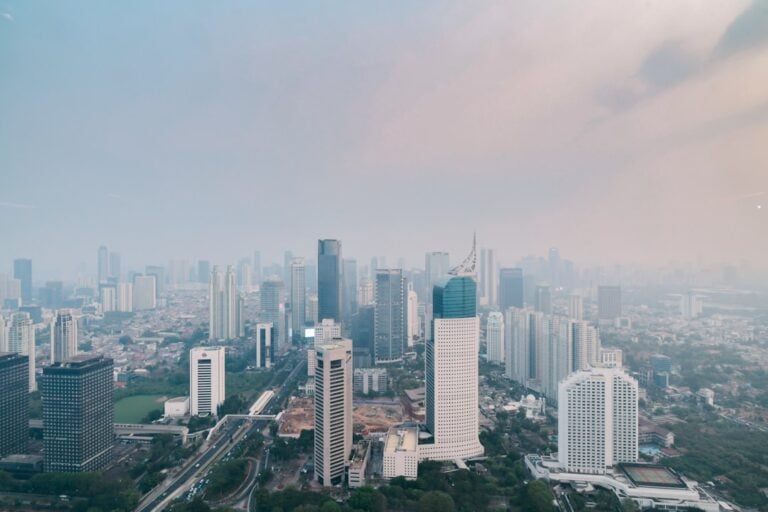
How to Get to Koh Chang: Every Route Explained
Koh Chang is Thailand’s second-largest island, tucked away in Trat province near the Cambodian border. If you are researching how to get to Koh Chang, the short answer is: you travel overland to Laem Ngop on the mainland, then catch a car ferry across the short stretch of sea to the island itself. There is no airport on Koh Chang, so every traveller, whether coming from Bangkok, Pattaya, or across the Cambodian border, funnels through the same piers. In this guide I will walk through every realistic route, with real journey times, costs, and honest tips from my own trips so you can plan a journey that feels smooth rather than stressful.
Why Koh Chang Feels Like Thailand Used to Be
The first time I set foot on Koh Chang, what struck me was how different it felt from the heavily developed islands on the Andaman coast. There are no international chains lining the beaches, no mega-clubs pumping bass until dawn. The island still has that slightly rough-around-the-edges charm that Phuket and Samui lost decades ago. Jungle-clad mountains rise steeply from the coastline, waterfalls tumble through the interior, and the nightlife, such as it is, stays confined to a few pockets along White Sand Beach and Lonely Beach.
Part of the reason Koh Chang has stayed this way is accessibility. Unlike Phuket, which has an international airport, or Samui, which has its own short-haul airport, Koh Chang requires a deliberate effort to reach. That extra barrier, the overland journey plus the ferry crossing, filters out the fly-in-fly-out crowd and keeps the island’s pace a notch slower. It is the kind of place where you still see fishing boats pulled up on the sand in the morning and where a rented scooter is genuinely the best way to explore the winding coastal road.
If you have been travelling through Thailand’s Deep South, like the fascinating, culturally layered province I wrote about in my guide to Yala, Koh Chang offers a completely different but equally rewarding contrast: island life on the eastern Gulf coast, with jungle instead of mosques, and sea breezes instead of military checkpoints. Both places reward travellers willing to go beyond the standard tourist circuit.
Bangkok to Koh Chang: Bus, Minivan and Ferry
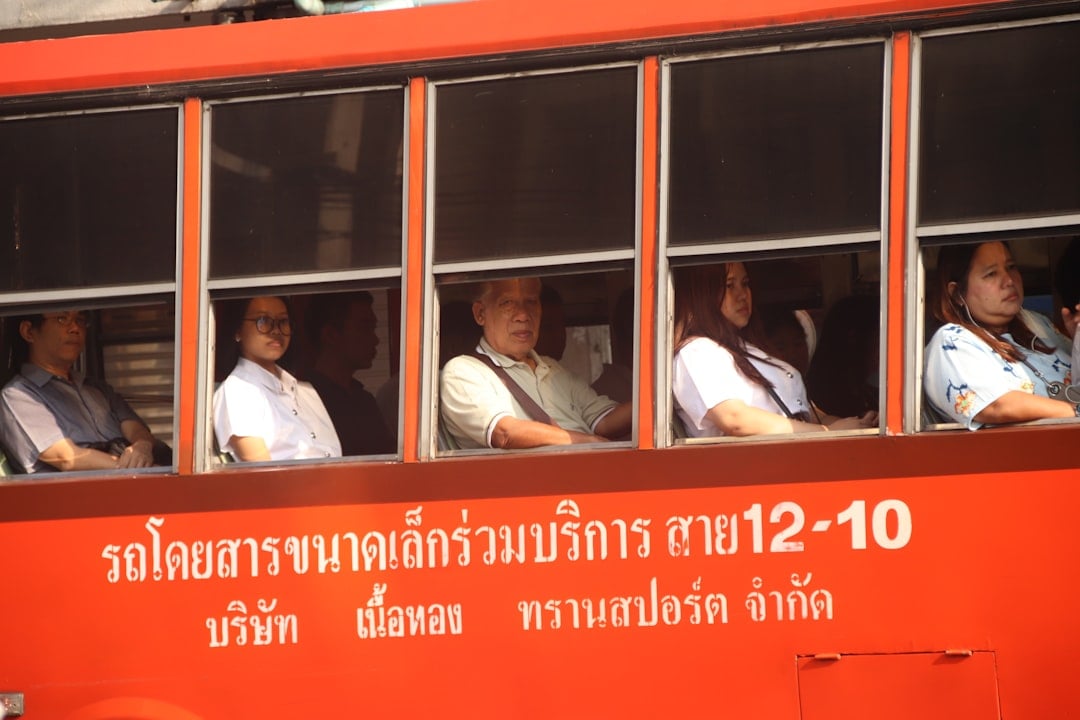
The most common route from Bangkok to Koh Chang starts at the Eastern Bus Terminal (Ekkamai). You take a bus or minivan to Trat town or directly to Laem Ngop pier, then catch the car ferry across to the island. The total journey takes about 6 to 7 hours door to door, including the ferry. It is straightforward, affordable, and well-trodden, which means there are plenty of departures throughout the day.
Taking the Big Bus from Ekkamai
State-run and private buses depart from Ekkamai terminal (also accessible via BTS Ekkamai station) to Trat town throughout the day. The journey covers roughly 315 kilometres and takes about 5 to 5.5 hours, depending on traffic and stops. Buses are typically air-conditioned coaches with reclining seats. When I took this route, the bus made one rest stop at a highway service area where you can grab food and use clean toilets.
The fare is usually in the range of 250 to 280 baht one way. From Trat town, you then need to get to the ferry pier at Laem Ngop, which is about a 30-minute songthaew ride costing around 60 to 80 baht. Some bus services advertise a “joint” ticket that includes the ferry and even a songthaew transfer on the island, which can simplify things, though it sometimes costs a small premium.
The Minivan Option: Faster but Tighter
If speed matters more than legroom, minivans are the better choice. They depart from Ekkamai and also from Khao San Road area agencies, travelling directly to Laem Ngop pier (or in some cases all the way to your Koh Chang beach). The journey takes about 4.5 to 5 hours, roughly 30 to 45 minutes faster than the big bus, because minivans make fewer stops and skip Trat town centre. Fares are typically 280 to 350 baht.
The trade-off is comfort. Thai minivans pack in passengers tightly, and if you are tall, your knees will be pressed against the seat in front. Luggage space is limited, so if you are carrying a large backpack or a big suitcase, confirm at booking that there is room. On one trip, I had to stow my helmet bag under my feet for the whole ride because the rear rack was full.
Comparing Your Bangkok Options
Here is a quick comparison of the main ways to travel from Bangkok to Koh Chang:
| Option | Duration | Approx. Cost (one way) | Comfort Level |
|---|---|---|---|
| Big bus (Ekkamai to Trat) | 5 to 5.5 hrs + ferry | 250 to 280 baht | Good, spacious seats |
| Minivan (Ekkamai to Laem Ngop) | 4.5 to 5 hrs + ferry | 280 to 350 baht | Faster but cramped |
| Joint ticket (minivan + ferry + transfer) | 6 to 7 hrs total | 400 to 500 baht | Convenient, less to think about |
| Private taxi (door to pier) | 4.5 to 5 hrs + ferry | 2,500 to 3,500 baht | Best, ideal for groups or families |
The ferry crossing itself adds about 30 to 45 minutes and costs roughly 80 to 120 baht per person. I will cover the ferry and pier experience in detail further down.
Booking Advice
You can book bus and minivan tickets directly at Ekkamai terminal on the day of travel, and in low season this is usually fine. However, during peak season (December to February), long weekends, and Thai public holidays, minivans fill up fast. I recommend booking a day or two ahead, either at the terminal or through one of the many travel agencies around Ekkamai and Khao San Road. Online booking platforms also sell joint tickets that bundle transport and ferry, which removes the guesswork if you are new to Thailand.
One thing to watch for: some minivan services from Khao San Road agencies pick up from a side street rather than the actual terminal. Confirm the exact departure point when you book, so you are not wandering around looking for your van.
Getting to Koh Chang from Pattaya and the Eastern Seaboard
If you are starting from Pattaya, the journey to Koh Chang is actually shorter than from Bangkok. Pattaya sits further east along the Gulf coast, so you are already partway to Trat province. The route involves taking a bus or minivan to Trat or directly to Laem Ngop, then the ferry across. Total travel time is about 5 to 6 hours including the ferry crossing.
Bus and Minivan from Pattaya
Buses to Trat depart from Pattaya’s Northern Bus Terminal on Pattaya Nuea Road. The journey takes about 4 to 4.5 hours and costs roughly 200 to 250 baht. From Trat, you take a songthaew to the pier as described above. Minivans from Pattaya to Laem Ngop are also available through local travel agencies and take about 4 hours, costing around 280 to 350 baht. These are less frequent than Bangkok departures, so checking the schedule a day ahead is wise.
Driving Your Own Vehicle from Pattaya
If you have your own car or motorcycle, driving from Pattaya to Laem Ngop is a pleasant run of about 4 to 4.5 hours, mostly on Highway 3 (Sukhumvit Road) heading east through Chonburi, Chachoengsao, and Chanthaburi before reaching Trat province. The road is generally in good condition, with fuel stations and food stops along the way. Chanthaburi, famous for its gem trade and riverside cathedral, makes a worthwhile lunch stop if you are not in a rush.
For anyone planning to drive in Thailand with a foreign license, I highly recommend reading my full guide to the International Driving Permit (IDP). Thailand accepts both the 1949 and 1968 IDP conventions, but enforcement varies, and rental agencies increasingly require one. Carrying the correct IDP along with your original license saves you from fines and hassle at checkpoints.
Coming from Further Afield: Hua Hin and Phuket
Travellers sometimes ask about reaching Koh Chang from Hua Hin or even Phuket. There is no direct transport. From Hua Hin, the most practical route is to travel back to Bangkok first (about 3.5 hours by minivan or train) and then continue to Koh Chang as described above. Total journey time would be 9 to 10 hours, so it makes sense to overnight in Bangkok.
From Phuket, the journey is genuinely long: you would need to fly Phuket to Bangkok (about 1.5 hours) and then continue overland to Koh Chang (another 6 to 7 hours). Some travellers break this up with a night in Bangkok. It is not a day trip. If you are already on the Andaman coast and want an island experience, staying on that side of Thailand makes more sense than crossing to Koh Chang unless you have a specific reason.
Crossing from Cambodia into Koh Chang via Hat Lek
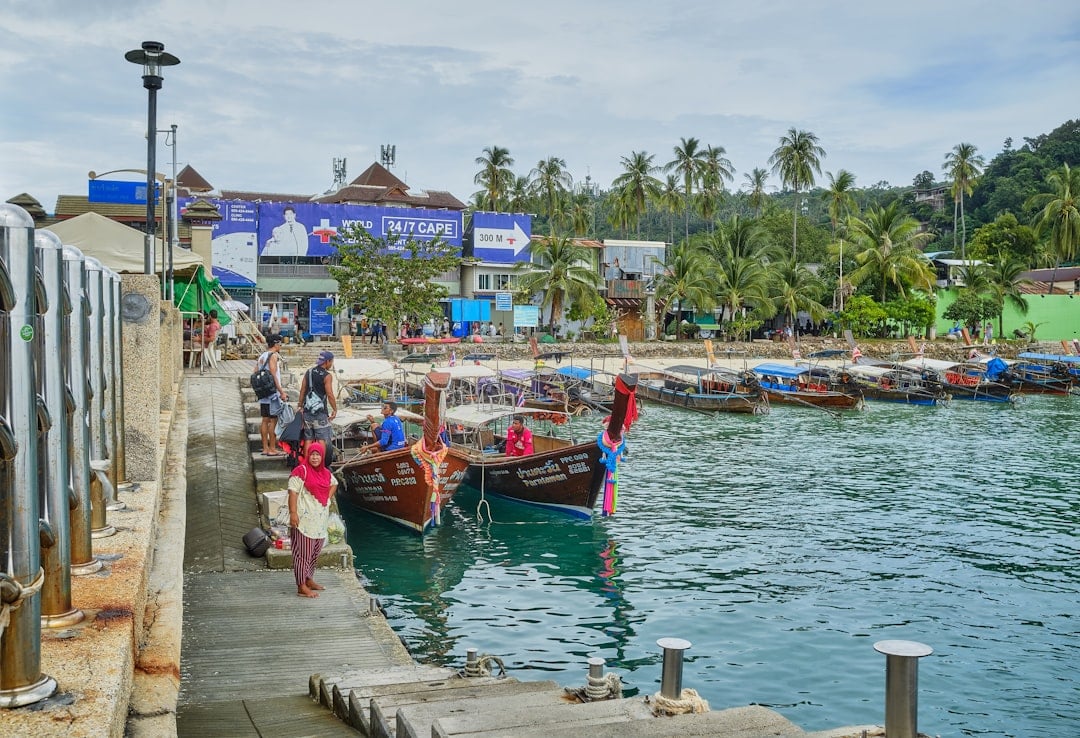
One of the most interesting routes to Koh Chang, and one that overlanders and motorcycle travellers particularly enjoy, comes from Cambodia via the Hat Lek border crossing. Also known as the Cham Yeam checkpoint on the Cambodian side, this crossing connects Koh Kong province in Cambodia with Trat province in Thailand. From the border, it is about a 90-minute drive to Laem Ngop pier, then a short ferry to Koh Chang. This route is less travelled than the Bangkok path and offers a genuine cross-border adventure.
The Border Crossing Process
On the Cambodian side, the crossing is at Cham Yeam, about 10 kilometres from the town of Koh Kong. You exit Cambodia through Cambodian immigration, then cross a short bridge to Thai immigration at Hat Lek. The process is straightforward if your paperwork is in order. Most nationalities receive a visa-on-arrival or visa-free entry stamp for Thailand at this crossing, but always check current Thai visa policy for your passport before you travel, as rules change.
If you are riding your own motorcycle across, you will need your vehicle registration, an International Driving Permit, and ideally a Carnet de Passage (CPD) if your home country requires one for temporary vehicle import. Thai customs at Hat Lek is generally familiar with overland travellers. I have heard from fellow riders that processing can take anywhere from 30 minutes to a couple of hours depending on how busy it is and how routine your vehicle paperwork turns out to be.
Getting from the Border to the Pier
From Hat Lek, the drive to Laem Ngop is about 90 minutes on Highway 3, a scenic coastal road through small fishing villages and palm groves. If you are not driving your own vehicle, shared minivans and songthaews connect the border to Trat town and sometimes directly to the pier. Expect to pay around 100 to 150 baht for a shared ride to Trat, from where you continue to the pier by songthaew.
A private taxi from the border to Laem Ngop costs roughly 800 to 1,200 baht, which is worth it if you are a group or carrying lots of luggage. Motorcycle taxis are also an option for solo travellers with light bags.
Tips for the Cambodia-to-Koh Chang Route
- Bring US dollars and some Thai baht. Cambodian immigration may charge a small exit fee in dollars, and you will need baht immediately on the Thai side.
- The border typically opens from around 7:00 AM to 8:00 PM. Do not arrive too late in the day, or you risk missing the last ferry to Koh Chang.
- Last ferries from Laem Ngop generally depart between 6:00 PM and 7:00 PM, depending on the pier and season. If you miss it, you will need to overnight in Trat or Laem Ngop.
- ATMs and small shops are available at the border on both sides, but exchange rates are poor. Change money in Koh Kong town before heading to the crossing.
Arriving at Laem Ngop Pier: What to Expect
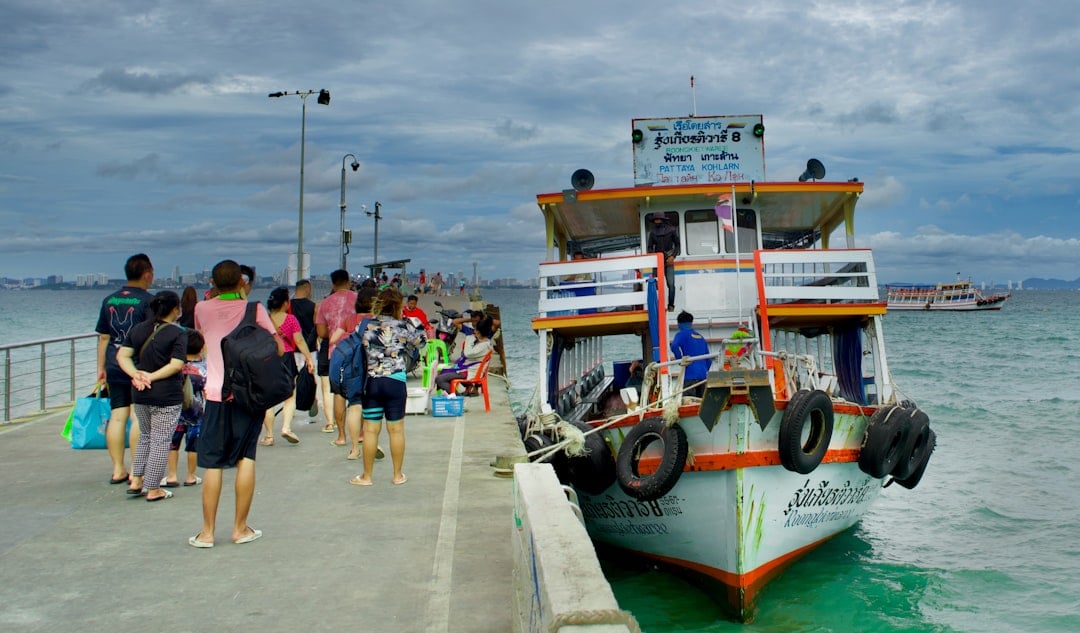
Laem Ngop is the mainland hub for all ferries to Koh Chang. There are actually three piers within a few kilometres of each other: Ao Thammachat (the most popular car ferry), Centre Point Pier, and the Koh Chang Ferry Terminal. All three operate car ferries that take passengers and vehicles. The crossing takes 30 to 45 minutes depending on sea conditions and which pier you depart from.
Buying Your Ferry Ticket
You buy ferry tickets at the pier itself, either at a ticket counter or, if you are driving, at a booth before you board. For foot passengers, advance booking is not necessary. You just show up, buy a ticket (around 80 to 120 baht), and wait for the next ferry. If you are travelling with a vehicle, especially on weekends or during Thai public holidays, arrive early as the vehicle queue can get long. I have heard of people waiting an hour or more during peak periods when the vehicle loading backs up.
Vehicle fares vary: a motorcycle typically costs around 100 to 130 baht, and a car roughly 400 to 600 baht, including the driver. These are approximate figures and piers occasionally adjust pricing, so treat them as a guide rather than exact quotes.
The Ferry Crossing Experience
The ferries are large open-deck car ferries. Vehicles are parked on the main deck, and passengers can stay in their vehicles or head upstairs to an open-air passenger deck with bench seating and a small snack kiosk. The crossing is usually calm because the waters around Laem Ngop are sheltered, but in rougher weather the sea can get choppy. If you are prone to seasickness, sit upstairs in the fresh air rather than in an enclosed vehicle cabin.
The views on the crossing are genuinely beautiful. You will see fishing boats, mangrove-lined shores, and the jungle-covered spine of Koh Chang growing larger as you approach. On a clear day, it is one of the more scenic ferry rides in Thailand. Have your camera ready.
Arriving on Koh Chang and Getting to Your Beach
The ferry arrives at one of two piers on Koh Chang: Ao Sapparot (for Ao Thammachat and Koh Chang Ferry departures) or Bang Bao (for Centre Point Pier departures). Songthaews (converted pickup trucks with bench seating in the back) wait at the arrival pier to take passengers to the beaches. Fares run around 50 to 80 baht per person depending on your destination beach, and the ride can take 30 to 60 minutes depending on where on the island you are heading.
The songthaews follow the island’s main coastal road, which winds along the west coast where most beaches and accommodation are located. White Sand Beach is the first major stop, about 15 minutes from the pier. Further south, you reach Klong Prao, Kai Bae, Lonely Beach, and finally Bang Bao at the southern tip. If your accommodation is not on this list, tell the driver your hotel name and they will usually drop you at the nearest point.
Practical Tips for Your Koh Chang Journey
After multiple trips to and from Koh Chang, here are the practical lessons I have learned the hard way, so you do not have to:
- Allow a full day for travel. Even though the journey is 6 to 7 hours from Bangkok, factoring in waiting time, transfers, and the ferry means you should not plan anything important on arrival day. Treat it as a travel day.
- Bring snacks and water. The bus and minivan stops are brief, and pier-side food options are limited and overpriced. A 7-Eleven in Trat town is your last reliable stop for cheap supplies.
- Keep cash handy. The ferry, songthaews, and many island businesses run on cash. ATMs exist on Koh Chang but can run low during peak season. Withdraw enough baht in Trat or before you leave Bangkok.
- Check the weather. In the monsoon season (roughly June to October), rough seas can occasionally cause ferry delays or cancellations, though complete cancellations are rare. If a storm is passing through, allow extra time and check locally before heading to the pier.
- Do not trust the last ferry timing blindly. Last ferry departure is usually between 6:00 PM and 7:00 PM, but it can shift with the season. Confirm at your hotel or with a local the day before if you are cutting it close.
- Renting a scooter on the island is the best way to explore. The main road loops the west coast and is well-paved. But the interior mountain roads are steep and sometimes poorly lit at night. Ride within your comfort level.
Explore More of Eastern Thailand
Koh Chang is the headline act of Thailand’s eastern seaboard, but the region has more to offer if you have the time. Trat town itself is a charming, unhurried provincial capital worth a morning of wandering, with its old wooden shophouses and lively morning market. Chanthaburi, on the road between Bangkok and Trat, is known for its gem traders, riverside Catholic cathedral, and excellent weekend market. If you are crossing from Cambodia, the stretch of coast between Hat Lek and Laem Ngop is dotted with quiet fishing villages that see almost no foreign visitors.
And if your appetite for off-the-beaten-path Thailand is growing, I would point you toward the Deep South, a region most tourists skip entirely. My guide to Yala covers one of the most culturally distinctive provinces in the country, where Malay-Muslim heritage meets Thai civic life in a way you will not find anywhere else.
Have you travelled to Koh Chang recently? Did I miss a route or has something changed since my last visit? Drop your tips in the comments, I would love to hear your experience and keep this guide as current as possible for fellow travellers.
And if you are planning to drive your own vehicle on this route, whether crossing from Cambodia or renting in Thailand, do not skip my IDP guide before you go. Getting that small document sorted in advance can save you hours of hassle at the border or a roadside checkpoint.
Frequently Asked Questions
How long does it take to get from Bangkok to Koh Chang?
The total journey from Bangkok to Koh Chang takes about 6 to 7 hours. That includes roughly 5 to 5.5 hours by bus or minivan to Trat or Laem Ngop, plus a 30 to 45 minute ferry crossing to the island. Minivans are faster than big buses by about 30 to 45 minutes.
How much is the ferry to Koh Chang?
The car ferry from Laem Ngop to Koh Chang costs around 80 to 120 baht per passenger. If you are bringing a vehicle, a motorcycle costs roughly 100 to 130 baht and a car around 400 to 600 baht. Prices vary slightly between the three piers and are subject to change.
Can you drive your own car or motorcycle onto the Koh Chang ferry?
Yes, all three ferry piers at Laem Ngop accept private vehicles. You simply buy a ticket that includes your vehicle at the pier ticket counter. Motorcycles and cars are parked on the open deck of the car ferries. Arrive early during weekends and holidays as queues can be long.
Can you cross from Cambodia to Koh Chang by land?
Yes, you can cross the Thai-Cambodian border at Hat Lek (Cham Yeam on the Cambodian side) and then travel about 90 minutes by road to Laem Ngop pier. From there, a short ferry crossing takes you to Koh Chang. Minivans and shared taxis connect the border area to the ferry piers.
Do I need to book the Koh Chang ferry in advance?
Advance booking is not usually necessary for foot passengers, even during peak season. If you are travelling with a vehicle during weekends, public holidays, or the December to February high season, arriving at the pier early is advisable. Ferries run roughly every 45 minutes during daytime.