Luang Prabang Travel Guide: Slow Laos at Its Best
I arrived in Luang Prabang, Laos on the Mekong slow boat, stiff from two days on a wooden bench and squinting into the late afternoon light as the boat rounded the peninsula. The town appeared as a low silhouette of temple roofs and colonial facades, golden spires catching the last sun, and I remember thinking it looked too perfect to be real. That first evening, I sat on a riverside terrace with a cold Beerlao, watching the Mekong turn copper and then black, and the noise in my head from weeks of overland travel finally went quiet. This Luang Prabang travel guide is for slow travellers and culture-focused backpackers who want more than a checklist. It is for people who are willing to get up at dawn, eat where the locals eat, and stay long enough for the town to reveal itself beyond the Instagram version.
What makes Luang Prabang worth visiting is not any single attraction. It is the accumulation of small moments: monks walking barefoot through mist at 5:30 AM, the smell of charcoal grilling and lemongrass from the morning market, the way the whole peninsula slows to the rhythm of two rivers. If you give it time, Luang Prabang gets under your skin in a way that few places in Southeast Asia still do.
The History Of Luang Prabang
Luang Prabang is one of the oldest continuously inhabited towns in Southeast Asia, and its history is written into every street and temple on the peninsula. The town sits on a tongue of land formed by the Mekong River and its tributary, the Nam Khan, a location that made it a natural trading post and religious center for centuries.
Known originally as Muang Sua and later Xieng Thong, the town became the capital of the powerful Lan Xang kingdom, the Kingdom of a Million Elephants, from the 14th to the 16th century. Its wealth and influence stemmed from its position on regional trade routes and its role as the center of Buddhism in the region. The town takes its current name from the Prabang, a sacred gold Buddha image brought from Cambodia, probably in the 14th century, which still gives the town its identity. You can learn more about the UNESCO World Heritage listing and its historical significance on the official UNESCO site.
When the French established their protectorate over Laos in 1893, Luang Prabang once again became a royal and religious capital, this time under King Sisavang Vong. The French brought colonial architecture, tree-lined boulevards, and brick buildings with wooden balconies that merged with the existing Lao urban fabric. This fusion of traditional Lao wooden structures and 19th-century European colonial style is exactly what earned Luang Prabang its UNESCO World Heritage designation in 1995.
What this history means for a visitor today is that Luang Prabang is not a museum piece or a reconstructed theme park. It is a living town where Buddhist practice, royal legacy, and colonial influence coexist in the same streetscape. The monks still walk their alms route at dawn. The morning market still sells foraged herbs and river fish. And the town’s quiet, measured pace is not a marketing invention but a continuation of how life has been lived here for centuries.
Best Things To Do In Luang Prabang
The best things to do in Luang Prabang fall into three categories: cultural experiences rooted in Buddhist tradition, natural attractions on the town’s doorstep, and the slower pleasures of simply being in one of Southeast Asia’s most atmospheric towns. Here is what is genuinely worth your time, and how to experience it without becoming part of the problem.
The Alms-Giving Ceremony (Tak Bat): What It Actually Feels Like
I want to talk about this honestly, because most Luang Prabang travel guides either romanticize the alms-giving ceremony or skip the controversy entirely. The Tak Bat is a daily Buddhist ritual dating back over 600 years, in which monks and novices walk barefoot through the streets before dawn to collect offerings of food. It is not a performance. It is sustenance. The food the monks collect is what they eat for the day.
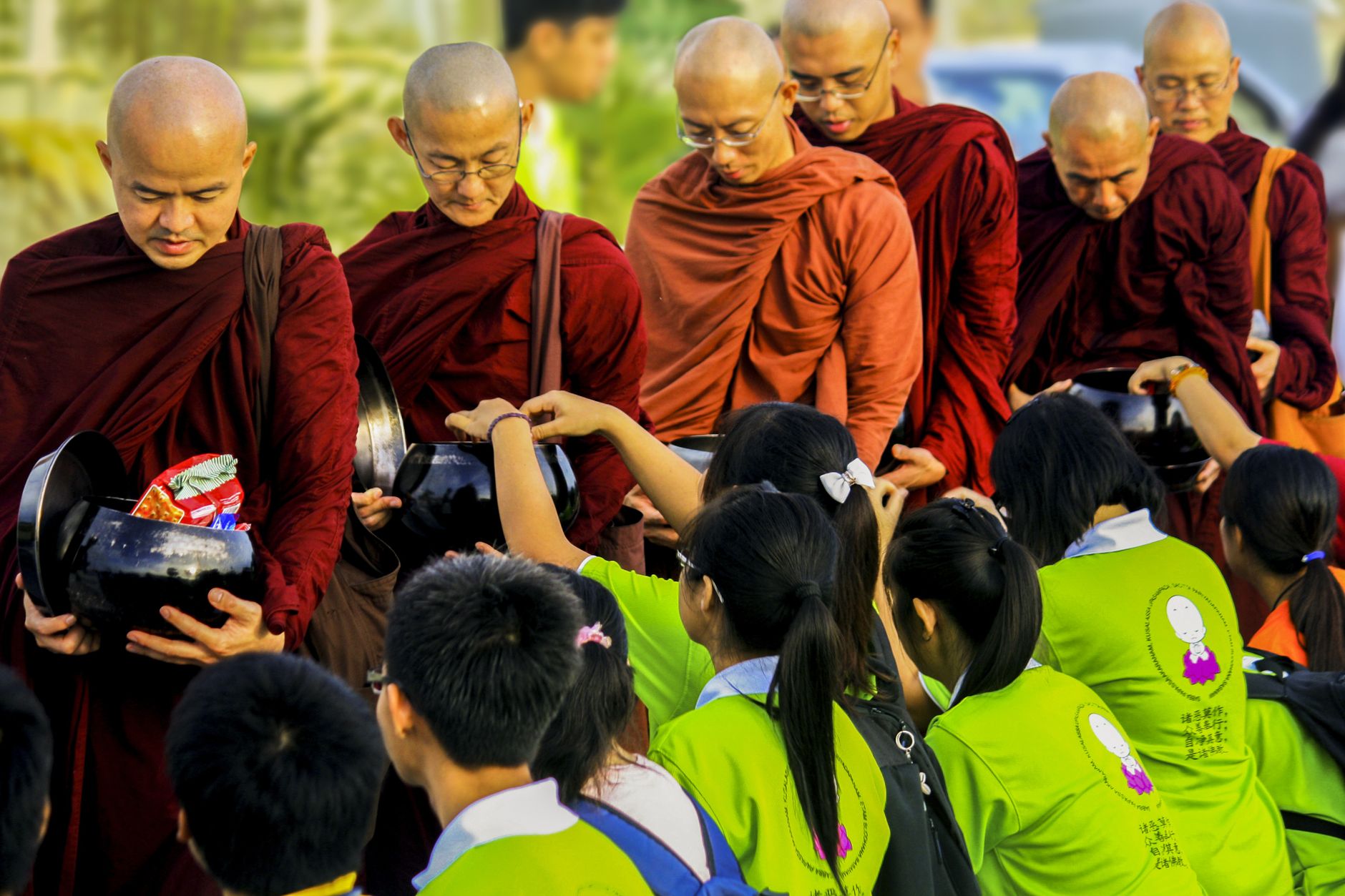
The first time I watched it, I sat on the curb opposite Wat Sensoukharam at 5:15 AM, well before the first gray light. An older Lao woman next to me was already kneeling on a woven mat with a basket of sticky rice she had prepared at home that morning. She said nothing. When the monks appeared, a line of saffron robes moving through the mist in barefoot silence, she pinched a small ball of rice into each bowl as they passed. The whole thing took maybe four minutes. There was no sound except the soft pat of bare feet on the road.
That is what the ceremony is supposed to feel like. Quiet. Humble. A private exchange between a community and its monks.
What it too often looks like now is something else entirely. Since the Laos-China Railway opened in 2021, bringing a surge of tourists to the city, the ceremony along Sakkaline Road has become what one local described to AFP as a “sea of people” with tourists on plastic stools shoving phone cameras into monks’ faces. Vendors sell pre-packaged alms baskets along the route, some of which contain plastic-wrapped junk food and leftover rice that is inappropriate for monks to eat. Tour buses have been known to follow the procession, positioning their passengers above the monks, which is considered deeply disrespectful in Lao Buddhist culture. A local nun-turned-guide told the BBC, “It hurts my heart to see such disrespect.”
So here is the honest advice I wish someone had given me before my first visit: You do not have to participate to witness the ceremony respectfully. The official Tourism Luang Prabang guidelines are clear. If you do offer alms, buy sticky rice from the local market that morning, not from vendors along the route, and only do so if it is meaningful to you, not as a photo opportunity. If you are observing, stay at least five meters back, keep silent, do not use flash photography, and dress with shoulders and legs covered. Do not position yourself above the monks. Do not follow the procession.
Even better, walk away from Sakkaline Road and find a quieter street elsewhere on the peninsula. The monks walk routes throughout the entire town, not just the tourist section. Watching from a side street, where only a few local residents are kneeling, gives you a far more authentic and respectful perspective. I did this on my second morning and the difference was profound. No crowds, no phones, no tour guides. Just monks, mist, and a few quiet offerings.
Alternatively, consider booking a monk-led tour through one of the locally run operations like Spirit of Laos or Orange Robe Tours, both founded by former monks who are working to educate visitors about Buddhist culture in a more thoughtful way. These tours give you context and depth that standing on the side of the road with a phone cannot.
Cultural Experiences: Temples and the Royal Palace
Luang Prabang has over 30 active temples on or near the peninsula, and visiting even a handful of them gives you a sense of why UNESCO called this town’s religious architecture among the most sophisticated in Southeast Asia.
Wat Xieng Thong is the most important. Built in the 16th century, it sits at the tip of the peninsula where the Mekong and Nam Khan meet, and its sweeping tiered roofs and glass mosaic walls depicting the Tree of Life are the iconic image of Luang Prabang. Go early in the morning or late afternoon to avoid tour groups. Entry is 20,000 kip.
The Royal Palace Museum, now called the Haw Kham Royal Palace, was the residence of the Lao royal family until 1975. Inside you will find the Prabang Buddha itself, along with royal regalia and gifts from foreign dignitaries. It is a compact museum that takes about an hour, and it gives you essential context for understanding how Luang Prabang functioned as a royal capital. Entry is 30,000 kip. Dress modestly, as you would for a temple.
Wat Mai, next to the night market on Sisavangvong Road, is worth stepping into for its gilded relief panels depicting scenes from the Ramayana and Lao folk tales. It is one of the most richly decorated temples in town, and because of its central location, you can pop in on your way to or from the market.
Nature: Kuang Si Falls and Mount Phousi
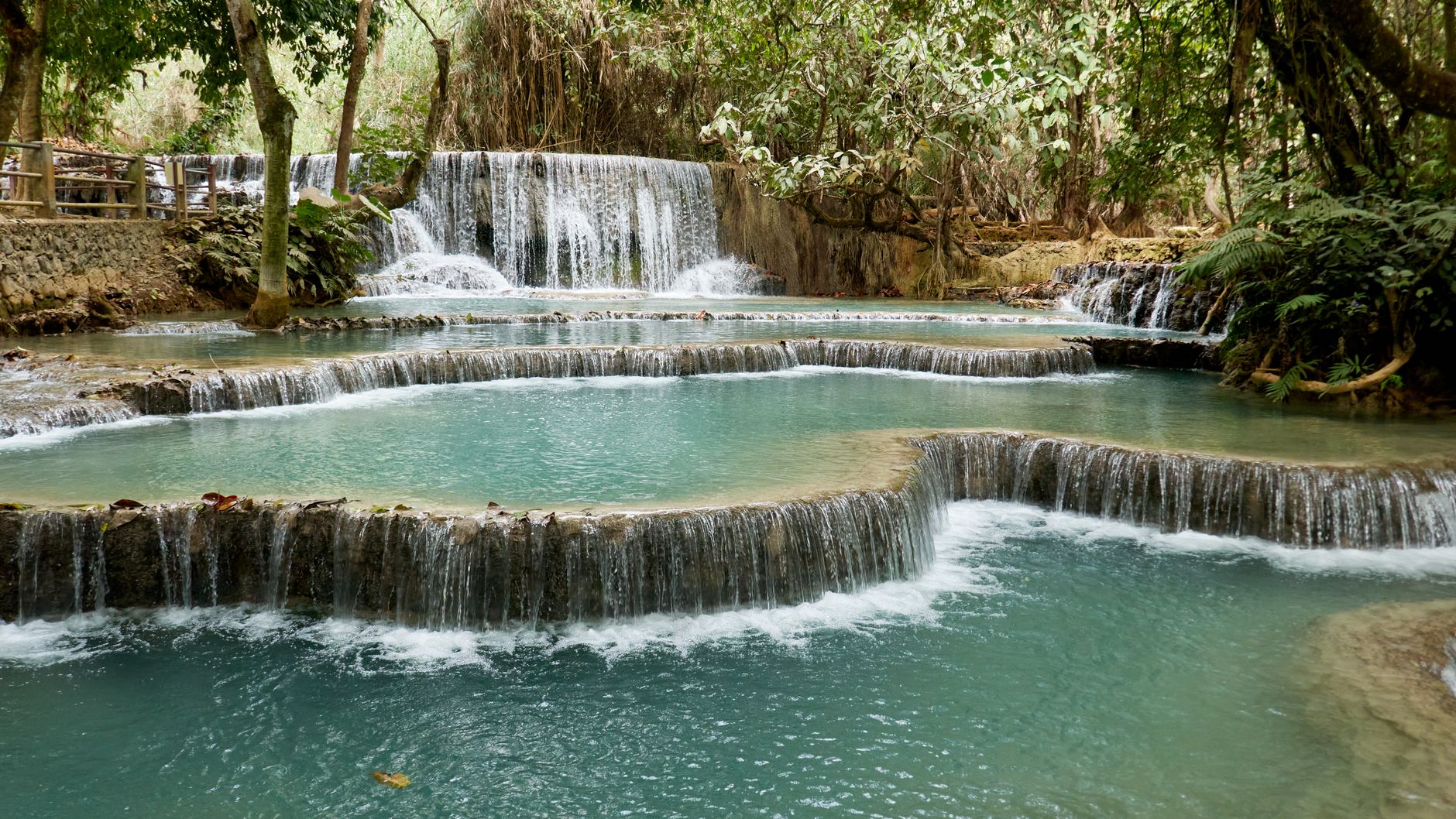
Kuang Si Falls is the most famous natural attraction near Luang Prabang, a multi-tiered cascade about 29 kilometers south of town that tumbles into vivid turquoise pools surrounded by jungle. It is beautiful, and it is also one of the most crowded attractions in Laos if you time it wrong.
Here is the timing strategy that makes all the difference. The park opens at 8 AM. The shared minivans from town start arriving around 10 AM, and by 11 AM the main pools are packed. If you hire a private tuk-tuk or rent a motorbike, leave town by 7:15 AM and you will arrive just after the gates open, with roughly one to two hours of near-solitude before the crowds build. The early morning light through the canopy is also the best for photos.
The alternative is to arrive late, after 3 PM, when most tour groups have already left. You will have less time before the park closes at 5:30 PM, but the final hours are noticeably quieter. Weekdays are less crowded than weekends, when domestic tourists arrive in larger numbers.
Season matters too. During the dry season from November to April, the pools are at their most vivid turquoise and the swimming is excellent. In the rainy season, particularly August through October, the water turns brown and muddy and swimming is often unsafe, though the falls are at their most powerful and dramatic. November and early December are the sweet spot: the water is clearing back to turquoise but still flowing strongly from the recent rains.
The park also houses the Free the Bears rescue center, near the entrance, where you can see Asiatic black bears that have been rescued from illegal trafficking. Entry to the falls is 20,000 kip, which includes access to the bear center and all trails. Bring a dry bag for your phone and wallet, and do not use soap or sunscreen in the pools, as the ecosystem is fragile.
Closer to town, Mount Phousi is the 100-meter hill at the center of the peninsula, topped with a stupa and offering panoramic views over Luang Prabang and both rivers. Most people climb it for sunset, which means the summit gets crowded. I actually prefer the sunrise climb, which is quieter and cooler. The path has about 300 steps, and entry is 20,000 kip. There is a small temple complex at the top with a Buddha footprint shrine.
Tourist Attractions: The Mekong Slow Boat Route
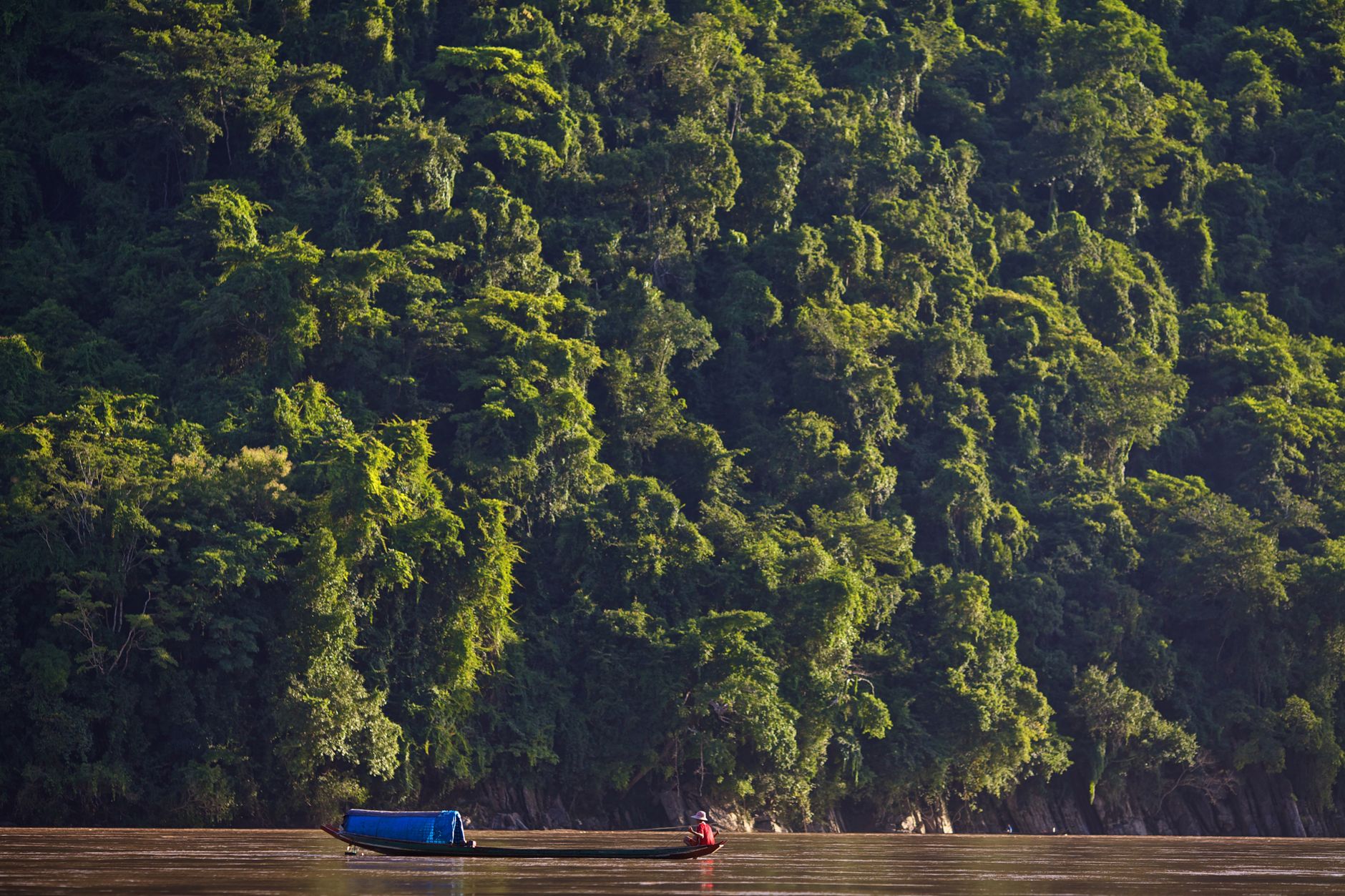
For many travellers, the two-day Mekong slow boat from Huay Xai, on the Thai border, to Luang Prabang is the journey itself, not just the transport. The boat departs Huay Xai around 10:30 AM and spends six to seven hours cruising down the Mekong to Pakbeng, where you overnight. The second day is another six to seven hours to Luang Prabang, arriving around 4 PM.
As of 2025, the official ticket price is about 400,000 kip, roughly $20, for the full two-day journey. You can buy tickets at the dock in Huay Xai or through guesthouses and travel agencies in Chiang Khong or Chiang Mai, though you may pay slightly more through an agency. The ticket covers only your seat on the boat. You will need to budget separately for food, accommodation in Pakbeng (guesthouses range from $10 to $25), and the tuk-tuk from the dock to Luang Prabang town center, which costs about 40,000 kip per person.
Here is what nobody tells you. The boat is a long wooden vessel with bench seats, and it gets uncomfortable after about four hours. Bring your own food. The options on board are limited and overpriced, and in Pakbeng the restaurants cater to captive tourists. A sandwich, some fruit, and a large bottle of water from the market in Huay Xai will save you money and disappointment. Bring a cushion or a sarong to sit on. Get there early to claim a seat near the front, because the seats near the engine at the back are loud and smoky.
That said, the slow boat is one of the most atmospheric river journeys in Southeast Asia. The Mekong widens and narrows through limestone gorges, villages appear and disappear on both banks, and at some point you stop caring about the uncomfortable bench because the landscape is so vast and unhurried. It is the opposite of the high-speed train that now connects Vientiane to Luang Prabang in two hours. Both get you there, but they deliver entirely different experiences.
If you are coming from northern Thailand, my Chiang Rai travel guide covers the approach to the Thai-Lao border at Chiang Khong, which is where the slow boat journey begins. And if you are building a longer route through the region, our Thailand, Cambodia, Laos, and Vietnam itinerary places the slow boat within the broader overland loop.
Where & What To Eat And Drink In Luang Prabang
Lao food is one of the most underappreciated cuisines in Southeast Asia, and Luang Prabang has its own regional food culture that is distinct from what you will find in Vientiane or southern Laos. The foundation of every meal here is sticky rice, or khao niew, which is steamed in a conical bamboo basket and served in small lidded containers. You eat it with your fingers, pinching off a ball and dipping it into whatever stew, chili paste, or salad accompanies it.
The dish most associated with Luang Prabang is Or Lam, a slow-cooked stew made with meat (usually beef, water buffalo, or pork), lemongrass, galangal, dill, basil, eggplant, and a crucial ingredient called sakhan. Sakhan is the stem of a wild vine that gives Or Lam a distinctive peppery, slightly numbing heat that is completely different from chili. It is earthy, warming, and complex, and it is the one dish you should not leave Luang Prabang without eating.
Khao soi in Luang Prabang is nothing like the coconut curry noodle soup of northern Thailand. The Lao version is a light, tomatoey broth served with rice noodles and a generous pile of fresh herbs and crispy fried noodles on top. It is tangy and herbaceous, and the best version I had was from a small stall across from Wat Sensoukharam that had no English sign, just a queue of locals.
Other dishes worth seeking out: Mok Pa, a fish mousse steamed in banana leaves with lemongrass, galangal, and coconut milk; Sai Oua, Lao pork sausage packed with herbs and grilled over charcoal; Tam Mak Hoong, the Lao green papaya salad that is punchier and more pungently fermented than its Thai cousin, som tam; and Kaipen, a snack made from pressed river algae seasoned with garlic, galangal, and sesame, then sun-dried and flash-fried. Kaipen is specific to Luang Prabang and is best eaten with a cold drink while sitting by the river.
The morning market, running daily along the streets behind the main road from about 5 AM, is the place to see the raw ingredients of Lao cuisine. Foraged herbs, river fish, wild game, bamboo shoots, and vegetables you will not recognize are spread out on woven mats and plastic sheets. It is not a tourist market. Walk through it slowly, buy a few things you cannot identify, and eat whatever the woman next to you is eating.
The night market, on Sisavangvong Road from about 5 PM, has a dedicated food alley running perpendicular to the main souvenir stalls. It is not the most refined street food you will find in Asia, but the grilled Mekong fish, Lao stews, and vegetarian buffet stalls are cheap and reliable. For a sit-down meal, Tamarind Restaurant on Kingkitsarath Road is widely recommended for its accessible introduction to Lao cuisine, and the cooking school attached to it is excellent if you want to learn to make Or Lam and jaew dips yourself.
For coffee, Luang Prabang has a small but genuine cafe culture, partly a legacy of the French colonial period and partly a result of the Bolaven Plateau coffee industry in southern Laos. You will find good espresso along Sisavangvong Road, and the slower morning ritual of sitting with a coffee and watching the town wake up is one of the great pleasures of being here.
Shopping In Luang Prabang
The night market on Sisavangvong Road, running every evening from about 5 PM to 10 PM, is the primary shopping experience in Luang Prabang and one of the best handicraft markets in Southeast Asia. Unlike the mass-produced souvenir stalls you find in Bangkok or Hanoi, many of the vendors here sell genuinely handcrafted items: woven textiles, embroidered bags, wood carvings, ceramics, and silver jewelry made by Lao artisans and ethnic minority communities from the surrounding highlands.
Textiles are the standout. Laos has a deep weaving tradition, and you will find handwoven silk and cotton scarves, wall hangings, and table runners in a range of patterns that reflect different ethnic groups. Prices are reasonable by international standards but you should still bargain politely. The opening price is typically inflated by 30 to 50 percent, and a friendly back-and-forth is expected.
For higher quality and fair-trade credentials, look for Ock Pop Tok, a weaving and textile center with a shop on the main road and a Living Crafts Center on the banks of the Mekong. They produce handwoven textiles using natural dyes and employ local weavers. It is more expensive than the market, but you are paying for genuine craftsmanship and ethical production.
The morning market is the place to buy food and ingredients rather than crafts. If you are leaving Luang Prabang and want to take Lao coffee with you, the market has vendors selling beans from the Bolaven Plateau, and several shops along Sisavangvong Road sell packaged coffee and tea.
One shop worth seeking out is LaLaLaos, an artisan store established by a former monk to help girls from rural areas access secondary education. Buying from them is a way to support the local community beyond simply spending tourist dollars.
Bars & Nightlife In Luang Prabang
Let me be direct: Luang Prabang is not a party town, and that is part of its character. There is a citywide curfew of 11:30 PM for bars in the center, and it is enforced with surprising consistency. What exists before that is genuinely pleasant: riverside bars with cushioned bamboo seating, cold Beerlao for around 20,000 kip, and the Mekong going dark below you.
The riverside bars along Fa Ngum Road are the classic evening move. A half dozen places with river-view seating where travelers from every corner of the world sit comparing slow boat stories and Mekong River routes. Utopia Bar, on the Nam Khan river, is a backpacker favorite that hits a good balance between daytime chill and evening social energy, with a deck overlooking the water.
The infamous Luang Prabang Bowling Alley, a 10-minute tuk-tuk ride outside the center, has long been the late-night fallback for backpackers after the curfew shuts down the town bars. It stays open until around 2 AM, serves alcohol, and has music. It is exactly as absurd and fun as it sounds. The bowling is secondary.
A few bars and clubs operate just outside the city center where the curfew is less strictly enforced. Dao Fa, near the southern bus station, is the closest thing to a nightclub in town, with live bands and a DJ. U-Pub has nightly live music with Lao hits. These are more local-oriented and younger in crowd. For something quieter, Icon Klub and Artisan Bar offer a more intimate, speakeasy-style atmosphere with good cocktails.
The honest answer is that evenings in Luang Prabang end early, and most nights I was happy about that. After a 5:30 AM start for the alms-giving ceremony and a full day of walking, temples, and heat, a couple of riverside beers and a 10 PM night market stroll felt like exactly the right pace.
When Is The Best Time To Visit Luang Prabang?
The best time to visit Luang Prabang is November through February, when the weather is dry, cool, and clear. Daytime temperatures sit between 26 and 31 degrees Celsius, dropping to 15 to 18 degrees at night, which is cool enough that you will want a light layer after sunset. The Mekong runs low and blue, the light at dawn is cinematic, and the town looks like the photographs that made you want to come.
March and April are hot season. April can hit 36 degrees or more, and agricultural burning across the region in March and April creates hazy, poor air quality that is uncomfortable for anyone with respiratory issues. That said, mid-April is Lao New Year, Boun Pi Mai, a three-day water festival that is one of the most vibrant cultural events in the country. If you can tolerate the heat and book accommodation well in advance, it is an incredible time to be here.
The rainy season runs from roughly May through September, with August being the wettest month. Do not let this scare you off entirely. Rain typically falls in heavy afternoon downpours rather than all day, mornings are often clear, and the landscape turns vivid green. Hotel prices drop significantly, and you will have temples largely to yourself. The trade-off is that Kuang Si Falls turns muddy and swimming is unsafe, the Mekong swells and turns brown, and road conditions in rural areas can deteriorate.
One festival worth timing your trip around is Lai Heua Fai, the boat lantern festival marking the end of Buddhist Lent, usually in October. The peninsula’s temples glow with handmade paper lanterns, and each village parades a giant boat lantern down the main street before releasing it onto the Mekong. It is magical and far less crowded than peak season.
October and November are shoulder months that combine the end of the rains with recovering weather, strong waterfall flow, and fewer crowds than peak winter. If I had to pick one month, it would be November: the air clears, the waterfalls are still powerful, the foliage is still green, and the worst of the heat and crowds are both still weeks away.
| Season | Months | Weather | Crowds | Prices | Best For |
|---|---|---|---|---|---|
| Peak / Dry | Nov to Feb | Cool, dry, clear | High | High | Comfortable weather, photography, swimming at Kuang Si |
| Hot | Mar to Apr | Very hot, hazy from burning | Moderate (surge for Lao New Year) | Moderate to high | Boun Pi Mai festival in April |
| Rainy / Green | May to Sep | Hot, humid, afternoon downpours | Low | Low | Budget travel, green landscapes, solitude |
| Shoulder | Oct to Nov | Improving, occasional rain, clearing skies | Low to moderate | Moderate | Lai Heua Fai festival, waterfalls at full flow, fewer crowds |
My recommendation: aim for November to February if you want the best all-around experience. Choose October if you want fewer crowds and greener scenery and can handle the occasional rain. Avoid March and April if you have any respiratory sensitivity, unless you are specifically coming for Lao New Year.
How Many Days Do You Need In Luang Prabang?
You need at least four full days in Luang Prabang, and I would argue for five or six if you have the flexibility. This is a town that punishes rushing. The people who arrive on the high-speed train from Vientiane, sprint through the main temples and Kuang Si Falls in 36 hours, and then move on are seeing maybe 30 percent of what Luang Prabang actually is.
Here is why four-plus days makes a difference. Day one is for arriving and settling in, walking the peninsula, climbing Mount Phousi for sunset, and getting your bearings. Day two is for the alms-giving ceremony at dawn (which means an early night and an early morning), the morning market, a couple of temples, and the night market. Day three is for Kuang Si Falls, ideally with an early start, plus the bear rescue center. Day four is for the slower stuff that most travellers skip: a half-day cooking class, a visit to a temple you have not heard of, a long lunch, a riverside walk along the Nam Khan, or a boat trip to the Pak Ou Caves up the Mekong. Day five is buffer: a second dawn alms-giving attempt on a quieter street, a return visit to the morning market to eat something you were too nervous to try on day two, and an unhurried afternoon sitting somewhere with a book.
If you are doing a longer Laos itinerary, the extra days also let you take a day trip to the Pak Ou Caves (about two hours upriver by slow boat, housing thousands of Buddha statues in limestone caves) or a longer trip to Nong Khiaw and Muang Ngoi on the Nam Ou River, where the karst cliffs are some of the most dramatic scenery in mainland Southeast Asia.
For motorcyclists heading south from Luang Prabang, the road through Vang Vieng toward Vientiane is the main route, and Vang Vieng has reinvented itself from its tubing-party reputation into a genuine adventure hub surrounded by karst peaks. If you are heading further south, the Thakhek Loop in central Laos is one of the best motorcycle routes in Southeast Asia, a three to four day loop through karst landscapes, caves, and remote villages that belongs on any overlander’s list.
Where To Stay In Luang Prabang
Luang Prabang is compact enough that your base location matters less than in most cities, but the peninsula versus the surrounding areas does shape your experience. The historic peninsula is where you want to be for atmosphere, walkability, and proximity to the temples and markets. It is also the most expensive. The areas just across the Nam Khan or along the Mekong outside the peninsula offer quieter stays at lower prices, with a short walk or tuk-tuk into the center.
Here is how I would break it down across budgets:
Budget
- Guesthouses along the Nam Khan side of the peninsula: simple, clean rooms starting around $15 to $25 per night, within walking distance of everything.
- Hostels near the night market: dorm beds from $8 to $15, social atmosphere, good for solo backpackers looking to connect.
- Slightly further out along the Mekong road: even cheaper guesthouses at $10 to $20, but you will walk 15 to 20 minutes to the center or take a tuk-tuk.
Mid-Range
- Boutique guesthouses on the peninsula: $40 to $80 per night, often in restored colonial buildings with character, gardens, and breakfast included.
- Riverside guesthouses along the Nam Khan or Mekong: $50 to $100, with river views and a quieter feel while still walkable to the center.
Upscale
- Heritage hotels in restored colonial buildings on the peninsula: $120 to $250+, with full-service amenities, pools, and spa facilities.
- Riverside resorts outside the center, including properties along the Mekong or Nam Khan: $150 to $400+, offering more space, privacy, and grounds, with a short tuk-tuk ride into town.
If I were staying on a mid-range budget, I would look for a small guesthouse on the peninsula within a few blocks of the Mekong. You get the atmosphere of waking up inside the World Heritage zone, you can walk everywhere, and the prices are still reasonable if you avoid the most prominent riverside addresses.
How Do You Get Around In Luang Prabang?
Getting around Luang Prabang is simple, and for the most part you will walk. The historic peninsula is compact, roughly two kilometers from one end to the other, and the main streets are flat and shaded by trees. Most of what you will want to see, the temples, the Royal Palace, the morning and night markets, Mount Phousi, and dozens of restaurants and cafes, is within a 20-minute walk of anywhere on the peninsula.
For longer distances, here are the options:
Tuk-tuks are everywhere and are the standard way to reach places outside the center, including Kuang Si Falls, the train station, and the slow boat dock. Agree on the price before you get in. A shared tuk-tuk to Kuang Si costs around 50,000 kip per person if you find others to split with, while a private one runs 150,000 to 200,000 kip round trip. The tuk-tuk from the train station to town costs a fixed 30,000 to 50,000 kip per person.
Motorbike rentals are available from shops around the center for about 100,000 to 150,000 kip per day. This is the best option for Kuang Si Falls if you want to control your timing, because it lets you leave town at 7:15 AM and arrive before the crowds. The road to the falls is paved and in decent condition. Always carry your International Driving Permit, as police checkpoints do happen, and enforcement has become more consistent in recent years. My complete guide to the International Driving Permit covers which version you need for Laos and how to avoid the most common pitfalls.
Bicycles are a pleasant option for the peninsula and the immediate surroundings. Many guesthouses rent them for about 20,000 to 30,000 kip per day. The peninsula is flat enough that cycling is easy, and it is a good way to reach the Pak Ou Caves boat departure point or explore the villages along the Nam Khan.
The Laos-China Railway has transformed long-distance travel to and from Luang Prabang. The high-speed train from Vientiane takes about two hours and costs roughly $20 to $40 one way, depending on class. The train station is about 10 kilometers from the center, so factor in another 30 minutes and a tuk-tuk ride. You can also take the train north toward the Chinese border. The key challenge is booking tickets: they are only released three days before departure, and during peak season they sell out fast. Use a booking platform like 12Go.asia or ask your hotel to arrange tickets if you do not have a Lao phone number for the official LCR Ticket app.
For the Mekong slow boat, the dock is about 8 kilometers north of town. When you arrive by boat, tuk-tuks meet you at the dock for the fixed 40,000 kip ride into the center. When departing, arrange transport through your guesthouse or hire a tuk-tuk from town.
Conclusion
Luang Prabang rewards the travellers who slow down. The ones who stay four days instead of two, who walk to a side street for the alms-giving instead of crowding Sakkaline Road with a phone in their face, who arrive at Kuang Si Falls before the first minivan, and who eat Or Lam at a place with no English sign. This is a town that has been absorbing outside influences for 700 years, from the Lan Xang kings to the French to the backpackers and now the high-speed train, and it has not lost its core. It still wakes at dawn. It still goes quiet at night. It still smells of frangipani and charcoal and sticky rice.
If you are planning a Laos trip, make Luang Prabang your anchor, not a pit stop. Give it the days it deserves. And if you are on a motorcycle, remember that the roads south through Vang Vieng and the Thakhek Loop are some of the best riding in the country, so plan your route accordingly.
Have you been to Luang Prabang, or are you in the planning stages? Drop your questions or your own tips in the comments. I would genuinely love to hear how your experience compared to mine, especially if you found a quieter temple, a better bowl of khao soi, or a side street for the alms-giving that I missed. Every trip through this town teaches me something new, and the place keeps evolving as more travellers discover it.
Frequently Asked Questions
Is the alms-giving ceremony in Luang Prabang ethical to attend?
Yes, if you follow the guidelines. Observe in silence from at least five meters away, do not use flash photography, dress with shoulders and legs covered, and do not position yourself above the monks. Avoid the crowded section on Sakkaline Road and find a quieter side street. If you offer alms, buy sticky rice from the local market that morning, not from vendors along the route, and only do so if it is personally meaningful, not as a photo opportunity.
How long is the Mekong slow boat from Huay Xai to Luang Prabang?
The slow boat takes two days, with an overnight stop in Pakbeng. Each day involves roughly six to seven hours on the river. The official ticket price is about 400,000 kip (roughly $20) for the full journey, not including food, accommodation in Pakbeng, or the tuk-tuk from the dock to Luang Prabang town center.
How many days do you need in Luang Prabang?
At least four full days, ideally five or six. This allows time for the dawn alms-giving ceremony, the morning market, the main temples, Mount Phousi, Kuang Si Falls, and the slower experiences like a cooking class or a boat trip to the Pak Ou Caves. Rushing through in 36 hours means seeing only a fraction of what the town offers.
What is the best time of day to visit Kuang Si Falls?
Arrive by 8 AM when the park opens, before the shared minivans from town start arriving around 10 AM. Alternatively, arrive after 3 PM when most tour groups have left. Weekdays are quieter than weekends. November through April offers the clearest turquoise water and best swimming conditions.
Can you get to Luang Prabang by high-speed train?
Yes. The Laos-China Railway connects Vientiane to Luang Prabang in about two hours, with tickets costing roughly $20 to $40 one way. The train station is about 10 kilometers from the town center. Tickets are only released three days before departure and sell out quickly during peak season, so book through a platform like 12Go.asia or ask your hotel to arrange them.