Chiang Rai Travel Guide: Beyond Chiang Mai
The first time I rode into Chiang Rai, I was coming south from the Thai-Lao border at Chiang Khong, fresh off the Mekong and looking for a place to reset before continuing down toward Chiang Mai. I expected a smaller, sleepier version of Chiang Mai. What I found was something rawer and more interesting: a town that hasn’t been polished into a tourism product the way its southern neighbor has, sitting close enough to the Golden Triangle and the Burmese border that you can feel the frontier in the air. This Chiang Rai travel guide is built from multiple trips through the region, some on a motorcycle and some not, and it’s the city I keep returning to when I want Northern Thailand without the crowds.
Why I Kept Coming Back to Chiang Rai
Chiang Mai gets all the attention. It has the digital nomad scene, the cooking classes, the Sunday Walking Street that fills entire blocks, and a temple on every corner of the Old City. I love Chiang Mai, and if you’re planning a broader loop through the region, my Thailand, Cambodia, Laos, and Vietnam itinerary uses it as a key staging point. But Chiang Rai offers something different: a city that still feels like it belongs to the people who live there, not to the travel industry.
The province sits in Thailand’s far north, bordered by Myanmar to the west and Laos to the northeast. It’s the northernmost major city in Thailand, and historically it was part of the Lanna Kingdom, the same cultural sphere that shaped Chiang Mai. But where Chiang Mai has been cosmopolitan for decades, Chiang Rai retained a frontier-town quality for much longer. The opium trade of the Golden Triangle faded only in the 1990s, and the legacy of that era, along with the ethnic diversity of the hill tribes and the KMT Chinese communities who settled here after fleeing China, gives the region a layered, complicated identity that you can feel in the food, the markets, and the roadside villages.
What surprised me most was the pace. Chiang Rai’s night bazaar is lively but walkable in a way Chiang Mai’s massive markets aren’t. The traffic is manageable. You can ride a motorcycle through the city center without the suffocating gridlock of Sukhumvit or even the moat road in Chiang Mai. And the surrounding countryside, with its rice paddies, hot springs, and winding mountain roads toward Mae Salong and the Golden Triangle, is some of the best riding in Northern Thailand.
For motorcycle travelers, Chiang Rai is also the better staging point for the northern loop. If you want to ride toward Mae Hong Son, Pai, and the Mae Hong Son Loop, starting from Chiang Rai gives you a different angle of approach and lets you thread through the Golden Triangle and Mae Salong first. I’ll get into the specifics of that route later, but the short version is: Chiang Rai is where the interesting roads begin.
Getting to Chiang Rai: Roads, Buses, and Flights
You can reach Chiang Rai by road, by bus, or by air, and the best option depends on where you’re coming from and whether you’re on a bike. I’ve done all three, and each has its trade-offs.
Riding from Chiang Mai: Highway 118 vs Route 1090
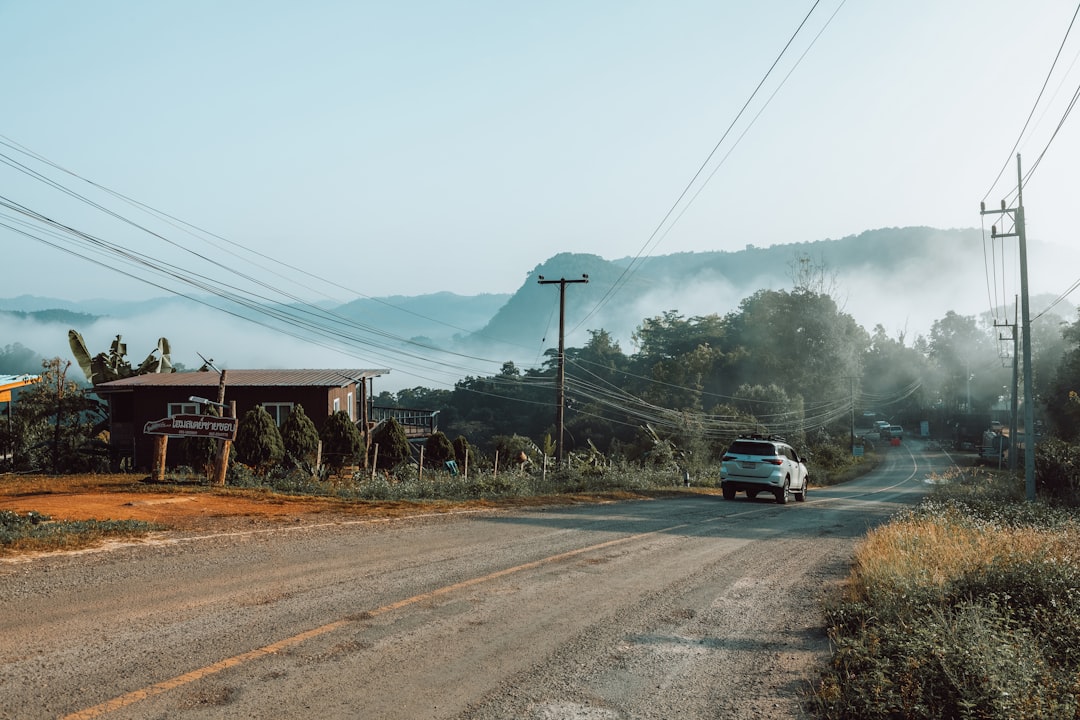
The ride from Chiang Mai to Chiang Rai is about 180 kilometers, and you have two main route options. Highway 118 is the direct route: four lanes, well-paved, fast, and frankly a bit boring. You can knock it out in under three hours. It’s the route the buses take, and if you just want to get there, it’s fine. But if you’re on a motorcycle and the whole point is the ride, take Route 1090 via Phrao instead.
Route 1090 cuts northeast from Chiang Mai through Mae Rim, then winds through the mountains via Phrao before rejoining Highway 118 closer to Chiang Rai. The road is two lanes for most of its length, with sweeping curves through forested hills and small villages. It’s not a technical riding road in the way that the Mae Hong Son Loop is, but it’s genuinely scenic and far less traffic. On a clear day between November and February, this is one of the most pleasant half-day rides in Northern Thailand. Allow four to five hours with stops.
Road conditions as of my last ride: Highway 118 is in excellent condition throughout. Route 1090 has occasional patchy sections between Phrao and the junction with 118, especially after the rainy season, but nothing that would stop a standard road bike. Fuel is available in Phrao and at several PTT stations along 118. If you’re renting a bike in Chiang Mai, most rental shops are fine with you taking it to Chiang Rai as long as you tell them. Just make sure your International Driving Permit is the 1968 Vienna Convention version, because Thailand recognizes both the 1949 and 1968 conventions but police in northern Thailand are increasingly strict about documentation, especially at checkpoints between Chiang Mai and Chiang Rai.
Overnight Buses from Bangkok
If you’re coming from Bangkok, the overnight bus is the budget option. The journey takes about 12 to 13 hours, departing from Mo Chit Bus Terminal in the evening and arriving at Chiang Rai’s bus station near the old airport road in the morning. Greenbus and Sombat Tour both run this route, and Greenbus offers a VIP class with wider seats and fewer rows that I’d recommend for the price difference (around 600 to 900 baht depending on class). The bus is cold. Bring a jacket or a sarong to use as a blanket.
The alternative is the overnight train from Bangkok to Chiang Mai (13 to 14 hours on a sleeper berth), then a three-hour bus or minivan from Chiang Mai to Chiang Rai. This is more comfortable if you sleep poorly on buses, and the train is one of the genuinely good travel experiences in Thailand. But it adds a transfer and a few hours to your total travel time.
Flights from KL, Singapore, and Bangkok
Chiang Rai International Airport (CEI) is small but well-connected for its size. Thai Airways, AirAsia, and Bangkok Airways all run flights from Bangkok (about 1.5 hours). AirAsia also flies direct from Kuala Lumpur and Singapore, which makes Chiang Rai one of the easiest Northern Thailand destinations to reach if you’re based in Malaysia or Singapore. I’ve flown in from KL on AirAsia and the flight was straightforward, under three hours, and the airport is only about 8 kilometers from the city center. A grab from the airport to the Clock Tower area costs around 150 to 200 baht.
My honest take: if you’re short on time, fly. If you have time and want the ride, come from Chiang Mai on Route 1090. If you’re on a tight budget, the overnight bus from Bangkok is perfectly serviceable.
Where to Stay in Chiang Rai
Chiang Rai is compact enough that your neighborhood choice matters less than in a city like Bangkok, but it still affects your experience. Here’s how I’d break down the three main areas.
Near the Clock Tower (City Center)
The Clock Tower is Chiang Rai’s geographic and social center, and staying within a few blocks of it puts you within walking distance of the night bazaar, the Saturday Walking Street, and dozens of restaurants and cafes. This is where most travelers end up, and for good reason. The downside is noise and the fact that you’re in the most tourist-dense part of town. Budget guesthouses start around 300 to 500 baht per night, and mid-range hotels run 800 to 1,500 baht. I’ve stayed at several guesthouses in this area and the quality varies wildly, so check recent reviews.
Out Toward the White Temple
Wat Rong Khun (the White Temple) is about 13 kilometers south of the city center, and staying out in this direction means more space, quieter surroundings, and closer access to Singha Park and the southern day-trip routes. There are a few resorts and guesthouses along the road between the city and the temple, and prices are comparable to or slightly lower than the city center. The trade-off is that you’ll need transport to get into town for the night bazaar and restaurants. If you have a motorcycle, this is actually my preferred option: you get a quieter base and easy access to the countryside rides.
The Riverside and Nimmanhaemin-Style Area
Chiang Rai has a smaller version of Chiang Mai’s Nimmanhaemin area along the Kok River, with a growing number of boutique cafes, craft shops, and design-forward guesthouses. It’s quieter than the Clock Tower area but still walkable to restaurants, and the riverside setting is genuinely pleasant in the evenings. This is where I’d stay for a mid-range budget of 1,000 to 2,000 baht if you want something with character rather than a concrete box near the bus station.
Things to Do in Chiang Rai: What’s Actually Worth Your Time
Chiang Rai’s attractions are spread across the city and the surrounding countryside, and some are absolutely worth your time while others you can skip without regret. Here’s my honest assessment after multiple visits.
The White Temple (Wat Rong Khun): Touristy but Worth Timing Right
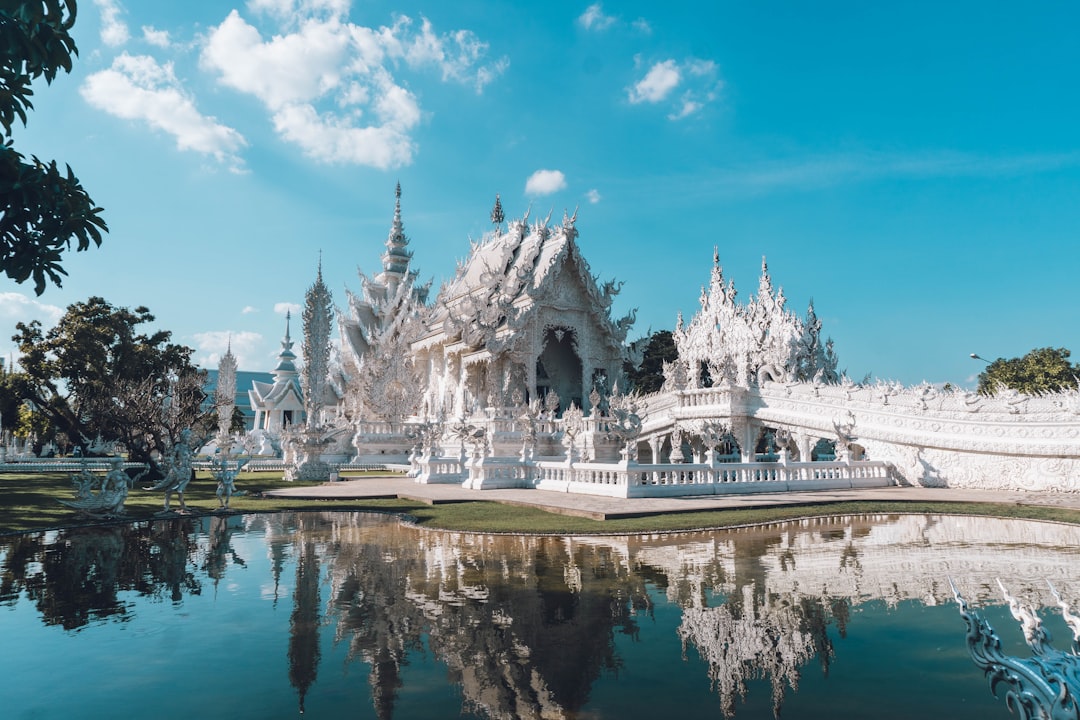
Let’s be clear: the White Temple is the most touristy attraction in Chiang Rai. Tour buses arrive in waves, and between 10 AM and 3 PM the grounds are packed with selfie-taking crowds and tour guides with clipboards. But the temple itself is genuinely extraordinary. It’s not ancient. The artist Chalermchai Kositpipat began the project in 1997, rebuilding a dilapidated temple into a contemporary art installation that uses Buddhist iconography to comment on modern culture, consumerism, and desire. The interior murals include pop culture references ranging from Michael Jackson to Spider-Man to the Twin Towers, woven into traditional Buddhist imagery of the cycle of rebirth.
The key is timing. Go at 8 AM when it opens, or go after 4 PM when the tour buses leave. I went at 8 AM on a weekday in January and had the grounds nearly to myself for the first 45 minutes. The light is also better in the early morning for photographs. Entry is 100 baht for foreigners. Dress modestly: shoulders and knees covered, no flip-flops. The temple closes at 5 PM, and the golden restroom building (yes, that’s a thing) is worth a quick look for the sheer absurdity of it.
The Blue Temple (Wat Rong Suea Chang)
Less famous than the White Temple but, in some ways, more striking. The Blue Temple uses deep indigo and sapphire blue throughout, with a large white Buddha statue inside and intricate murals that blend traditional Lanna motifs with modern art. It’s smaller than the White Temple and usually less crowded, though it’s gaining popularity. It’s located about 4 kilometers northwest of the city center, easily reachable by motorcycle or songthaew. Entry is free, though donations are appreciated. The interior is the main draw: the blue and gold contrast is genuinely beautiful in person in a way that photos don’t fully capture.
Baan Dam (The Black House)
Baan Dam is the work of the late artist Thawan Duchanee, and it’s the dark counterpart to the White Temple. Rather than a single building, it’s a complex of about 40 wooden structures scattered across a wooded property, filled with animal bones, skins, horns, and dark-lacquered furniture. Some people find it macabre. I found it fascinating and unsettling in a way that few tourist attractions manage to be. It forces you to sit with the relationship between beauty, death, and Buddhist impermanence in a way that a pretty temple doesn’t.
Baan Dam is about 15 kilometers north of the city center, on the road toward Mae Sai. Entry is free. Go in the morning to avoid the tour bus crowds and because the light filtering through the trees makes the whole compound feel more atmospheric. Allow about an hour to wander through the main buildings.
Singha Park
Singha Park is a large agricultural and adventure park about 15 kilometers from the city, run by the Boon Rawd Brewery (the Singha beer company). It has tea plantations, fruit orchards, cycling trails, zip lines, and a restaurant overlooking the hills. It’s a mixed bag: the zip lines and adventure activities feel a bit corporate, but the tea plantation walks and the landscape views are genuinely nice, especially in the early morning or late afternoon. If you have a motorcycle, the ride out there is pleasant, and the park makes a good stop on a loop that includes the White Temple and the hot springs at Mae Kha Nong.
The Night Bazaar and Saturday Walking Street
Chiang Rai’s night bazaar runs every night and is smaller, more manageable, and (in my opinion) more enjoyable than Chiang Mai’s massive night markets. You’ll find food stalls, clothing, handicrafts, and live music in a compact area near the Clock Tower. The Saturday Walking Street (Tard Muan Chaiwiwat) is a separate market that runs only on Saturday evenings, stretching several blocks with a more local feel and better food. I’ve returned to specific stalls at the Saturday market more than once, which is something I rarely do.
What I’d skip: the “Hill Tribe Museum” near the Clock Tower feels dated and surface-level. If you want to understand hill tribe culture, go to the villages themselves or visit a community-based tourism project. Also, the long-neck Karen (Padaung) photo-op villages that some tours offer are ethically problematic. The brass rings are a tourist attraction staged for outsiders, not a living cultural tradition. I’d avoid these entirely.
Eating in Chiang Rai: Northern Thai Food You Won’t Find in Bangkok
Northern Thai food, or Lanna cuisine, is one of the most underappreciated regional food traditions in Southeast Asia. It’s distinct from central Thai food in ways that go beyond spice level: the flavor profile is earthier, more bitter, more herbal, and built around sticky rice rather than jasmine rice. Pork features heavily. Curries are thicker and less coconut-heavy. And the influence of neighboring Burma, Laos, and the KMT Chinese communities means you’ll find dishes in Chiang Rai that simply don’t exist in Bangkok.
Khao Soi: Every Shop Is Different
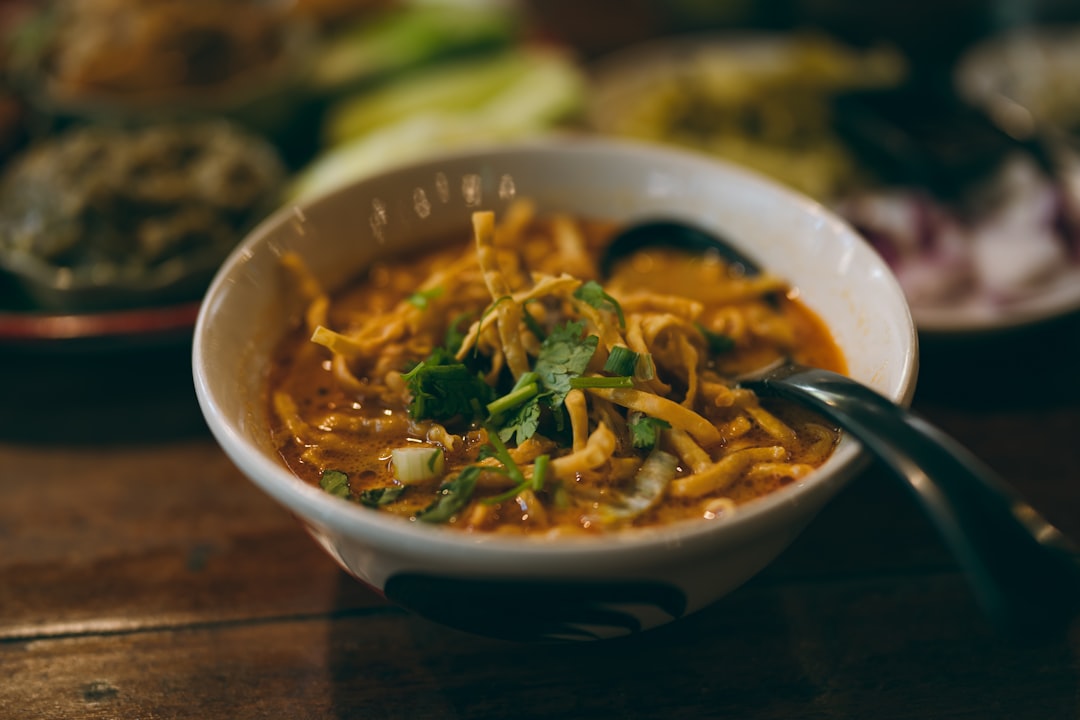
Khao Soi is the dish most people associate with Northern Thailand, and it’s the one I seek out first every time I arrive. It’s a coconut curry noodle soup with soft egg noodles in a rich, slightly sweet broth, topped with crispy fried noodles, pickled cabbage, shallots, and lime. The thing that surprised me is how much variation exists between shops. Some versions are rich and creamy, almost like a massaman. Others are lighter, more brothy, with a sharper chili edge. The Khao Soi at the night bazaar food court is decent, but the best I’ve had in Chiang Rai was at a small shop near the old clock tower that I stumbled into on a rainy afternoon. The point is: don’t eat it once and decide you’ve had it. Try it at three different places.
Nam Ngiao: The Noodle Soup That Defines the Border
Nam Ngiao is a noodle soup that’s specific to the Lanna and Shan cultural sphere, and it’s a must-try if you’re in Chiang Rai. The broth is tomato-based, tangy and slightly spicy, with pork or beef, rice noodles, and fresh herbs. The tomato gives it a reddish color and a tartness that you don’t find in other Thai noodle soups. It’s a dish that shows the connection between Northern Thailand and the Shan communities across the border in Myanmar. I’ve had versions in Chiang Rai that tasted almost identical to what I later ate in a Shan village near Hsipaw in Myanmar. If you see it on a menu, order it.
Sai Oua and Lanna Sausage Culture
Sai Oua is Northern Thai sausage, and it’s one of the best things you can eat in Chiang Rai. It’s a pork sausage packed with lemongrass, galangal, kaffir lime leaves, turmeric, and dried chili, grilled over charcoal until the casing is blistered. The flavor is aromatic and bright in a way that central Thai sausages aren’t. You’ll find it at market stalls, at the night bazaar, and at small roadside restaurants throughout the city. Eat it with sticky rice and a side of nam prik (chili dip). It’s the kind of food that makes you understand why people stay in Northern Thailand.
Night Market Food Stalls I Return To
At the Saturday Walking Street, I keep coming back to a few specific stalls: the grilled pork skewer vendor near the eastern end (charcoal-grilled, slightly sweet, absurdly cheap at about 10 baht per stick), the woman selling Sai Oua and Nam Ngiao together (she’s there most Saturdays), and the fresh spring roll stall that hand-rolls each order. At the regular night bazaar, the Khao Soi stall near the center food court is reliable, and there’s a Kanom Jeen Nam Njiaow (rice noodles with Nam Ngiao broth) stall on the south side that’s worth seeking out.
The cultural context matters here. Lanna cuisine developed in a cooler climate than central Thailand, with different agricultural products and strong influence from neighboring cultures. The use of turmeric (imported from Indian and Mon culinary traditions), the prominence of pork (historical Buddhist reluctance to slaughter large animals meant pork was the primary meat), and the reliance on sticky rice (which grows better in the highland climate than jasmine rice) all tell a story about this region’s history and geography. Eating in Chiang Rai isn’t just a culinary experience, it’s a way of understanding where you are.
Day Trips and the Road North: Mae Salong, the Golden Triangle, and Beyond
This is where Chiang Rai really shines as a base. The day-trip options from here are some of the best in Northern Thailand, especially if you have wheels. I’ll cover the two most rewarding routes and then talk about staging the Mae Hong Son Loop from Chiang Rai instead of Chiang Mai.
The Ride to Mae Salong (Santikhiri)
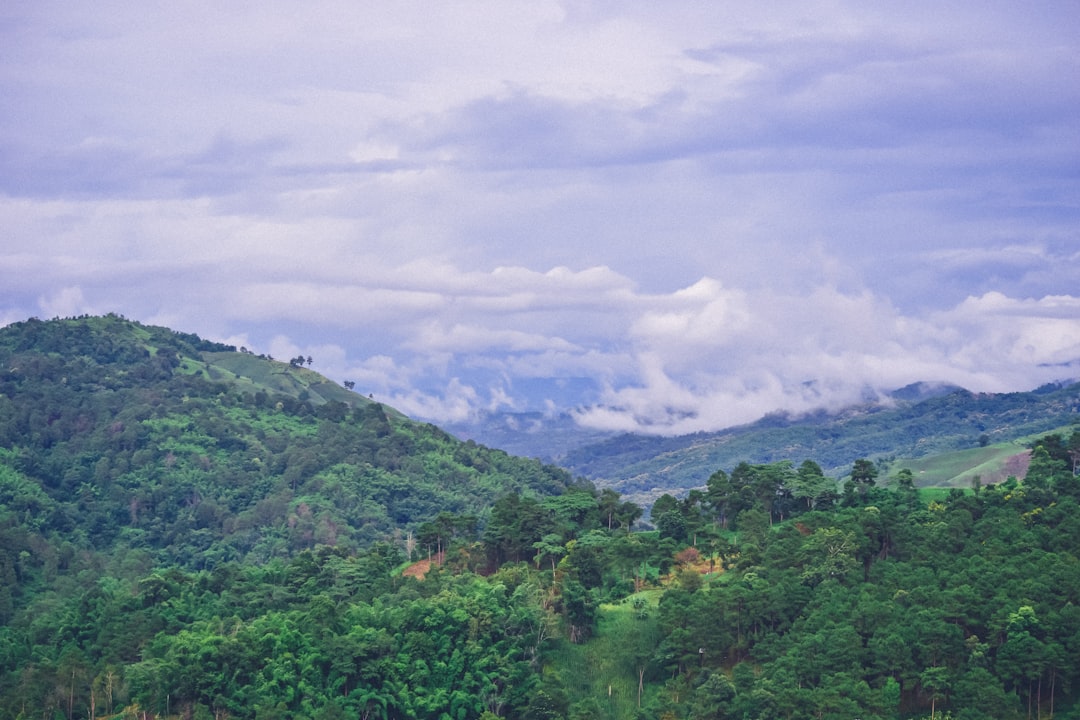
Mae Salong, also known as Santikhiri, is a village in the hills about 65 kilometers north of Chiang Rai, and the ride there is one of the best half-day trips in the region. The village was settled by KMT (Kuomintang) soldiers who fled China after the Communist victory in 1949, eventually relocating to Northern Thailand in the 1960s and 1970s. Today, it’s a Chinese village in the Thai hills, with tea plantations, Yunnanese Chinese food, and a bilingual culture that feels unlike anywhere else in Thailand.
The road to Mae Salong from Chiang Rai goes north on Route 1 toward Mae Sai, then turns west at a junction near the 30-kilometer mark. The final 15 kilometers climb through a series of switchbacks up to about 1,300 meters elevation. The road is paved but narrow, with tight curves that demand concentration. In the wet season (June through October), there can be mud and reduced visibility, so ride carefully and check conditions before setting out. In the cool season (November through February), the air is crisp, the tea terraces are green, and the temperature drops noticeably as you climb.
Once in Mae Salong, the main activities are walking through the tea plantations, visiting tea shops where you can taste oolong and Assam varieties grown right there, and eating Yunnanese food that you won’t find elsewhere in Thailand. The village has a small market, a few guesthouses, and a viewpoint looking out over the valley. I’d recommend spending at least half a day here. If you have time, stay overnight: the village is quiet in the evening after the day-trip buses leave, and the morning mist over the tea terraces is worth the extra night.
The Golden Triangle
The Golden Triangle is the point where the Mekong River meets the borders of Thailand, Myanmar, and Laos. Historically, it was the center of the opium trade that defined this region for over a century. Today, it’s a tourist site with a viewpoint, a boat pier, and the Hall of Opium museum. The museum is actually excellent: it covers the history of the opium trade, its social and economic impact on the region, the role of the KMT armies, and the eventual eradication efforts. I expected a tourist trap and found a genuinely informative and well-curated museum.
The drive from Chiang Rai to the Golden Triangle is about 60 kilometers north on Route 1, then east toward Sop Ruak. The road is in good condition, mostly flat, and an easy ride. You can combine it with a visit to Mae Sai (Thailand’s northernmost town, right on the Myanmar border) for a full-day loop. In Mae Sai, there’s a border market where you can buy goods from Myanmar, though the quality and authenticity vary. The border crossing into Myanmar is possible for a day-trip visa, but check current regulations, as they change frequently.
Staging the Mae Hong Son Loop from Chiang Rai
Most riders start the Mae Hong Son Loop from Chiang Mai, heading west through Mae Sariang or north through Pai. But staging it from Chiang Rai gives you a different and, in my experience, more rewarding route. From Chiang Rai, you ride west on Route 1090 to Phrao, then continue to Chiang Mai, then take Route 1095 north to Pai. This adds the scenic Route 1090 ride to the beginning of your loop and lets you warm up on gentler roads before hitting the tight switchbacks of the Pai approach.
The Mae Hong Son Loop deserves its own full guide, but here’s what I wish I’d known when I first rode it from Chiang Rai: Allow at least five days for the loop, including a rest day in Mae Hong Son town. The stretch between Pai and Mae Hong Son has over 1,800 curves, and riding it tired or in rain is dangerous. Fuel up whenever you see a station, because there are long stretches between them in the mountains. The best riding season is November through February, when the air is cool, the roads are dry, and the mountain views are clear. In the wet season, roads can be slippery and occasionally blocked by minor landslides.
If you’re planning a longer ride through Northern Thailand and into the broader region, Chiang Rai is an excellent staging point. It sits at the intersection of routes toward the Golden Triangle, the Mae Hong Son Loop, and the northern crossings into Laos (via Chiang Khong and Huay Xai) and Myanmar (via Mae Sai and Tachilek). If you’re building a multi-country route through the region, my guide to a Thailand, Cambodia, Laos, and Vietnam itinerary covers the broader logistics of linking these routes together over three to six weeks.
And if you’re interested in another side of Thailand entirely, one that most travelers skip entirely, check out my guide to things to do in Yala in the Deep South. It’s a completely different Thailand: Malay-Muslim culture, a planned city with a radial layout, and a frontier quality that echoes what I love about Chiang Rai but in a very different cultural context.
Practical Tips for Riding in Chiang Rai Province
A few things I’ve learned the hard way about riding in this region:
- Fuel: PTT stations are the most reliable, and they’re spaced along all major routes. In remote areas (especially the Mae Salong road and the Golden Triangle back roads), fill up whenever you can. Running out of fuel in the hills is not fun.
- Rentals: Most bike rentals in Chiang Rai are smaller operations compared to Chiang Mai. You’ll find Honda Clicks, PCXs, and occasionally CRF250s. Prices range from 200 to 500 baht per day depending on the bike. Inspect the bike carefully, photograph existing damage, and make sure you get the registration papers, as you’ll need them at checkpoints.
- Checkpoints: Police checkpoints are common on highways in Northern Thailand, especially between Chiang Rai and Mae Sai, and on the road to the Golden Triangle. They’re mostly looking for drugs and undocumented migrants, but they will check your license. Carry your IDP and passport at all times when riding.
- Weather: The cool season (November to February) is the best time to ride, with daytime temperatures of 20 to 28 degrees and low humidity. March and April are hot season, when temperatures can hit 40 degrees. The rainy season runs roughly June through October, and while riding is still possible, mountain roads can be slick and visibility reduced.
- Helmets: Thai law requires helmets, and enforcement in Chiang Rai is more consistent than it used to be. Wear a proper helmet, not the flimsy half-shell loaners that some rental shops provide. If you ride regularly, consider bringing your own.
A Few Final Thoughts on Chiang Rai
Chiang Rai isn’t trying to be Chiang Mai, and that’s exactly what makes it worth visiting. It’s quieter, less polished, and closer to the borderlands that define this part of Thailand. The food has depth that central Thai cuisine doesn’t. The riding roads are excellent and uncrowded. The White Temple, for all its tourist-trap reputation, is a genuinely provocative piece of contemporary art. And the day trips to Mae Salong and the Golden Triangle give you access to histories and cultures that most travelers to Thailand never encounter.
If you’re staging a Northern Thailand trip, especially on a motorcycle, I’d genuinely recommend starting in Chiang Rai rather than Chiang Mai. You get a calmer base, better access to the northern routes, and a city that still feels like it belongs to the people who live there. Have you been to Chiang Rai, or are you planning a trip? Drop your questions and tips in the comments. I’d love to hear your experience, especially if you found a road or a restaurant I missed.
Frequently Asked Questions
How many days do I need in Chiang Rai?
Two to three days covers the city’s main attractions (White Temple, Blue Temple, Black House, night bazaar). Add two more days if you want to do day trips to Mae Salong and the Golden Triangle. If you’re staging a motorcycle loop from Chiang Rai, allow at least five to seven days total.
What is the best way to get from Chiang Mai to Chiang Rai?
By motorcycle, take Route 1090 via Phrao for a scenic four to five hour ride. Highway 118 is the faster, more direct route. Buses take about three hours and run frequently. Flights from Bangkok take about 1.5 hours, and AirAsia flies direct from Kuala Lumpur and Singapore.
Is the White Temple in Chiang Rai worth visiting?
Yes, but timing matters. Go at 8 AM when it opens or after 4 PM when tour buses leave. The temple is a contemporary art installation, not an ancient temple, and the interior murals blend Buddhist imagery with pop culture references. Entry is 100 baht for foreigners.
What is the best time of year to visit Chiang Rai?
November through February is the cool season, with comfortable temperatures and clear skies. This is the best time for motorcycle riding and outdoor activities. March and April are very hot. The rainy season runs June through October, with occasional road flooding in mountain areas.
Do I need an International Driving Permit to ride a motorcycle in Chiang Rai?
Yes. Thailand recognizes both the 1949 and 1968 International Driving Permits, but the 1968 Vienna Convention version is recommended. Police checkpoints are common on highways in Northern Thailand, and you will be asked to show your license. Carry your IDP, your home license, and passport at all times when riding.