El Nido Palawan Travel Guide: Which Tour Is Worth It?
I have done all four of El Nido’s standard island-hopping tours, and I am going to tell you something most guides will not: they are not all worth your money. Tour A packs the postcard shots but feels like a floating traffic jam by 10 AM. Tour C has the most dramatic scenery and the best snorkeling, and most first-timers skip it because the marketing pushes A harder. Tour B is the quiet middle child. Tour D is where you go when you want lagoons without sharing them with forty strangers.
This is an El Nido Palawan travel guide for people who want a straight answer, not brochure copy. I will break down exactly what each tour delivers, which stops are worth it, which feel like a waste of a morning, and how to piece together a trip that actually lives up to the photos. I will also cover the logistics that matter: getting there from Puerto Princesa, what food costs, where to base yourself, and when the weather cooperates.
The History Of El Nido
El Nido’s story goes deeper than tourism. The limestone karst formations you see across Bacuit Bay are among the oldest rocks in the Philippines, dating back roughly 250 to 270 million years to the Permian period. Long before boats of snorkelers showed up, this coastline was shaped by geological forces on a scale that makes human history feel like a footnote.
The first known settlement here was a Tagbanua village called Talindak, established in the 16th century in what is now Barangay Aberawan. The word means “a chance appearance in a place,” reflecting the belief that the area was enchanted and sometimes could not be found. In the 17th century, Cuyonons from Cuyo Island began migrating to mainland Palawan aboard pangko boats, traditional vessels built from banaba wood held together not by nails but by tree resin, to plant rice when their island’s farmland could no longer feed a growing population.
The Spanish called the settlement Bacuit, and it remained a barrio of the municipality of Taytay until 1916, when it became its own municipality. In 1954, the town was renamed El Nido, Spanish for “the nest,” after the edible swiftlet nests harvested from the limestone caves, which for centuries were a valuable trade commodity shipped to China for bird’s nest soup. That name still tells you something about what makes this place distinctive: the cliffs are not just scenery, they are a living ecosystem.
Today, the Cuyonon language is still widely spoken in El Nido, and the local government has made efforts to preserve this heritage. A replica of the traditional pangko boat sits in Sibaltan as a museum, and the Balay Cuyonon, a reconstruction of a traditional bamboo-and-thatch Cuyonon house, is one of the few cultural sites most visitors never see because it is well outside the island-hopping circuit. If you have a spare afternoon, it is worth the trip to Sibaltan to understand what El Nido was before the backpackers arrived.
Best Things To Do In El Nido
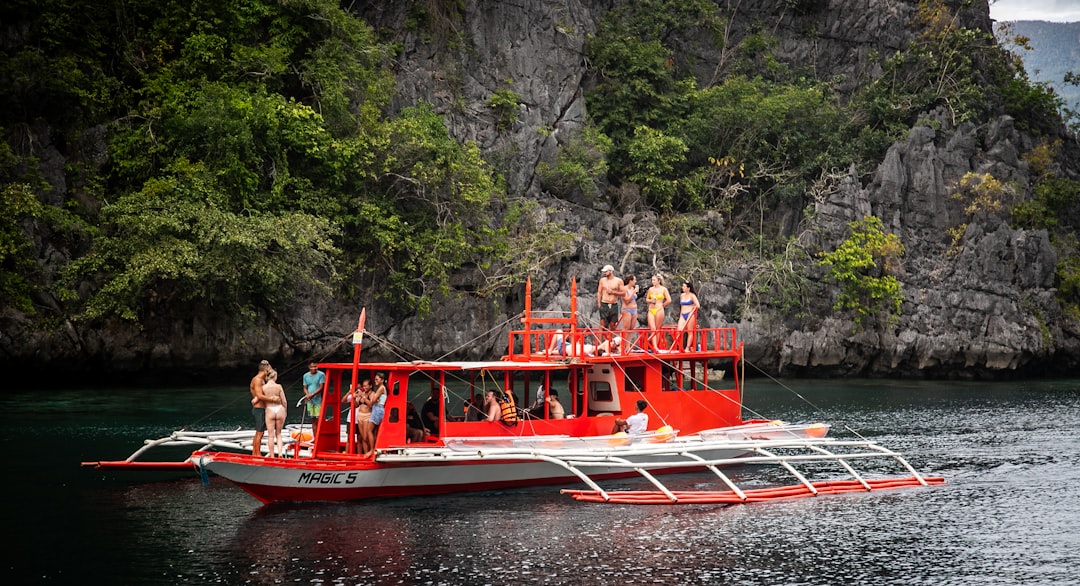
The island-hopping tours are the main event, and choosing the right combination is the single most important decision you will make in El Nido. You cannot do combination tours anymore (the old “Tour A and C in one day” packages are no longer permitted), so each tour is a full-day commitment. That means if you have four days, you are choosing two or three tours, not all four. Here is my honest take on each one, based on having done them all.
Before diving in, the practical baseline: every tour requires the Eco-Tourism Development Fee (ETDF), which is ₱400 for non-Palawan residents as of 2026, paid once and valid for 10 days. Keep your receipt and show it for every tour. Some stops charge additional entrance fees (Big Lagoon and Small Lagoon each add about ₱200, Matinloc Shrine about ₱200), and these are not included in the tour price. Bring small bills for everything.
Tour A: Big Lagoon, Secret Lagoon, Shimizu Island, Seven Commandos Beach
Tour A is the most popular tour in El Nido, and that is both its strength and its weakness. It is the one every hostel, hotel, and walk-in booking desk pushes hardest, because it delivers the images that made El Nido famous: towering limestone walls rising from jade-green water, kayaks gliding into hidden lagoons, and a beach that looks like a screensaver.
Big Lagoon is the headline stop, and it is genuinely stunning. You enter through a narrow gap in the cliffs that opens into a long, narrow channel of impossibly clear water between vertical karst walls. You explore by kayak (rental runs about ₱300 per kayak, not included), and on a calm morning the reflections on the water are surreal. The problem is that by mid-morning, there can be fifteen to twenty bangkas anchored at the entrance, all offloading kayaks at once. The lagoon is big enough that you can paddle away from the crowd if you push to the far end, but the entry point feels like a boat parking lot during peak season. The ₱200 entrance fee (a premium lagoon user fee introduced to manage overcrowding through limited time slots) helps somewhat, but it does not eliminate the congestion.
Secret Lagoon is a small pool hidden behind a rock wall, accessed through a narrow crevice you have to swim or wade through. It is a cool concept, but the pool itself is small, shallow, and dark. When three boats arrive at the same time, you are standing in shoulder-to-shoulder water waiting for your turn to squeeze through the gap. Go early or skip it mentally. It is not the highlight the brochure makes it out to be.
Shimizu Island is the lunch and snorkeling stop. The reef here is decent, with reasonable coral and fish life, but it has taken a beating from years of anchoring. Seven Commandos Beach is the final stop, a strip of white sand with a view back toward the Bacuit Bay cliffs. It is a nice place to swim and decompress after a full day on the water, but it is not dramatic.
My honest verdict on Tour A: do it if this is your only tour or your first tour. Big Lagoon alone justifies the ₱1,200 to ₱1,500 joiner price. But manage your expectations on Secret Lagoon, and if you are doing multiple tours, do not put A first. It sets a crowded baseline that Tour C or D will pleasantly surprise you by breaking.
Tour B: Snake Island, Entalula Beach, Cudugnon Cave, Cathedral Cave, Pinagbuyutan Island
Tour B is the tour nobody talks about, and that is exactly why some travellers end up loving it. It gets fewer boats, smaller groups, and has a completely different character from the lagoon-focused A and D. This is the caves-and-coves tour, and it appeals more to people who want to explore than to people who want to float in turquoise water.
Snake Island is the standout. It is a natural sandbar that curves between two islands in an S-shape, and at low tide you can walk the entire length with water on both sides. The sandbar is temporary, it shifts with the tides and seasons, so what you see depends on when you arrive. On a good day it is one of the most photogenic natural features in El Nido, and because Tour B gets less traffic, you might actually have space to enjoy it.
Cudugnon Cave is a shallow cave with archaeological significance, human remains and artifacts dating back centuries have been found here. It is not deep or dramatic, but it has a sense of history that the other tours lack. Cathedral Cave is a large sea cave you view from the boat, an impressive natural archway in the limestone that you cannot enter but is worth the pass-by. Entalula Beach is a small, well-maintained beach cove that some operators use for lunch. Pinagbuyutan Island is the final beach stop, a classic deserted-island look with a single towering coconut palm.
My honest verdict on Tour B: worth doing if you have already done A or C and want variety, or if you are the type of traveller who gets bored sitting on a beach. It is not the tour I would pick if I only had time for one. The snorkeling is weaker than C, and none of the stops deliver the “wow” that Big Lagoon or Hidden Beach does. But it is quiet, and in El Nido, quiet has real value.
Tour C: Hidden Beach, Secret Beach, Matinloc Shrine, Helicopter Island, Talisay Beach
Tour C is the best tour in El Nido, and I will defend that position. If I could only do one tour, this would be it. It has the most dramatic scenery, the best snorkeling, and the most varied stops of the four. The trade-off is that it involves more swimming and physical effort than the others, so it is not the lazy-day-on-a-boat experience.
Hidden Beach is the headline, and it lives up to the name. You swim through a gap in the rocks to reach a small beach enclosed by towering limestone walls on three sides. The water is deep and clear, and the beach itself feels genuinely hidden in a way that Secret Lagoon on Tour A does not. When the boat drops you off, you swim about fifty meters to the entrance, which naturally filters out the casual swimmers and keeps the crowd thinner than Big Lagoon. On a calm day, this is the most atmospheric stop in El Nido.
Secret Beach is accessed through a narrow swim-through in the rock wall, and this is where Tour C earns its “adventure” reputation. You swim through a tight crevice into a hidden cove enclosed entirely by cliffs, with a small beach and open sky above. The swim-through is short but requires a degree of confidence in the water. If the swell is up, your boat guide will assess conditions and may skip it. When I did Tour C, some people on my boat opted out and waited on the bangka, which is a legitimate choice if you are not a comfortable swimmer.
Matinloc Shrine is the cultural stop. It is a religious shrine built on a narrow strip of land between two limestone walls, with a path leading up to a viewpoint over Bacuit Bay. The shrine itself is modest, but the viewpoint at the top is one of the best panoramic looks at the archipelago you will get without chartering a private boat. The entrance fee is about ₱200 if you want to climb to the viewpoint.
Helicopter Island (officially called Dilumacad Island) is named for its shape, which does resemble a helicopter from a certain angle. It is a solid snorkeling stop with better coral than Shimizu Island on Tour A. Talisay Beach is the lunch stop, a small beach with decent shade and clear water.
My honest verdict on Tour C: this is the tour I would recommend to anyone doing two tours. The scenery is the most varied, the snorkeling is the best, and Hidden Beach alone is worth the ₱1,200 to ₱1,800 price. The only reason to skip it is if you are not comfortable swimming in open water. If that is you, Tour A is the safer pick.
Tour D: Cadlao Lagoon, Small Lagoon, Paradise Beach, Pasandigan Cove
Tour D is the anti-Tour A. It covers the northern reaches of the archipelago near Cadlao Island, gets the fewest boats of the four standard tours, and is the one repeat visitors tend to love most. If you have already done A and C and want a third tour, D is the obvious choice.
Cadlao Lagoon is a large, calm lagoon on the leeward side of Cadlao Island. The water is glassy in the morning, and because Tour D gets a fraction of the traffic that Big Lagoon gets, you can actually hear birds and wind instead of outboard motors. You explore by kayak (about ₱600 for two kayaks here, since there are two lagoons), and the paddling is gentle enough for beginners. The limestone walls here are some of the tallest in the archipelago, and the sheer scale is humbling when you are the only kayak in the water.
Small Lagoon is the secondary lagoon stop. It is smaller and more intimate than Big Lagoon on Tour A, and since Big Lagoon and Small Lagoon are no longer allowed on the same tour (a management decision to spread the crowds), Tour D is now the only standard tour that includes it. The entrance fee is about ₱200, the same premium lagoon user fee system as Big Lagoon. Small Lagoon is a tighter, more enclosed space, and paddling through the narrow entrance feels more like discovery than the wide-open Big Lagoon channel.
Paradise Beach and Pasandigan Cove are the beach stops. Paradise Beach is a decent strip of sand on Cadlao Island, though it is less dramatic than the beaches on Tour A or C. Pasandigan Cove is a shallow, sheltered spot good for swimming and snorkeling. Neither is going to blow you away if you have already done Tour C, but the overall quiet of Tour D is the point.
My honest verdict on Tour D: the best tour for a third day, and the best tour for anyone who explicitly wants to avoid crowds. It is not the tour to pick if you only have time for one. The scenery is beautiful but less dramatic than C, and there is no single stop that rivals Hidden Beach. But if you have been worn down by the crowds on Tour A and want to remember what quiet tropical water sounds like, D delivers.
Beaches & Islands: Nacpan Beach And Inland Options
Not everything worth doing in El Nido involves a bangka. Nacpan Beach, about 17 kilometers north of town, is one of the finest beaches in the Philippines. It is a four-kilometer stretch of golden sand with twin hills at the northern end, and the drive takes 30 to 45 minutes by motorbike or tricycle on a partly unpaved road. Most people do Nacpan on a rest day between island-hopping tours. If you are basing yourself in town, it is a half-day trip. If you want to stay there, a handful of mid-range resorts and guesthouses line the beach.
Inland, the Nagkalit-Kalit Waterfalls and the Nacpan-Calitian twin beach trek are options for anyone who wants to trade salt water for jungle. These are not well-marked, and you will need a local guide or a motorbike and a sense of adventure. They are worth mentioning because most travellers never leave the coast, and if you have an extra day, the interior has a rawness that the tour circuit does not.
Cultural Experiences: Sibaltan And The Pangko Museum
If you want cultural context beyond the island-hopping circuit, head to Barangay Sibaltan, about 30 minutes east of El Nido town. This is where the Balay Cuyonon Museum and the Pangko Maritime Museum are located. The Balay Cuyonon is a reconstruction of a traditional Cuyonon house, built from bamboo and nipa thatch, and the Pangko Museum is a full-scale replica of the traditional Cuyonon boat, built in 2014 by the last living carpenter in El Nido who knew how to construct one. Few tourists make it here, which is a shame, because this is where you understand the human story behind the landscape.
Where & What To Eat And Drink In El Nido

El Nido’s food scene has three real tiers, and knowing the difference saves you money and disappointment. The beachfront restaurants on the main strip carry a sunset premium that can double or triple the price of a meal you could get two streets inland. The trick is to eat local for two meals and treat yourself for one.
At the bottom tier, carinderias (Filipino cafeteria-style eateries) serve rice and viands for ₱80 to ₱180 per plate. You point at steam trays of adobo, sinigang, pinakbet, or grilled bangus and get a full plate with rice. These cluster around the public market and the side streets off Calle Hama. This is where the locals eat, and this is where you should eat breakfast and lunch on tour days. A realistic daily food budget eating carinderia meals is ₱350 to ₱500 per person.
In the evening, the main street transforms into an open-air BBQ market starting around 5 PM. Vendors grill fresh squid, tuna belly, tiger prawns, and whole fish over charcoal, and you eat at plastic tables under string lights. Grilled seafood here runs about ₱100 to ₱150 per 100 grams, and a full seafood plate costs ₱400 to ₱600. This is one of the best-value dinners in El Nido, and the atmosphere beats sitting in an air-conditioned restaurant.
For sit-down meals, the mid-range runs ₱300 to ₱700 per head. Altrove on the main strip does solid wood-fired pizza and fresh pasta, with an open-air terrace that works for sunset dinners. Café Athena serves Mediterranean plates with ocean-facing windows, a good change after days of grilled fish. UGAT Filipino Kitchen on Calle Hama does heritage-driven Filipino cooking, slow-braised kare-kare and smoky chicken inasal, in a stone-house space under acacia trees. For a special-occasion dinner, Piece of Sky and La Plage are the splurge picks, running ₱700 and up per person.
The coffee scene has improved significantly. Hama Coffee and Neighbors & Nomads are laptop-friendly cafes with decent espresso. A cappuccino runs about ₱220. If you are on a tight budget, local bakeries sell pan de sal (bread rolls) for ₱5 to ₱8 each, a breakfast staple with instant coffee. Fresh coconuts from beach vendors cost ₱50 to ₱80. Fruit shakes run ₱80 to ₱150.
Beer (San Miguel) runs ₱60 to ₱120 depending on where you drink it. If you are planning your overall trip budget, a comfortable daily food spend in El Nido is ₱800 to ₱1,500 per person, mixing carinderia lunches with one decent dinner. If you are backpacking hard, ₱350 to ₱500 covers three carinderia meals and a beer.
Shopping In El Nido
El Nido is not a shopping destination, and that is fine. There are no malls. What you will find is a public market where locals buy fresh fish, produce, and basic supplies, and a scatter of souvenir stalls along the main strip selling pearl jewelry, woven bags, sarongs, and bottled local products. Prices are reasonable but negotiable on the non-food items.
The public market is worth a walk-through even if you are not buying, because it gives you a sense of the town beyond the tourist zone. Fresh fish, dried goods, and produce are on display in the early morning, and the carinderias around the market serve the cheapest food in town. If you want souvenirs, South Sea pearl jewelry is a Palawan specialty, though quality varies enormously and you should buy from established shops, not beach vendors, if you want genuine pearls. Woven buri bags made by local women in Sibaltan are a more authentic and ethical buy, and you can find them at the heritage museums or through community-based tourism initiatives.
Bars & Nightlife In El Nido
El Nido’s nightlife is low-key and that suits the place. This is not Boracay. The after-dark scene centers on a handful of beach bars and restaurants along the main strip and at Town Square, and most places wind down by midnight. The nightly BBQ market on Calle Hama is as much a social scene as a food one, and it is where you will end up most evenings if you are staying in town.
For drinks with a view, AP Kala Beach Bar at Town Square sits right on the water and does good ceviche and cocktails. Happiness Beach Bar and Republica are popular with backpackers for sundowners. A cocktail runs ₱250 to ₱500. If you want something quieter, the beach bars along Corong Corong face west across the bay and are the best spots in El Nido for sunset, with a beer in hand and no soundtrack beyond the water.
There is no club scene to speak of. If late-night drinking is your priority, you are in the wrong town. El Nido is a place where you wake up early for boat tours, and most people are in bed by midnight because the first bangka leaves at 8 AM.
When Is The Best Time To Visit El Nido?
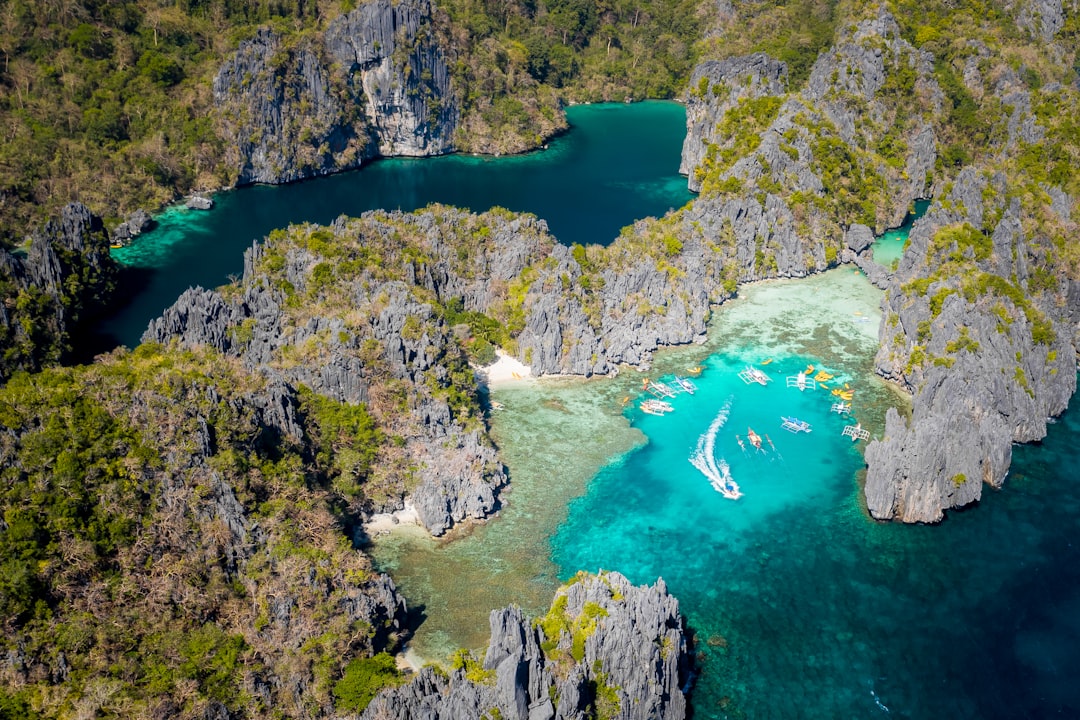
El Nido has two seasons: a dry season from November through April and a wet season from June through October, with May as a transitional month. The dry season is when you want to be here, and the specific window matters more than you might think.
February and March are the standout months. The northeast monsoon (amihan) brings clear skies, calm seas, and the best snorkeling visibility of the year. Bacuit Bay is sheltered enough that even during the dry season’s windier periods, the lagoons stay navigable. This is also peak season, so lagoons fill with boats by mid-morning and accommodation prices are at their highest. The trade-off is worth it: the weather reliability during these months means your tours will actually run.
Mid-November to mid-December is my favorite sweet spot. The rains have eased, the seas have calmed, prices have not spiked yet, and the Christmas crowds have not landed. You get dry-season conditions with shoulder-season crowds. Early December is excellent.
December through January is peak season with peak crowds. Christmas week and Holy Week are the busiest periods of the year, and lagoons become genuinely unpleasant. Avoid these windows if you have any flexibility. March through May is still dry but increasingly hot, with April and May being scorchers. Late May brings the first proper rains as the seasons flip.
June through October is the southwest monsoon (habagat), and this is when tours get cancelled. Palawan’s western coast faces the open sea, and storms bring swells that make island-hopping dangerous. Operators cancel departures routinely, and some resorts close entirely. July and August are the wettest. September and October sit inside peak typhoon season. The upside: lowest prices and no crowds, and the islands are genuinely beautiful in moody grey light. But the core reason to visit, getting on a boat, is compromised. Travel insurance is essential if you travel during this window.
| Period | Weather | Crowds | Prices | Notes |
|---|---|---|---|---|
| Nov to mid-Dec | Dry, improving, 27 to 31C | Low to moderate | Shoulder | Best sweet spot: good weather, fewer crowds |
| Dec to Jan | Dry, 27 to 31C | Peak (Christmas, Holy Week) | Peak | Reliable weather but lagoons packed |
| Feb to Mar | Dry, calm seas, best visibility | High | High | Most reliable weather for island hopping |
| Apr to May | Hot and dry, 30 to 35C | Moderate | Shoulder to high | Good weather but uncomfortably hot by May |
| Jun to Aug | Wet, rough seas, heavy rain | Very low | Lowest | Tour cancellations likely, some resorts close |
| Sep to Oct | Peak typhoon season | Very low | Lowest | Highest risk, avoid for island hopping |
My recommendation: aim for mid-November to mid-December if you want the best balance of weather and solitude. If you want maximum weather reliability and do not mind crowds, February or March. Avoid September and October unless you are on a strict budget and willing to gamble.
How Many Days Do You Need In El Nido?
Four to five days is the sweet spot for El Nido. This gives you two to three island-hopping tours, a day for Nacpan Beach, and a buffer day in case of weather cancellations (which happen even in the dry season). If you only have three days, do two tours and spend the third at Nacpan. If you have a week, you can do all four tours plus inland exploration, but most people start to feel tour fatigue after three consecutive boat days.
Here is the itinerary I would recommend for a four-day trip:
- Day 1: Arrive from Puerto Princesa (5 to 6 hours), settle in, evening BBQ market on Calle Hama.
- Day 2: Tour C (the best overall tour, save the best for your first full day).
- Day 3: Tour A (Big Lagoon is the postcard shot, do it second so the crowds feel less jarring after C).
- Day 4: Nacpan Beach for the morning, or Tour D if you want a third tour and prefer quiet lagoons.
If I had to pick two tours only, I would do C and A. If I had time for three, I would add D. I would skip B unless you have five days and want caves and quiet over scenery.
Where To Stay In El Nido
El Nido has four main accommodation zones, and choosing the right one matters because the town is small but the logistics of getting to the tour pier add up over multiple days. If island hopping is your priority, stay in El Nido Town or Corong Corong. If you want a beach base, look at Lio or Nacpan.
El Nido Town (Poblacion)
El Nido Town is the practical choice. It is walking distance to the tour departure pier, tour operators, restaurants, and the BBQ market. The downside is that the town beach is a boat departure point, not a place you want to swim. The noise level can be high, and the town is gritty in a way that some travellers find charming and others find frustrating. If you are here for the tours and do not care about beachfront accommodation, this is where you stay.
- Budget: Dorm beds from ₱450 to ₱900 (Spin Designer Hostel and Frendz Hostel are well-regarded).
- Mid-range: Private rooms from ₱2,000 to ₱6,000 (Cuna Hotel, H Hotel, South Anchorage Inn).
Corong Corong
Corong Corong is the accommodation sweet spot for most travellers. It is a five-minute tricycle ride (₱50 to ₱80) from the pier, has an actual beach facing west across the bay, and offers the best sunset views in El Nido. The beach is shallow at low tide, but the zone has a calmer, more residential feel than town. This is where mid-range boutique hotels have proliferated in recent years, and it is the area I would choose for a four-day trip.
- Mid-range: ₱2,000 to ₱8,000 per night (Panorama Beach Club, Frangipani El Nido, Maremegmeg Beach Club).
Lio Beach
Lio Beach is the resort zone, about 15 to 20 minutes by tricycle from the town pier, and it is where the airport is located. It has a swimmable beach, the most polished accommodations in El Nido, and a growing restaurant and retail complex. The trade-off is distance from the tour departure point and higher prices. If you are doing daily island-hopping tours from Lio, factor in the tricycle fare and time each morning. If you want a resort-style stay with a real beach and are willing to do one or two tours rather than daily ones, Lio makes sense.
- Mid-range to luxury: ₱4,000 to ₱25,000+ per night (Seda Lio, Cauayan Island Resort, El Nido Resorts Miniloc and Lagen on private islands).
Nacpan Beach
Nacpan Beach is 17 kilometers north of town, 30 to 45 minutes by motorbike on a partly unsealed road. It is one of the most spectacular beaches in the Philippines, but staying here means a ₱600 to ₱800 round-trip tricycle fare to the tour pier each day, and most travellers who base at Nacpan do only one or two tours and spend the rest of their time on the beach. If you want remote, quiet, and beautiful, and island hopping is secondary, Nacpan is the choice.
- Mid-range: ₱2,500 to ₱8,000 per night (beachfront boutique properties and guesthouses).
How Do You Get Around In El Nido?
El Nido town is small enough to walk end to end in fifteen minutes, and most of your getting-around happens on foot or by tricycle (motorcycle with sidecar). Tricycle fares within town are ₱50 to ₱80 per ride. To Corong Corong, expect ₱50 to ₱80. To Lio Beach or the airport, ₱150 to ₱200. To Nacpan Beach, you are looking at ₱300 to ₱400 one way by tricycle, or you can rent a motorbike for about ₱400 to ₱500 per day and ride yourself, which is the better option if you are comfortable on mixed terrain.
Getting to El Nido from Puerto Princesa, the main entry point, is a 260-kilometer journey that takes 5 to 6 hours by shared van or 6 to 7 hours by bus. Shared vans cost ₱600 to ₱800 per person and depart from Puerto Princesa Airport or San Jose Terminal, with hotel drop-off in El Nido town included by most operators. Vans are faster and more convenient than buses, with fewer stops, and they depart roughly every hour from 6 AM to 10 PM. The road is mostly paved but winding in the mountain sections, so if you are prone to motion sickness, take a front seat or consider the bus.
Buses are cheaper at ₱600 to ₱850 per person depending on the class, but take longer and have fewer departure times. Cherry Bus runs the route with both standard air-conditioned and Lazy Boy reclining seat options. The bus is the better choice if you want more legroom, less motion sickness, and do not mind the extra hour.
If you are flying, direct flights to El Nido’s Lio Airport (ENI) are available from Clark, Cebu, and Boracay (Caticlan). As of March 29, 2026, all flights previously operating from Manila to El Nido have shifted to Clark International Airport, so if you are connecting through Manila, you will need to get to Clark first (about two to three hours by road). AirSWIFT, now a subsidiary of Cebu Pacific, operates the El Nido routes. The airport is tiny, you walk off the plane and are out in minutes, and it is a five-minute tricycle ride from Lio Beach or twenty minutes from town. Flying saves you a full day of travel but costs significantly more than the van.
For a wider view of the region, our guide to Manila covers the entry point most travellers use before heading to Palawan, including which terminal you will land at and how to get to the next connection. If you are planning to explore more of the Philippines, the Manila Philippines travel guide breaks down how much time to spend in the capital before flying out to the islands.
Conclusion
El Nido earns its reputation, but only if you choose the right tours. Tour C is the best overall experience in Bacuit Bay, with Hidden Beach and Secret Beach delivering the dramatic, enclosed spaces that make El Nido unlike anywhere else in the Philippines. Tour A is worth doing for Big Lagoon alone, but it is the most crowded and the one where the brochure promise meets the busiest reality. Tour D is the quiet alternative, best as a third tour or for travellers who want lagoons without the crowds. Tour B is the niche pick for caves and solitude, not the one to prioritize if your time is limited.
Four to five days gives you enough time for two or three tours plus a Nacpan Beach day, and staying in Corong Corong puts you close enough to the pier without sacrificing a sunset view. Budget ₱1,800 to ₱2,400 per tour day per person (including the ₱400 eco fee and lagoon entrance fees), ₱350 to ₱500 per day for food if you eat local, and ₱2,000 to ₱8,000 per night for a comfortable mid-range room in Corong Corong. The ETDF receipt is your best friend, keep it in your wallet for all ten days.
Have you been to El Nido? Which tours did you do, and did they live up to the hype? Drop your tips in the comments, I would love to hear your experience and adjust this guide accordingly. And if you are planning a wider Philippines trip, check out the Manila travel guide next, which covers the logistics of getting from the capital to Palawan and beyond.
Frequently Asked Questions
Which El Nido island-hopping tour is the best?
Tour C is the best overall for scenery and snorkeling, with Hidden Beach and Secret Beach as standout stops. Tour A is the most popular and good for first-timers, but Big Lagoon gets very crowded. If you want quiet lagoons, Tour D is the least crowded option.
How much do El Nido island-hopping tours cost in 2026?
Joiner (shared boat) tours cost roughly 1,200 to 1,800 pesos per person depending on the tour. On top of that, the Eco-Tourism Development Fee is 400 pesos (one-time, valid 10 days), and Big Lagoon or Small Lagoon entrance fees add about 200 pesos each. Budget 1,800 to 2,400 pesos per person per tour day.
How do you get from Puerto Princesa to El Nido?
The most common route is by shared van, which takes 5 to 6 hours and costs 600 to 800 pesos per person. Buses are cheaper at 600 to 850 pesos but take 6 to 7 hours. You can also fly directly to Lio Airport from Clark, Cebu, or Boracay.
How many days do you need in El Nido?
Four to five days is the sweet spot. This gives you two to three island-hopping tours, a day to explore Nacpan Beach or the inland waterfalls, and buffer time in case of weather cancellations. You need at least two tours to see the full range of Bacuit Bay’s landscapes.
When is the best time to visit El Nido?
November through April is the dry season and the best time to visit. February and March have the most reliable weather and calmest seas. Mid-November to mid-December is a sweet spot with good conditions and fewer crowds before the Christmas rush. Avoid July through October, when typhoons can cancel tours for days.