Thailand Cambodia Laos Vietnam Itinerary: 3 to 6 Weeks
I’ve spent months crisscrossing mainland Southeast Asia, and if there’s one overland loop that keeps pulling me back, it’s the Thailand Cambodia Laos Vietnam itinerary. These four countries share contiguous borders, linked by a web of roads, rivers, and ferry crossings that let you travel the entire circuit without a single flight if you’re willing to put in the hours. What makes this route work so well is the sheer variety packed into a compact area: Thai temples and street food one week, Angkor’s stone galleries the next, then the slow river life of Laos, and finally the electric energy of Vietnam’s coast and highlands.
The route also makes geographic sense. Thailand sits at the center with borders touching Cambodia, Laos, and (indirectly) Vietnam through the Mekong corridor. Cambodia and Laos connect directly along the Mekong at the Stung Treng border crossing. Laos and Vietnam share a mountainous frontier with multiple crossing points from the far north down to the central border at Lao Bao. You can string these together in either direction, and the infrastructure has improved dramatically over the past few years, with better roads, more e-visa options, and expanding bus and train connections.
One thing I learned the hard way: the pace matters more than the direction. On my first attempt I tried to squeeze too much into three weeks and ended up spending half my time on buses. This guide breaks down three versions of the Thailand Cambodia Laos Vietnam itinerary, for three weeks, one month, and six weeks, so you can match the route to your actual travel style and time budget.
Why This Four-Country Route Works So Well
The Thailand Cambodia Laos Vietnam itinerary works because each country transitions naturally into the next, both geographically and culturally. Thailand’s infrastructure makes it the easiest entry point, with international flights, comfortable trains, and well-paved highways heading east toward Cambodia. Cambodia feels rawer and less developed, but its compact size means you can cross it in a matter of days, stopping at Angkor Wat, Phnom Penh, and the Mekong towns before sliding into southern Laos.

Laos is the slow-traffic heart of this route. It’s the least developed of the four, and that’s exactly its appeal. The Mekong River becomes your highway here, whether you’re drifting through the 4,000 Islands region or winding up through Vang Vieng’s karst valleys toward Luang Prabang. Vietnam then delivers the payoff: dramatic highlands in the north, the karst bays of the central coast, and the dense urban pulse of Hanoi and Ho Chi Minh City.
Culturally, the arc feels like a slow reveal. Thai Theravada Buddhism gives way to the Khmer-rooted culture of Cambodia, then into the Lao interpretation of Theravada practice (quieter, more syncretic with animism), and finally into the Mahayana-influenced, Confucian-tinged society of Vietnam. The food shifts just as noticeably: from Thailand’s chili-laden curries to Cambodia’s fish-heavy, lemongrass-driven cuisine, then Laos’s sticky rice and jeow dips, and finally Vietnam’s herb-forward, lighter broths and rice paper rolls. You’re not just checking off countries, you’re tasting a continent’s gradient.
How to Choose the Right Direction and Starting Point
The direction you travel matters less than you’d think, but it does affect logistics, weather, and your energy levels. I’ll break down the two main options below. The most important factor is actually the monsoon season, which hits these countries at slightly different times, so your timing can make one direction far more comfortable than the other.
Option A: West to East (Bangkok to Hanoi or HCMC)
This is the direction I’d recommend for most first-timers. You start in Bangkok, where flights are cheapest and infrastructure is most familiar, then head east into Cambodia at the Aranyaprathet/Poipet border crossing. From Siem Reap you work your way south and east through Phnom Penh, up the Mekong to Stung Treng, and cross into southern Laos at the Dong Kalor/Trapeang Kriel border. From there you traverse Laos northward (4,000 Islands, Pakse, Vientiane, Vang Vieng, Luang Prabang) and enter Vietnam from the northwest, coming down through Sapa and Hanoi before continuing south.
The advantage here is that you ease into the trip with Thailand’s comfort and convenience, then gradually move into more challenging travel as you build confidence. Laos feels like a reset between Cambodia’s chaos and Vietnam’s intensity. The downside is that you end in Vietnam, which means your exit flight departs from either Hanoi or Ho Chi Minh City, and you’ll need to decide early whether to fly out of the north or south.
Option B: East to West (Hanoi to Bangkok)
Starting in Vietnam and finishing in Thailand is the reverse route, and it has its own logic. You land in Hanoi, travel south through Vietnam (or start south and work north), then cross into Laos from the east, descend through the country, and enter Cambodia at the Stung Treng border. From there you head west through Phnom Penh and Siem Reap before crossing back into Thailand at Poipet and finishing in Bangkok.
I actually prefer this direction if you’re traveling between November and February, because you start in Vietnam’s cool, dry north when the weather is at its best, and by the time you reach Cambodia and Thailand the temperatures are still manageable. The disadvantage is that you hit Vietnam’s complexity and intensity right at the start of your trip, which can be jarring if you’re a first-time SEA traveler. But if you’ve been to the region before, this is a fantastic way to build up to the laid-back finale in Thailand.
Route Comparison at a Glance
Here’s how the three itinerary durations compare, so you can pick the one that fits your trip. I’ve based these on my own spending and transport experiences across multiple runs of this route.
| Feature | 3 Weeks | 1 Month | 6 Weeks |
|---|---|---|---|
| Pace | Fast, highlights only | Moderate, balanced | Relaxed, slow travel |
| Thailand | 4-5 days (Bangkok + transit) | 7-8 days (Bangkok + Chiang Mai) | 10-12 days (Bangkok, North, Islands) |
| Cambodia | 4-5 days (Siem Reap + Phnom Penh) | 6-7 days (+ Battambang or coast) | 8-10 days (full loop) |
| Laos | 3-4 days (transit through south) | 5-6 days (Vientiane + Vang Vieng) | 8-10 days (full north-south) |
| Vietnam | 5-6 days (Hanoi + Ha Long) | 8-10 days (Hanoi to Hoi An) | 12-14 days (Hanoi to HCMC overland) |
| Transport | Buses + 1-2 flights | Mostly overland + 1 flight | Fully overland, no flights |
| Best for | Time-pressed first-timers | Balanced exploration | Slow travel + riders |
| Budget (USD) | $1,200-$1,800 | $2,000-$2,800 | $3,000-$4,500 |
3-Week Thailand Cambodia Laos Vietnam Itinerary
Three weeks is tight for a four-country loop, but it’s doable if you’re disciplined about skipping destinations and using one or two cheap flights to leapfrog long stretches. This version assumes the west-to-east direction, starting in Bangkok and finishing in Hanoi or Da Nang. You’ll see the headline sights in each country without much room for detours.
Days 1-4: Bangkok and Transit to Siem Reap
Spend two full days in Bangkok. That gives you one day for the Grand Palace, Wat Pho, and Wat Arun (all walkable along the Chao Phraya), and one day for food exploration, markets, and neighborhoods. I’d skip Khao San Road for a first night and stay somewhere closer to the river or Sukhumvit for better transport links. On day 3, take the morning train from Hua Lamphong to Aranyaprathet (about 5-6 hours, around 50 baht), then walk or take a tuk-tuk across the border to Poipet. From Poipet, a shared minivan or private taxi gets you to Siem Reap in about 2-3 hours ($10-25 depending on the option).
Days 4-7: Angkor Wat and Siem Reap
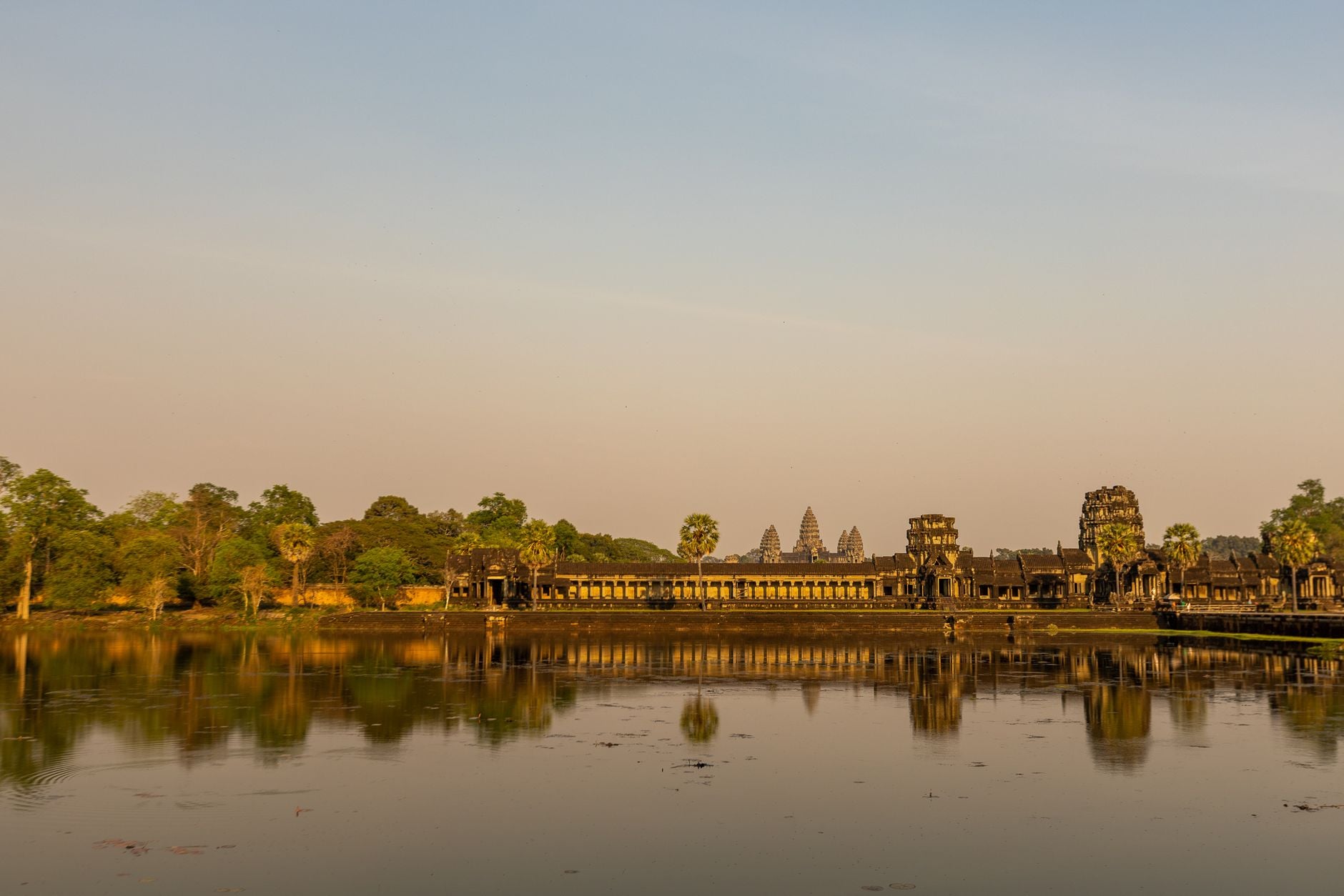
Buy a 3-day Angkor pass and dedicate days 5 and 6 to the temples. Start with the small circuit (Angkor Wat at sunrise, Bayon, Ta Prohm) on day 5, then do the grand circuit (Banteay Srei, Preah Khan, East Mebon) on day 6. The pass is $62 for three days as of my last visit, and you can buy it at the official Angkor Enterprise office. Hire a tuk-tuk driver for the day ($15-20) rather than trying to walk or cycle in the heat. On day 7, take a morning bus to Phnom Penh (about 6 hours, $10-15) via the Mekong Express or similar service.
Days 7-9: Phnom Penh and the Mekong Crossing
Phnom Penh deserves at least one full day. The Royal Palace and Silver Pagoda take a morning, and the Tuol Sleng Genocide Museum and Choeung Ek killing fields take an afternoon. It’s heavy, but essential context for understanding modern Cambodia. On day 9, take a bus from Phnom Penh to Stung Treng (about 5-6 hours, $8-12), where you can arrange onward transport to the Laos border. The Dong Kalor/Trapeang Kriel crossing is about an hour north of Stung Treng by minivan or shared taxi.
Days 9-11: Into Southern Laos
Once you cross into Laos at Trapeang Kriel, you’re at the 4,000 Islands (Si Phan Don) region. Most travelers head straight to Don Det or Don Khon, where you can rent a bicycle, spot Irrawaddy dolphins, and watch the Mekong churn past your bungalow. This is the most laid-back stretch of the entire route, and even on a tight schedule, I’d carve out one night here. From Don Det, take a bus north to Pakse (about 3-4 hours) and then an overnight bus or flight to Vientiane.
If you’re really pressed for time, this is where I’d recommend a shortcut flight. Lao Airlines operates flights from Pakse to Vientiane, and from Vientiane you can fly to Hanoi on Lao Airlines or Vietnam Airlines. These flights are not daily, so check schedules in advance. A Pakse-Vientiane-Hanoi flight combo saves you about 3 days of overland travel.
Days 11-15: Laos Highlights (If Overland)
If you stay overland, you’ll pass through Vientiane (spend a day exploring That Luang, the Morning Market, and the riverside), then take a bus or minivan to Vang Vieng (about 4 hours, 60,000 kip). Vang Vieng has reinvented itself from its tubing-party days into a genuine adventure hub surrounded by karst peaks. Spend a day hiking, caving, or kayaking. Then continue north to Luang Prabang by bus (about 6-7 hours on the new road, 110,000 kip) or by slow boat via the Mekong (2 days, a much more atmospheric option if you have the time).
Luang Prabang is the crown jewel of Laos, a UNESCO town where French colonial architecture meets gilded Buddhist temples. Give it at least two nights. Wake early for the alms-giving ceremony, visit the Royal Palace Museum, climb Mount Phousi for sunset, and swim at Kuang Si Falls. The night market along the main street is one of the best in the region for textiles and handicrafts.
Days 15-21: Vietnam
From Luang Prabang, cross into Vietnam at the Muang Khua/Tay Trang border if you want to reach Sapa and the northwest highlands. The crossing itself takes a few hours, and from there you can get a minivan to Dien Bien Phu and then to Sapa (another long day of travel). Alternatively, if you flew ahead to Hanoi, you can use your remaining days more efficiently.
Hanoi deserves at least two full days: the Old Quarter on foot, Hoan Kiem Lake, the Temple of Literature, and a street food crawl (bun cha, pho, egg coffee). Book a Ha Long Bay or Lan Ha Bay overnight cruise for one night if you can spare the time (day 18-19). If you have days 20-21 left, take the overnight train south to Da Nang (about 16-17 hours on the Reunification Express) or fly directly to HCMC for your departure. On a three-week schedule, you’ll likely end in either Hanoi or Da Nang, depending on your exit flight.
1-Month Itinerary: More Time, More Depth
A month transforms this route. Instead of racing between highlights, you get breathing room to stay an extra night where it matters, take the slow boat instead of the bus, and add a few destinations that the three-week version has to skip. This is the version I’d recommend for most travelers. It’s still active, but it doesn’t feel rushed.
Days 1-8: Thailand (Bangkok and Chiang Mai)
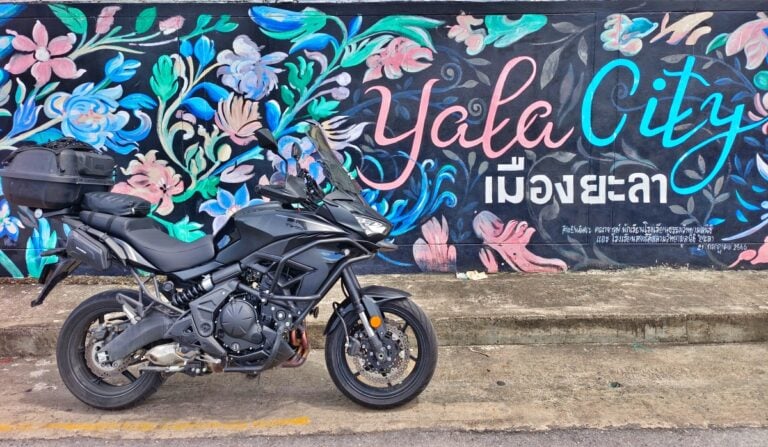
Start with three days in Bangkok. Beyond the obvious temples, I’d add a day trip to Ayutthaya (1.5 hours by train, the ancient capital is worth a full day of ruins and river views). On day 4, take the overnight train to Chiang Mai (sleeper berth, about 13-14 hours, 800-1,200 baht for a first-class sleeper). Chiang Mai deserves four days: temple-hopping around the Old City, a cooking class (I’ve done three different ones here and they’re all worth it), a day trip to Doi Suthep, and the Sunday Walking Street market. If you have time, consider a detour to Yala and Thailand’s Deep South for a completely different cultural experience, though that’s a significant southward detour better suited to the six-week version.
Days 8-15: Cambodia (Siem Reap, Battambang, Phnom Penh)
From Chiang Mai, the easiest route to Cambodia is to fly to Siem Reap (via Bangkok) or take the overland route through the Chong Mek border if you want to hit southern Laos first. For the west-to-east flow, fly Chiang Mai to Bangkok to Siem Reap, or take the bus via Bangkok and Aranyaprathet.
Spend three days at Angkor (upgrade to the 7-day pass for $72 if you want to explore the outer temples at a leisurely pace). Then instead of heading straight to Phnom Penh, take the Battambang route: a scenic 6-7 hour bus ride through Cambodia’s rice bowl, or the bamboo railway for a unique experience. Battambang is an underrated colonial-era town with great architecture, a vibrant art scene, and far fewer tourists than Siem Reap. Spend two nights here, then continue to Phnom Penh by bus (about 5 hours).
Give Phnom Penh two full days. Beyond the palace and genocide sites, the city has a surprisingly good food scene and a growing coffee culture. The riverside bars and Russian Market are worth an afternoon.
Days 15-21: Laos (South to North Overland)
From Phnom Penh, bus to Stung Treng and cross into Laos at the Dong Kalor border. Spend two nights in the 4,000 Islands (Don Det or Don Khon) for river relaxation and dolphin watching. Then head north: a bus to Pakse (3-4 hours), where you can detour to the Bolaven Plateau for coffee plantations and waterfalls if you have an extra day. From Pakse, fly or take an overnight bus to Vientiane.
In Vientiane, spend a day visiting That Luang (the national symbol), Patuxai, and the excellent COPE Visitor Centre, which tells the story of unexploded ordnance in Laos. Then head north to Vang Vieng for two days of karst scenery, tubing (the responsible kind), and adventure activities. Finally, take the road or the Mekong slow boat to Luang Prabang and spend two nights there. On a month-long schedule, you can afford the two-day slow boat from Huay Xai if you want to enter from the north, but in the west-to-east flow you’ll likely arrive by road from Vang Vieng.
Days 21-30: Vietnam (North to South, or North Only)
Option 1: Northern Vietnam Focus (Days 21-30)
Cross from Luang Prabang into Vietnam at the Muang Khua/Tay Trang border, then travel to Sapa for trekking among the rice terraces and ethnic minority villages. Two days in Sapa, then the overnight bus or train to Hanoi. From Hanoi, you have time for a 2-night Ha Long Bay cruise plus a day trip to Ninh Binh (the “Ha Long Bay on land” with limestone karsts rising from rice paddies). Finish with three days exploring Hanoi’s Old Quarter, eating your way through the street food scene, and flying home from Hanoi.
Option 2: Vietnam Coast (Hanoi to Hoi An)
If you fly from Luang Prabang to Hanoi (Lao Airlines operates this route, though not daily), you gain about 2 days that you can use to travel south. From Hanoi, take the overnight train to Hue (about 14 hours), spend a day exploring the Imperial City, then continue south to Da Nang and Hoi An (about 3 hours by bus or train). The Hai Van Pass between Hue and Da Nang is one of the most scenic coastal stretches in Vietnam, and if you ride a motorbike it’s an absolute must. The central Vietnam section deserves its own deeper exploration, and my Da Nang guide covers the standout attractions, from the Marble Mountains to the Golden Bridge at Ba Na Hills.
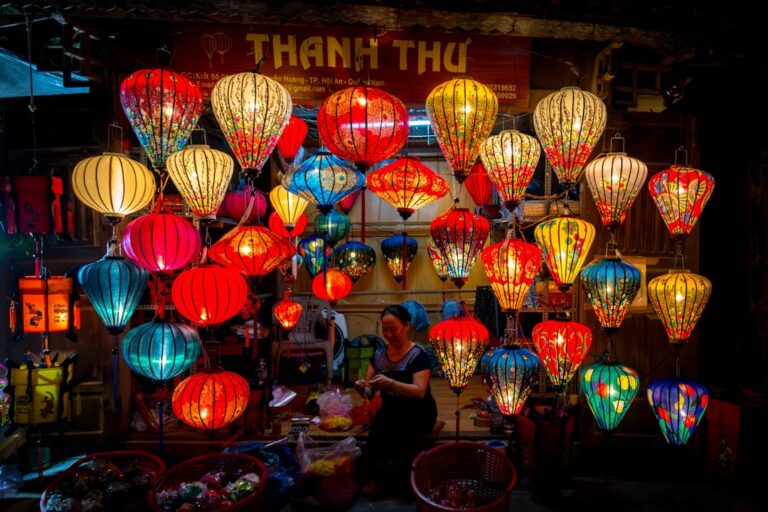
Finish in Hoi An, with its lantern-lit old town, tailor shops, and riverside food scene. Spend three nights here. The cooking class options are excellent, and the beaches (An Bang and Cua Dai) are a 15-minute bike ride away. Fly out of Da Nang airport.
6-Week Route: The Full Overland Experience
Six weeks is the sweet spot for serious overland travel. This is the version where you skip flights entirely, take every slow boat and overnight train, and still have time for the detours that make a trip memorable. It’s also the version I’d recommend if you’re traveling by motorcycle, though vehicle importation adds a significant layer of complexity (more on that in the border section below).
Thailand: 10-12 Days
Start with three days in Bangkok, then take the train south. If you want a taste of Thailand beyond the tourist circuit, the overnight train to the Deep South is a fascinating journey. The southern rail line passes through some beautiful countryside, and the region’s Malay-Muslim culture is completely different from central and northern Thailand. I’d also consider adding a detour to Chiang Mai and Pai (4-5 days) for the mountain roads, hot springs, and cooler climate. Then head east toward the Cambodian border.
Cambodia: 8-10 Days
Cross at Poipet and head to Siem Reap for a full 4-5 days at Angkor (the 7-day pass is worth it at this pace). From Siem Reap, take the bamboo railway route through Battambang (2 nights), then continue to Phnom Penh (2 nights). With extra time, add the southern coast: Kampot and Kep are small, relaxed towns where you can stay a few nights, eat pepper crab, and watch fireflies on the river. From Kampot, you can head east toward the Stung Treng border with Laos.
Laos: 10-12 Days (The Slow Traverse)
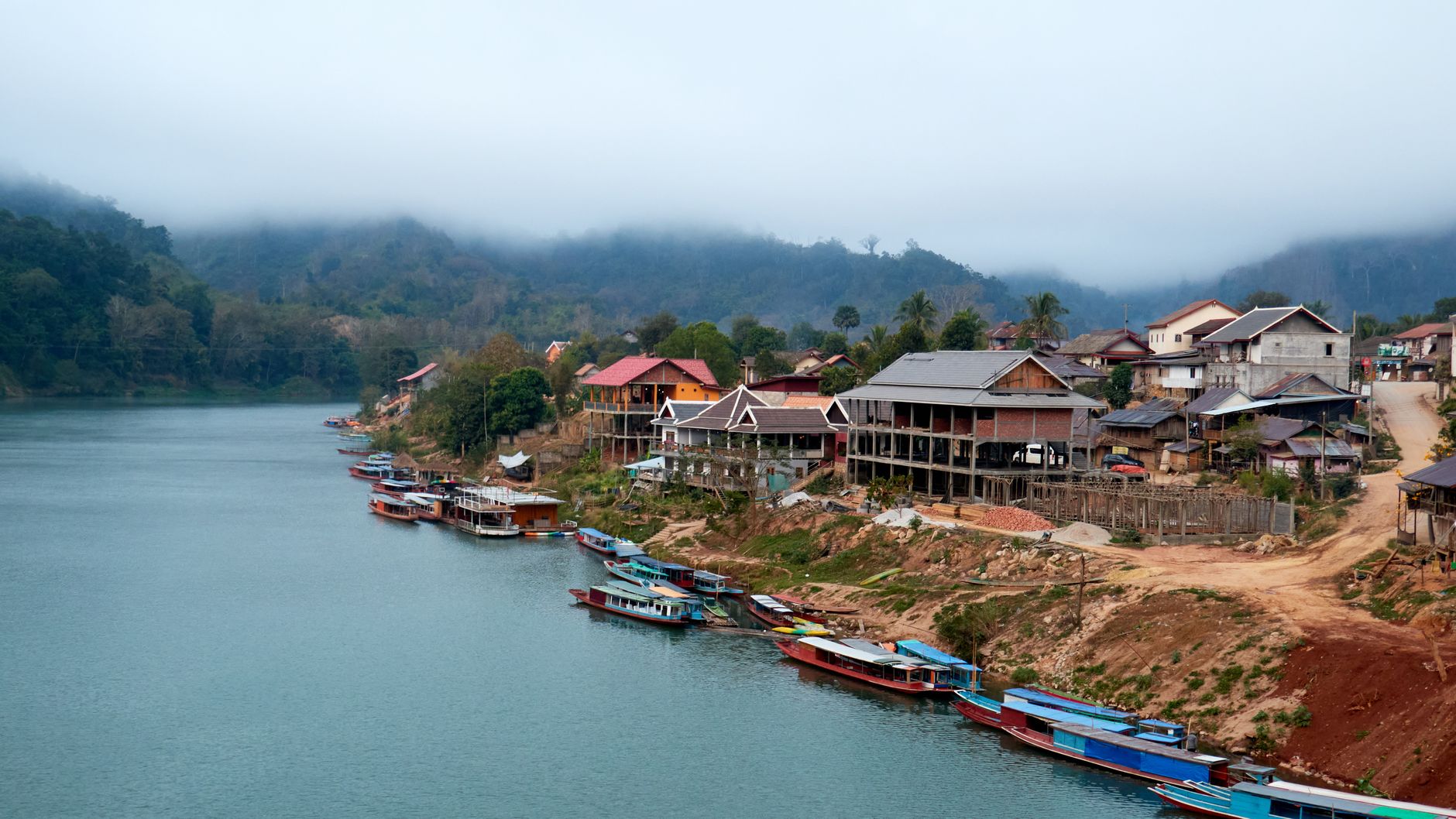
This is where six weeks really pays off. Laos rewards slow travel, and the country is long enough that a rushed visit barely scratches the surface. Enter at the 4,000 Islands and spend 3 nights there. Head north to Pakse and the Bolaven Plateau (2 nights for waterfalls, coffee farms, and villages). Then Vientiane (2 nights), Vang Vieng (2-3 nights for outdoor activities), and Luang Prabang (3 nights).
If you have time and the roads are in good condition, consider the northern loop: from Luang Prabang, head to Nong Khiaw and Muang Ngoi for dramatic river scenery and trekking. The karst cliffs along the Nam Ou River are some of the most beautiful landscapes in mainland Southeast Asia. From here, cross into Vietnam at the Muang Khua/Tay Trang border.
Vietnam: 14 Days (North to South Overland)
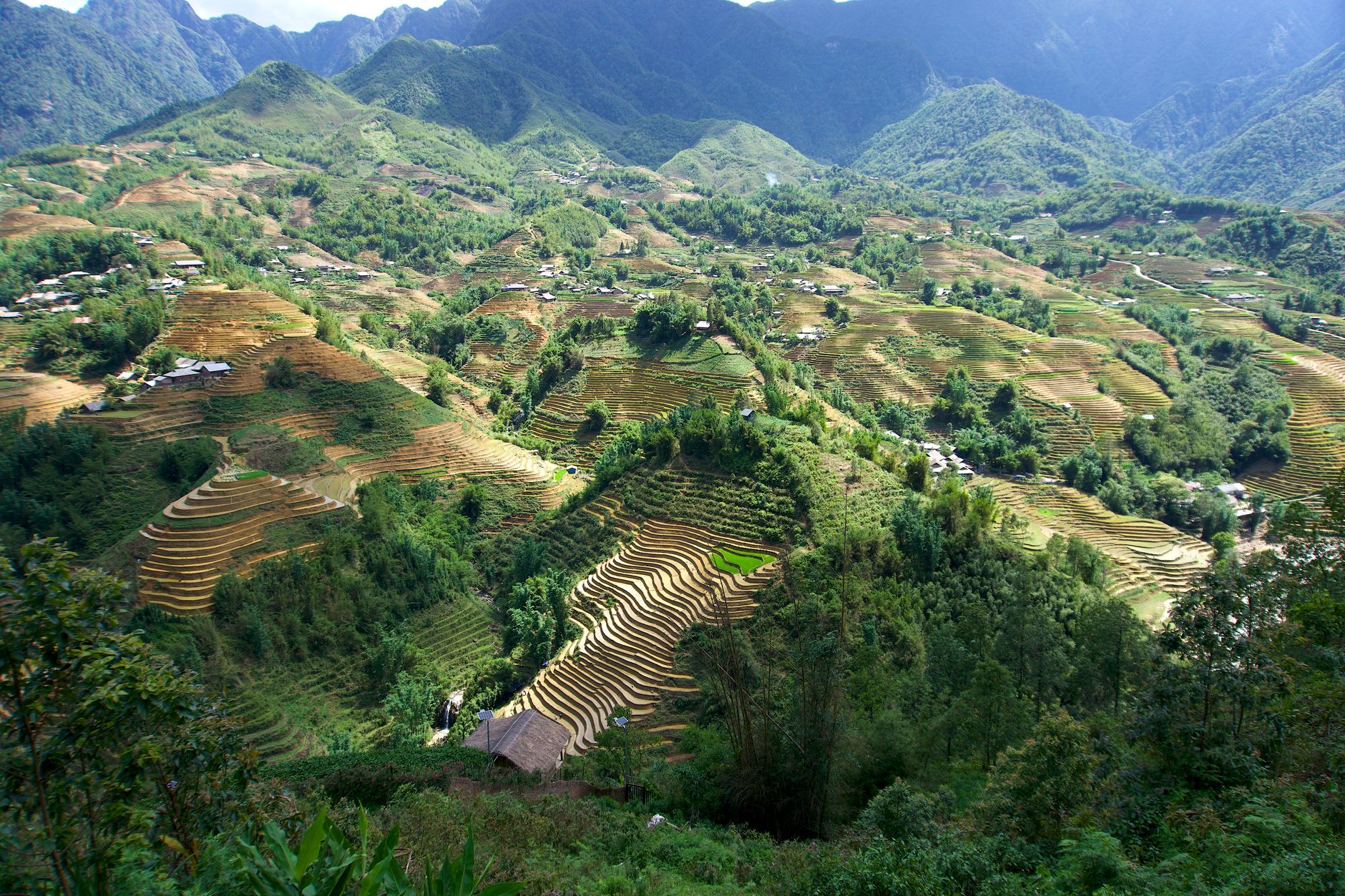
Enter Vietnam in the northwest, arriving in Sapa for 2-3 days of trekking and homestays. Then head east to Hanoi (3 days), including a 2-night Ha Long Bay or Lan Ha Bay cruise. From Hanoi, take the Reunification Express overnight train south. The train hugs the coast for much of the journey, and waking up to the South China Sea outside your window is one of the great travel experiences in the region.
Stop in Hue (1-2 days for the Imperial City and DMZ tours), then ride or drive the Hai Van Pass to Da Nang and Hoi An (3-4 days combined). Continue south to Nha Trang (skip it if you’re not into beach resort towns) or head inland to Dalat for cool-weather highlands, waterfalls, and the famous motorbike easy-rider tours. From Dalat, descend to Ho Chi Minh City (2-3 days) for the grand finale. If you have a few extra days, the Mekong Delta is worth a 2-day trip before you fly out.
For Motorcycle Travelers
If you’re doing this route on a motorcycle, the six-week version is essentially the minimum realistic timeframe. The Ha Giang Loop in northern Vietnam alone deserves 3-4 days, and the roads through northern Laos (Route 6 to Muang Khua, Route 1D along the Vietnam coast) are some of the best riding in Asia. You’ll need to sort out your documentation carefully: an International Driving Permit (IDP) is essential, and ideally the 1968 Vienna Convention version, which is recognized in all four countries. In my experience, enforcement varies wildly, especially in Vietnam where I’ve had police at some checkpoints accept my IDP and others question it for 20 minutes before waving me through.
If you’re riding your own foreign-registered bike across all four borders, you’ll need a Carnet de Passage (CPD) for Thailand, and you’ll deal with temporary import paperwork at each crossing. For most travelers, buying or renting locally in each country is far simpler and avoids the CPD entirely. In Vietnam, you can rent a bike in Hanoi or HCMC for $5-10/day, and the registration papers serve as your “ownership” document at internal checkpoints.
Border Crossings, Visas, and Transport Between Countries
This is the section I wish I’d had on my first run. Border crossings in Southeast Asia are generally straightforward, but each one has its own quirks, and visa policies change frequently. I’ll cover each crossing and the current visa situation as of early 2026, but always double-check before you travel, because rules shift.
Thailand to Cambodia: Poipet / Aranyaprathet
This is the busiest land crossing between the two countries. From the Thai side, take a train or bus to Aranyaprathet, then a tuk-tuk to the border (about 15 minutes). The crossing is walkable: you exit Thai immigration, walk through a short no-man’s-land, and enter Cambodian immigration at Poipet. The Cambodian e-visa is accepted at this crossing (get it online before you arrive), and visa-on-arrival is also available for $30 plus a $7 processing fee, though officials sometimes ask for more. Stand your ground politely and point to the official rate. From Poipet, shared taxis or minivans to Siem Reap take about 2-3 hours and cost $10-25.
An alternative crossing is Hat Lek / Koh Kong on the southern coast, useful if you’re coming from Trat or the Thai islands and want to enter Cambodia from the southwest. From Koh Kong, you can travel overland to Sihanoukville and then up to Phnom Penh. This route is less crowded but the roads are rougher.
Cambodia to Laos: Dong Kalor / Trapeang Kriel
This is the only land border between Cambodia and Laos, located north of Stung Treng on the Cambodian side and near the 4,000 Islands on the Lao side. From Stung Treng, take a minivan or shared taxi to the border (about 1-1.5 hours). The crossing is small and usually uncrowded. Lao visa-on-arrival is available here for most nationalities (about $30-42 depending on your passport, plus a $1-2 processing fee). Bring passport photos and US dollars in cash, as there’s no ATM at the border. Once through, you’re a short drive from the 4,000 Islands.
Laos to Vietnam: Multiple Crossings
Laos and Vietnam share a long mountainous border with several crossing points. The one you choose depends on your route direction:
- Muang Khua / Tay Trang (northern Laos to Dien Bien Phu, Vietnam): This is the best crossing if you’re coming from Luang Prabang or Nong Khiaw and want to reach Sapa and the northwest highlands. The road is scenic but winding, and it’s a full day from Muang Khua to Sapa with the crossing.
- Na Meo / Nam Xoi (Sam Neua to Thanh Hoa): A quieter, more remote crossing in northeastern Laos. Useful if you’re exploring the Vieng Xai caves and the Pathet Lao history sites. Not heavily trafficked, so transport options are limited.
- Cau Treo / Nape (Vientiane to Vinh): The central crossing, about 5 hours from Vientiane. Good road on both sides. From Vinh, you can take the train or bus north to Hanoi or south to Hue.
- Lao Bao / Densavanh (Savannakhet to Dong Ha, near Hue): The southernmost major crossing. If you’re traveling south through Laos and want to enter central Vietnam directly, this saves a lot of backtracking. From the border, Dong Ha is about 30 minutes, and Hue is about 2-3 hours further south.
Vietnam e-visa is available online for most nationalities ($25 for single entry, 30 days validity). Some land borders accept the e-visa and some don’t. As of my last crossing, the Muang Khua/Tay Trang and Lao Bao crossings both accepted Vietnam e-visas, but always verify this on the official Vietnam e-visa portal before committing to a route, because the list of eligible crossings has been expanded multiple times.
Thailand to Laos: Friendship Bridges and River Crossings
If you’re doing the reverse (east-to-west) route or starting in Thailand and heading to Laos before Cambodia, there are three main crossings. The Thai-Lao Friendship Bridge at Nong Khai (about 20 km from Vientiane) is the most popular, with a train service that runs directly from Bangkok to Vientiane via the new bridge. The Chiang Khong / Huay Xai crossing in the north is the gateway to the Mekong slow boat to Luang Prabang. The Chong Mek crossing in the south connects to Pakse and the Bolaven Plateau.
Visa Summary for 2026
Visa policies in Southeast Asia change frequently, so treat this as a general guide and verify on official government portals before you travel. As of early 2026, here’s the broad picture for the four countries on this route:
- Thailand: Citizens of many countries (including most Western, East Asian, and ASEAN nations) can enter visa-free for up to 60 days. Others can apply for a Visa on Arrival (15 days) or e-Visa (up to 60 days). Check the Thai e-Visa portal for your specific nationality.
- Cambodia: e-Visa available online ($36, 30-day validity, single entry). Visa on Arrival at most land borders and airports ($30). Bring a passport photo and US dollars.
- Laos: e-Visa available online ($50 for most Western nationalities). Visa on Arrival at most land borders ($30-42 depending on nationality, plus small processing fee). Bring two passport photos and US dollars in cash.
- Vietnam: e-Visa available online ($25 single entry, $50 multiple entry, 30-day validity for most nationalities). Some nationalities enjoy visa-free entry for limited periods. The e-visa is accepted at an expanding list of land border crossings, but verify your chosen crossing is on the approved list.
Transport Between Countries: Buses, Trains, Boats, and Flights
The backbone of this route is the long-distance bus network. VIP buses, sleeper buses, and minivans connect every major city on this itinerary, and they’re cheap (typically $5-20 per leg). The quality varies enormously. In Thailand, trains are comfortable and the overnight sleepers are genuinely good value. In Cambodia and Laos, buses are the main option, with the occasional domestic flight saving you a brutal 10-hour road leg.
The slow boat on the Mekong from Huay Xai to Luang Prabang is a two-day journey with an overnight stop in Pakbeng. It costs about 220,000 kip ($11-13) and is one of the most atmospheric stretches of river travel in Southeast Asia. Just bring your own food and snacks, as the options on board are limited.
Vietnam’s Reunification Express train runs the full length of the country from Hanoi to Ho Chi Minh City (about 32-35 hours if you do it in one go, but most people break it into segments). The sleeper berths are decent, and the coastal scenery between Hue and Da Nang is worth the ticket price alone. Book through the official Vietnam Railways website or use a booking service like 12Go.asia for English-language reservations.
For flights, the key budget airlines in this corridor are AirAsia, VietJet, Lao Airlines, and Cambodia Angkor Air. The most useful flights for this itinerary are Pakse to Vientiane, Vientiane to Hanoi, Luang Prabang to Hanoi, and Da Nang to Ho Chi Minh City. Book 2-3 weeks ahead for the best fares, and watch baggage allowances, as budget carriers in Asia often charge extra for checked bags.
Practical Tips Before You Go
After multiple runs of this route, here are the tips I’d give a friend planning the same trip:
Money and ATMs
Thailand and Vietnam have reliable ATM networks. Cambodia and Laos are less consistent, especially in rural areas. In Cambodia, US dollars are widely accepted alongside the riel, and you’ll often get change in a mix of both currencies. In Laos, you’ll need kip for most transactions, though dollars are accepted in tourist areas. Always carry a stash of US dollars in small bills for border fees, visas, and remote areas where ATMs don’t exist.
SIM Cards and Connectivity
Each country has its own SIM card system, and you can buy one at airports or border towns. In Thailand, AIS and TrueMove offer good tourist SIM packages. In Vietnam, Viettel is the most reliable network, especially in rural areas. In Laos, Unitel has the best coverage outside of cities. In Cambodia, Smart and Metfone are the main options. I usually grab a local SIM at each border crossing and spend $3-10 for a month of data. If you’re moving quickly, an eSIM service like Airalo can save you the hassle of physical SIM swaps, but coverage in rural Laos and northern Vietnam can be spotty regardless of which provider you use. For staying connected safely, especially on public Wi-Fi at bus stations and guesthouses, check out my guide on staying safe online while traveling.
Packing for Four Countries
You’ll cross climate zones on this route, from tropical Bangkok to the cool highlands of northern Vietnam. Pack layers. A light fleece or jacket is essential for Sapa, Ha Giang, and overnight buses (which crank the AC). Bring quick-dry clothes, a rain jacket for the monsoon months, and decent walking shoes for temple complexes and trekking. A dry bag is invaluable if you’re doing any boat travel on the Mekong or Ha Long Bay. And pack a power bank: long bus rides and unreliable electricity in rural Laos will drain your phone faster than you expect.
Health and Safety
Mosquito-borne illnesses (dengue, malaria in some rural areas) are a real concern across all four countries. Bring DEET-based repellent, wear long sleeves at dawn and dusk, and consider a mosquito net for rural Laos and Cambodia stays. Tap water is not safe to drink anywhere on this route; stick to bottled or filtered water. Food safety is generally good at busy local restaurants (high turnover means fresh ingredients), but be cautious with raw foods and ice in very remote areas.
Travel insurance is non-negotiable on a route like this. Make sure your policy covers motorbike riding if you plan to rent one (many standard policies exclude it unless you hold a valid motorcycle license and IDP). Read the fine print on adventure activities, too, as some policies exclude trekking, caving, or even kayaking above a certain grade.
Timing the Monsoon
The dry season (roughly November to March) is the most popular time for this route, with cooler temperatures and clear skies. I traveled the route once in July and it was still incredible, but you need to be flexible: roads in southern Laos and the Mekong region can flood, boat schedules become unreliable, and the humidity in Cambodia and southern Vietnam is intense. If you’re doing the six-week overland version on a motorcycle, I’d strongly recommend November to February. The roads are dry, the northern highlands are cool, and the visibility in the mountains is at its best.
Have you done this four-country route yourself, or are you in the planning stages? Drop your questions or your own tips in the comments below. I’d genuinely love to hear how your version of the trip compared to mine, especially if you found border crossings or transport options that worked better than what I’ve described here. Every trip teaches me something new about this part of the world, and the route keeps evolving as infrastructure improves.
Frequently Asked Questions
How many days do I need for a Thailand Cambodia Laos Vietnam itinerary?
You can do the highlights in 3 weeks with a fast pace and 1-2 flights, but 1 month gives a balanced experience and 6 weeks allows a fully overland trip with detours. Most travelers find 4-5 weeks the sweet spot for covering all four countries without feeling rushed.
Can I cross all four countries by land without flying?
Yes. Thailand connects to Cambodia (Poipet border), Cambodia to Laos (Dong Kalor/Trapeang Kriel border), and Laos to Vietnam (multiple crossings including Muang Khua, Cau Treo, and Lao Bao). All crossings issue visa-on-arrival or accept e-visas for most nationalities. There is no direct land border between Thailand and Vietnam.
Do I need a visa for each country on this route?
Yes, you need separate visas for each country. Thailand offers visa-free entry (up to 60 days) for many nationalities. Cambodia issues e-visas ($36) and visa-on-arrival ($30). Laos offers e-visa ($50) and visa-on-arrival ($30-42). Vietnam issues e-visas ($25 single entry) accepted at an expanding list of land borders. Always verify current requirements before travel.
What is the best direction to travel this route?
West to east (Bangkok to Hanoi/HCMC) is recommended for first-timers because Thailand offers the easiest entry and you gradually move into more challenging travel. East to west (starting in Vietnam) works well from November to February when northern Vietnam’s weather is at its best. The direction also affects which monsoon season you encounter in each country.
Can I ride a motorcycle across all four countries?
Yes, but it requires significant planning. You need an International Driving Permit (ideally the 1968 Vienna Convention version) recognized in all four countries. If riding your own foreign-registered bike, you need a Carnet de Passage for Thailand. Most travelers rent or buy bikes locally in each country instead, which is simpler and avoids the CPD. Allow at least 6 weeks for a motorcycle version of this route.