Ubud Private Tours: How to Book the Right One
When I first visited Ubud, I made the rookie mistake of jumping on a group tour that crammed seven water temples, two rice terraces, and a coffee plantation into a single afternoon. By the third stop, I was exhausted, slightly resentful, and had barely spent ten minutes at Tirta Empul before being herded back into the van. That experience taught me something: Ubud private tours are not just a luxury for travellers with bigger budgets. They are, for most people, the smarter way to actually experience the cultural heart of Bali.
If you are independent-minded and want to explore Ubud at your own pace, a private tour gives you the flexibility to linger where it matters and skip the things that do not. This guide covers everything I have learned about booking Ubud private tours: what they include, what they cost, which experiences are genuinely worth the premium, and how to find a driver or guide you can trust.
Why I’d Choose a Private Tour in Ubud Over a Group Trip
Group tours in Ubud operate on a simple formula: pack as many stops as possible into a fixed schedule, keep everyone moving, and collect a commission at every plantation, silver shop, or batik studio along the way. That model works if you just want a superficial sweep and a few photos. But Ubud rewards slow, attentive travel. The town and its surroundings are layered with Hindu-Balinese spiritualism, artisan traditions, and landscapes that change character depending on the time of day.
A private tour flips the dynamic. You set the pace. You choose the stops. And critically, you get a driver-guide who can adapt in real time. If the clouds roll in over the Tegallalang Rice Terraces, your guide can shuffle the itinerary and take you to Goa Gajah first instead. If you fall in love with a market stall in Ubud town centre and want an extra thirty minutes, nobody is honking at you from a parking lot.
Here is what I have found makes the biggest practical difference:
- Flexible timing: Start early to beat the crowds at popular sites, or start late if you are not a morning person. The schedule is yours.
- Personalised stops: A good private guide will ask what interests you and tailor the route accordingly, whether that means extra temples, a textile workshop, or a quiet waterfall.
- Local insight: The best guides do not just drive. They explain the meaning behind the offerings at a temple, tell you which warung serves the best bebek betutu, and help you navigate cultural etiquette.
- No commission traps: Group tours almost always include mandatory stops at overpriced coffee plantations or art shops where the driver earns a kickback. On a private tour, you can explicitly opt out.
- Comfort: Air-conditioned car, your own music, room for your bags, and no strangers asking you to take their photo every five minutes.
The trade-off, of course, is cost. But as I will break down below, the per-person price difference between a group tour and a private tour is often smaller than people expect, especially if you are travelling as a couple or small group.
What Do Ubud Private Tours Usually Include?
Most Ubud private tours share a common structure, but the specifics vary widely between operators. Understanding what is typically included, and what counts as an extra, helps you compare options without getting caught off guard by hidden costs.
At a minimum, a standard private tour includes a private vehicle with a driver-guide, hotel pickup and drop-off within the Ubud area (and often from southern Bali destinations like Kuta, Seminyak, or Canggu for an additional fee), fuel, and parking fees. Entry tickets to individual attractions are usually not included in the tour price, and neither are meals. Some operators bundle a few entry tickets, but most leave those as on-the-day expenses so you only pay for the sites you actually visit.
Here is a breakdown of what you can typically expect:
| Included in Standard Tour Price | Usually Extra (Pay on the Day) |
|---|---|
| Private air-conditioned vehicle | Entry tickets to temples and attractions (IDR 15,000 to 50,000 per site) |
| English-speaking driver-guide | Meals and drinks |
| Hotel pickup and drop-off | Sarong rental (some temples include this free) |
| Fuel and parking fees | Cooking class fees (IDR 350,000 to 600,000) |
| Bottled water | Kecak fire dance tickets (IDR 100,000 to 150,000) |
| Flexible, customisable itinerary | Tips for the guide (appreciated, not mandatory) |
One thing to clarify upfront with any operator: whether the driver is also a licensed guide. In Bali, there is a distinction. A driver will get you from A to B and may offer basic commentary, but a licensed guide (often certified through the Bali Tourism Board) can walk you through temple complexes, explain rituals, and provide historical and cultural context. Some tours include a dedicated guide in addition to a driver, which tends to cost more but adds significant depth if you care about understanding what you are seeing rather than just photographing it.
The Best Experiences to Add to Your Ubud Private Tour
The beauty of a private tour is that you can hand-pick your stops. But with so many options around Ubud, it helps to know which experiences genuinely deliver and which are tourist traps dressed up in cultural clothing. These are the stops I would prioritise, based on my own time in the area.
Tegallalang Rice Terraces
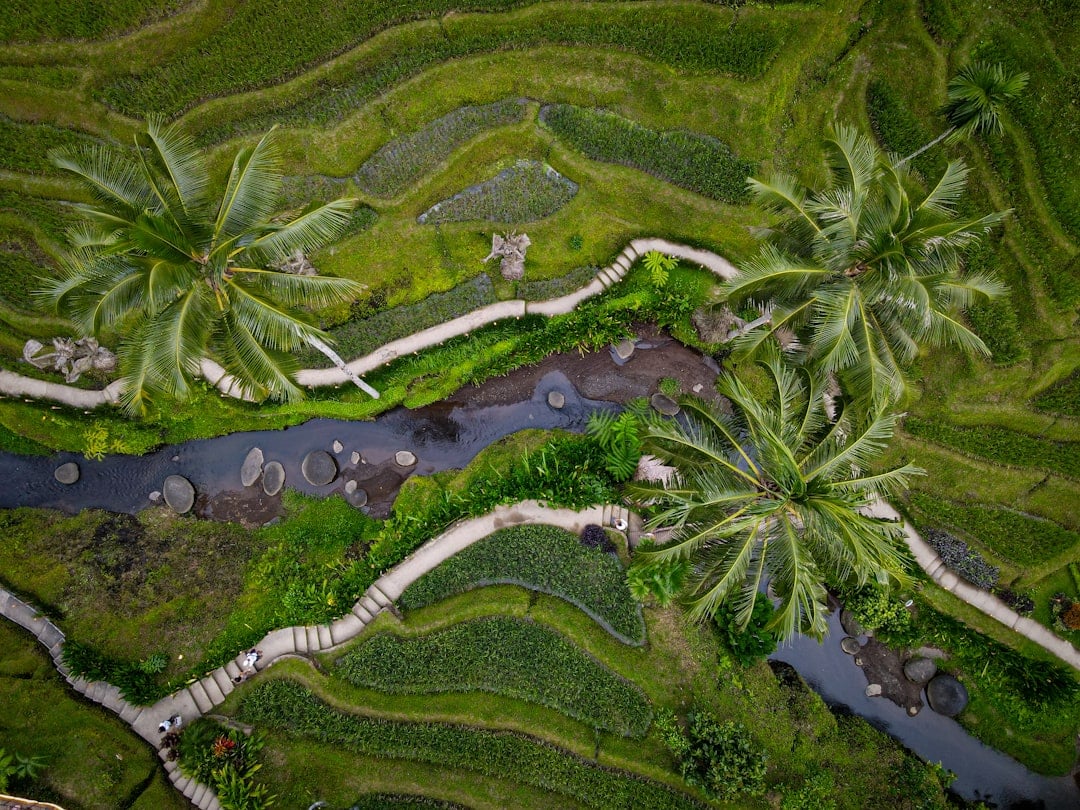
The Tegallalang Rice Terraces are the iconic image of Bali: emerald tiers cascading down a river valley, coconut palms leaning over the edges, and small wooden swings suspended above the green. They are stunning, but they are also one of the most visited sites on the island, which means timing matters enormously.
I would aim to arrive before 8:00 AM if possible. The light is soft, the air is still cool, and you will share the terraces with a fraction of the midday crowd. Walk down to the lower levels for the best views, and be prepared for a bit of a climb back up. There is a small entrance fee (around IDR 25,000) and locals may ask for a modest donation at certain photo spots along the path.
A good private guide will know the quieter corners and can steer you away from the most congested viewing platforms. They can also help you negotiate the swings if you want to try one, though I would skip the overpriced “Bali swing” packages that some drivers push and just enjoy the walk.
Tirta Empul (Holy Spring Temple)
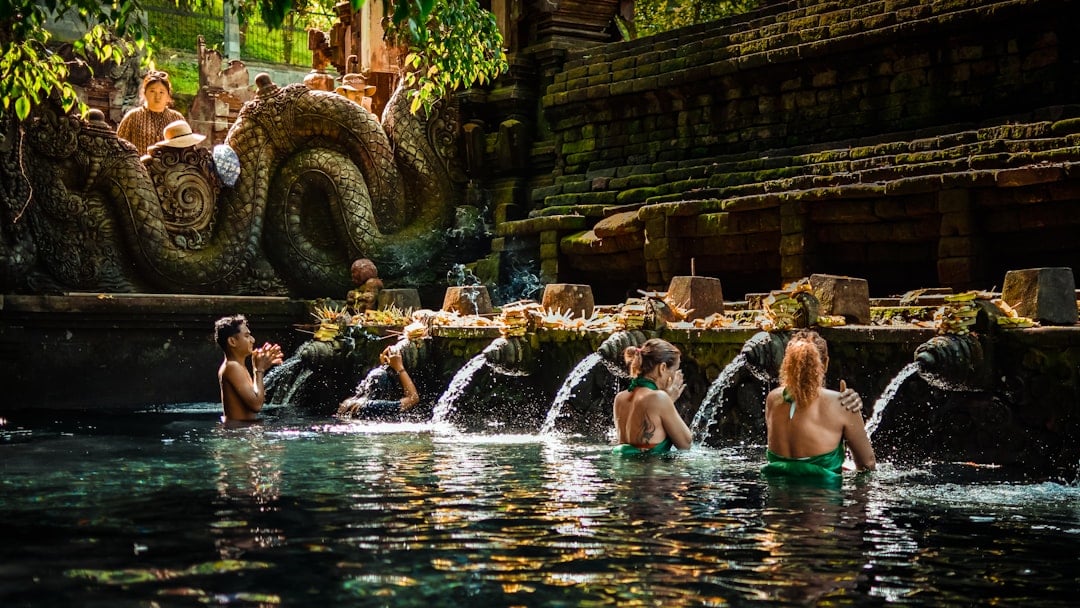
Tirta Empul is a water temple built around a holy spring where Balinese Hindus perform ritual purification. Watching devotees move through the series of spouts, each one representing a different prayer or cleansing, is one of the most moving cultural experiences I have had in Southeast Asia.
You can participate in the purification ritual yourself, and I would recommend it if you are open to the experience. Your guide can help you rent a proper sarong (required for entry to any Balinese temple) and explain the correct sequence: which spout to start at, which one to skip (the last two are reserved for cremation ceremonies), and how to make an offering before entering the water.
Arrive early here too. By mid-morning, tour buses line the parking lot and the pools get crowded. The entrance fee is around IDR 50,000, and sarong rental is usually included with the ticket.
Goa Gajah (Elephant Cave)
Goa Gajah dates back to the 9th century and is one of Ubud’s most significant archaeological sites. The entrance to the cave is carved into a menacing demon face, and inside you will find a small chamber with Hindu and Buddhist relics. The surrounding grounds include bathing pools, rock carvings, and a peaceful walk through tropical forest.
It is a relatively quick stop, maybe 30 to 45 minutes, which makes it a good complement to a morning that includes Tirta Empul. The two sites are only about 15 minutes apart by car. Entrance is around IDR 15,000, and a sarong is provided at the entrance.
What I appreciate about Goa Gajah is that it is less about a single dramatic view and more about layers of history. A knowledgeable guide makes a huge difference here. Without context, it is just a dark cave with some carvings. With context, you understand the syncretism of Hindu and Buddhist traditions that defines so much of Balinese culture.
Kecak Fire Dance at Uluwatu or Ubud Palace
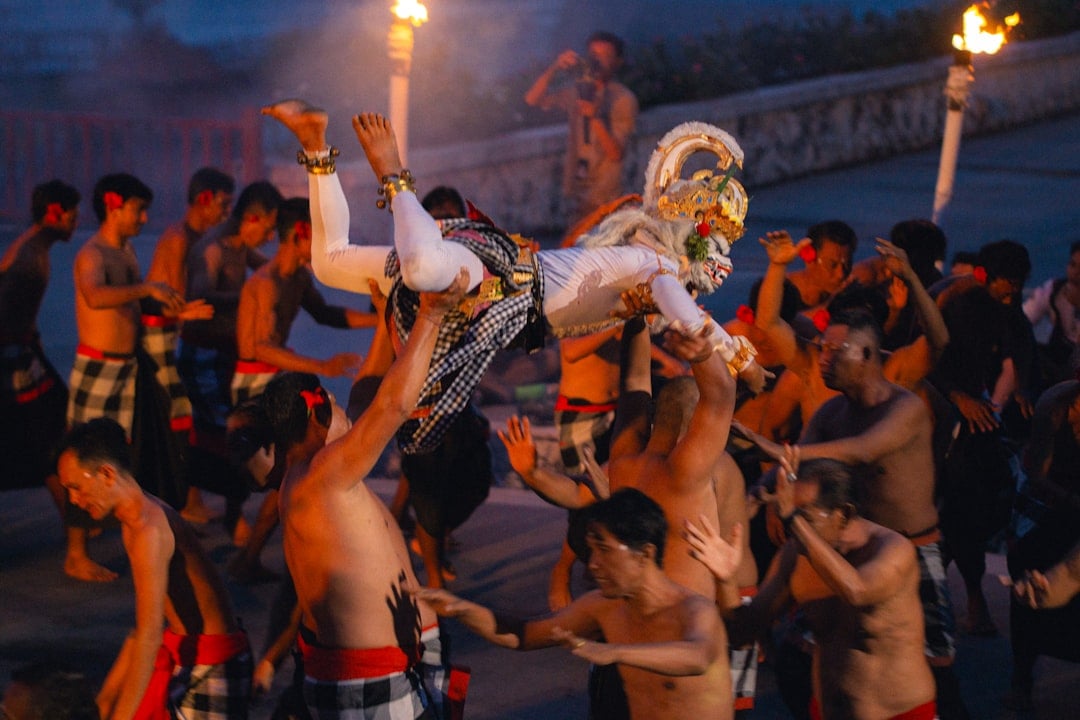
The Kecak fire dance is a performance unlike anything else I have seen. Dozens of men sit in concentric circles, chanting in rhythmic unison without any musical instruments, while dancers act out scenes from the Ramayana. The climax involves a horse made of coconut leaves being set alight and a performer walking through the flames.
You can see Kecak performances at several venues, but the two most popular are Pura Dalem Taman Kaja in Ubud (closer to town, more intimate) and Uluwatu Temple (dramatic clifftop setting at sunset, but a longer drive from Ubud). If your private tour is a full-day affair, you can arrange for your driver to drop you at the evening performance and wait, or pick you up afterward.
Tickets cost around IDR 100,000 to 150,000 depending on the venue. I would ask your guide or driver to book in advance, especially during peak season (July and August), as popular nights sell out.
A Balinese Cooking Class
If you have a full day and want something more hands-on, a Balinese cooking class is one of the most rewarding additions to a private tour itinerary. Several cooking schools around Ubud start with a guided visit to a traditional market to learn about ingredients, then move to a family compound where you cook and eat a multi-dish meal together.
The classes typically run for about three to four hours and cost between IDR 350,000 and 600,000 per person. You will learn to make dishes like nasi goreng, sate lilit, lawar, and bubur injin (black rice pudding). Even if you are not a serious cook, the market visit alone is worth it. Your guide can help translate and point out ingredients you would never identify on your own.
One tip: schedule the cooking class for the second half of your day. Do your temple and rice terrace visits in the morning when it is cooler, then transition into the class as the afternoon heat peaks. Most cooking schools have shaded, well-ventilated kitchens.
How Much Does a Private Tour in Ubud Cost?
Private tour pricing in Ubud is refreshingly transparent compared to many other parts of Southeast Asia. The going rate for a full-day private tour (8 to 10 hours) with a driver-guide and a private car is typically between IDR 500,000 and 800,000 for the vehicle, not per person. That works out to roughly USD 35 to 55 total, which means if you are travelling as a couple or group of three or four, the per-person cost can actually be comparable to or only slightly more than a group tour.
Here is a rough breakdown of what I have seen across multiple operators:
| Tour Type | Duration | Price Range (per vehicle) | Typical Inclusions |
|---|---|---|---|
| Half-day private tour | 4 to 5 hours | IDR 350,000 to 500,000 | Driver-guide, fuel, 2 to 3 stops |
| Full-day private tour | 8 to 10 hours | IDR 500,000 to 800,000 | Driver-guide, fuel, 4 to 5 stops, flexible route |
| Full-day with licensed guide | 8 to 10 hours | IDR 800,000 to 1,200,000 | Separate driver and licensed cultural guide |
| Custom photography tour | 8 to 10 hours | IDR 900,000 to 1,500,000 | Photographer-guide, curated scenic locations |
Keep in mind that these are the vehicle rates. On top of that, budget for entry tickets (usually IDR 15,000 to 50,000 per site), meals (a decent warung lunch costs IDR 30,000 to 80,000), and any special activities like a cooking class or Kecak performance. A realistic total budget for a full-day private tour for two people, including everything, is around IDR 1,000,000 to 1,500,000 (roughly USD 65 to 100).
Pickup location also affects price. If you are staying in Ubud itself, most tours include free pickup. If you are coming from Kuta, Seminyak, Canggu, or Nusa Dua, expect an additional charge of IDR 100,000 to 200,000 for the extra driving time. Some operators waive this if you book a full-day tour, so it is worth asking.
How to Find a Good Local Driver or Guide in Ubud
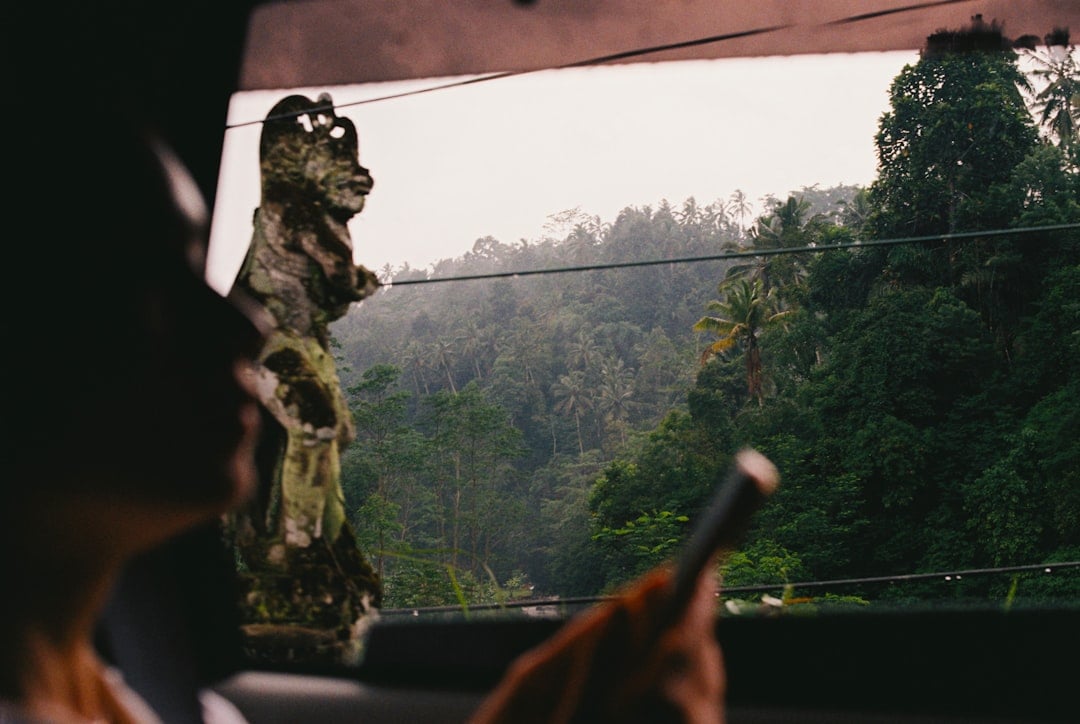
This is the part that trips up most travellers. The quality of your Ubud private tour depends almost entirely on the person behind the wheel, and the difference between a great guide and a mediocre one is night and day. Here is how I go about finding someone reliable.
Ask Other Travellers, Not Hotels
Hotels and guesthouses in Ubud almost always have a “preferred driver” on call, and while some of these are genuinely good, many are simply the ones who pay the biggest commission to the front desk. I have had mixed results with hotel-recommended drivers. Instead, I prefer to ask fellow travellers, either in person at a cafe or through travel forums and Facebook groups dedicated to Bali travel.
Personal recommendations from people who have actually spent a day with a driver carry far more weight than a polished Instagram page. Ask specific questions: Did the driver push commission stops? Were they punctual? Did they speak good English? Could they explain the cultural significance of what you were seeing, or did they just drop you at the gate and wait in the car?
Check Online Reviews Carefully
Platforms like TripAdvisor, Google Reviews, and Viator all list private tour operators in Ubud. Look beyond the star rating and read the detailed reviews. I pay attention to patterns rather than individual comments. If multiple reviewers mention that a driver was flexible and avoided commission stops, that is a strong signal. If several people complain about feeling rushed or taken to a specific silver shop, that is a red flag.
I also look for reviews that mention specific guides by name. Many drivers in Ubud work semi-independently and build their reputation on personal relationships. A driver who is consistently named and praised across multiple reviews is usually a safe bet.
Message Them Directly Before Booking
Before committing, send a WhatsApp message (the primary communication app in Bali) to the driver or operator and ask a few questions. Their responsiveness and the quality of their answers will tell you a lot. I always ask:
- What is included in the price, and what is extra?
- Can I see a sample itinerary, and can I customise it?
- Do you include any mandatory stops at coffee plantations or shops?
- Are you a licensed guide, or just a driver?
- What type of vehicle do you use, and is air conditioning included?
A good driver will answer these questions directly and without defensiveness. If someone is vague about stops or evasive about commissions, move on. There are hundreds of drivers in Ubud, and you do not need to settle for one who is not transparent.
Consider Renting a Scooter Instead
If you are comfortable on two wheels and have a valid International Driving Permit, renting a scooter in Ubud is a viable alternative to hiring a driver. It costs around IDR 70,000 to 100,000 per day and gives you complete freedom to explore at your own pace. The roads around Ubud are generally in decent condition, though some of the narrower village lanes can be challenging in the rain.
That said, if you plan to visit multiple sites in a single day, especially ones spread across different directions from town, a private car is more efficient and far less tiring. I have done both, and for a full-day cultural tour, I always go with a driver now. The scooter is better for short, spontaneous trips to a single destination.
Tips to Get the Most Out of Your Day
Booking the right tour is only half the equation. How you structure the day determines whether you come away feeling enriched or exhausted. These are the practical lessons I have picked up from multiple trips to Ubud.
Start Early, Finish Early
Bali sits about eight degrees south of the equator, which means the sun is intense by 10:00 AM and punishing by noon. I structure my tours to hit the major outdoor sites (rice terraces, temples) between 7:30 and 11:00 AM, then shift to indoor or shaded activities for the middle of the day. The afternoon is perfect for a cooking class, a museum visit, or a long lunch at a warung with a view.
Limit Yourself to Four Stops Maximum
The biggest mistake I see travellers make is trying to cram too much into a single day. Five or six stops sounds ambitious and exciting on paper, but in practice, you spend half the day in the car and barely absorb anything. I aim for three to four stops maximum on a full-day tour. That gives you 60 to 90 minutes at each location, plus travel time and a proper meal, without feeling like you are on a conveyor belt.
Build in Buffer Time
Traffic in and around Ubud can be unpredictable, especially during ceremonies and festival days. Roads that take 20 minutes in the morning can take 45 minutes in the afternoon. Build at least 30 minutes of buffer between stops, and do not schedule anything time-sensitive (like a cooking class or performance) at the very start of the day.
Dress for Temples
If your itinerary includes temples (and it probably will), wear or bring a sarong and a sash. Many temples provide these at the entrance, but having your own means you are not relying on shared, sometimes damp loaner sarongs. Shoulders should be covered. I usually wear a lightweight long-sleeve shirt and carry a sarong in my day bag. It takes two seconds to wrap and shows respect for the local culture.
Carry Small Cash
Most entry fees, donations, and small purchases at temples and markets are cash-only, and many places do not have change for large notes. Carry a wad of IDR 10,000 and 20,000 notes for entrance fees, sarong rentals, small donations, and snacks. A bottle of water from a roadside stall is not the time to break out a IDR 100,000 note.
Be Clear About Commission Stops Upfront
This is worth repeating because it is the single biggest complaint I hear from travellers about Ubud tours. Some drivers earn a significant portion of their income from commissions at coffee plantations, silver shops, woodcarving studios, and art galleries. These are not necessarily scams, but they are sales pitches disguised as cultural experiences, and they eat into your day.
When you book, be direct. Tell your driver you are not interested in shopping stops and want to focus on cultural and natural sites. A good driver will respect this without issue. If they agree and then “spontaneously” suggest a coffee plantation visit on the day, you are within your rights to say no firmly.
A Sample Full-Day Itinerary That Actually Works
If you want a concrete starting point, here is the itinerary I would build for a first-time visitor who wants a balance of culture, nature, and food, without feeling rushed:
- 7:30 AM: Hotel pickup. Drive to Tegallalang Rice Terraces (about 20 minutes from central Ubud).
- 8:00 AM to 9:15 AM: Explore the rice terraces while the morning light is soft and crowds are thin.
- 9:30 AM to 10:30 AM: Tirta Empul. Participate in the purification ritual or observe from the side.
- 10:45 AM to 11:30 AM: Goa Gajah. Quick but culturally rich stop on the way back toward Ubud.
- 12:00 PM to 1:30 PM: Lunch at a local warung. Ask your guide for a recommendation away from the tourist strips.
- 2:00 PM to 5:00 PM: Balinese cooking class, or alternatively a visit to the Ubud Monkey Forest and a wander through the Ubud Traditional Market.
- 6:00 PM: Drop-off at your hotel, or arrange for your driver to take you to an evening Kecak performance if one is scheduled.
This itinerary gives you five distinct experiences, a proper lunch break, and realistic travel times between stops. It is full but not frantic. You could swap any of these out for a waterfall visit (Tegenungan is popular but crowded; Tibumana or Kanto Lampo are quieter alternatives), a silver-making workshop in Celuk, or a batik demonstration, depending on your interests.
Frequently Asked Questions
Here are answers to some of the most common questions I get asked about booking private tours in Ubud.
Explore More of Bali and Beyond
Ubud is just one piece of what Bali, and Southeast Asia more broadly, has to offer. If you are planning a wider trip through the region, the same principles of slow, personalised travel apply whether you are exploring the cultural crossroads of southern Thailand or navigating the markets and mosques of Malaysia’s east coast. For a completely different flavour of the region, check out my guide to the best places to visit in Yala, Thailand, a destination that shares Ubud’s capacity to surprise travellers who venture beyond the obvious.
And if you are planning to drive yourself anywhere in Bali or beyond, make sure you understand the International Driving Permit requirements before you get on the road. The rules vary by country, and getting caught without the right documentation can ruin a trip faster than any traffic jam.
Have you done a private tour in Ubud? Or are you planning one and still weighing up your options? Drop your questions or tips in the comments. I would love to hear about your experience, especially if you found a driver or guide who went above and beyond. The best recommendations in Bali always come from fellow travellers who have been there, done that, and are willing to share what they learned.
Frequently Asked Questions
How much does a private tour in Ubud cost?
A full-day private tour with a driver-guide typically costs between IDR 500,000 and 800,000 per vehicle (roughly USD 35 to 55 total), not per person. Entry tickets, meals, and special activities like cooking classes are usually extra. For two people, a realistic all-in budget is around IDR 1,000,000 to 1,500,000.
What is the difference between a driver and a licensed guide in Ubud?
A driver will transport you between sites and may offer basic commentary, but a licensed guide (certified through the Bali Tourism Board) can walk you through temple complexes, explain rituals, and provide cultural and historical context. Tours with a dedicated guide in addition to a driver cost more but add significant depth.
Can I customise my Ubud private tour itinerary?
Yes, that is one of the main advantages of a private tour. You can choose your stops, start time, and pace. Most drivers and operators will work with you to build a custom route based on your interests, whether that means extra temples, a cooking class, or a quieter waterfall.
Do Ubud private tour drivers include commission stops?
Some drivers earn commissions from stops at coffee plantations, silver shops, or art galleries. These are sales pitches disguised as cultural experiences. When booking, explicitly tell your driver you are not interested in shopping stops and want to focus on cultural and natural sites.
What should I wear on a temple tour in Ubud?
Wear or bring a sarong and sash, as they are required for entry to Balinese temples. Many temples provide loaner sarongs at the entrance, but having your own is more hygienic. Shoulders should be covered, and lightweight long-sleeve shirts are ideal for sun protection.