Flying to Bali: Airports, Visas, and Transfers
I’ve flown into Bali more times than I can count, and honestly, the arrival never stops being exciting. That wall of humid tropical air when you step off the plane, the smell of incense mixing with jet fuel, the chaos of the taxi rank outside. Flying to Bali is the start of something good, but it can also be overwhelming if you’re not prepared. This guide walks through everything from booking the right flight to getting from the airport to your hotel, with the kind of details I wish someone had told me the first time I landed in Denpasar.
Why Bali Is Worth the Flight

Bali rewards you the moment you arrive. No other island in Southeast Asia packs together so many different worlds in such a compact space: surf towns, rice terrace valleys, volcanic mountains, Hindu temples, and beaches that range from black sand to blinding white. For the price of a single flight, you get access to a place that feels like several destinations stitched together.
I remember my first trip. I landed expecting a beach holiday and left ten days later having hiked a volcano at 3 AM, ridden a scooter through rice paddies, and eaten at warungs where the owner sat me down and refused to let me pay for dessert. That’s the thing about Bali. The flight is just the door. What’s behind it keeps surprising you.
For travellers based in Southeast Asia, flying to Bali is almost always a short-haul hop. From Kuala Lumpur, Singapore, Bangkok, or Jakarta, you’re looking at 2.5 to 4 hours in the air. From further afield, like Australia, it’s 4 to 6 hours depending on your departure city. Even from Europe, the connectivity through hubs like Singapore, Doha, and Dubai has made Bali one of the most accessible tropical island destinations on the planet.
What makes Bali different from, say, Phuket or Boracay is the cultural layer. This is a Hindu island in the world’s largest Muslim-majority country. Daily offerings, temple ceremonies, and gamelan music are woven into ordinary life, not performed for tourists. I’ve written about similar cultural depth in places like Yala, Thailand, where Malay-Muslim heritage gives a Thai province an entirely different character. Bali has that same quality of feeling distinct from the rest of the country it belongs to. The difference is that Bali has been a global travel crossroads for decades, which means the infrastructure to welcome you is genuinely well-developed.
How to Find the Best Flights to Bali
The best flights to Bali balance price, layover time, and arrival timing. I’ve made the mistake of booking the cheapest option and arriving at 1 AM, groggy and stuck in a two-hour immigration queue. Saving fifty dollars cost me half a day of holiday. Here’s what I’ve learned about getting it right.
Choose Your Hub Wisely
Most international flights to Bali route through one of three hubs: Singapore (SIN), Kuala Lumpur (KUL), or Jakarta (CGK). Singapore offers the best transit experience by far. Changi Airport is genuinely pleasant to transit through, and the SIN-DPS leg is only about 2.5 hours on a wide-body aircraft. Kuala Lumpur is usually cheaper, especially with AirAsia, and the KUL-DPS leg is roughly 3 hours. Jakarta is the domestic hub, with Garuda Indonesia and other carriers running near-continuous flights to Denpasar.
For long-haul travellers coming from Europe or the Middle East, Doha (DOH) and Dubai (DXB) have direct or one-stop connections to Bali through Qatar Airways and Emirates respectively. These are excellent options if you want a premium experience and don’t mind a longer overall journey.
Airlines That Fly to Bali: A Quick Comparison
Here’s a breakdown of the main airlines I’ve used or researched for flying to Bali, based on typical routes, service quality, and value for money. Keep in mind that schedules and prices change constantly, so use this as a starting framework rather than a fixed schedule.
| Airline | Typical Route | Strengths | Watch Out For |
|---|---|---|---|
| AirAsia | KUL-DPS, SIN-DPS (via Indonesia AirAsia) | Cheapest fares, frequent flights, good if you’re based in SEA region | Baggage and meals are add-ons; can get expensive once you add everything |
| Singapore Airlines / Scoot | SIN-DPS | Excellent service, reliable schedules, Scoot is the budget arm | Scoot has less legroom; SQ full-service is pricier |
| Garuda Indonesia | CGK-DPS, SIN-DPS, multiple domestic | Full-service, Indonesian hospitality, often includes baggage | Sometimes delayed; financial issues have caused route cuts |
| Malaysia Airlines | KUL-DPS | Full-service, good baggage allowance, decent legroom | Not always the cheapest option |
| Qatar Airways | DOH-DPS (direct) | Luxury long-haul, great for Europe connections | More expensive; longer total travel time from Asia |
| Emirates | DXB-DPS (via SIN or direct) | Premium service, extensive European network | Higher price bracket |
| Qantas / Jetstar | SYD-DPS, MEL-DPS, PER-DPS | Best for Australian travellers; Jetstar is budget-friendly | Jetstar charges for everything; Qantas is pricier |
| Batik Air / Lion Air | CGK-DPS, domestic routes | Cheap domestic flights within Indonesia | On-time performance varies; basic service |
Booking Tips I Actually Use
I start with Google Flights to map out the cheapest days and compare hubs. Once I know which routing works best, I check the airline’s own website to see if the price matches. For low-cost carriers like AirAsia and Scoot, booking directly through their apps often gives you better control over add-ons and sometimes exclusive promo fares.
If you’re flexible on dates, aim for the shoulder seasons: April to early June and September to October. The weather is still good, flights are cheaper than the July-August peak, and Bali is less congested. I once flew in late April and paid roughly half what the same flight cost in July. The difference is that stark.
One more thing: book early for peak periods. Nyepi (the Balinese Day of Silence, usually in March) and the Christmas-New Year period see massive demand spikes. I’ve seen flights from Singapore double in price during the last week of December. If you’re locked into those dates, book two to three months ahead minimum.
What to Know About Ngurah Rai International Airport (DPS)
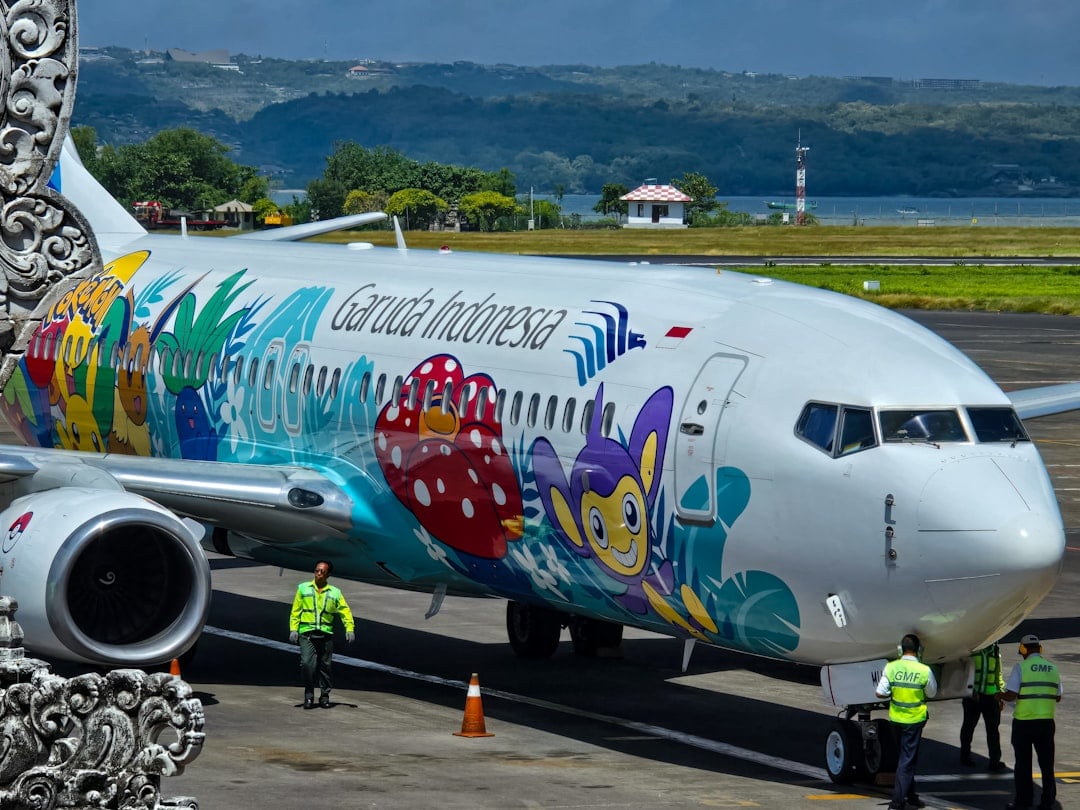
Bali’s airport is officially called I Gusti Ngurah Rai International Airport, code DPS. It’s located in Tuban, just south of Kuta and about 15 minutes from the main tourist strip. The airport went through a major expansion completed in 2014, adding a much larger international terminal that handles the bulk of arrivals. For most travellers, the airport is clean, modern, and reasonably efficient, though it can get painfully crowded during peak arrival windows.
Terminal Layout
There are two terminals. Terminal 3 is the international terminal, where you’ll arrive if you’re flying from outside Indonesia. It’s a single-building layout: you deplane (sometimes via aerobridge, sometimes via bus from a remote stand), walk through a corridor to immigration, then down to baggage claim, then through customs and out into the arrivals hall. Terminal 1 and 2 handle domestic flights. If you’re connecting through Jakarta on Garuda, your domestic leg may arrive at a different terminal, though the walk between them is short and covered.
What’s in the Arrivals Hall
The arrivals hall has ATMs, a couple of convenience stores, SIM card booths, and the official taxi counter. There’s also a Grab pickup point, though it’s a bit of a walk from the terminal exit. I’ll cover all the transport options in detail below. What you should know is that once you exit the sliding doors, you’ll be approached by touts offering transport. Smile, say no thank you, and keep walking unless you’ve already decided to use them. More on that later.
Airport Facilities Worth Knowing
The international terminal has free Wi-Fi, which works well enough for messaging but can be slow for larger tasks. There are currency exchange counters with rates that are not terrible but not great either. I usually withdraw rupiah from the ATM instead, which gives a better rate. There are a few cafes and restaurants both before and after security, and a duty-free shop that’s fine for last-minute chocolate and liquor if you’re into that. The Premium Lounge is available if you have priority pass access or want to pay for entry.
Should You Buy a SIM Card at the Airport?
You can, and it’s convenient, but you’ll pay a premium. The booths in arrivals typically sell tourist SIM packages from Telkomsel, XL, and Indosat. Prices are marked up compared to buying the same SIM at a convenience store in town. If you need data immediately for booking a Grab or calling your accommodation, go ahead and get one. Otherwise, I recommend waiting until you reach your hotel area. There are Indomaret and Alfamart convenience stores everywhere that sell SIM starters for a fraction of the airport price.
Clearing Immigration and Customs: What to Expect
Immigration at DPS can be the smoothest or the most frustrating part of your arrival, depending entirely on how many flights landed before yours. I’ve cleared immigration in 10 minutes at 11 AM on a Tuesday, and I’ve stood in line for 90 minutes at 3 PM on a Saturday during peak season. Here’s how to make it as painless as possible.
Visa on Arrival: The Process
Indonesia offers Visa on Arrival (VOA) to citizens of around 90 countries, including most of Europe, the United States, Australia, the UK, Canada, and many ASEAN nations. The VOA costs 500,000 IDR (roughly 32 USD) and is valid for 30 days. You can pay in cash (rupiah or major foreign currencies) or by card at the VOA counter, which is located before you reach the immigration desks.
You can also apply for an e-VOA online before your trip through the official Indonesian immigration website (molina.immigration.go.id). I recommend doing this. It lets you pay in advance, upload your documents, and get a pre-approved visa QR code. When you arrive, you still go through the immigration counter, but the process is faster because your information is already in the system. The e-VOA costs the same 500,000 IDR.
The Immigration Queue
After getting your VOA (or heading straight to immigration if you’re from an exempt country, which currently includes ASEAN members like Malaysia, Singapore, Thailand, and the Philippines for short stays), you join the immigration queue. There are auto-gate lanes for e-passport holders and manual counters for everyone else. The auto-gates are significantly faster. If your passport has an electronic chip and your country is on the auto-gate list, use it.
You’ll need your passport (valid for at least six months from entry), your printed return or onward ticket, and proof of payment for the VOA if you didn’t do e-VOA. I’ve been asked to show my onward ticket every single time I’ve entered Bali. Have it ready on your phone or printed. If you don’t have one, some airlines won’t even let you board.
Customs: Honest Quick Guide
After baggage claim, you walk through customs. Indonesia has a red-green channel system. Green means nothing to declare, red means you have goods to declare. In practice, most people walk through the green channel. Indonesia has strict rules on alcohol (you can bring in 1 litre of alcohol per person if you’re 21 or older, though enforcement is more relevant for arrivals from duty-free), cigarettes (200 cigarettes or 25 cigars or 100 grams of tobacco), and prohibited items include narcotics, firearms, and pornography. Vaping products are technically banned in Indonesia, though enforcement is inconsistent.
Indonesia also requires you to complete a customs declaration form. As of recent updates, this can be done online through the e-CD (electronic customs declaration) portal before you arrive. I fill it out on my phone in the plane. It takes about three minutes. Having the QR code ready saves you time at the counter.
Bali Tourist Tax
As of February 2024, Bali introduced a tourist levy of 150,000 IDR (about 10 USD) per international visitor. This is separate from the visa fee. You can pay it online before arrival through the official Bali provincial government portal (lovebali.baliprov.go.id) or at designated counters at the airport. I paid online before my last trip and it was smooth: I showed the QR code receipt at a desk near the exit and walked through in seconds. If you pay at the airport, expect a short queue during peak hours.
Getting from Bali Airport to Your Destination
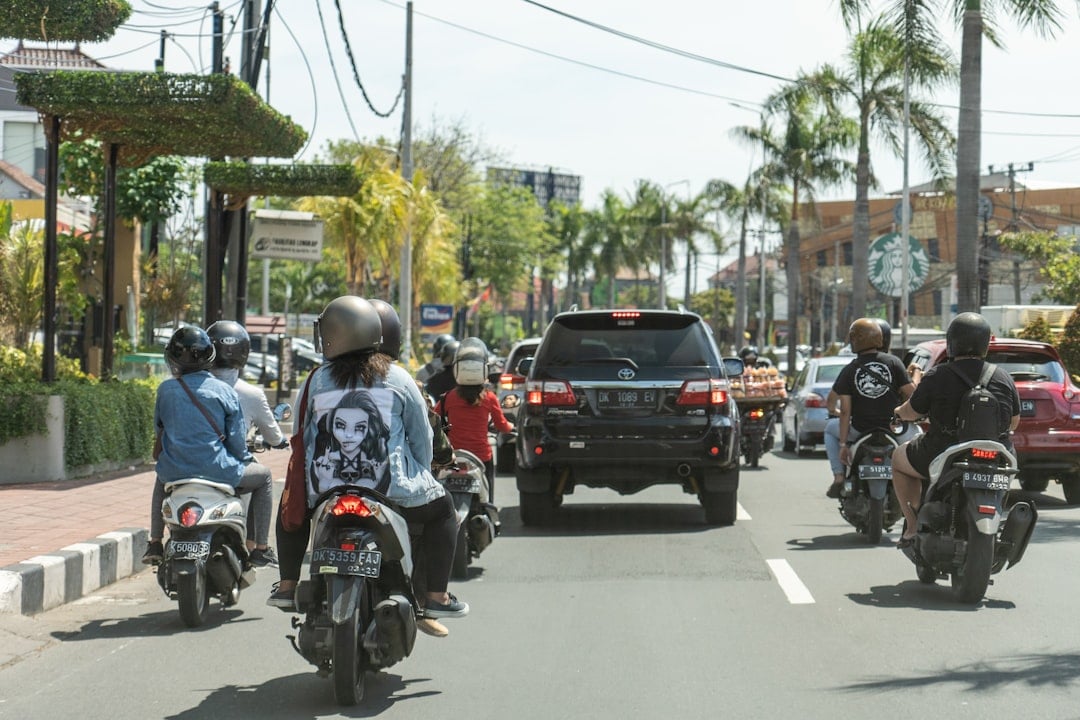
This is the part where first-time visitors get caught out. The moment you step outside the terminal, you’re in a swarm of people offering rides. Some are legitimate, some are not, and figuring out which is which when you’re jetlagged is no fun. Here’s how I handle it, broken down by destination.
Transport Options at a Glance
| Destination | Distance from DPS | Official Taxi (Fixed Rate) | Grab/Gojek Estimate | Travel Time |
|---|---|---|---|---|
| Kuta / Tuban | 2-5 km | ~100,000 IDR | ~35,000-50,000 IDR | 10-15 min |
| Seminyak | 8-10 km | ~150,000-200,000 IDR | ~60,000-90,000 IDR | 20-30 min |
| Canggu | 15-20 km | ~250,000-300,000 IDR | ~80,000-120,000 IDR | 35-50 min |
| Ubud | 35-40 km | ~300,000-400,000 IDR | ~120,000-180,000 IDR | 60-90 min |
| Uluwatu / Pecatu | 20-25 km | ~250,000-350,000 IDR | ~90,000-150,000 IDR | 40-60 min |
| Nusa Dua | 12-15 km | ~200,000-250,000 IDR | ~70,000-100,000 IDR | 25-35 min |
Note: Prices are approximate and reflect typical fares at the time of writing. Traffic in Bali can be unpredictable, especially in the Canggu and Seminyak areas during rush hour. Always confirm the fare before getting into any vehicle.
Official Airport Taxi Counter
The most straightforward option for first-time visitors is the official airport taxi counter, operated by the airport authority. You walk up, tell them your destination, pay a fixed rate, and they give you a voucher. A driver is assigned and you walk to the car. The rates are higher than Grab or Gojek, but it’s reliable, there’s no haggling, and the cars are generally decent. I use this when I arrive late at night or when I’m too tired to deal with apps.
Grab and Gojek: Can You Use Them at the Airport?
Here’s the honest answer: yes, but it’s complicated. The official taxi operators at Ngurah Rai have historically pushed back against ride-hailing apps picking up at the terminal. Grab and Gojek are allowed to operate, but their designated pickup point is not at the main arrivals exit. It’s a short walk to a designated area, usually near the parking structure. When you book, the app will show you the pickup point on a map.
In practice, I’ve found that Grab and Gojek work fine from the airport, and the savings are significant compared to the official taxi. The trick is to walk calmly to the designated pickup zone, ignore anyone who tries to tell you Grab is “not allowed today” (a common tout tactic to steer you toward their own vehicle), and wait for your driver. If you haven’t used Grab or Gojek before, download both apps before you arrive. Grab has wider coverage across Indonesia; Gojek is more Indonesian-centric and sometimes has better prices.
Private Drivers and Hotel Pickups
Many hotels and villas in Bali offer airport transfers, often for a fee. This is the most stress-free option, especially if you’re arriving at night or with a lot of luggage. Your driver meets you in the arrivals hall with a sign bearing your name. Typical costs range from 200,000 to 500,000 IDR depending on your destination, which is comparable to or slightly more than the official taxi. I always check if my accommodation offers this and compare the price to Grab. If it’s close, the convenience of being met inside the terminal is worth it.
Renting a Scooter at the Airport
Some travellers, especially those on a budget or planning to explore Bali on two wheels, consider renting a scooter directly at the airport. I’ve done this, and I have mixed feelings about it. There are rental operators near the airport, but the selection can be limited and prices are inflated compared to renting in town. More importantly, riding a scooter in Bali traffic when you’ve just stepped off a long-haul flight is not a great idea. Fatigue, left-hand driving (Indonesia drives on the left), and aggressive traffic patterns are a dangerous combination.
If you plan to ride in Bali, get your scooter in your destination town after you’ve rested. And make sure you have a valid International Driving Permit. Indonesia is a 1968 Vienna Convention country, so a 1968 IDP is what you need. I’ve written in detail about IDPs and how enforcement can vary by country in my International Driving Permit guide. The short version: carry both your home license and your IDP, have a printed copy, and expect that police in tourist areas do check.
Heading to Specific Destinations
Seminyak and Legian are the closest major tourist areas to the airport, about 8 to 10 km north. The drive is usually 20 to 30 minutes, but Seminyak traffic can crawl during peak hours. If you’re staying in Seminyak, the airport taxi or a Grab are both good options.
Canggu has become one of Bali’s most popular areas, and the roads leading there were not designed for the volume of traffic they now carry. The drive from the airport is 15 to 20 km, but travel time can balloon to nearly an hour during rush hour. The shortcuts through narrow village lanes are not something you want to navigate on your first day. I recommend a Grab or private driver for this route.
Ubud is inland, about 35 to 40 km from the airport through increasingly scenic countryside. The drive takes about an hour to 90 minutes depending on traffic. I love this drive: you leave the coastal chaos behind and wind through villages, rice fields, and forested slopes. It’s a beautiful introduction to the Bali that exists beyond the beach towns. Budget for a slightly higher fare, and consider a private driver if you want to stop for photos or a meal along the way.
Uluwatu and the Bukit Peninsula are south of the airport, 20 to 25 km away. The drive is usually 40 to 60 minutes. The Bukit is a limestone plateau with dramatic cliffs, surf breaks, and some of Bali’s best beaches. The roads here are narrower and less congested than Canggu, but they can be winding and dark at night. I recommend arriving during daylight hours if possible, especially if you’re not familiar with the area.
My Best Tips for a Smooth Bali Arrival
After enough arrivals, you develop a system. Here are the things I do every time I fly to Bali, honed through trial, error, and the occasional lesson learned the hard way.
Fill Out Your Forms Before You Land
Do the e-VOA, the customs declaration (e-CD), and the Bali tourist tax payment before you even board your flight. Having all three QR codes on your phone means you walk through the airport with minimal friction. I keep screenshots of all confirmations in a dedicated album on my phone, plus printed copies as backup. I’ve watched fellow passengers fumbling with airport Wi-Fi trying to fill out forms on arrival while the queue grew behind them. Don’t be that person.
Have Some Rupiah Before You Exit the Airport
Not a lot, just enough for your first taxi or Grab if the card payment fails. I usually withdraw 500,000 IDR from the airport ATM. That covers transport to my hotel and a meal or two on the first day. ATM withdrawal limits vary, and some international cards have trouble with certain bank ATMs in Indonesia. I’ve had the best luck with BCA and Mandiri ATMs. Avoid the currency exchange counters unless you have no other option.
Ignore the Touts
This deserves its own point because it catches people off guard every time. When you exit the terminal, you’ll be approached by men offering transport, SIM cards, hotel bookings, and sometimes just “help.” They’re persistent, friendly, and sometimes pushy. The tactic is to engage you in conversation, then steer you toward a service that pays them a commission. This might mean a taxi that costs three times the Grab price, or a SIM card that’s double what you’d pay at Indomaret.
The fix is simple: smile, say “no, thank you” firmly, and keep walking. Don’t stop to chat. Don’t show hesitation. If you need help, go to the official information desk inside the terminal or use the official taxi counter. I’ve found that wearing headphones (even if nothing is playing) dramatically reduces the number of people who try to talk to me. It’s a small trick that works.
Download the Right Apps Before You Arrive
Grab and Gojek are essential. WhatsApp is how almost every Balinese accommodation communicates, so install it and make sure your number is verified. Google Maps works well in Bali, including scooter routes. If you use a VPN for travel security or to access certain services, make sure it’s set up before you land. I’ve written about staying safe online while traveling if you want a deeper dive on that topic. The short version: use a VPN on airport and hotel Wi-Fi, and don’t access banking on public networks without one.
Time Your Arrival If You Can
The best arrival window is mid-morning, between 9 AM and 12 PM. Immigration queues are shorter, traffic to your destination is lighter, and you arrive with enough daylight to get settled and explore a bit. The worst arrival window is between 2 PM and 6 PM, especially on weekends, when multiple international flights land within the same hour. If your only flight option arrives at night, that’s fine, just set expectations: immigration may be slower, and you’ll want your transport pre-arranged rather than figuring it out on the spot.
Pack for the Heat
Bali sits about 8 degrees south of the equator. It’s hot and humid year-round. If you’re flying from a temperate climate, you’ll feel it the moment you step off the plane. Dress in light layers for the flight, and pack a change of light clothes in your carry-on if your checked bag is delayed. I once arrived in a hoodie and jeans from a cold-climate departure and spent the first hour in Bali looking for somewhere to buy a t-shirt. Not the end of the world, but avoidable.
Ready to Land in Bali?
Flying to Bali is one of those arrivals that actually lives up to the anticipation. The island is warm, chaotic, beautiful, and welcoming in a way that hits you from the moment the airport doors slide open. With the right preparation, the logistics fade into the background and you can focus on what you actually came for: the surf, the rice terraces, the warung food, the temple ceremonies, and the kind of conversations with locals that you’ll still be thinking about weeks later.
If this guide helped you plan your arrival, I’d love to hear about it. Have you flown to Bali before? Drop your tips, your airport stories, or your questions in the comments. Every traveller has a different arrival experience, and the more we share, the easier it gets for the next person stepping off that plane.
And if you’re planning a wider Southeast Asia trip, I’ve written guides to destinations across the region, including Da Nang, Vietnam and the underrated deep south of Thailand. Bali is just one piece of a much bigger puzzle, and the flights connecting these places are shorter and cheaper than you might think.
Frequently Asked Questions
Do I need a visa for Bali?
Most international visitors need a Visa on Arrival (VOA), which costs 500,000 IDR (about 32 USD) and is valid for 30 days. Citizens of ASEAN countries like Malaysia, Singapore, Thailand, and the Philippines can enter visa-free for short stays. You can get the VOA at the airport or apply for an e-VOA online before your trip through the official Indonesian immigration website for a faster process.
How much is the Bali tourist tax?
Bali introduced a tourist levy of 150,000 IDR (about 10 USD) per international visitor in February 2024. This is separate from the visa fee. You can pay online before arrival through the official Bali provincial government portal or at designated counters at the airport.
Can I use Grab or Gojek from Bali airport?
Yes, but the pickup point is not at the main terminal exit. Grab and Gojek have a designated pickup zone, usually near the parking structure, a short walk from arrivals. The apps will show you the exact location on a map. Fares are significantly cheaper than the official airport taxi, but be prepared to ignore touts who may tell you ride-hailing apps are not allowed.
How long does immigration take at Ngurah Rai Airport?
It depends on arrival time and flight volume. During quiet periods (mid-morning weekdays), you can clear immigration in 10 to 20 minutes. During peak periods (afternoons, weekends, holiday seasons), waits of 60 to 90 minutes are common. Using the e-VOA and auto-gate lanes for e-passport holders speeds up the process significantly.
What is the best way to get from Bali airport to Ubud?
Ubud is about 35 to 40 km from the airport, a drive of 60 to 90 minutes. The most convenient options are a private driver arranged by your hotel, the official airport taxi (about 300,000 to 400,000 IDR), or a Grab (about 120,000 to 180,000 IDR). The route is scenic, so if budget allows, a private driver lets you stop for photos or a meal along the way.