Yangon Myanmar Travel Guide: Honest Take for 2026
You are standing barefoot on warm marble at 5:15 AM, watching the first light hit the gold-leaf surface of Shwedagon Pagoda. The stupa glows, then blazes, then seems to emit its own light. A few monks are already walking their clockwise circuit. An elderly woman kneels and pours water over a Buddha statue corresponding to the day of her birth. Aside from that, it is quiet. This is Yangon, Myanmar at its most beautiful and most complicated, and if you are reading this, you are probably weighing whether to come at all.
This guide is for culturally curious travellers who are seriously considering Myanmar but feel uncertain about the current situation. I am not going to pretend the political context does not exist, and I am not going to tell you it is fine and you should just go. What I will do is give you an honest, first-person perspective on what Yangon is actually like for a visitor right now, what the ethical questions are, and how to experience the city’s extraordinary culture if you decide the calculus works for you. Think of this as the anchor for our Myanmar coverage, with a future guide to Bagan on the way.
The History Of Yangon
Yangon’s story is one of constant reinvention. The area around what is now downtown was originally a small Mon fishing settlement called Dagon, centered on the hill where Shwedagon Pagoda still stands. King Alaungpaya conquered the town in 1755, renamed it Yangon (meaning “end of strife”), and laid out a new grid plan. For the next century it grew as a port town, nothing especially grand.
Everything changed with the British. After the Second Anglo-Burmese War in 1852, Lower Myanmar fell under colonial control, and the British redesigned Yangon, then called Rangoon, as a model colonial city. They laid out the grid of streets you still walk today, built the Victorian and Edwardian civic buildings that define downtown, and turned the port into one of the busiest in British India. By the early 1900s, Rangoon was a cosmopolitan city with Burmese, Indian, Chinese, Armenian, and European communities all living and trading in the same few square miles. The Strand Hotel, opened in 1901 by Armenian brothers, hosted Kipling and Orwell. The High Court, built in 1911, still stands with its red-brick clock tower.
Independence came in 1948, and for a time Yangon remained the capital of a promising new nation. Then came decades of military rule, isolation, and economic decline. The colonial buildings decayed but were never demolished, partly because nobody had the money to replace them. In 2005, the military government moved the capital to Nay Pyi Taw, a purpose-built city in the interior, and Yangon was left to itself. That neglect turned out to be accidental preservation. Today, Yangon has the largest concentration of colonial-era architecture in Southeast Asia, roughly 188 heritage buildings on the official Yangon City Heritage List. It is a city that feels frozen between eras: grand but crumbling, sacred and profane, resilient above all else.
Best Things To Do In Yangon
Yangon’s best experiences are slow ones. This is not a city of theme parks or resort beaches. It is a city of pagodas, markets, train rides, and walking streets where the architecture tells you more than any museum could. Here is what I recommend, grouped by type.
Tourist Attractions
Shwedagon Pagoda at Sunrise
If you do one thing in Yangon, do this. Shwedagon is the most sacred Buddhist site in Myanmar, a 99-meter gold-plated stupa on Singuttara Hill that is visible from miles around. The complex opens at 4:00 AM and closes at 10:00 PM. Most tourists come for sunset, which is beautiful but crowded. I went for sunrise, arriving at 5:00 AM, and it was one of the most powerful travel experiences I have had in Southeast Asia.
The foreigner entrance fee is 20,000 Myanmar kyat (roughly $10 USD), payable at any of the four entrance gates. The ticket is a one-day pass, so you cannot reuse it for a sunset visit later. The northern entrance has an elevator, the western has an escalator, and the others are covered stairways. You must remove your shoes and socks. Dress modestly: long pants or a longyi (the traditional sarong worn by most Myanmar people), and shoulders covered. If you arrive underdressed, sarongs are available for purchase at the entrance.
What makes sunrise special is the light and the emptiness. The gold leaf catches the first rays and throws them back in a way that photographs cannot capture. The platform is enormous, extending about 450 meters, with smaller shrines, bell pavilions, and planetary posts arranged around the central stupa. Walk clockwise, as is customary. Find the planetary post for the day of the week you were born and pour water over it, as local devotees do. By 7:00 AM the tourist buses start arriving. Get there early and you will have the place almost to yourself.
The Yangon Circular Train
The Yangon Circular Railway is a 46-kilometer loop with 39 stations that takes about three hours to complete a full circuit. It departs from Yangon Central Railway Station, a short walk from Bogyoke Aung San Market and Sule Pagoda. Trains run in both directions, clockwise and counterclockwise, from roughly 6:00 AM to early evening. The timetable is indicative at best. Trains run late, platforms change, and not every train does the full loop. Count on departure times rather than stop-by-stop schedules.
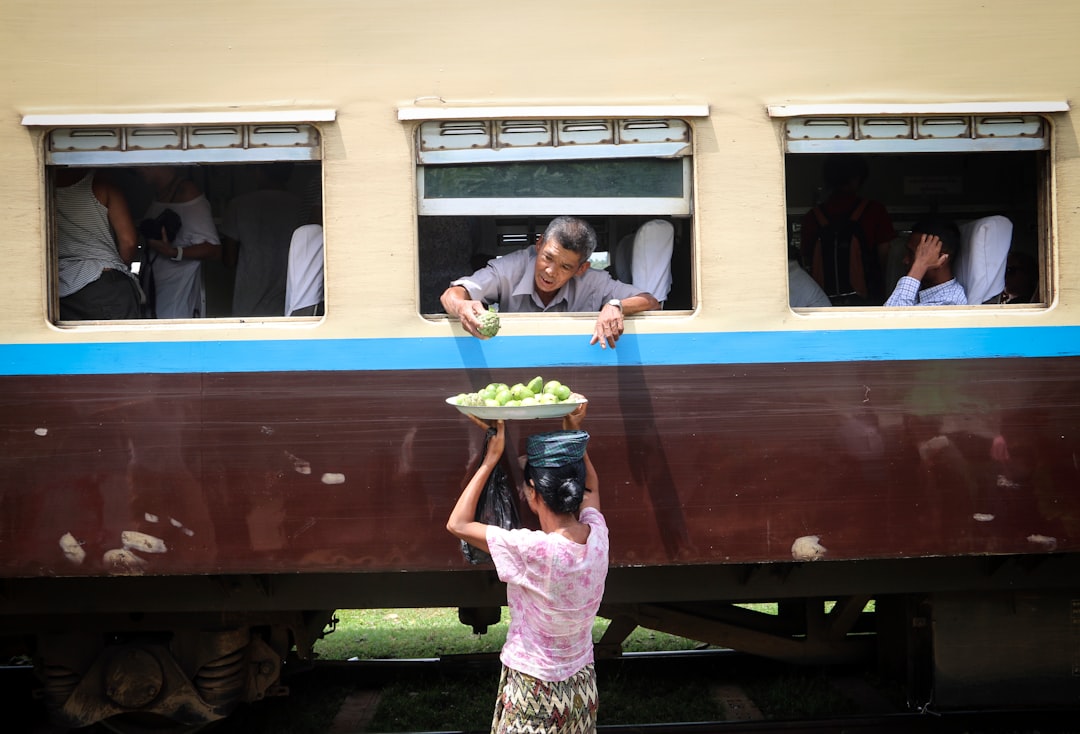
The fare is almost absurdly cheap. A full loop in a standard car costs around 200 to 400 kyat (well under $1). Tourists are sometimes automatically sold a ticket for the air-conditioned car at 500 to 1,000 kyat, which is still negligible. Tickets are purchased on the platform, not at the main station entrance. Look for the small booth on platforms 6 or 7.
The experience itself is pure immersion. The train rattles through suburbs, rice paddies, and informal settlements. Vendors board with baskets of quail eggs, fried snacks, vegetables, and medicine. You see Yangon the way its residents see it: not the postcard version, but the working city. I recommend taking the first morning departure, around 6:10 AM, when the air is still cool and the light is good. The afternoon car gets hot and crowded. Conditions are basic: hard plastic benches, ceiling fans that may or may not work, open windows. That is the point. This is not a heritage railway ride dressed up for tourists. It is a public commuter service that happens to be fascinating.
Downtown Colonial Architecture Walk
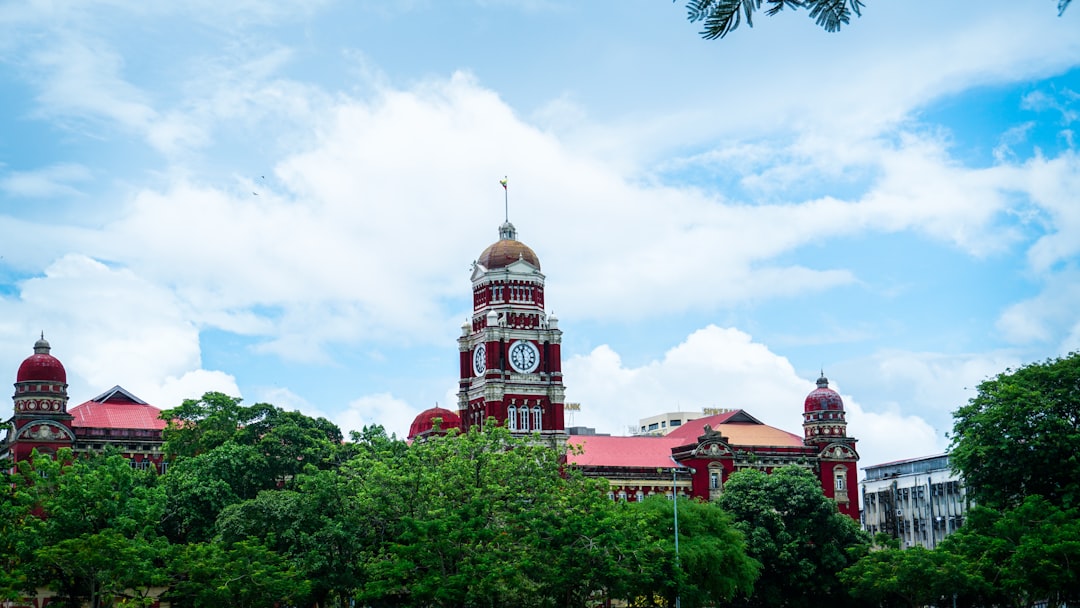
Yangon’s downtown is a living museum of colonial architecture, and the best way to experience it is on foot. The walk I recommend starts at Yangon City Hall, a striking building that blends colonial and Burmese design elements, facing Mahabandula Park. From there, head to Pansodan Street, which has the highest concentration of well-preserved colonial facades in the city.
Key buildings to look for along the walk:
- Yangon City Hall: A blend of colonial and traditional Burmese architectural elements, facing Mahabandula Park.
- The High Court: A 1911 red-brick building with an iconic clock tower, designed by architect John Ransome.
- Customs House: A 1916 building with a white tower and double-faced clock above the entrance.
- The Strand Hotel: Opened in 1901 by the Armenian Sarkies brothers, once one of the finest hotels in British Asia.
- General Post Office: A red-brick colonial building still functioning as a post office.
- Former Rowe and Company building: Designed in 1910 as Myanmar’s most upmarket department store, now housing government offices.
- Immanuel Baptist Church: Originally built in 1830, the present structure dates from 1885.
The walk takes about 90 minutes at a slow pace. I suggest doing it in the morning before the heat builds. Start at City Hall, walk down Pansodan to Strand Road, then loop back along Mahabandula Road toward Sule Pagoda. If you want a teahouse break, stop at any of the street-level tea shops along the route for a cup of sweet Myanmar tea and a semolina cake. The architecture tells the story of Yangon better than any history book: British ambition, Indian and Chinese merchant energy, Burmese adaptation, and decades of graceful decay.
Cultural Experiences
Beyond the main sights, Yangon rewards cultural curiosity. Sule Pagoda, sitting in the middle of a downtown traffic circle, is small compared to Shwedagon but deeply embedded in the city’s daily life. Botahtaung Pagoda, on the riverfront, is said to contain a hair relic of the Buddha and features a hollow interior you can walk through. Kandawgyi Lake, east of Shwedagon, offers a quiet morning walk with a view of the stupa reflected in the water, and the Karaweik, a golden barge shaped like a mythical bird, sits on the lake.
Bogyoke Aung San Market (formerly Scott Market) is the city’s main market for textiles, gemstones, lacquerware, and handicrafts. It opens at 9:00 AM and closes at 5:00 PM. Go in the morning when it is less crowded and vendors are more relaxed. This is where you will find the best selection of longyis, the cylindrical sarongs worn by nearly everyone in Myanmar, as well as traditional lacquerware that makes excellent souvenirs. Bargaining is expected, but keep it light and respectful.
If you want to support local artisans directly, look for Hla Day, a non-profit social enterprise shop on Pansodan Street that sells handicrafts sourced from local producers, including people overcoming disability and exclusion. It is a genuine alternative to the government-linked emporiums that funnel profits upward.
Nature
Yangon is not a nature destination, but it does have a few green refuges. Kandawgyi Nature Park around the lake is pleasant for a morning walk. Inya Lake, in the northern part of the city, is the largest lake in Yangon and a popular spot for locals to stroll at sunset. Mahabandula Park, in the heart of downtown, is small but provides a shaded bench where you can sit and watch the colonial architecture around you.
Where and What To Eat and Drink in Yangon
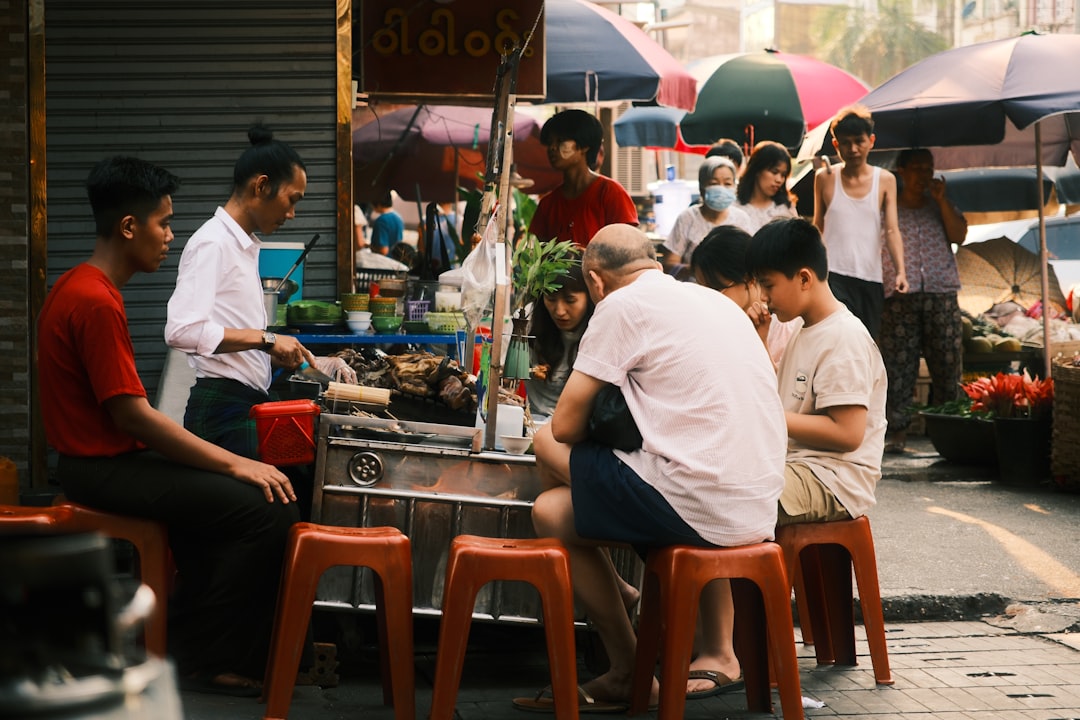
Yangon’s food scene is a layered reflection of its history: Burmese, Indian, Chinese, and Shan influences all intermingle. The backbone of daily eating is the teahouse, a institution as central to Yangon life as the pub is to Britain. Teahouses serve sweet milky tea (lapae yae) alongside cheap snacks and meals, and they are where you should start every morning.
Must-try local dishes:
- Mohinga: Myanmar’s unofficial national dish, a rice noodle soup in a fish-and-banana-stem broth, typically eaten for breakfast. Look for street vendors with steaming pots in the morning.
- Ohn no khao swe: Coconut chicken noodles, a Burmese comfort food with wheat noodles in a rich coconut curry broth, topped with crispy noodles.
- Tea leaf salad (lahpet thoke): Fermented tea leaves mixed with fried garlic, peanuts, sesame, and chili. It is uniquely Burmese and one of the most memorable things you will eat here.
- Shan khauk swe: Shan-style rice noodles with a tomato and meat sauce, simpler than mohinga but equally satisfying.
- Burmese curry</strong: Less spicy than Thai or Indian curries, typically served with a plate of complimentary side dishes including salad, soup, and fried snacks.
- Mont lone yay baw: Sticky rice balls filled with palm sugar, a traditional snack often sold by street vendors.
For eating out, 19th Street in Chinatown is the easiest evening food destination. It transforms into a lively street food strip after dark, with grilled skewers, beer stations, and noodle stalls. 999 Shan Noodle House on 34th Street is a tiny, long-running spot for authentic Shan noodles. For Burmese curry, try Wai Wai’s Place or Myaung Mya Daw Cho, both of which serve proper multi-dish Burmese meals. For a sit-down teahouse experience with colonial atmosphere, the Rangoon Tea House on Pansodan Road does modern Burmese dishes and excellent tea in a heritage building.
Coffee culture has quietly grown in Yangon. Independent cafes have appeared in downtown heritage buildings, serving locally roasted beans alongside the traditional tea. Junction City and Sakura Tower (which has a rooftop with views over the colonial quarter) also house modern cafes if you need air conditioning and reliable Wi-Fi.
Shopping In Yangon
Shopping in Yangon is about markets, not malls. Bogyoke Aung San Market is the main tourist market, with gems, textiles, lacquerware, and handicrafts across more than 1,600 stalls. Go in the morning, bargain politely, and look for the smaller stalls in the side aisles where the more interesting pieces tend to be. Theingyi Zei Market, a few blocks north, is the traditional medicine and textile market, far less touristy and fascinating if you want to see where locals actually shop.
For everyday goods and a slice of local life, Pansodan Morning Market spills onto the sidewalks of downtown before 8:00 AM. Vendors sell vegetables, fish, flowers, and betel nut. It is not set up for tourists, which is exactly why it is worth visiting. Bring small kyat notes and do not take photos of people without asking.
The best souvenirs from Yangon are things made by local artisans: lacquerware (which you will also see in Bagan, but Yangon has good selections at the markets), traditional textiles and longyis, and if you are brave, pickled tea leaf (lahpet) which you can buy vacuum-sealed to take home. Hla Day on Pansodan Street is the most ethical option, as all proceeds go to local producers.
Bars and Nightlife In Yangon
Yangon’s nightlife is modest, and in the current political climate it is quieter than it used to be. Many establishments close early, and the atmosphere after dark is subdued compared to Bangkok or even Phnom Penh. That said, there are a few spots worth a visit if you want a drink.
19th Street in Chinatown is the liveliest evening area, with beer stations (casual outdoor spots serving draft Myanmar Beer) and grilled skewer stalls. It is cheap, informal, and the closest thing Yangon has to a street-party atmosphere. The Union Bar and Grill on Strand Road is a more upscale option in a colonial building, popular with expats. Pansodan Ale House, also on Pansodan, serves craft beer in a converted heritage space. Sakura Tower’s rooftop bar offers views over downtown and Shwedagon at night.
My honest take: Yangon is not a nightlife city, and trying to make it one will disappoint you. Plan a good dinner, maybe one drink somewhere with a view or a colonial room, and get to bed early enough for a sunrise visit to Shwedagon. The city rewards early risers far more than night owls.
When Is The Best Time To Visit Yangon?
The best time to visit Yangon is November to February. This is the cool, dry season, when daytime highs sit around 30 to 33 degrees Celsius, mornings are pleasant, and rainfall is minimal. December and January are the peak months for comfort, with average lows around 21 degrees and almost no rain. November is nearly as good and slightly less busy.
March to May is the hot season, and it gets brutal. April highs can approach 38 degrees Celsius with suffocating humidity. The one exception is the Thingyan Water Festival (usually April 13 to 17), Myanmar’s biggest festival, marking the Burmese New Year. The entire country shuts down for water-throwing celebrations, and Yangon’s streets become a massive, chaotic, joyful water fight. If you want to experience it, book accommodation well in advance. If you do not, avoid this week entirely, as transport and hotels are disrupted.
The wet season runs from May to October, with July and August the wettest months (over 500 mm of rain each). Rain usually falls in heavy afternoon downpours rather than all-day drizzle, so you can still travel, but streets flood, walking becomes unpleasant, and outdoor sightseeing is limited. The Thadingyut Lighting Festival in October marks the end of the rains and is visually spectacular, with pagodas and buildings lit with candles and electric lights.
| Month | Avg High | Avg Low | Rainfall | Verdict |
|---|---|---|---|---|
| January | 32°C | 18°C | ~3 mm | Best: cool and dry |
| February | 34°C | 19°C | ~3 mm | Best: cool and dry |
| March | 36°C | 22°C | ~7 mm | Getting hot |
| April | 38°C | 24°C | ~15 mm | Hottest month; Thingyan festival |
| May | 37°C | 25°C | ~100 mm | Wet season begins |
| June | 33°C | 25°C | ~300 mm | Wet |
| July | 31°C | 25°C | ~500 mm | Wettest month |
| August | 31°C | 25°C | ~520 mm | Wet |
| September | 32°C | 25°C | ~300 mm | Wet, rain easing |
| October | 33°C | 24°C | ~100 mm | Rain easing; Thadingyut festival |
| November | 32°C | 22°C | ~15 mm | Excellent: dry season returns |
| December | 31°C | 19°C | ~5 mm | Best: cool, dry, comfortable |
If I had to pick one month, I would pick December. The weather is at its most comfortable, the city is dry, and the light is clear for photography. November is nearly as good and slightly less crowded.
How Many Days Do You Need In Yangon?
Two full days is the minimum to do Yangon justice, and three is better. You can see the highlights in 48 hours if you are disciplined, but the city rewards a slower pace. Here is how I would shape a two-day itinerary:
Day 1: Arrive at Shwedagon Pagoda by 5:00 AM for sunrise. Spend two hours on the platform. Head back to your hotel for breakfast, then do the downtown colonial architecture walk: City Hall, Pansodan Street, High Court, Strand Hotel, General Post Office. Stop at a teahouse for lunch. Afternoon at Bogyoke Aung San Market. Evening on 19th Street for street food and beer.
Day 2: Take the 6:10 AM circular train from Yangon Central for the full three-hour loop. Back downtown for lunch at a Burmese curry restaurant. Afternoon at Kandawgyi Lake and Sule Pagoda. Sunset at Shwedagon if you missed sunrise, or at a rooftop bar in Sakura Tower.
If you have a third day, add Botahtaung Pagoda, the riverfront, and a deeper exploration of Chinatown and the Indian Quarter. This is also the day to slow down and let the city surprise you: wander into a teahouse you did not plan to visit, follow a street market you stumble across, and talk to people. Yangon, Myanmar is a city that opens up when you stop checking items off a list.
If you are planning a broader Myanmar trip, Yangon is your natural gateway. From here, you can fly or take overnight transport to Bagan, Mandalay, or Inle Lake. We will be publishing a full Bagan travel guide soon, so keep an eye out for that if the temple plains are on your list.
Where To Stay In Yangon
Yangon’s accommodation scene ranges from basic guesthouses to grand colonial-era hotels, though the range is narrower than in Bangkok or Hanoi. The best area to base yourself is downtown, within walking distance of Sule Pagoda, Bogyoke Market, and the colonial architecture walk. Here are picks across budgets:
Budget:
- Family-run guesthouses in the downtown grid (around 28th to 35th Streets) offer rooms from $15 to $25 per night with fan or basic AC and en-suite bathrooms.
- Backpacker hostels are limited but a few dormitory options exist near Chinatown for under $15 per night.
Mid-range:
- Hotel Shwe Yee and similar mid-range properties in downtown offer clean rooms with AC for $30 to $50 per night.
- Alexander Hotel and Nawarat Hotel are reliable mid-range picks near the commercial district.
- Several boutique properties in converted colonial buildings offer character at $40 to $70 per night.
Higher-end:
- The Strand Hotel: The legendary 1901 property, fully restored, with suites starting around $300+ per night. If you want to sleep inside a piece of colonial history, this is the place.
- Sule Shangri-La: A modern international-standard hotel near Bogyoke Market, with a pool and full amenities, typically $100 to $150 per night.
- Pan Pacific Yangon: High-rise hotel with city views, connected to Junction City mall, around $100 to $120 per night.
My recommendation: stay downtown if it is your first visit. You can walk to the architecture walk, the market, the circular train station, and most teahouses. Arrange taxis from your hotel for Shwedagon and Kandawgyi. If you prefer comfort over character, the hotels around Junction City give you reliable standards and AC without sacrificing walkability.
How Do You Get Around In Yangon?
Visa Requirements
Most visitors need a visa to enter Myanmar. The Myanmar e-visa is available through the official government portal at evisa.moip.gov.mm. The tourist e-visa costs $50 USD, is valid for a single entry, allows a 28-day stay, and takes a minimum of three working days to process. You will need a passport with at least six months validity, a recent color photo, your passport bio-data page, proof of a return ticket, and proof of hotel booking. The approval letter is valid for 90 days from the issue date, and you must print it and present it on arrival. You cannot show it on your phone.
The e-visa is accepted at four entry points: Yangon International Airport, Mandalay International Airport, Nay Pyi Taw International Airport, and the Kawthaung land border checkpoint with Thailand. If you are planning to enter overland from Thailand at any other crossing, check whether that crossing accepts the e-visa before committing to your route. Most land borders are currently restricted or closed to foreign travelers, so flying into Yangon is the practical option for most visitors.
Citizens of ASEAN countries have visa exemptions: Brunei, Cambodia, Indonesia, Laos, and the Philippines get 14 days visa-free, Thailand gets 14 days, Vietnam gets 30 days, and Singapore gets 30 days. These exemptions apply only if entering and departing via Yangon, Mandalay, or Nay Pyi Taw international airports.
SIM Cards and Connectivity
Three carriers dominate Yangon: MPT (the state-linked incumbent), Ooredoo (Qatari-owned), and Atom (formerly Telenor, now locally owned). MPT has the broadest coverage footprint, making it the safest pick if you plan to travel beyond Yangon to Bagan or Inle Lake. Ooredoo and Atom generally offer faster 4G speeds within central Yangon.
You can buy a SIM at Yangon International Airport in the arrivals hall, where kiosks for all three carriers are staffed during most international flight arrivals. A tourist data plan from MPT starts at around 2,000 kyat (about $1 USD) for 1 GB over 7 days, or 8,000 kyat for 5 GB over 30 days. Passport registration is mandatory and takes about 10 to 15 minutes at the kiosk. Bring your physical passport, not a photocopy.
If the airport kiosks are closed (which can happen for late-night arrivals), official carrier shops in downtown Yangon sell SIMs during business hours. Look for stores around Sule Pagoda Road, Junction City mall, and along Pyay Road. Ask specifically for a tourist data package rather than a default prepaid plan, as the tourist bundles tend to include more data for the price.
For shorter stays, an eSIM is a convenient alternative. Services like Airalo offer Myanmar data plans you can install before you fly, though they cost noticeably more per gigabyte than a local SIM and piggyback on the same local networks. For trips over four or five days, a local SIM is the better value. For a first 24-hour stopgap after a late arrival, an eSIM works fine.
Getting Around the City
Downtown Yangon is compact and walkable, and walking is the best way to experience the colonial architecture. For longer distances, taxis are the primary option for visitors. There is no Uber or Grab in Myanmar. Taxis do not use meters, so you agree on the fare before getting in. A typical downtown trip costs 3,000 to 5,000 kyat. Your hotel can help negotiate if you are unsure of the going rate. The ride-hailing app Grab does not operate in Myanmar, but a local app called hi shuttle and Oway Ride offer booking services, though reliability varies.
The city bus system is extensive and extremely cheap (200 to 500 kyat), but it is geared toward locals and can be confusing for visitors. Routes are in Burmese, and the buses are often packed. If you are comfortable with a bit of chaos, it is an authentic way to travel. For everyone else, taxis and walking cover most needs.
If you are planning broader Southeast Asia travel and want to understand overland routes across the region, our Thailand Cambodia Laos Vietnam itinerary guide covers the logistics of multi-country travel, though Myanmar is not currently part of the standard overland circuit due to border restrictions.
The Elephant in the Room: Travel to Myanmar in 2026
I cannot write a guide to Yangon without addressing this directly. In February 2021, the Myanmar military seized power in a coup, deposing the elected civilian government. Since then, the country has been in a state of armed conflict between the military regime and various resistance groups, including the People’s Defence Force and ethnic armed organizations. The situation is volatile and can deteriorate at short notice. This is not a postcard destination with a minor political footnote. It is a country in crisis that happens to have extraordinary cultural heritage.
As of 2026, the U.S. State Department maintains a Level 4 “Do Not Travel” advisory for Myanmar. The UK Foreign Office advises against all travel to large parts of the country and against all but essential travel to others. Australia’s Smartraveller and Canada’s travel advisory both say “do not travel” or “avoid all travel.” These advisories cite armed conflict, arbitrary enforcement of local laws, risk of arbitrary detention, landmines, and poor healthcare infrastructure. I am not going to contradict these advisories. They exist for serious reasons.
What I can tell you is what the ground feels like for a visitor in Yangon specifically. The city is not an active war zone. Daily life continues. Markets are open, teahouses are full, the circular train runs, Shwedagon is visited by locals and foreigners alike. IEDs and targeted attacks have occurred in Yangon, including in areas frequented by foreigners, but these are sporadic rather than constant. The atmosphere is tense but not chaotic. You will see military checkpoints and security presence. Life goes on around them, which is both surreal and, for Yangon residents, simply normal.
The Ethical Question
This is the part where I cannot give you a clean answer, because there is not one. The case against visiting is straightforward: tourism generates tax revenue and licensing fees that ultimately reach the military government. Every hotel stay linked to the junta, every state-run tour, every airport fee sends money upward. Some argue that tourist photos from Myanmar project an image of normalcy that normalizes the junta’s grip on power.
The case for visiting is also real. The people who have suffered most from the coup are often the same people who depend on tourism income: guesthouse owners, tuk-tuk drivers, market vendors, local guides. A blanket boycott does not hurt the generals. It hurts the family running the $15-a-night guesthouse. Responsible travel advocates argue that careful engagement keeps Myanmar visible, supports civil society, and maintains people-to-people connections that isolation would sever. There is also the conscription law enacted in 2024, which applies to Myanmar citizens, including dual nationals, and which you should understand if your citizenship status is complicated.
If you decide to go, here is how to minimize harm and maximize benefit to ordinary people:
- Stay in small, family-run guesthouses, not large hotel chains. Ask about ownership. Some major hotels have military connections.
- Book with private, independent local operators, not state-run tours.
- Eat at street food stalls and small restaurants, not government-linked establishments.
- Buy directly from market vendors and artisans, not large emporiums.
- Use private transport rather than state airlines or military-linked bus companies.
- Avoid political conversations, do not photograph military or government buildings, and do not post critical comments about the regime on social media while in the country. The regime has detained people for private electronic messages critical of the military.
- Check your travel insurance carefully. Many policies exclude countries under “do not travel” advisories. If yours does, you are traveling uninsured.
- Monitor the situation daily. Register with your embassy if possible. Have an exit plan that does not depend on government assistance.
This is a personal decision that only you can make. What I can say from experience is that the ordinary people of Yangon, Myanmar are warm, resilient, and deeply proud of their culture. They have not asked to be cut off from the world. Whether you visit or not, engage with the question honestly. Do not go in ignorance, and do not stay away in ignorance either.
For context on how we think about travel in complex, politically sensitive regions of Southeast Asia, our guide to Yala, Thailand’s Deep South covers a similarly nuanced destination where security concerns and cultural richness coexist.
Conclusion
Yangon is one of the most culturally rich cities in Southeast Asia, and also one of the most complicated to visit in 2026. The Shwedagon at sunrise, the circular train through working suburbs, the colonial facades of Pansodan Street, the teahouse culture that anchors daily life: these are experiences you cannot get anywhere else. They exist alongside a political crisis that you cannot ignore and should not minimize. If you go, go with your eyes open, spend your money locally, and engage with the country and its people with respect and awareness. If you decide not to go, that is a legitimate choice too. Either way, Yangon is worth understanding.
Have you been to Yangon recently, or are you in the planning stages? Drop your questions or tips in the comments. I would genuinely like to hear how your experience compared to what I have described here, especially if you found places or people I missed. And if you are building a broader Myanmar itinerary, keep an eye out for our upcoming Bagan guide, which will cover the temple plains in the same honest, practical detail.
Frequently Asked Questions
Is it safe to travel to Yangon in 2026?
Major Western governments, including the US, UK, Australia, and Canada, maintain do-not-travel advisories for Myanmar as of 2026, citing armed conflict, arbitrary detention, and civil unrest. Yangon itself is not an active war zone, and daily life continues, but sporadic incidents have occurred in the city. If you decide to go, monitor the situation daily, register with your embassy, and have an exit plan.
How do I get a visa for Myanmar?
Apply for a Myanmar e-visa through the official portal at evisa.moip.gov.mm. The tourist e-visa costs $50 USD, allows a 28-day single-entry stay, and takes a minimum of three working days to process. You need a passport with six months validity, a color photo, proof of return ticket, and proof of hotel booking. Print the approval letter and bring it with you.
What is the best SIM card for tourists in Yangon?
MPT offers the widest coverage and is the best choice if you plan to travel beyond Yangon. Tourist data plans start at around 2,000 kyat (about $1 USD) for 1 GB over 7 days. You can buy a SIM at Yangon International Airport arrivals or at carrier stores downtown. Passport registration is mandatory.
How much does it cost to visit Shwedagon Pagoda?
The foreigner entrance fee is 20,000 Myanmar kyat (approximately $10 USD), payable at any of the four entrance gates. The ticket is a one-day pass. The pagoda is open from 4:00 AM to 10:00 PM daily, and sunrise (around 5:00 AM) is the best time to visit for light and quiet.
How long does the Yangon Circular Train take?
A full loop on the Yangon Circular Railway takes about three hours and covers 46 kilometers with 39 stations. Trains depart from Yangon Central Railway Station, usually from platforms 6 or 7. The fare is extremely cheap, around 200 to 400 kyat for a standard car. Take the first morning departure for the best experience.