Jakarta Travel Guide: What’s Worth Doing and When to Skip
I have passed through Jakarta more times than I can count. Sometimes I have given it two full days and walked away genuinely surprised by what I found. Other times I have sprinted through Soekarno-Hatta Airport and hopped straight on a connecting flight to Bali or Yogyakarta without a second thought. This Jakarta travel guide is for the traveler in between: someone with a layover, a business trip, or a day or two at the start of an Indonesia trip who wants to know if the city is worth their limited hours. The honest answer is sometimes yes, sometimes no, and knowing the difference is the whole game.
Should You Even Go to Jakarta? An Honest Take
Jakarta is a megacity of over 10 million people, with a metropolitan area that swells past 30 million when you include the satellite cities of Bekasi, Depok, Tangerang, and Bogor. It is the largest urban agglomeration in Southeast Asia, and it feels like it. The traffic is legendary, the air quality is frequently poor, and the city does not hand you its charms on a plate the way Bali or Yogyakarta do. You have to work for it.
But here is what I have come to appreciate about Jakarta after multiple visits: it is real. This is not a city that has been polished for tourists. The street food scene is extraordinary, representing cuisines from across the entire Indonesian archipelago in one place. The layers of history, from Dutch colonial rule to the independence struggle to the breakneck modernization of the past three decades, are visible if you know where to look. And the energy of a place where millions of people from across the archipelago come to make a living is something you simply cannot fake.
My honest recommendation: if you have less than 24 hours, skip Jakarta and take a connecting flight. The airport transit alone will eat into your time, and you will spend most of your day in traffic between sites that are spread across a massive city. If you have one to two days and you genuinely enjoy cities, food, and a bit of urban grit, Jakarta is worth staying for. If your priority is temples, rice terraces, or beaches, Jakarta will disappoint you and you should head straight to Yogyakarta or Bali.
The mistake I see most often is travelers treating Jakarta as a destination in the same category as Yogyakarta or Ubud. It is not. It is a working megacity that happens to have some genuinely interesting pockets. Adjust your expectations accordingly and you might actually enjoy it.
Kota Tua: Jakarta’s Dutch Colonial Quarter
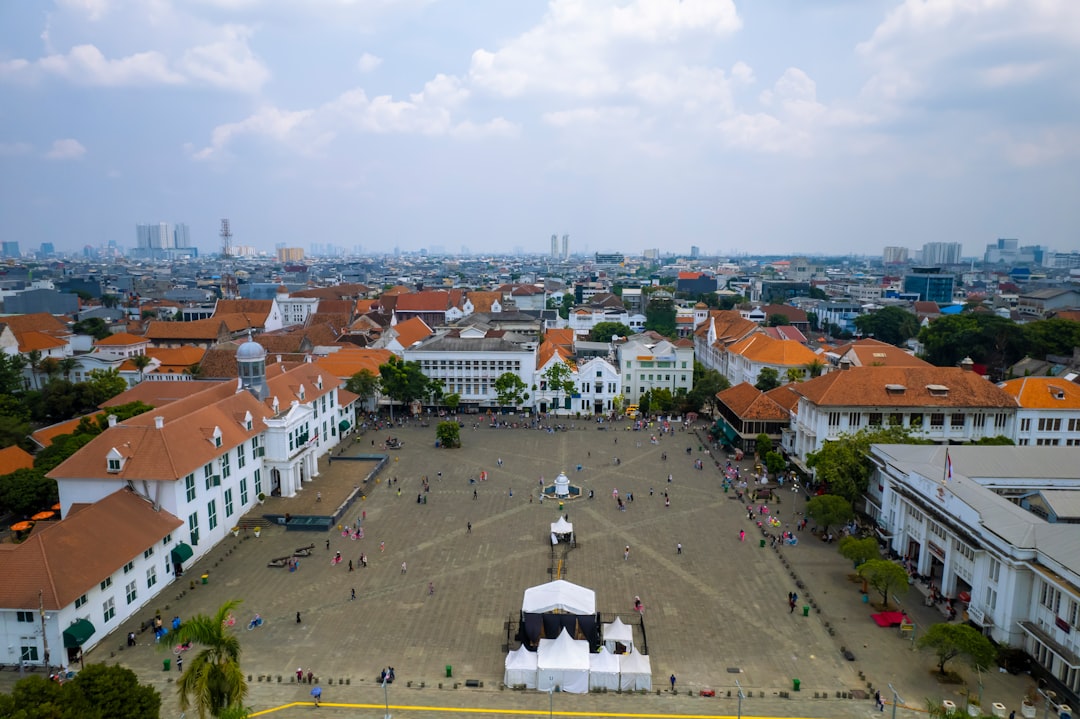
If there is one part of Jakarta that justifies a stopover, it is Kota Tua, the old Dutch colonial quarter also known as Old Batavia. This is where the city began in the early 17th century, and wandering through it gives you a tangible sense of the layers of history that sit beneath Jakarta’s modern sprawl.
Fatahillah Square (Taman Fatahillah) is the heart of the area. It is a broad cobblestone plaza surrounded by colonial-era buildings that date back to the 17th and 18th centuries, when the Dutch East India Company ruled from here. The square has been partially restored, and on weekends it comes alive with street performers, food vendors, and families renting brightly colored bicycles to ride around the plaza. During the week it is quieter, and you can actually appreciate the architecture without the crowds.
The Jakarta History Museum (Museum Sejarah Jakarta), housed in the former City Hall on the square, is worth a quick visit. It walks you through the city’s history from the pre-colonial period through Dutch rule, the Japanese occupation, and independence. The building itself is the main draw: heavy wooden beams, stone floors, and the old dungeon cells in the basement where prisoners were once held in grim conditions. Entry costs around 5,000 IDR, which is less than one US dollar, making it one of the best-value museums in the city.
A few steps away is the Wayang Museum, dedicated to Indonesian shadow puppets. Wayang is one of Indonesia’s most important cultural art forms, recognized by UNESCO as a Masterpiece of the Oral and Intangible Heritage of Humanity. The museum houses an extensive collection of puppets from across the archipelago, including Javanese wayang kulit (leather puppets) and wayang golek (wooden three-dimensional puppets from West Java). If you are heading to Yogyakarta, where wayang traditions are still very much alive in court performances and village rituals, this is an excellent primer.
Cafe Batavia sits on the northwest corner of the square, occupying one of the oldest surviving buildings in the area. It dates to the early 19th century and operates as a restaurant and bar. Yes, it is touristy. Yes, the prices are significantly higher than a street-side warung. But sitting in its wood-paneled interior with a cold drink, surrounded by old photographs and colonial furniture, is one of the few genuinely atmospheric experiences you can have in Jakarta. I would go for a drink rather than a full meal, and I would time it for late afternoon when the heat starts to ease and the light softens over the square.
One practical note: Kota Tua is best visited in the morning, before 11 AM. The area has limited shade and the heat can be punishing by midday. The streets around the square are walkable, but if you venture further into the surrounding old town, you will find crumbling warehouses, old canals that once served as the city’s lifeline, and streets that feel frozen in time. It is gritty and not entirely gentrified, which I think is part of the appeal. This is not a sanitized heritage district. It is a living, slightly frayed reminder of what Jakarta once was.
Menteng and Central Jakarta: Parks, Cafes, and Hidden Gems
If Kota Tua is Jakarta’s past, Menteng and Central Jakarta are its present. This is where you find the National Monument, the major museums, the leafy residential streets, and the cafe culture that has exploded across the city in recent years.
The National Monument, universally known as Monas, is the 132-meter obelisk that stands in the middle of Merdeka Square. It commemorates Indonesian independence and you can see it from miles away, rising above the tree line with a golden flame at its tip. You can take an elevator to the observation platform near the top for views across the city. On a clear day, which Jakarta does have occasionally though they are not the norm, you can see all the way to the docks at Tanjung Priok and the high-rises of Sudirman. The surrounding park is one of the few large green spaces in central Jakarta and is genuinely pleasant for a walk in the early morning, when joggers and families fill the paths before the heat sets in.
Just south of Monas, the National Museum (Museum Nasional) houses an extraordinary collection of Indonesian cultural and archaeological artifacts. If you want to understand the sheer diversity of the Indonesian archipelago, from Hindu-Buddhist statuary that predates Borobudur to tribal artifacts from Papua and Kalimantan, this is the place. I spent a couple of hours here on my last visit and could have stayed longer. The museum suffered a fire in September 2023 that damaged part of the building, so check ahead to see which galleries are open before making a special trip.
Menteng itself is the neighborhood to the south of Merdeka Square. It was developed in the early 20th century as a residential area for Dutch colonists and later became home to Indonesia’s political elite. It retains a leafy, almost suburban character that feels miles away from the traffic chaos of the main arteries. Wide streets lined with rain trees, grand old houses behind garden walls, and the occasional diplomatic mission give Menteng a calm, established feel that is rare in Jakarta.
Taman Suropati, a small park in the heart of Menteng, is my favorite spot in Jakarta for simply sitting and watching the city go about its business. On weekends you will find musicians playing, artists sketching, and families picnicking on the grass. The park is surrounded by embassies and grand old houses, some of which have been converted into cafes and restaurants. There is a collection of sculptures by ASEAN artists scattered through the park that gives it a quietly artistic atmosphere.
The cafe scene in Menteng and the nearby Senopati and Senayan areas has matured significantly over the past few years. You can find specialty coffee shops that would not be out of place in Melbourne or Singapore, often occupying restored colonial buildings or sleek modern spaces with garden seating. If you need a break from the heat and the noise of central Jakarta, this is where to find it. I have whiled away entire afternoons in Menteng cafes with a laptop and a cold brew, and I do not regret a single one.
What’s Actually Worth Doing in 24-48 Hours
Here is how I would prioritize a short stay in Jakarta, depending on how much time you actually have. The table below summarizes the experiences I think are worth your hours, with realistic time commitments and approximate costs in Indonesian rupiah.
| Experience | Time Needed | Approx. Cost (IDR) | Worth It? |
|---|---|---|---|
| Kota Tua and Fatahillah Square | 2-3 hours | 5,000-25,000 | Yes, go early |
| Cafe Batavia (drink only) | 45 min | 50,000-100,000 | Yes, for atmosphere |
| Monas observation deck | 1-2 hours | 15,000-25,000 | Yes, for city views |
| National Museum | 1.5-2 hours | 25,000 | Yes, if time permits |
| Menteng and Taman Suropati | 1-2 hours | Free | Yes, for a breather |
| Street food crawl | 2-3 hours | 50,000-150,000 | Absolutely |
| Shopping malls (Grand Indonesia) | 1-2 hours | Varies | Skip unless you need AC |
For a 24-hour stopover, I would focus on Kota Tua in the morning, have lunch at Cafe Batavia or a nearby warung, then head to Monas and the National Museum in the afternoon. End the day with dinner and drinks in Menteng or Senopati, where the cafe and restaurant scene is at its best. That gives you a taste of old Jakarta, modern Jakarta, and the food scene in a single day without trying to cover too much ground. The key is clustering your activities geographically, because crossing Jakarta in traffic can eat an hour each way.
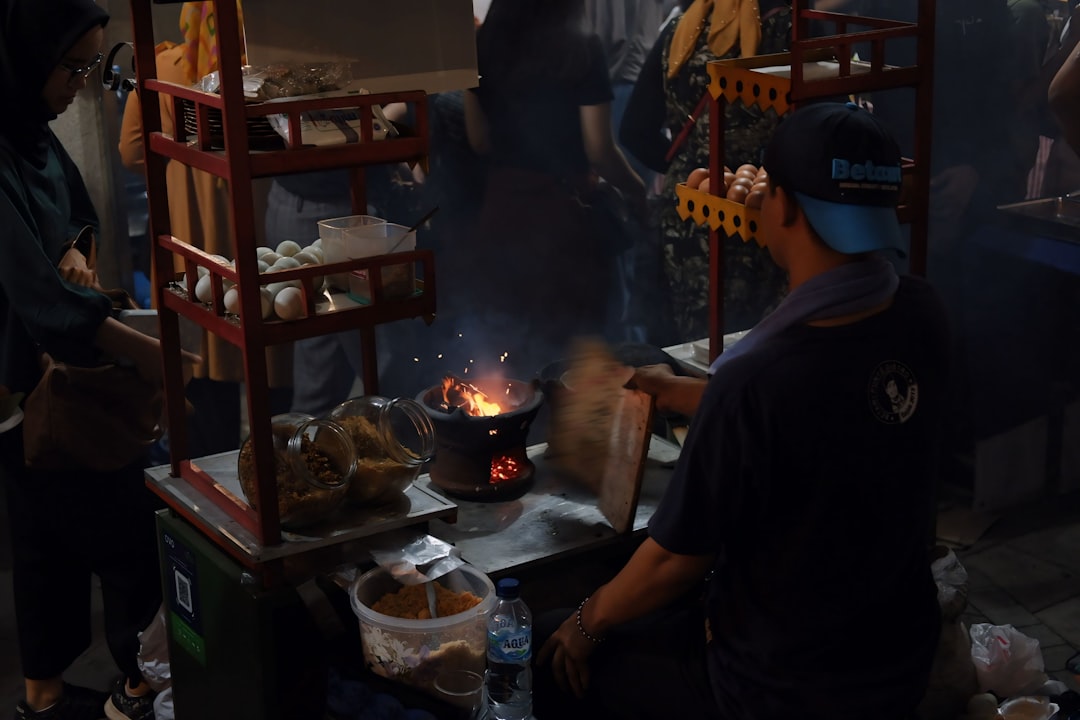
For 48 hours, add a morning exploring the Menteng cafe scene and Taman Suropati, plus an evening food crawl. Jakarta’s street food is one of its genuine highlights, and the best way to experience it is to hire a local guide or join a food tour that can take you to the stalls that do not show up on Google Maps. Dishes to look for include nasi uduk (coconut rice served with fried chicken, tempeh, and sambal), soto Betawi (Jakarta-style beef soup with coconut milk), kerak telor (a crispy Betawi egg and rice pancake cooked in a clay wok), and gado-gado (vegetable salad with peanut sauce). If you are staying in the Kemang area, the night markets and street food stalls along Jalan Kemang Raya are a good starting point for self-guided exploration.
I would skip the giant malls unless you specifically need to shop or want air-conditioned refuge from the midday heat. Grand Indonesia and Plaza Indonesia are impressive in their scale, but they are not culturally distinct from malls anywhere else in Asia. Your time is better spent on the street, where Jakarta’s real character lives.
Where to Stay: Sudirman vs Kemang vs Old Batavia
Where you stay in Jakarta matters more than in most cities because of the traffic. A poorly chosen hotel can mean spending an hour in a taxi each way to reach the places you actually want to see. Here is how I would choose between the three main areas travelers typically consider.
Sudirman and Thamrin (Central Business District)
This is where I usually stay. Sudirman and Thamrin are the business and hotel district at the geographic center of Jakarta, and they offer the best balance of convenience and comfort for short-stay visitors. You are close to Monas, the National Museum, and the MRT line. The major malls are here if you need them, and there is a wide range of hotels from budget business chains to five-star international properties. The trade-off is that the area feels corporate and somewhat sterile in the evenings, with limited street-level character. But for convenience and transit access, especially if you are arriving on the airport train, it is hard to beat.
Kemang (South Jakarta)
Kemang is the expat and nightlife district. It has the best concentration of restaurants, bars, and cafes outside the center, and it has a more lived-in, neighborhood feel than Sudirman. You will find everything from trendy coffee shops to late-night live music venues here. The problem is traffic. Kemang is not on the MRT line, and getting to and from central Jakarta during rush hour can take an hour or more each way in a ride-hailing car. If your priority is food and nightlife and you do not mind spending time in the back of a Gojek, Kemang is a good choice. If you are on a tight schedule, stay closer to the center.
Old Batavia / Kota Area
Staying near Kota Tua puts you walking distance from the colonial quarter, which is appealing if you want to explore the old town at dawn before the crowds arrive. Hotel options are more limited and generally budget to mid-range. The area empties out at night and does not have the dining or nightlife scene of Kemang or even Sudirman. I would only recommend this if you are specifically interested in the historical quarter and plan to spend most of your time there. For most travelers on a short visit, the trade-offs in terms of dining options and evening atmosphere are not worth the proximity.
Getting Around Jakarta Without Losing Your Mind
Jakarta’s traffic is not a myth. It is real, it is daily, and it can consume hours of your trip if you are not strategic about when and how you move around. The good news is that Jakarta has invested significantly in public transit over the past decade, and there are now options that let you bypass the worst of the congestion.
The MRT (Moda Raya Jakarta)
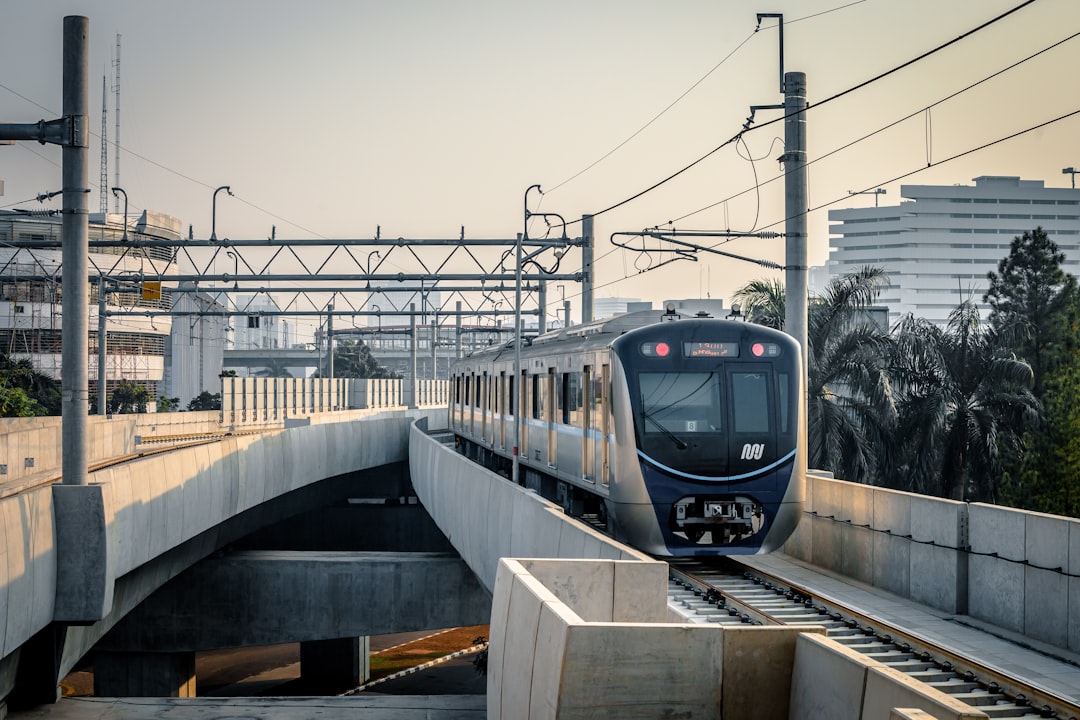
Jakarta’s MRT is the newest transit option, having opened in 2019. It runs north-south from Bundaran HI station (near the Selamat Datang roundabout in central Jakarta) south to Lebak Bulus. The line is clean, air-conditioned, and reliable. If your hotel and your destination are both on the MRT line, this is by far the fastest and most comfortable way to get around. The limitation is that there is currently only one line, so coverage is limited to a specific corridor. A north-south extension and an east-west line are under construction, but for now, the MRT serves a narrow but useful slice of the city. Fares start at around 3,000 IDR and max out at around 14,000 IDR. You need an electronic payment card, which you can buy at any MRT station, or you can use some contactless bank cards.
TransJakarta Busway
The TransJakarta BRT (Bus Rapid Transit) system is more extensive than the MRT, with over a dozen corridors running on dedicated bus lanes through some of the city’s most congested areas. The dedicated lanes mean the buses can bypass traffic, which is a game-changer during rush hour. The system covers much more of the city than the MRT, including routes to Kota Tua and other areas of interest. Fares are cheap, around 3,500 IDR per ride. The downside is that buses can be crowded, especially during peak commuting hours, and the stations are not always easy to navigate if you do not read Indonesian. Download the TransJakarta app or use Google Maps, which shows TransJakarta routes and stop locations.
Airport Train (Soekarno-Hatta Airport Rail Link)
If you are flying into Soekarno-Hatta Airport (CGK), the airport rail link is the smartest way to reach central Jakarta. The train runs from the airport to several stations including BNI City (near Sudirman) and takes about 45 to 55 minutes. This compares favorably to a taxi, which can take anywhere from 45 minutes to two hours depending on traffic and the time of day. The train costs around 70,000 IDR. There is a shuttle bus from BNI City station to various hotels in the Sudirman area. I always take the airport train when arriving during daytime hours because it removes the single most unpredictable variable from your arrival: the traffic. At night, when the trains stop running (the last departure is typically around 10 PM), a Grab or Gojek is your best option. Budget around 150,000 to 250,000 IDR for a ride-hailing car from the airport to central Jakarta.
Grab and Gojek
Ride-hailing apps are essential in Jakarta. Grab and Gojek (the Indonesian original that inspired Grab) both operate extensively across the city. Gojek tends to have better coverage and pricing within Jakarta, while Grab is stronger across the rest of Indonesia. Both offer car and motorcycle options. Motorcycle taxis (ojek) are faster in heavy traffic but are not for everyone: you will be weaving through gridlock on the back of a scooter with a stranger driving, wearing a helmet that may or may not fit properly. If you are comfortable on two wheels, it is the fastest way to get around. If not, stick to car options.
One thing to know: ride-hailing pickup points can be contentious at malls, hotels, and transit hubs. Some venues have designated Grab and Gojek zones, while others try to steer you toward their own taxi or car services for a commission. The same dynamic I described in my guide to flying to Bali applies here: walk to the designated pickup point, ignore anyone telling you the apps are “not allowed today,” and wait for your driver.
Taxis and Walking
Blue Bird is the most reputable taxi company in Jakarta. Their drivers use meters reliably, which is not universal among Jakarta taxis. If you must hail a taxi on the street, look for Blue Bird. But honestly, I rarely use taxis in Jakarta anymore. Grab and Gojek are cheaper, more convenient, and you can see the route and fare upfront.
Walking in Jakarta is possible but limited. Sidewalks are inconsistent: some areas, particularly around Kota Tua, Menteng, and the Sudirman business district, have decent pedestrian paths. Elsewhere you will find yourself walking on the road alongside motorcycles and cars, which is not pleasant and sometimes not safe. For distances beyond a few blocks, use transit or ride-hailing rather than attempting to walk.
When to Skip Jakarta (and What to Do Instead)
I want to be direct about this because I see too many travelers spend two or three days in Jakarta feeling underwhelmed and wishing they had gone elsewhere. Jakarta is not for everyone, and that is fine.
Skip Jakarta if you have less than 24 hours. The airport transit alone will eat into your time, and you will spend most of your day navigating traffic between sites that are spread across a city of 10 million people. Take your connecting flight and spend those hours somewhere that rewards every minute.
Skip Jakarta if your primary interest is cultural tourism. Yogyakarta, a one-hour flight from Jakarta, is the cultural heart of Java. It has the Kraton (the Sultan’s palace), traditional markets, batik workshops, wayang performances, and is the gateway to Borobudur and Prambanan, two of the most extraordinary temple complexes in Southeast Asia. If temples and traditional culture are what you came to Indonesia for, go straight to Yogya. I will be covering Yogyakarta in depth in a future guide, but for now, trust me: it deserves every hour you can give it, and Jakarta does not.
Skip Jakarta if you want beaches, surf, or island relaxation. Bali is a two-hour flight from Jakarta and offers everything Jakarta does not: coastline, rice terraces, volcanic mountains, and a Hindu cultural tradition that is visible in daily life. I have written a full guide to flying to Bali that covers airports, visas, and ground transfers, and I would point you there if Bali is your actual goal. Similarly, if you are heading to Bali’s cultural center, my guide to booking the right Ubud private tour will help you make the most of your time there without wasting it on commission-driven group tours.
Skip Jakarta if you are sensitive to air pollution. Jakarta regularly ranks among the most polluted major cities in the world, particularly during the dry season from roughly May to September. If you have respiratory issues, this is a genuine health concern, not a minor inconvenience. Check the air quality index before you commit to a stay.
When is Jakarta worth it? If you are a foodie, the city’s food scene, from street stalls to high-end restaurants, is one of the best in Southeast Asia, and it represents cuisines from across the entire archipelago in one place. If you enjoy urban exploration and do not mind a bit of grit. If you are on a business trip and have a free afternoon to fill. If you are starting a longer Indonesia trip and want a day to adjust to the timezone and climate before heading somewhere more demanding.
If you do skip Jakarta but still want a taste of urban Java, consider Bandung as an alternative stop. Three hours by train from Jakarta, Bandung sits at a higher elevation with cooler weather, Dutch colonial architecture, surrounding tea plantations, and a food scene that locals argue rivals Jakarta’s. It is a more relaxed city with genuine character, and I will be covering it in a future guide.
Jakarta Travel Guide: Frequently Asked Questions
Here are answers to the questions I get asked most often about visiting Jakarta on a short stop. If you have a question I have not covered, drop it in the comments and I will do my best to help.
Continuing Through Indonesia?
Jakarta is a starting point, not a destination. For most travelers, the real Indonesia begins the moment you leave the capital, whether that means flying to Yogyakarta for temples and traditional culture, heading to Bali for beaches and rice terraces, or exploring the lesser-visited islands of Sumatra, Sulawesi, or Flores.
If you found this Jakarta travel guide helpful, I would love to hear about your experience. Have you spent time in Jakarta? Did you love it, hate it, or land somewhere in between? Drop your tips and stories in the comments. The best advice always comes from travelers who have been there and are willing to share what they learned.
And if you are planning a wider trip through the region, Rider Chris has guides to destinations across Southeast Asia. Check out my guide to flying to Bali next, or start planning a multi-country route with my Thailand, Cambodia, Laos, and Vietnam itinerary if you want to see how Indonesia fits into a bigger picture. Indonesia is massive, and Jakarta is just the front door.
Frequently Asked Questions
Is Jakarta worth visiting?
Jakarta is worth visiting if you have one to two days and enjoy cities, food, and urban exploration. If you have less than 24 hours or are primarily interested in temples, beaches, or nature, skip Jakarta and fly directly to Yogyakarta or Bali.
How many days do you need in Jakarta?
One to two days is enough for most travelers. In one day you can visit Kota Tua, Monas, and the National Museum. In two days you can add Menteng’s cafe scene and a street food tour. More than two days is rarely necessary for leisure travelers.
How do you get from Jakarta airport to the city center?
The Soekarno-Hatta Airport Rail Link train is the best option, taking about 45 to 55 minutes to BNI City station near Sudirman for around 70,000 IDR. A Grab or Gojek car takes 45 minutes to two hours depending on traffic and costs 150,000 to 250,000 IDR. The last train departs around 10 PM.
What is the best area to stay in Jakarta?
Sudirman and Thamrin are the most convenient for short stays due to proximity to attractions and MRT access. Kemang is better for nightlife and dining but suffers from heavy traffic. The Kota area is best for exploring Kota Tua but has limited dining and nightlife options.
Should I skip Jakarta and go straight to Bali or Yogyakarta?
If you have less than 24 hours or are primarily interested in cultural sites, beaches, or nature, yes. Fly directly to Yogyakarta for temples and traditional culture, or to Bali for beaches and relaxation. Jakarta is best for foodies and urban explorers with a day or two to spare.