
Medan to Lake Toba Travel Guide: Sumatra’s Caldera
I arrived in Medan expecting nothing. The flight from Kuala Lumpur was under an hour, and within thirty minutes of landing at Kualanamu Airport, I was in the back of a car heading east through flat plantation country toward the mountains. Four hours later, I was standing on the shore of the largest volcanic lake in the world, watching mist lift off water so still it looked painted. That journey, from Medan through Parapat and across the ferry to Samosir Island, is the story of this guide. If you have already explored Bali’s beaches and Java’s temples and you are hungry for something rawer, this is where Sumatra rewards you.
This Medan to Lake Toba travel guide is written for the traveler who wants to go beyond the usual Indonesian circuit and actually understand what makes this region different. The Batak Toba people, the supervolcano that reshaped the planet, the lake the size of a small sea, and a transit city that is better than its reputation: all of it is connected by a single four-to-five-hour road and a forty-minute ferry crossing. I will walk you through the whole journey, honestly, with the logistics you need to actually do it.
The History Of Lake Toba
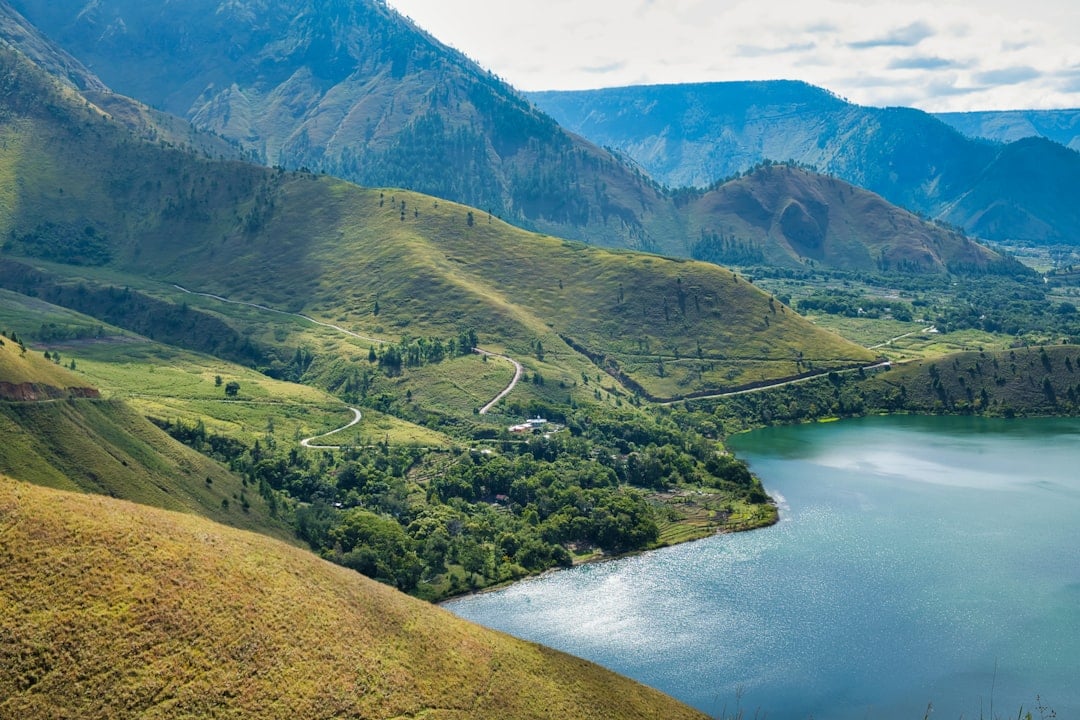
Lake Toba is not just a pretty lake. It is the scar of the largest known explosive eruption in Earth’s recent geological history. Approximately 74,000 years ago, the Toba supervolcano detonated with a force estimated at VEI 8, the maximum on the volcanic explosivity index. It ejected somewhere between 2,800 and 3,200 cubic kilometres of material, deposited ash layers up to 9 metres thick across parts of Malaysia, and may have triggered a volcanic winter that cooled the planet by several degrees for years. The crater collapsed, filled with rainwater, and became a lake roughly 100 kilometres long, 30 kilometres wide, and up to 505 metres deep. Samosir Island, sitting in the middle, is a resurgent dome, land that was pushed back up by magma pressure after the collapse. In July 2020, the Toba Caldera was designated a UNESCO Global Geopark, recognising both its geological significance and its living cultural heritage.
But the human story matters just as much. The Batak Toba people have inhabited the highlands around the lake for centuries, maintaining a distinct cultural identity through the Dutch colonial period and into modern Indonesia. They are predominantly Christian today, but their traditions, clan structures, architecture, and cuisine predate the missionaries and remain deeply woven into daily life. The Batak greeting Horas is everywhere on Samosir: shouted across streets, printed on signs, offered to strangers. It means something close to “may you be blessed with long life and prosperity,” and the warmth behind it is genuine, not performed for tourists.
A local legend tells of a man named Toba who married a woman who was secretly a cursed fish. They had a son, Samosir. When Toba broke his promise and revealed her secret, she and Samosir vanished, and Toba’s tears filled the crater to form the lake, with Samosir Island at its centre. Whether you take it as myth or metaphor, the story captures something real about how the Batak people see this landscape: it is not scenery, it is family history written in stone and water.
Best Things To Do In Lake Toba
Most of the best things to do around Lake Toba are concentrated on or around Samosir Island, the roughly island-shaped landmass in the centre of the lake that is accessible by ferry from Parapat. You can fill three or four days easily without repeating yourself, and the pace is unhurried by nature. This is not a place where you sprint between attractions. You rent a scooter, you ride along the lake road, you stop when something catches your eye.
Nature
The single best way to understand Lake Toba’s scale is to get on the water. You can charter a small boat from Tuktuk or Tomok for a private lake tour, which typically costs around IDR 300,000 to 500,000 for a couple of hours. Seeing Samosir from the water, with the crater walls rising on every horizon, is the moment it clicks that you are floating inside a volcano. The lake is calm in the mornings, often mirror-still, and the light at that hour turns the water into something almost luminescent.
If you prefer to stay on land, hike Pusuk Buhit, the highest point on Samosir. The trail takes about three to four hours round trip and passes through forest and small villages before opening to a panoramic view of the lake and the crater rim. Start early, around 7:00 AM, to beat the heat and catch clear skies. The trailhead is accessible by scooter from Tuktuk. It is moderately challenging but does not require any special equipment, just decent shoes and water.
Danau Aek Natonang is another stop worth seeking out. It is a small lake sitting on Samosir Island, inside Lake Toba, essentially a lake on an island in a lake. The road to it winds through farmland and forest, and the meadows around it are quiet enough that you might have the place entirely to yourself. Bring a picnic.
Tourist Attractions
The royal tombs at Tomok are the most visited cultural site on Samosir, and they deserve the attention. King Sidabutar’s tomb is carved from a single stone in a sphinx-like form with a long, mask-like face. According to local tradition, the king shaped it himself before his death. Surrounding tombs honour other royal family members, including a bodyguard and a woman the king is said to have loved unrequitedly. A collection of humanoid stone figures, small-bodied and large-headed and thickly encrusted in lichen, stands on a terrace below the tomb. Offerings of betel leaves are still placed here, blending the older animist traditions with the Christianity the Batak Toba adopted in the 19th and 20th centuries.
The Batak Museum in the Tuktuk area is small but worthwhile, especially if you want context before exploring the villages. It houses artifacts, traditional clothing, and exhibits on Batak customs, clan systems, and the spiritual significance of the lake. Entry costs around IDR 50,000 for foreign visitors. Spend an hour here on your first morning and everything else you see on the island will make more sense.
Cultural Experiences
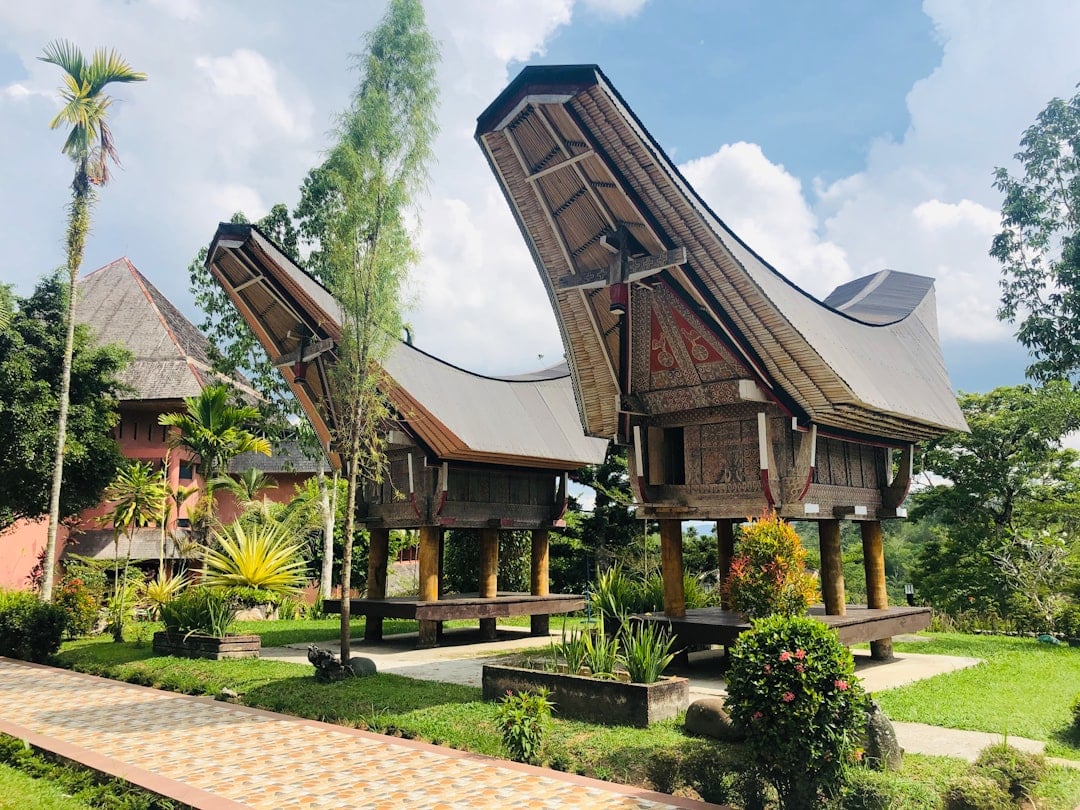
Huta Siallagan, on Samosir’s western shore, is the island’s most atmospheric heritage village. It is enclosed by a stone wall originally built for defence, and inside you will find well-preserved traditional Batak houses arranged in neat rows. These houses are extraordinary: they stand on stilts, with steeply curved roofs sweeping upward like water buffalo horns, and their facades are painted in red, black, and white, colours that represent life, death, and the afterlife in Batak cosmology. The decorative carvings incorporate motifs from Batak mythology and the natural world.
The village also contains the Batu Parsidangan, or Stone Court, where stone chairs and a table were used for council meetings and judicial proceedings. Serious crimes were judged here, sometimes resulting in capital punishment carried out under strict ceremonial rites. Standing in that circle of stone chairs, you feel the weight of that history in a way no museum exhibit can replicate.
The Batak are also renowned for ulos, handwoven textiles created on backstrap looms. You can see weaving in action in several villages across Samosir. Ulos are not souvenirs in the tourist sense: they are given as wedding gifts, used in ceremonial blessings, and draped over coffins as marks of respect. Watching a woman weave an ulos on a loom strapped to her waist, hours of work producing a strip of cloth maybe thirty centimetres wide, changes how you think about every textile you own.
If your timing is right, you can attend a Batak dance and music performance. Several cultural centres on Samosir offer evening shows featuring traditional tortor dance and gondang sabangunan ensemble music. Check with your guesthouse for current schedules. The performances are not large-scale productions, they are intimate gatherings where the connection between the performers and the audience is real.
Beaches & Islands
Parbaba Beach, on the northern side of Samosir, is the island’s best swimming spot. It is a sandy shore on the lake itself, with calm, clean water and food vendors nearby. It is rarely crowded, and the atmosphere is laid-back rather than resort-like. You can swim, sunbathe, or just sit under a tree and eat grilled corn from a roadside stall. On a clear afternoon, the view across the lake from here is one of the best on the island.
Where & What To Eat And Drink In Lake Toba
Batak Toba cuisine is one of the most distinctive food traditions in Indonesia, and it is radically different from what you will find in Bali or Java. The defining spice is andaliman, sometimes called Batak pepper, a wild-growing relative of Sichuan pepper that produces a soft citrus aroma followed by a tingling numbness on the tongue. It is used in almost everything, and it is the single ingredient that separates Batak food from every other regional cuisine in the country.
The two dishes you must try are arsik and saksang. Arsik is dry-cooked carp, marinated in a paste of shallot, garlic, ginger, turmeric, candlenut, red chilli, and andaliman, then cooked until the liquid evaporates and the spice paste clings to the fish. It is a ceremonial dish, served at weddings and births, and on Samosir it is made with freshwater carp from the lake itself. The flavour is complex: earthy, slightly sour, warmly spiced, with that distinctive andaliman tingle underneath.
Saksang is darker and more intense: minced pork (sometimes dog, locally called B1) or buffalo meat stewed in its own blood with coconut milk, chilli, lemongrass, galangal, and andaliman. It is an obligatory dish at Batak marriage celebrations. If you are not comfortable with pork or blood, you can find versions without, but they will not taste the same. The Batak are predominantly Christian, unlike the Muslim-majority populations of most of Indonesia, which is why pork features so prominently in their cuisine. This is one of the cultural contrasts that hits you immediately when you arrive from Muslim-majority regions like Malaysia or other parts of Sumatra.
You will find the best Batak food at lapo, traditional Batak eating and drinking establishments that are scattered across Samosir and the towns around the lake. A lapo is not a restaurant in the formal sense. It is a simple, often open-air place where food is cooked to order and tuak, palm wine, is served. Eating at a lapo is as close as you can get to sitting in a Batak family kitchen. Ask your guesthouse for the nearest one, because the best lapo rarely have English menus or Google Maps listings.
For everyday eating, the guesthouses and restaurants along the Tuktuk peninsula serve a mix of Batak specialties and standard Indonesian fare like nasi goreng and mie goreng. The quality varies, but the setting is usually right on the water, which makes up for a lot. Also look for sambal tuktuk, a local chilli paste made with andaliman and dried fish, which you can buy in jars at Tomok Market to take home.
Coffee culture is real here. Samosir’s volcanic soil and high altitude produce excellent Arabica beans, and several coffee plantations on the island welcome visitors for tours covering the process from cherry to cup. The coffee is rich, slightly earthy, and distinct from the Java and Sulawesi beans you may have tried elsewhere in Indonesia. If you have been to the highlands of Bandung and enjoyed the coffee scene there, Samosir offers a rougher, more hands-on version of the same idea.
Shopping In Lake Toba
Shopping around Lake Toba means markets, not malls. Tomok Market is the main one, and it doubles as an introduction to Samosir’s daily life. Stalls sell tropical fruit, vegetables, dry fish, meat, and spices alongside the usual tourist items like ulos textiles, wood carvings, and Batak-style souvenirs. The market is at its best in the morning, when locals are doing their actual shopping and the atmosphere is more village market than tourist bazaar.
If you want to buy an ulos, do it here or directly from a weaver in one of the villages. Prices for a handwoven ulos range from IDR 200,000 to over IDR 1,000,000 depending on size, complexity of the pattern, and whether it is genuinely handwoven or machine-made. Learn to tell the difference by looking at the edges: handwoven ulos have slightly irregular borders, while machine-made ones are perfectly uniform. Buying directly from the weaver costs more but ensures the money goes to the person who did the work, and you will often get the story behind the pattern as part of the purchase.
Other worthwhile purchases include andaliman spice (sold dried in small bags), sambal tuktuk paste, local Arabica coffee beans, and wooden carvings of Batak ancestral figures. All of these are genuinely local products, not the generic souvenirs you find repeated across every tourist destination in Southeast Asia.
Bars & Nightlife In Lake Toba
Lake Toba is not a nightlife destination, and that is part of its appeal. The after-dark scene on Samosir is quiet, centred on guesthouse restaurants and the occasional lapo that stays open late. You will find cold Bintang beer at most restaurants in Tuktuk, and tuak, the local palm wine, at lapo. Some guesthouses host occasional acoustic music nights or cultural performances, but these are sporadic and small-scale.
If you are coming from somewhere like Labuan Bajo with its harbourfront bars and sunset crowds, the contrast will be stark. Lake Toba is where you go to slow down, not to party. Bring a book, sit on your balcony, watch the lake go silver at dusk, and call it a night. The honest truth is that the best evening entertainment here is the sunset itself, and it delivers every single day.
When Is The Best Time To Visit Lake Toba?
The best time to visit Lake Toba is during the dry season from May to September, when rainfall is minimal, skies are clear, and temperatures sit comfortably between 16 and 30 degrees Celsius. July and August are the peak months: weather is at its most reliable, but accommodation fills up faster and you will share the lake with more visitors. The shoulder months of April and October offer good weather with fewer crowds and lower prices. The wet season runs from October to April, with the heaviest rain between November and January. Roads can get muddy and ferry schedules may be disrupted, though the mist rolling across the lake during the wet months is genuinely beautiful if you do not mind the rain.
| Season | Months | Weather | Crowds | Best For |
|---|---|---|---|---|
| Dry Season | May to September | Minimal rain, 16 to 30C | Peak in July and August | Hiking, swimming, scooter tours |
| Shoulder | April, October | Occasional rain, mostly clear | Low | Lower prices, quieter villages |
| Wet Season | November to March | Heavy rain, especially Nov to Jan | Very low | Photography, mist, solitude |
| Lake Toba Festival | June or July | Dry, warm | Higher during festival days | Batak cultural performances, boat races |
My recommendation: go in May, June, or September if you can. You get the dry season weather without the July-August peak crowds, and accommodation prices are noticeably lower. If you are flying from elsewhere in the region, check flight connections through Medan, which is the primary gateway to North Sumatra and has the nearest international airport to Lake Toba.
How Many Days Do You Need In Lake Toba?
Three to four days is the sweet spot for Lake Toba. Two days feels rushed because you lose half a day each way on the Medan-to-Parapat drive and ferry crossing. Five days gives you time to truly slow down, but unless you are working remotely or writing a novel, most travellers will be ready to move on after four.
Here is how I would shape a three-day stay: arrive in Parapat from Medan by midday, catch the ferry to Tuktuk, settle into your guesthouse, and spend the afternoon walking the Tuktuk peninsula and watching the sunset from the lake. Day two, rent a scooter and ride the lake road to Tomok for the royal tombs and market, then continue to Huta Siallagan and the Stone Court. Have lunch at a roadside warung. In the afternoon, hike Pusuk Buhit if you have energy, or head to Parbaba Beach to swim. Day three, take a morning boat tour on the lake, visit the Batak Museum, and spend the afternoon at a coffee plantation or hunting for ulos at Tomok Market before catching the afternoon ferry back to Parapat.
If you have a fourth day, use it to go deeper. Visit Danau Aek Natonang, charter a boat to a remote lakeshore village, or take a cooking class to learn how arsik is made. The pace on Samosir rewards people who build in unstructured time rather than packing every hour with activities.
Where To Stay In Lake Toba
Almost all travellers stay on Samosir Island, and almost all of those stay in or around Tuktuk, the peninsula on the eastern shore that serves as the main tourist base. Tuktuk is where the ferry from Parapat drops you, where the concentration of guesthouses and restaurants is highest, and where the lake views are most accessible. You can walk to dinner, rent a scooter from your guesthouse, and be on the water within minutes.
Here is how the accommodation breaks down across budgets:
- Budget (IDR 100,000 to 300,000 per night): Simple guesthouses with basic rooms, shared or cold-water bathrooms, and sometimes lake views from a common terrace. Hariara Guest House and Belindo Guesthouse are long-standing Tuktuk options. Expect fan-cooled rooms, mosquito nets, and a communal atmosphere. You are paying for location and authenticity, not luxury.
- Mid-range (IDR 400,000 to 800,000 per night): Private rooms with air conditioning or at least hot water, lake-facing balconies, and an on-site restaurant. Matraville Home Stay and similar properties around Tuktuk offer comfortable rooms with the views that make Lake Toba memorable. This is the sweet spot for most travellers.
- Higher-end (IDR 1,000,000 and above): A small number of boutique resorts and upgraded guesthouses offer larger rooms, pools, and more polished service. These are limited on Samosir, so book well in advance if you want this level during peak season.
One practical tip: coordinate with your accommodation before you arrive. Many guesthouses will send someone to meet you at the ferry dock in Tuktuk, which saves you from negotiating with a becak driver while holding your bags. The ferry from Parapat can drop you close to your hotel if you tell the crew where you are staying.
If you are starting your trip in Medan and spending a night there before heading to the lake, stay near the city centre to be close to Maimun Palace and the Grand Mosque. Medan’s accommodation ranges from budget business hotels to international chains, and the central area is compact enough that you can walk between the main historical sites. Just do not plan to spend more than one night in Medan unless you have a specific reason. The lake is why you are here.
How Do You Get Around In Lake Toba?
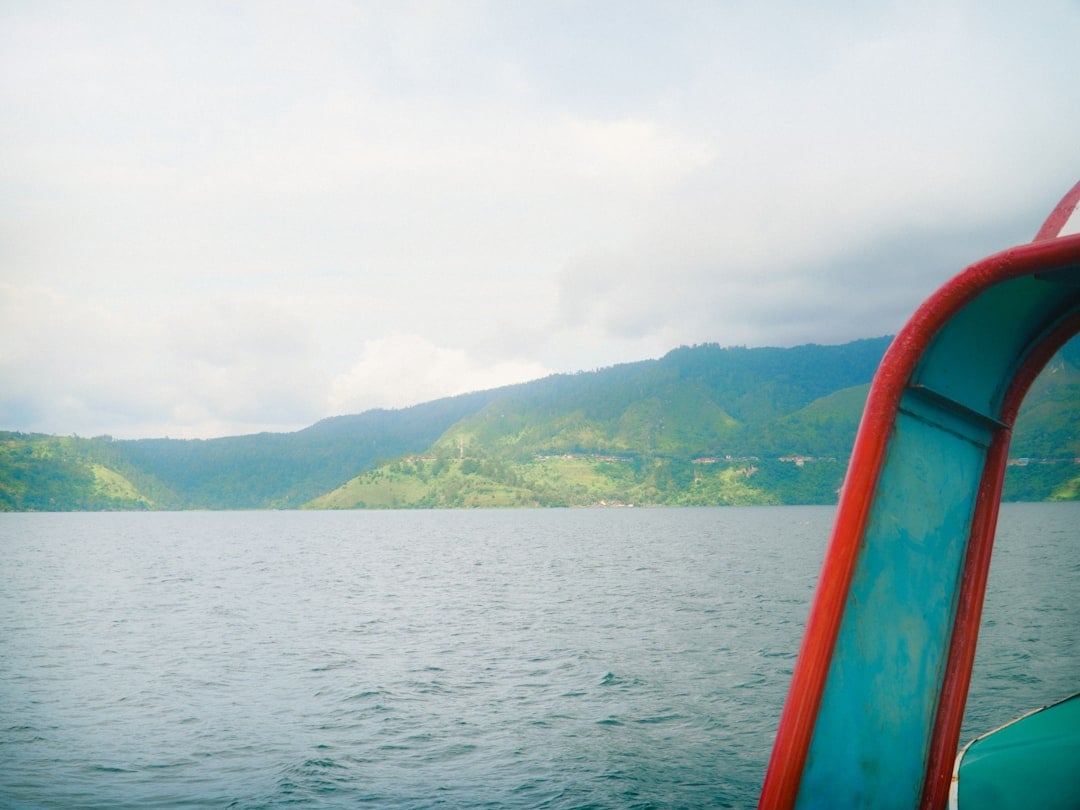
Getting to Lake Toba from Medan is straightforward but takes planning. The distance is roughly 170 to 176 kilometres, and the most common route runs from Medan through Lubuk Pakam, Tebing Tinggi, and Pematang Siantar to Parapat, the lakeside town where ferries depart for Samosir Island. The drive takes four to five hours depending on traffic and road conditions. An alternative scenic route through Berastagi and Kabanjahe is slightly longer at around 190 kilometres but offers mountain views, waterfalls, and the option to stop at tea plantations along the way.
Here are your main transport options from Medan to Parapat:
- Private car with driver: The most convenient option, especially for groups or families. Prices range from about IDR 600,000 to IDR 1,000,000 one-way depending on vehicle type (a Toyota Avanza is the budget standard, a Toyota Innova is the comfortable upgrade). This gets you door-to-door in about four hours with stops as you please. You can arrange this through your hotel in Medan, through travel agencies at Kualanamu Airport, or through online booking platforms. This is the option I would choose.
- Public bus from Amplas Terminal: The budget option. Sejahtera bus company runs services from Medan’s Amplas terminal to Parapat for around IDR 70,000 per person. Buses depart roughly hourly during daylight hours. The journey takes five to seven hours because the bus makes stops. You need to buy your ticket in person at the terminal. As of early 2026, online booking for this route was not reliably available.
- DAMRI bus from Kualanamu Airport: A newer option that connects directly from the airport to Parapat, eliminating the need to transit into Medan city first. Departures were reported at 10:00, 14:00, and 20:00, but schedules change, so confirm current times before relying on this.
Once you reach Parapat, you need to cross the lake to Samosir Island. There are two ports in Parapat, and they serve different ferry types:
- Tigaraja Port (passenger ferry to Tuktuk): This is the one most travellers use. Passenger ferries depart roughly hourly from about 8:30 AM to 6:00 PM, take about 45 minutes, and cost around IDR 25,000 per person. You buy your ticket on the ferry, cash only, no advance booking. The ferry can drop you near your accommodation in Tuktuk if you tell the crew where you are staying.
- Ajibata Port (car ferry to Tomok or Ambarita): If you are travelling with a vehicle or arrive after the last passenger ferry, the car ferry from Ajibata to Tomok or Ambarita operates with more extended hours, with departures running into the evening. Passenger fare is around IDR 17,000, with vehicle rates varying by size. The crossing takes about one hour.
One important warning: there have been reports of scammers at Parapat harbour approaching travellers and claiming they must book return ferry tickets and transport through them before crossing. This is false. You pay for your ferry ticket on the ferry, and you do not need to arrange anything with anyone at the port. Walk past anyone who tells you otherwise.
On Samosir itself, the best way to get around is by scooter. Rentals cost around IDR 80,000 to 100,000 per day and are available from most guesthouses in Tuktuk. The lake road circles much of the island and is in decent condition, though some secondary roads can be rough. If you are not comfortable on a scooter, you can hire a becak (motorcycle taxi) for short trips or arrange a car and driver through your guesthouse for a full-day island tour.
Conclusion
Lake Toba is the kind of place that recalibrates your sense of scale. You fly into Medan, a busy transit city that is worth a morning but not a detour, drive four hours through plantations and hills, cross a forty-minute ferry, and arrive at a lake so vast it has its own weather patterns, sitting inside a volcano that nearly ended human history. The Batak Toba people who live here have built a culture that feels distinct from anything you will encounter in Bali or Java, and the food, the textiles, the architecture, and the music all carry that distinction. If you have been working through Indonesia destination by destination and want something that rewards going further, this is it.
And if Sumatra hooks you the way it hooked me, this is only the beginning. Further south, Bukittinggi in West Sumatra offers Minangkabau culture, the Harau Valley, and the Sianok Canyon, a completely different cultural and landscape experience from Batak country. I will be covering that in a future guide. For now, if you are building a wider Indonesia route, explore the full collection of Indonesia travel content at Rider Chris to see how Lake Toba fits into a bigger picture that spans from Yogyakarta’s temples to Bali’s beaches and beyond.
Have you been to Lake Toba? Drop your tips in the comments. I would love to hear about your ferry experiences, where you stayed on Samosir, and what you ate. The best advice always comes from travellers who have been there.
Frequently Asked Questions
How long does it take to get from Medan to Lake Toba?
The drive from Medan to Parapat, the lakeside town where ferries depart for Samosir Island, takes about four to five hours by private car and five to seven hours by public bus. From Parapat, the passenger ferry to Tuktuk on Samosir Island takes approximately 45 minutes.
How much does it cost to get from Medan to Lake Toba?
A private car with driver costs roughly IDR 600,000 to IDR 1,000,000 one-way. The public bus from Amplas terminal in Medan to Parapat costs about IDR 70,000 per person. The passenger ferry from Parapat to Tuktuk costs around IDR 25,000 per person, paid on board.
Do you need a ferry to reach Samosir Island?
Yes. Samosir Island is in the centre of Lake Toba and is only accessible by ferry. Passenger ferries depart from Tigaraja Port in Parapat to Tuktuk roughly hourly from 8:30 AM to 6:00 PM. Car ferries from Ajibata Port to Tomok or Ambarita operate with extended hours into the evening.
What is Batak Toba culture like?
The Batak Toba are a predominantly Christian ethnic group native to the Lake Toba highlands. Their culture features distinctive boat-roofed traditional houses, handwoven ulos textiles, clan-based social structures, and a cuisine defined by andaliman pepper. Traditional dishes include arsik (dry-cooked spiced fish) and saksang (minced pork stewed in blood and spices).
When is the best time to visit Lake Toba?
The best time to visit is during the dry season from May to September, when weather is clear and temperatures range from 16 to 30 degrees Celsius. May, June, and September offer the best balance of good weather and fewer crowds. July and August are peak season with more visitors.


