Bandung Weekend Travel Guide: Highlands, Outlets & Food
I’ve made the Jakarta-to-Bandung run more times than I can count, and it never stops being a relief. Two and a half hours after leaving the sweltering lowlands, you’re pulling on a hoodie in a city that sits 768 metres above sea level, surrounded by tea plantations, volcanic craters, and some of the best street food in West Java. This Bandung weekend travel guide covers everything I’ve learned from multiple trips: the honest reality of the Puncak Pass drive, which highland area suits your weekend vibe, where the factory outlets are actually worth your time, and what you’ll pay for food and a bed.
Whether you’re a Jakarta expat escaping the city for the weekend or a regional traveller adding Bandung to a broader Indonesia itinerary, this guide is written for independent explorers who want practical logistics without the brochure spin. I’ll be direct about traffic, specific about costs, and honest about which parts of the Bandung plateau are worth your limited weekend hours.
Why Bandung Is the Ultimate Weekend Escape
Bandung works as a weekend destination because it delivers three things Jakarta cannot: cool weather, dramatic highland scenery, and a surprisingly sophisticated shopping and food scene, all within a three-hour drive. The city sits on a plateau framed by volcanic peaks, and the temperature regularly sits five to eight degrees cooler than Jakarta. That might not sound dramatic on paper, but after months of 33-degree lowland heat, waking up to 22-degree air in Lembang feels like a different country.
The Dutch colonists understood this. They built Bandung as a planned retreat city in the early 1900s, laying out wide boulevards and art deco buildings that still give the city centre a more refined feel than most Indonesian cities. That colonial heritage mixed with Sundanese culture, a strong creative industries sector, and the factory outlet boom of the 2000s gives Bandung a personality that is distinct from anywhere else in Java.
What Makes Bandung Different from Other Indonesia Weekends
I’ve travelled extensively across Indonesia, from flying into Bali to exploring Ubud’s cultural scene, and Bandung occupies a unique niche. It is not a beach destination, nor is it a deep cultural immersion destination in the way Yogyakarta is. What it offers is accessibility and variety. You can drive up on a Friday evening, spend Saturday morning in a volcanic crater, Saturday afternoon in a factory outlet, Saturday evening eating street food at a night market, and Sunday morning hiking through tea plantations before driving back. Few places in Southeast Asia pack that much variety into a 48-hour window that is this easy to reach.
Getting There: The Drive from Jakarta
The Jakarta-to-Bandung drive is roughly 150 kilometres and takes about 2.5 to 3 hours in good traffic, but the reality is more complicated. There are two main routes, and choosing the right one depends on when you leave and whether you want scenery or speed. I’ll break down both honestly, including the traffic traps that catch first-timers.
The Puncak Pass Route (Scenic but Slow)
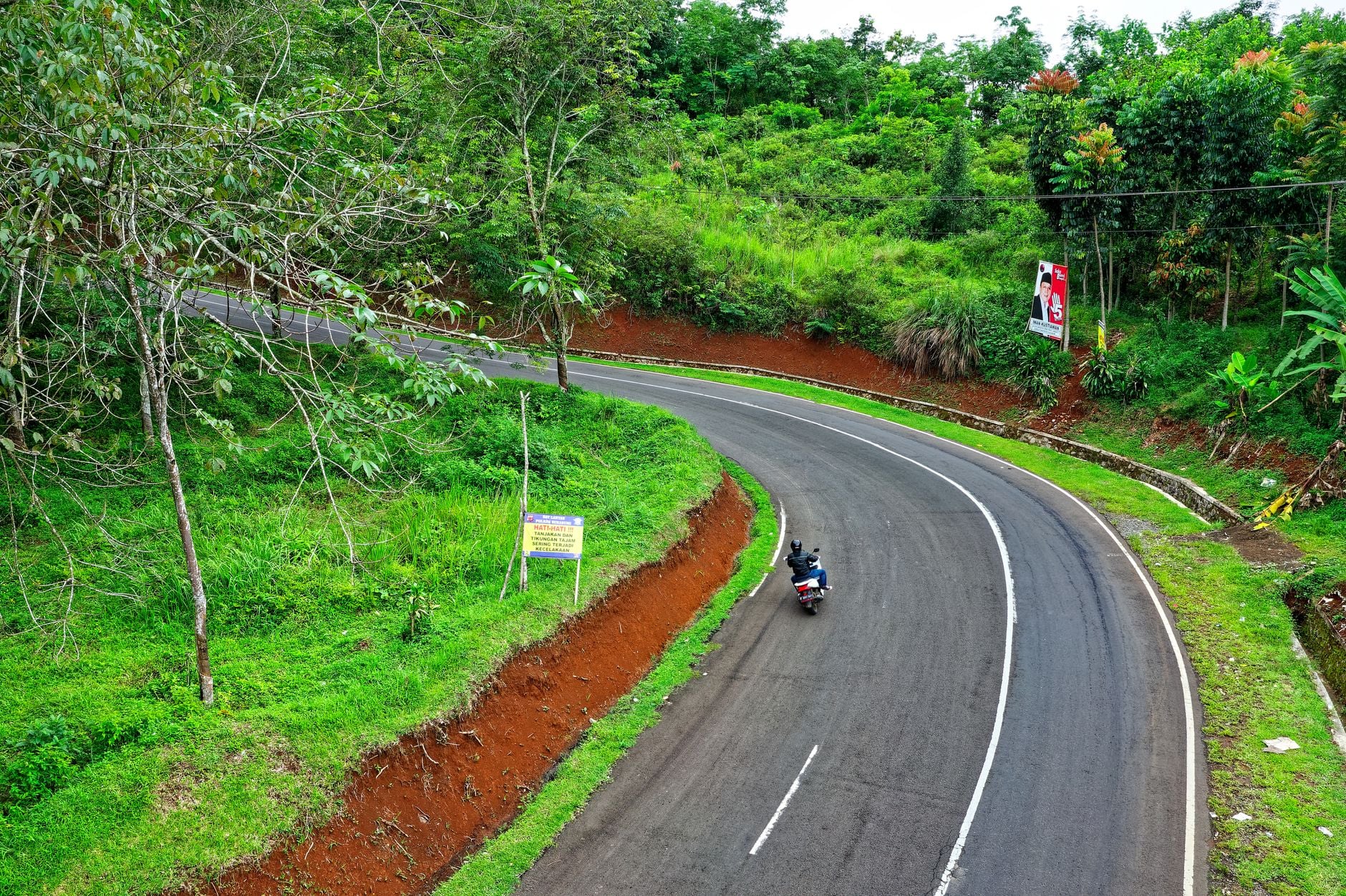
The classic route goes through Puncak Pass, the mountain road that winds through the highlands between Jakarta and Bandung. This is the scenic option: tea plantations roll across the hillsides, roadside stalls sell fresh corn and tropical fruit, and the air gets noticeably cooler as you climb. On a clear weekday morning, it is one of the most pleasant drives in West Java.
Here is the catch: on weekends and public holidays, Puncak Pass becomes one of the worst traffic bottlenecks in Indonesia. The road is narrow, winding, and not designed for the volume of weekend traffic it receives. I have personally sat in a three-hour crawl on a Saturday afternoon that should have taken 45 minutes. The traffic is so notorious that locals have a term for it: “macet Puncak.” If you drive this route on a weekend, leave Jakarta before 6 AM or after 8 PM to avoid the worst of it.
There is a one-way traffic system on the Puncak route during peak periods. On weekends, the uphill direction (Jakarta to Bandung) is typically open in the morning, and the downhill direction (Bandung to Jakarta) opens in the afternoon. This means if you are driving up on a Saturday afternoon, you may be forced onto the alternate route anyway. Check current traffic conditions on Google Maps before you commit to this road.
The Cipularang Toll Route (Fast and Direct)
The Cipularang Toll Road is the route most Jakarta residents actually use. It is a modern expressway that bypasses Puncak Pass entirely, cutting through the mountains via a series of tunnels and viaducts. The drive takes about 2.5 hours in normal traffic, and the toll fare is roughly 60,000 to 80,000 IDR one way depending on your entry and exit points.
This is the route I take when I want reliability. It is not scenic, but it is fast, well-maintained, and rarely backs up the way Puncak does. The only exception is the long weekend exodus from Jakarta, when even the toll road can slow to a crawl at the toll booths. If you are driving on a Friday evening of a public holiday weekend, expect to add an hour or more.
Driving or Riding: What You Need to Know
If you are an expat or visitor driving in Indonesia, make sure you have the right paperwork. Indonesia is a left-hand drive country and requires either a local licence or a valid International Driving Permit for foreign drivers. I have written a detailed guide to the International Driving Permit requirements for 2026, which covers what you need for legal driving across Indonesia and the wider region.
For motorcyclists, the Puncak Pass route is a genuinely rewarding ride on a weekday. The sweepers and elevation changes make it one of the better roads within reach of Jakarta. The Cipularang toll road does not allow motorcycles, so if you are riding, you will need to take the Puncak route or the older Sukabumi road. Bring a warm layer; the temperature drop at the summit can be significant, especially in the early morning or after rain.
Alternative: Train from Jakarta
If you do not want to drive, the Argo Parahyangan train runs from Gambir Station in Jakarta to Bandung Station, taking about three hours. Tickets cost between 100,000 and 300,000 IDR depending on class and how far in advance you book. The train is comfortable, air-conditioned, and completely bypasses the traffic. I have taken it several times and it is my preferred option when I know I am travelling on a peak weekend. Book through the KAI Access app or the official KAI website, and book early for weekend and holiday travel because trains fill up fast.
Highland Day Trips from Bandung
The highland areas around Bandung are the real reason to make the trip. The city itself is pleasant, but the surrounding plateau is where the magic happens. Three areas dominate the weekend trip circuit: Lembang, Dago, and Ciwidey. Each has a distinct personality, and choosing the right one depends on what kind of weekend you want.
Lembang: Family-Friendly and Accessible
Lembang is the closest highland area to central Bandung, about 10 to 15 kilometres north of the city. It sits at roughly 1,300 metres elevation, and the temperature drop is immediately noticeable. This is where Jakarta families come for the weekend, and the infrastructure reflects that: you will find farm-themed parks, strawberry picking operations, flower gardens, and plenty of cafes with valley views.
The standout attraction here is Tangkuban Perahu, an active volcano with a crater you can drive almost to the edge of. The main crater, Kawah Ratu, is accessible by car and requires only a short walk from the parking area. There are two other craters, Kawah Domas and Kawah Upas, that require a guided hike of about 30 minutes each. The guided hike costs around 50,000 to 100,000 IDR per group, and the entrance fee to the Tangkuban Perahu area is 20,000 IDR for domestic visitors and 200,000 IDR for foreign visitors.
Lembang is also home to Floating Market Lembang, a touristy but enjoyable complex where vendors sell food and crafts from boats on a small lake. Entry is around 25,000 IDR per person. It is commercial, yes, but the food is decent and it is a good place to bring kids. If you want something quieter, the tea plantations along the road to Subang, north of Lembang, offer peaceful walks through rolling green hills with almost no crowds.
Dago: Cafes, Views, and the Cool-Weather Vibe
Dago (short for Jalan Ir. H. Juanda) is the stretch of road that climbs north out of central Bandung into the hills. It is the trendy highland area, lined with cafes, boutique hotels, and restaurants that overlook the valley below. If Lembang is for families, Dago is for couples, groups of friends, and anyone who wants to spend a slow afternoon drinking coffee with a view.
The upper section of Dago, known as Dago Atas or Dago Pakar, is where the best viewpoints and cafes are concentrated. The Dago Tea House is a cultural venue with open-air performances and a lovely garden. Higher up, you will find the trailhead for the hike to Maribaya Waterfall and the Curug Omas cascades, which takes about 45 minutes to an hour each way through forest. The trail is well-marked but can be slippery after rain, so wear proper shoes.
Dago is also where you will find some of Bandung’s best cafe culture. The area has embraced the third-wave coffee scene, and you can get a genuinely excellent flat white for 25,000 to 40,000 IDR while looking out over a misty valley. This is the area I gravitate to when I want a slow, atmospheric morning without a packed itinerary.
Ciwidey: Nature, Crater Lakes, and Strawberry Farms
Ciwidey is the furthest of the three highland areas from central Bandung, about 50 kilometres south, and it requires a commitment of at least a full day. The drive takes about 90 minutes to two hours depending on traffic. What you get in return is the most dramatic natural scenery in the Bandung area.
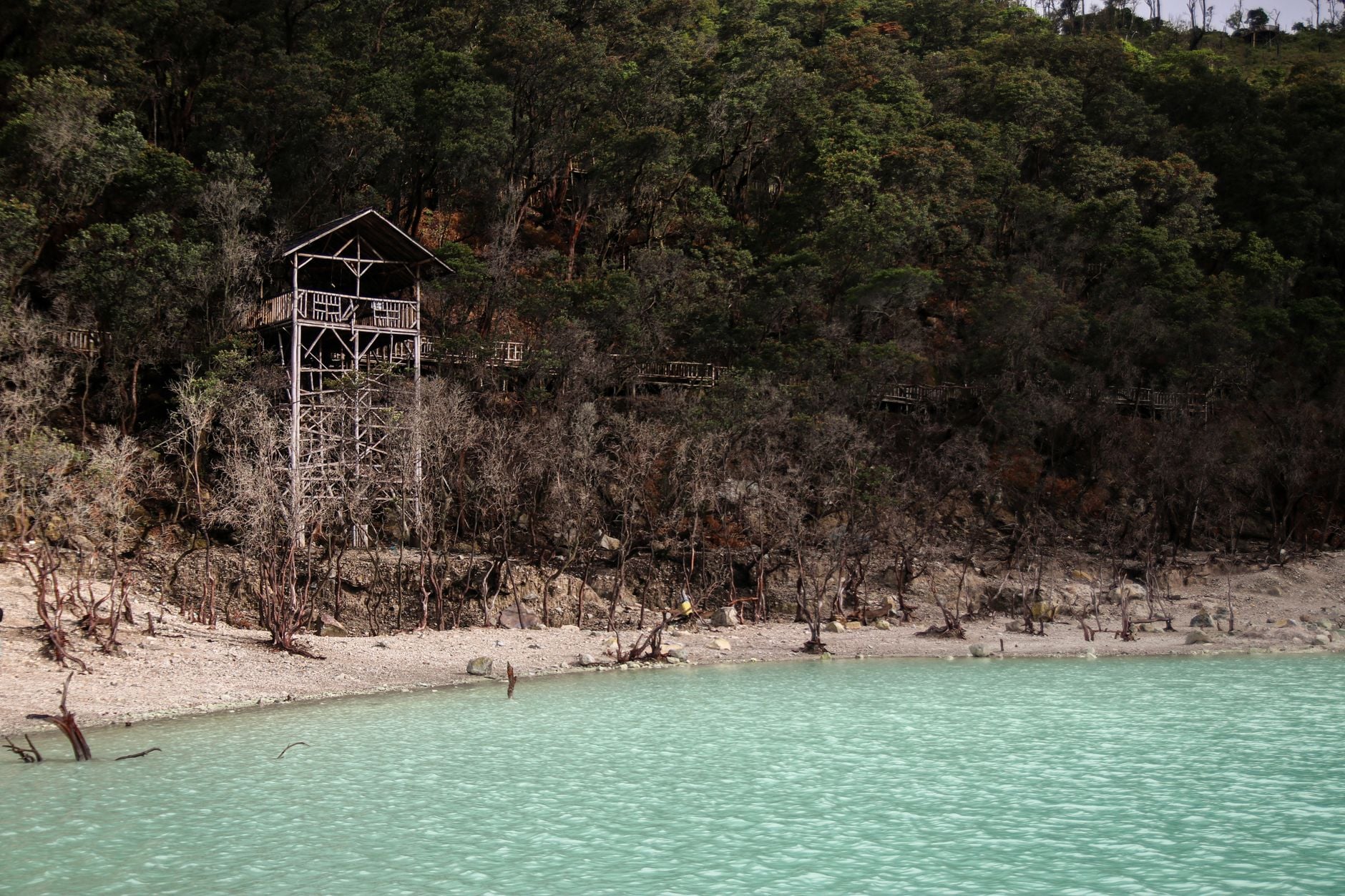
The headline attraction is Kawah Putih, a stunning volcanic crater lake with water that shifts between turquoise, milky blue, and pale green depending on the mineral content and sunlight. It is one of the most visually striking natural sites in Java, and unlike many crater lakes, you can walk right down to the shoreline. The entrance fee is 15,000 IDR for domestic visitors and 155,000 IDR for foreign visitors, plus a vehicle fee. Go early in the morning: the lake is at its most vivid before midday, and afternoon clouds can roll in and obscure the view entirely.
After Kawah Putih, the Ciwidey area has extensive strawberry farms where you can pick your own for around 50,000 to 80,000 IDR per kilogram. There is also the Situ Patenggang lake, a serene alpine lake surrounded by forest that is perfect for a quiet afternoon. If you want a tea plantation experience, the Rancabali tea estate near Ciwidey offers walks through the plantation and factory tours for a modest fee.
Ciwidey is the area I would choose for a Sunday day trip if I had a car and wanted to see the most beautiful landscape within reach of Bandung. It is less developed than Lembang, which means fewer facilities but also fewer crowds and a more raw, natural experience.
Factory Outlets and Shopping
Bandung’s factory outlet scene is genuinely good, and it is one of the reasons Jakarta residents flock here on weekends. The city became a manufacturing hub for international clothing brands in the 1990s and 2000s, and the factory outlets that sprang up sell overruns, export rejects, and past-season stock at a fraction of retail prices. I was sceptical the first time I visited, expecting tourist-trap quality, but the outlets along Jalan Riau and Jalan Dago offer real brands at real discounts.
Where the Best Outlets Are
The two main outlet streets are Jalan Riau (also known as Jalan R.E. Martadinata) and Jalan Ir. H. Juanda (Dago). Jalan Riau has the highest concentration of outlets in a compact, walkable stretch. The Warehouse, Heritage, and Cascade are three of the largest and most popular, each carrying a mix of men’s and women’s international brands. Jalan Dago has fewer outlets but they tend to be slightly more upscale.
For a more modern shopping experience, Paris Van Java Mall in the Sukajadi area combines international brands with local boutiques and restaurants. It is less about bargains and more about a comfortable, air-conditioned shopping environment if the weather turns rainy.
Factory Outlet Comparison
Here is how the main outlet areas compare, based on my experience and what you can expect to find at each.
| Outlet Area | Street | Vibe | Price Range (IDR) | Best For |
|---|---|---|---|---|
| Jalan Riau Outlets | R.E. Martadinata | Dense, walkable, busy on weekends | 30,000 to 150,000 per item | Best bargains, international brands |
| Jalan Dago Outlets | Ir. H. Juanda | More upscale, fewer crowds | 50,000 to 250,000 per item | Higher-end brands, slower pace |
| Paris Van Java Mall | Sukajadi | Modern mall, air-conditioned | 100,000 to 500,000 per item | Rainy days, dining plus shopping |
| Cihampelas Walk | Cihampelas | Touristy, mixed quality | 20,000 to 100,000 per item | Budget buys, souvenirs |
A practical note on outlet shopping: sizes run small by Western standards, as most stock is produced for Asian markets. If you wear a large or extra-large in Western sizing, you may find the selection limited. Quality varies even within the same store, so check seams, zippers, and fabric feel before buying. The outlets are genuine, but the merchandise is factory seconds and overruns, not first-quality retail stock.
Cihampelas: The Jeans Street
Cihampelas Street deserves a separate mention because it is a Bandung institution. This stretch of road is lined with shops selling jeans and denim at rock-bottom prices, with garish store facades featuring giant statues of superheroes and cartoon characters. The jeans are cheap, starting at around 50,000 IDR, but the quality is correspondingly basic. It is worth a quick walk through if you have never seen it, but I would not plan a serious shopping trip around Cihampelas. The Riau and Dago outlets offer much better quality for not much more money.
Where to Eat in Bandung
Bandung is one of the best food cities in Java, and the Sundanese cuisine here is reason enough to visit. The food culture is distinct from Jakarta’s: lighter, more herbaceous, and built around fresh vegetables, grilled fish, and sambal that ranges from bright and tangy to genuinely fiery. Here is what I seek out on every trip, with specific price ranges.
Sundanese Food: The Core Experience
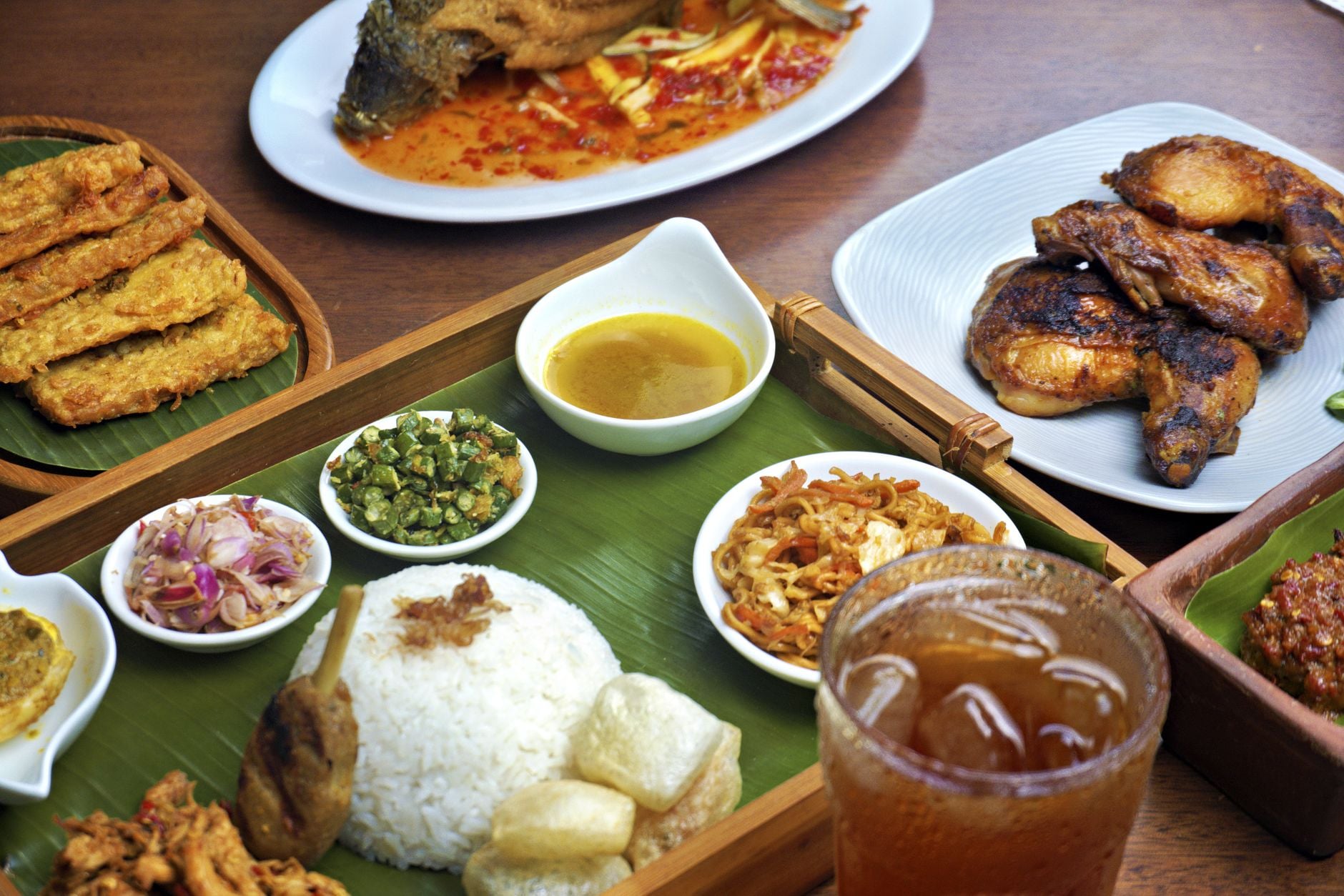
The Sundanese meal you need to try is nasi timbel: rice wrapped in banana leaf, served with grilled chicken or fish, fried tempeh and tofu, fresh raw vegetables (lalapan), and sambal. The combination is simple but the execution is what makes it. The sambal is usually pounded fresh, the grilled fish is often caught the same day, and the raw vegetables include things like basil, lemon basil, and cucumber that add a bright, herbal contrast to the grilled proteins.
A full nasi timbel meal at a mid-range restaurant costs 40,000 to 80,000 IDR per person. At a warung or street stall, the same meal costs 15,000 to 30,000 IDR. Two of my favourite spots are Lapo Pintu and Warung Nasi Ampera, both of which have multiple locations around Bandung and serve consistently good Sundanese food at fair prices.
Street Food and Night Markets
Bandung’s street food scene peaks in the evening, and the best concentration is along Jalan Cihampelas and at the night markets that pop up around the city. The must-try items are batagor (fried fish dumplings served with peanut sauce, 15,000 to 25,000 IDR), cireng (fried tapioca snacks, 5,000 to 10,000 IDR), and seblak (a spicy, soupy snack made from wet crackers, 10,000 to 20,000 IDR).
For dessert, look for es cendol or es doger, both shaved-ice desserts that are perfect in the highland climate. Even though Bandung is cooler than Jakarta, the afternoons can still be warm, and these desserts hit the spot. Expect to pay 10,000 to 20,000 IDR.
Dago Pakar Cafes and Restaurants
If you want a sit-down meal with a view, Dago Pakar is where to go. The restaurants here are built on the hillside overlooking the valley, and many have open-air decks that are spectacular at sunset. The food is a mix of Indonesian, Western, and fusion, and prices are higher than central Bandung but still reasonable by Jakarta standards. A main course at a Dago Pakar restaurant runs 50,000 to 120,000 IDR, and a coffee is 25,000 to 45,000 IDR.
Food Costs at a Glance
- Street food snack (batagor, cireng, seblak): 5,000 to 25,000 IDR
- Warung meal (nasi timbel, nasi goreng): 15,000 to 30,000 IDR
- Mid-range restaurant meal: 40,000 to 80,000 IDR per person
- Dago Pakar restaurant with a view: 50,000 to 120,000 IDR per main
- Coffee at a specialty cafe: 25,000 to 45,000 IDR
- Dessert (es cendol, es doger): 10,000 to 20,000 IDR
Where to Stay for the Weekend
Bandung has accommodation options across every budget, but where you stay matters more than you might expect. The city is spread out, and traffic within Bandung can be surprisingly heavy on weekends. Staying in the right area for your planned activities will save you hours of sitting in cars. Here is how I would choose, broken down by area and budget.
Central Bandung (Near Jalan Riau and Asia Afrika)
Central Bandung is the best base if your weekend is focused on factory outlets, food, and city exploration. The historic Asia Afrika street, with its art deco buildings and the iconic Savoy Homann Hotel, is the cultural heart of the city. Budget hotels and guesthouses here start at 200,000 to 350,000 IDR per night. Mid-range hotels run 400,000 to 800,000 IDR. This area puts you within walking distance of outlets, restaurants, and the central market.
Dago and Dago Pakar
If you want the cool-weather, valley-view experience, stay in Dago or Dago Pakar. This is where you wake up to mist rolling across the hills and drink your morning coffee on a balcony overlooking the valley. Guesthouses and boutique hotels here start at 300,000 IDR and go up to 1,500,000 IDR for the nicer properties with views. The trade-off is that you are further from the city centre and the factory outlets, so factor in 30 to 45 minutes of driving to reach central Bandung.
Lembang
Staying in Lembang makes sense if your weekend is focused on Tangkuban Perahu, the Floating Market, and the highland scenery. There are homestays and guesthouses from 150,000 IDR and resorts from 600,000 to 1,500,000 IDR. The area is quieter and cooler than the city, but you will need a car or motorbike to get anywhere, and dining options are more limited.
Accommodation Cost Summary
| Area | Budget (IDR/night) | Mid-Range (IDR/night) | Best For |
|---|---|---|---|
| Central Bandung | 200,000 to 350,000 | 400,000 to 800,000 | Outlets, food, city exploration |
| Dago / Dago Pakar | 300,000 to 500,000 | 600,000 to 1,500,000 | Views, cafes, cool weather |
| Lembang | 150,000 to 300,000 | 600,000 to 1,500,000 | Tangkuban Perahu, family trips |
| Ciwidey area | 200,000 to 400,000 | 500,000 to 1,000,000 | Kawah Putih, nature focus |
Common Mistakes to Avoid
Driving Puncak Pass on a Saturday Afternoon
This is the number one mistake first-timers make. Puncak Pass on a Saturday or Sunday afternoon is a parking lot. If you must drive the scenic route, do it on a weekday or before 7 AM on weekends. Otherwise, take the Cipularang toll road and save yourself hours of frustration.
Underestimating Weekend Crowds
Bandung is the default weekend escape for millions of Jakartans, and the popular attractions reflect this. Tangkuban Perahu, Kawah Putih, and the factory outlets are all significantly more crowded on weekends than weekdays. If you have any flexibility, visit on a Friday or Monday. The experience at Kawah Putih on a quiet weekday morning versus a Saturday afternoon is night and day.
Trying to Do Lembang and Ciwidey in One Day
Lembang is north of Bandung, Ciwidey is south, and the drive between them through the city can take two hours or more on a weekend. Do not try to visit both in a single day. Pick one highland area per day, and plan your accommodation accordingly. If you want to see Kawah Putih, stay south or in central Bandung. If you want Tangkuban Perahu, stay in Lembang or Dago.
Skipping the Sundanese Food
I have seen visitors eat nothing but pizza and burgers at the Dago Pakar cafes because they look familiar and safe. Do not do this. Sundanese food is one of the best regional cuisines in Indonesia, and Bandung is the place to eat it. Even if you only have one proper local meal, make it a nasi timbel at a warung. You will not regret it.
Not Bringing a Jacket
Bandung’s elevation makes it genuinely cool, especially in Lembang and Dago Pakar where temperatures can drop to 18 or 19 degrees at night and in the early morning. If you are coming from Jakarta, where it never gets below 25, this feels cold. Pack a light jacket or hoodie. I learned this the hard way on my first trip, shivering through a dawn visit to Tangkuban Perahu in a t-shirt.
Planning Your Next Indonesia Trip
Bandung is the kind of place that rewards repeat visits. The first trip, you do the hits: Tangkuban Perahu, the outlets, a nasi timbel dinner. The second trip, you start exploring deeper: the tea plantations of Rancabali, the hot springs of Maribaya, the smaller warungs that do not show up on Google Maps. There is enough here for a dozen weekends without running out of new corners.
If this Bandung weekend travel guide has you thinking about a broader Indonesia adventure, there is plenty more to explore. I have written about flying into Bali with practical tips on airports, visas, and transfers, and if you are interested in Ubud private tours and how to book the right one, that guide covers the cultural inland side of Bali. I am also working on more Jakarta content, so this spoke will eventually connect to a full Jakarta hub for expats and travellers based in the capital.
Have you done a Bandung weekend? Did I miss your favourite highland spot or warung? Drop your tips in the comments. I would love to hear your experience and add more stops to my own list for the next trip up the plateau.
Frequently Asked Questions
How long does it take to drive from Jakarta to Bandung?
The drive takes about 2.5 to 3 hours via the Cipularang Toll Road in normal traffic. The scenic Puncak Pass route takes longer, especially on weekends when traffic can stretch the drive to 4 or 5 hours. Leave before 6 AM on weekends to avoid the worst congestion.
What is the best highland area to visit near Bandung?
It depends on your vibe. Lembang is best for families and Tangkuban Perahu volcano. Dago is ideal for cafe culture and valley views. Ciwidey, about 90 minutes south, has the most dramatic scenery including the turquoise crater lake Kawah Putih. Pick one per day rather than trying to combine them.
Are the Bandung factory outlets worth visiting?
Yes, if you know what to expect. The outlets along Jalan Riau and Jalan Dago sell genuine international brand overruns and export rejects at 30,000 to 150,000 IDR per item. Quality varies, sizes run small, and the stock is factory seconds, not first-quality retail. Check seams and zippers before buying.
How much does a Bandung weekend trip cost?
Budget roughly 200,000 to 350,000 IDR per night for a central Bandung hotel, 15,000 to 80,000 IDR per meal depending on whether you eat at warungs or mid-range restaurants, and 60,000 to 80,000 IDR for toll road fees each way. A two-day trip for two people can be done comfortably for under 1,500,000 IDR total.
When is the best time to visit Bandung?
The dry season from May to September offers the clearest weather for highland views and outdoor activities. Weekdays are significantly less crowded than weekends at all major attractions. If you must go on a weekend, arrive Friday morning and leave Sunday morning to avoid the worst traffic.