Kuala Lumpur Travel Guide: A Local’s Honest Take
I have lived in Kuala Lumpur long enough to have opinions. Not the kind of opinions you pick up from a three-day stopover, but the kind that come from riding the same LRT line every morning, knowing which hawker stall opens at 6 AM and which closes by lunchtime, and understanding that the city does not reveal itself to anyone in a hurry. This Kuala Lumpur travel guide is written from that perspective: a local’s honest take for travellers who want to understand the city, not just photograph it.
Kuala Lumpur is a city of coexistence. Malay, Chinese, and Indian communities have shared this stretch of the Klang Valley for over 150 years, and the result is a place where a Hindu temple, a Chinese clan house, and a Malay mosque can sit within a five-minute walk of each other. That cultural layering is what makes the city worth more than a quick transit stop. If you are willing to slow down and eat where locals eat, walk where locals walk, and accept that the weather will be hot no matter what month you visit, Kuala Lumpur rewards you.
The History Of Kuala Lumpur
Kuala Lumpur translates literally as “muddy confluence,” and that name tells you almost everything about how the city began. It started as a tin mining settlement in the 1850s at the meeting point of the Klang and Gombak rivers. The early pioneers were Malay and Chinese, and the Chinese miners who arrived were largely Hakka and Cantonese from southern China. The Malay Chiefs who controlled the area brought in Chinese labour under the kapitan system, and the first Kapitan Cina of Kuala Lumpur was a Hakka man named Yap Ah Loy, whose name still echoes through the city’s history.
What grew from those muddy riverbanks was a town that became the capital of the Federated Malay States under British colonial administration, survived the Japanese occupation during World War II, and then emerged as the capital of an independent Malaysia in 1957. The colonial architecture around Dataran Merdeka, the shophouses of Chinatown, and the modern skyline of the Petronas Towers all represent different layers of that timeline. When you walk through the city today, you are moving through 170 years of layered history, sometimes within a single street.
The cultural mix that defines Kuala Lumpur today was built into the city’s DNA from the start. Indian Muslim traders and labourers arrived alongside the Chinese, establishing the area around Masjid India that still bears their influence. The Malay population expanded from the surrounding kampungs. By the time independence arrived, the three communities had developed distinct neighbourhoods, cuisines, and religious institutions that remain visible today. This is not a city that was planned for diversity. It grew that way organically, and the food, festivals, and street life all reflect it.
Best Things To Do In Kuala Lumpur
The mistake most first-time visitors make is treating Kuala Lumpur as a single downtown zone. KLCC and Bukit Bintang are the obvious starting points, but the city’s real character lives in Chinatown, Brickfields, and the older neighbourhoods that predate the skyscrapers. Here is how I would break down the best things to do, grouped by what actually fits the city.
Tourist Attractions: KLCC, Bukit Bintang, and the Skyline
KLCC, or Kuala Lumpur City Centre, is the postcard zone. The Petronas Twin Towers dominate everything, and yes, they are worth seeing up close. Standing at the base and looking up is free, and the Suria KLCC mall at the foot of the towers has a surprisingly good aquarium, a Malaysian Philharmonic Hall, and a rooftop park with a free wading pool where local families bring their children in the evenings. The KLCC Park itself is one of the best green spaces in central KL, designed by the Brazilian landscape architect Roberto Burle Marx, and the jogging track that loops around it is packed with locals every morning before work.
The Petronas Towers skybridge and observation deck visit costs around RM 80 for international visitors. Go early, because tickets sell out and the queues get long by mid-morning. The view from the observation deck on the 86th floor is stunning, but honestly, I prefer the view from the ground looking up. The towers are most beautiful at night when they are lit up, and the lake in front of KLCC reflects them perfectly for photographs.
Bukit Bintang is the shopping and entertainment district adjacent to KLCC, and it is walkable via the covered pedestrian walkway that connects the two areas. Pavilion KL, Fahrenheit 88, and Lot 10 are the main malls, and Jalan Bukit Bintang itself is a busy pedestrian street that comes alive at night with buskers, food stalls, and tourists. Bukit Bintang is where the city feels most like a Southeast Asian metropolis: loud, crowded, commercial, and full of energy. Walk through it in the evening and you will understand why KL attracts so many visitors.
If you want a perspective on the skyline that most tourists miss, head to the KL Tower (Menara KL) observation deck instead of the Petronas Towers. It sits on Bukit Nanas, a forested hill in the middle of the city, and the 360-degree view from the top gives you the full sweep of the KL skyline including the Petronas Towers themselves in context. Bukit Nanas is also one of the oldest forest reserves in Malaysia, and there is a short canopy walk through the trees that is free to enter.
Cultural Experiences: Chinatown, Brickfields, and Batu Caves
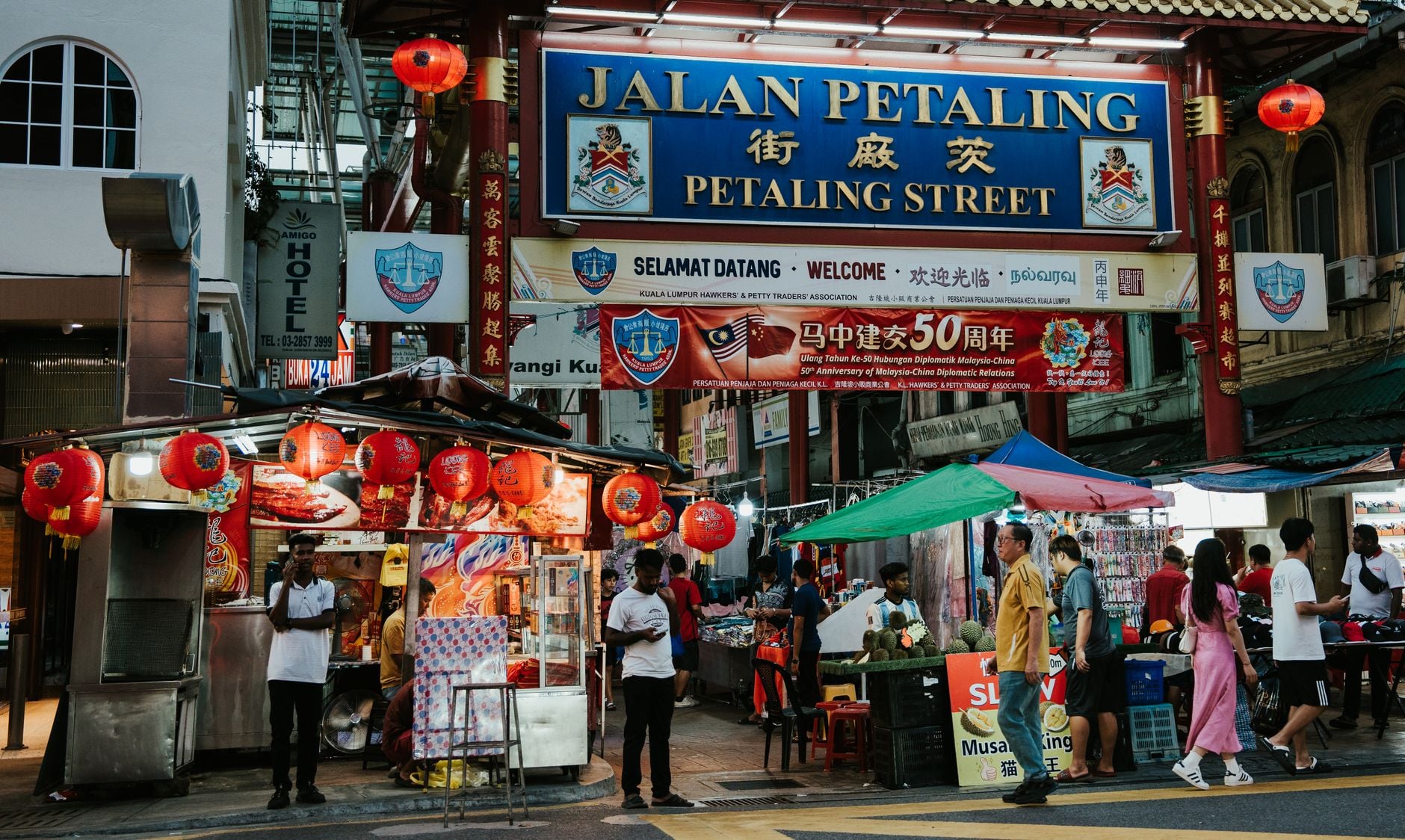
Chinatown, centred on Petaling Street, is where Kuala Lumpur’s Chinese heritage is most visible. The street market here is touristy, but the neighbourhood behind it is not. Walk into the side streets and you find Chinese clan associations, old Taoist temples like Sin Sze Si Ya Temple (the oldest temple in KL, built by Yap Ah Loy), and shophouses that have been operating since the 1880s. The Sri Mahamariamman Temple, a Hindu temple at the edge of Chinatown, is one of the oldest in the city and its gopuram tower is stunning. This kind of juxtaposition, a Chinese temple and a Hindu temple within a two-minute walk, is what makes Kuala Lumpur culturally distinct.
Brickfields is the neighbourhood most tourists skip, and it is one of my favourites. It is Kuala Lumpur’s Little India, centred on Jalan Tun Sambanthan, and it is where the city’s Indian community has lived and traded for over a century. Brickfields is named after the brick kilns that operated here in the colonial era, and the area supplied the bricks that built much of colonial Kuala Lumpur. Today it is a dense, lively quarter of saree shops, Indian sweet shops, gold merchants, and some of the best South Indian food in the city. Walk through Brickfields on a Sunday morning and the streets are full of families in their best clothes heading to temple, the smell of incense mixing with the smell of biryani. It is one of the most authentic cultural experiences you can have in KL without going to a museum.
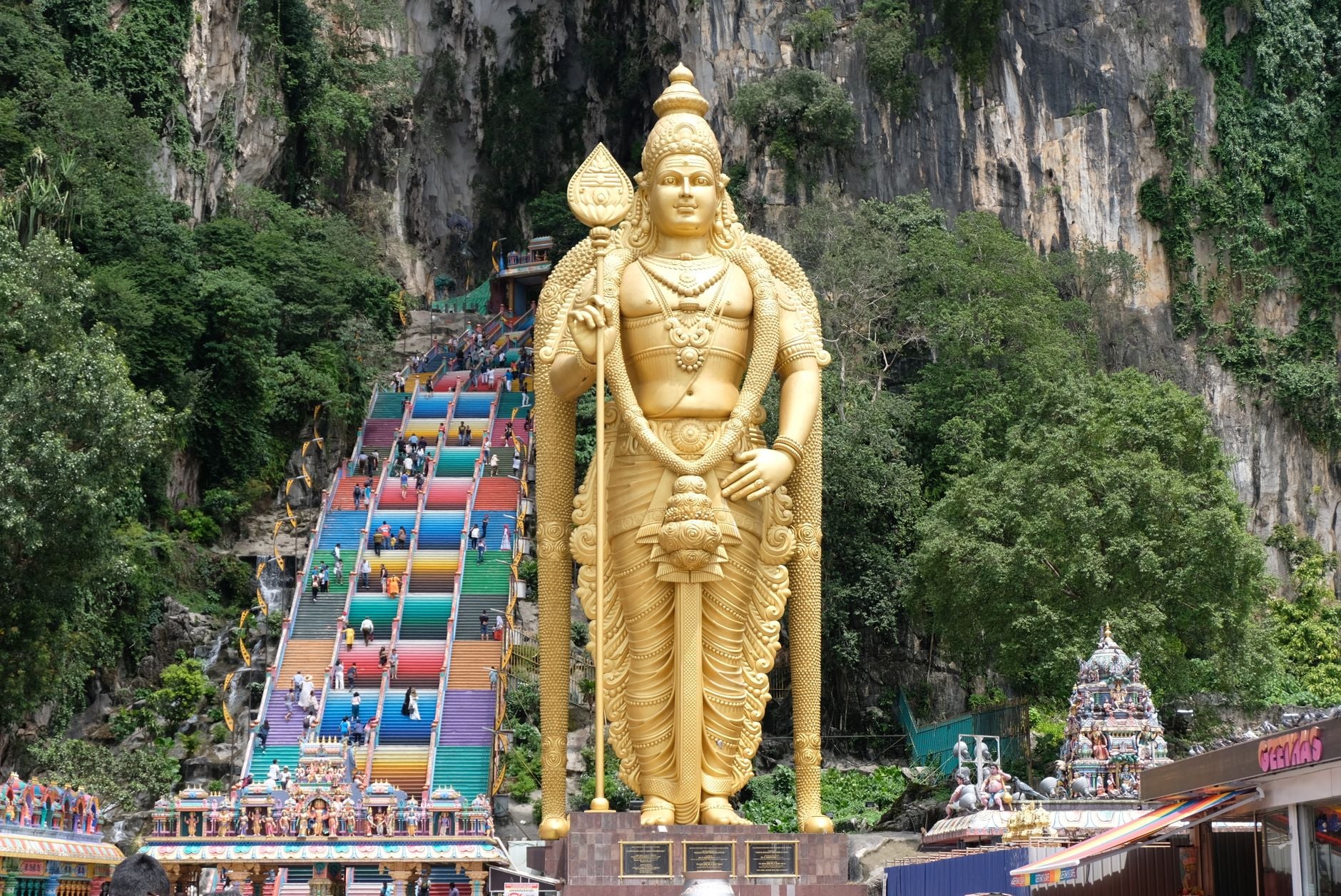
Batu Caves is the most important Hindu site in Malaysia, and it sits about 13 km north of the city centre. The golden statue of Lord Murugan at the base is one of the largest in the world, and the 272-step rainbow staircase leading up to Cathedral Cave is the image everyone recognises. Batu Caves is the focal point of Thaipusam, the Hindu festival that draws over a million devotees and visitors each year, and if you are in KL during late January or early February, witnessing Thaipusam at Batu Caves is one of the most intense cultural experiences in Southeast Asia.
Go early in the morning to beat the heat and the tour buses, which start arriving around 9:30 AM. The KTM Komuter train from KL Sentral costs around RM 5 one way and takes 30 minutes, dropping you right at the entrance. Dress modestly, cover shoulders and knees, and be aware that the macaque monkeys on the stairs are aggressive. I have seen them snatch bags out of people’s hands. Keep food hidden and hold your belongings tight.
Nature: Lake Gardens and KL Forest Eco Park
Kuala Lumpur has more green space than most visitors realise, and the Lake Gardens (Taman Tasik Perdana) area is the best of it. This is a large parkland about a 15-minute walk from the National Mosque, and it includes the KL Bird Park, the Butterfly Park, the Orchid Garden, and the Hibiscus Garden. The Bird Park is the largest free-flight walk-in aviary in the world, and walking through it with hornbills and peacocks roaming freely around you is genuinely memorable. It is a bit pricey for international visitors at around RM 67, but it is well maintained and worth it if you enjoy wildlife.
The KL Forest Eco Park on Bukit Nanas is free and has a canopy walkway that takes you through old-growth tropical rainforest right in the city centre. It is a short walk, maybe 30 minutes, but the fact that you are standing on a suspension bridge in primary rainforest with the KL Tower above you and skyscrapers visible through the trees is a uniquely Kuala Lumpur experience. I take visiting friends here every time, and none of them expect it.
Where and What To Eat and Drink In Kuala Lumpur
If there is one reason to visit Kuala Lumpur above all others, it is the food. This is a city where three major culinary traditions, Malay, Chinese, and Indian, exist side by side and have influenced each other for generations. The result is one of the most diverse street food scenes in Asia, and it is also one of the most affordable. You can eat spectacularly well for under RM 15 a meal if you know where to go.
Let me start with what to avoid. Jalan Alor in Bukit Bintang is the most famous food street in Kuala Lumpur, and it is also the most overpriced and least authentic. The stalls there cater to tourists, the prices are inflated, and the food is a watered-down version of what you will find in neighbourhood hawker centres across the city. I am not saying you cannot have a decent meal there. I am saying that if you want the real Kuala Lumpur food experience, you need to go elsewhere.
Malay Food: Nasi Lemak and Beyond
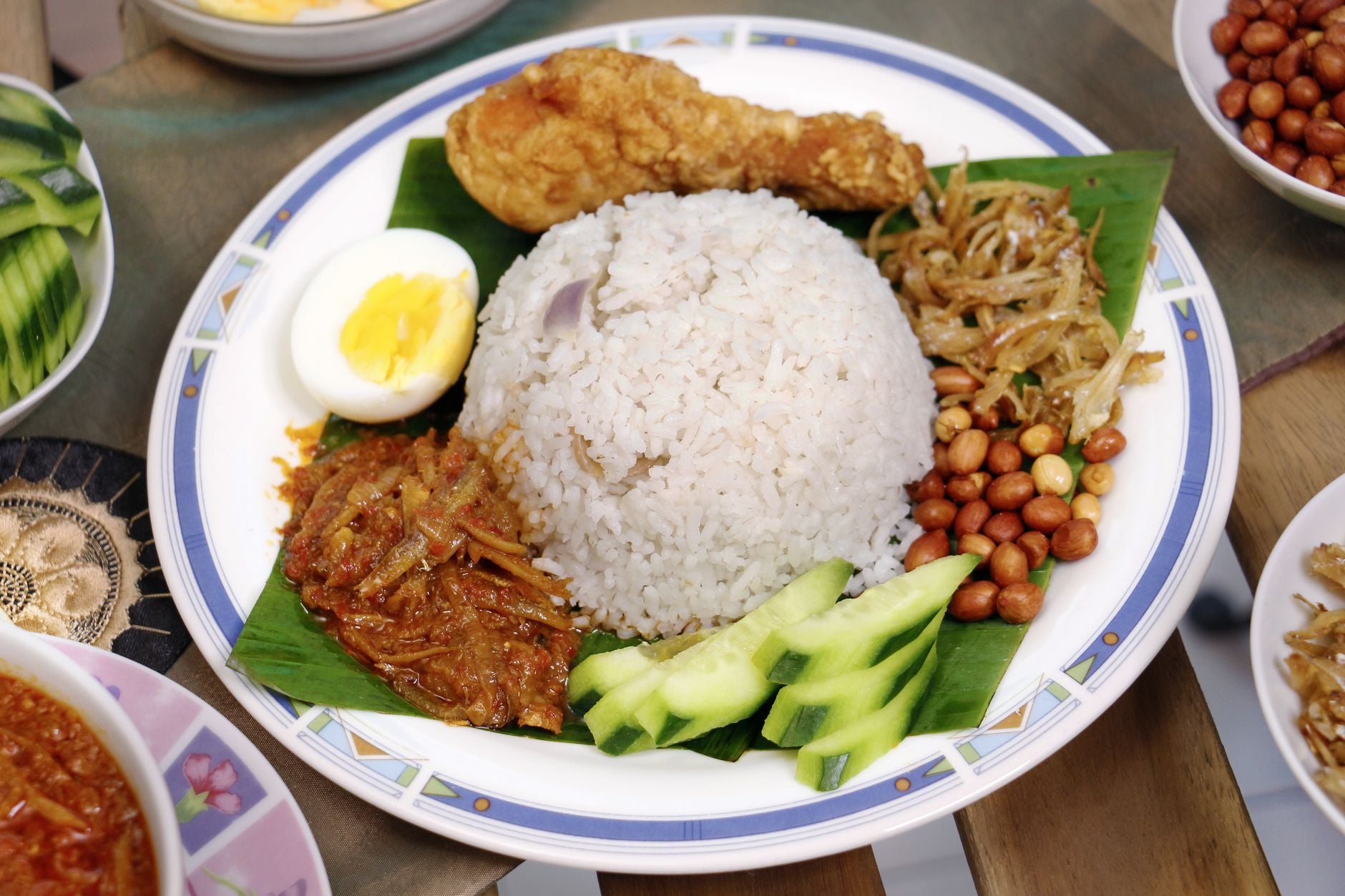
Nasi lemak is the unofficial national dish of Malaysia, and it is the breakfast that powers Kuala Lumpur. It is coconut rice served with fried chicken or anchovies, sambal, peanuts, and a boiled egg. The best nasi lemak in KL is not at a restaurant. It is at the roadside stalls and morning markets, and it is usually wrapped in banana leaf and brown paper. Village Park in Damansara Utama is the most famous sit-down nasi lemak spot in the city, and it genuinely is excellent, but be prepared to queue. For a quicker version, any stall with a line of motorcyclists waiting in the morning is going to be good.
For Malay dinner food, look for nasi campur (mixed rice) stalls where you point at various dishes and they pile them onto a plate of rice. This is how most Malay families eat lunch, and it gives you a chance to try rendang (slow-cooked beef in spices), sambal squid, fried fish with sambal, and sayur bayam (spinach in coconut milk). The Kompleks Kedai Makanan at Jalan Tuanku Abdul Rahman has a good concentration of Malay food stalls, and the Central Market food court is decent for a quick introduction.
Chinese Food: Hawker Stalls and Dim Sum
Kuala Lumpur’s Chinese food scene is dominated by Cantonese, Hakka, and Hokkien traditions, and the hawker centres are where you find the best of it. The best char kway teow (stir-fried flat noodles with prawns and cockles) I have had in KL is at a stall in theICC hawker centre in Pudu, a working-class neighbourhood just east of the city centre. The ICC complex, which stands for Inti College Centre but is really just a food court, is a local secret. It is not glamorous, the fans are loud, and the tables are shared, but the food is the real deal. Go for lunch and try the char kway teow, the Hakka yong tau foo, and the popiah (fresh spring rolls).
For dim sum, the traditional Cantonese brunch, go to Jalan Alor’s rest house area, but not the street itself. Instead, try Restoran Yik Mun in Ampang, which has been serving dim sum since 1928, or the Kwai San Hong in Petaling Street for a no-frills morning version. Dim sum in KL is eaten early, usually between 7 AM and 10 AM, and the good places sell out by lunchtime.
Hokkien mee, the thick noodle dish braised in dark soy sauce with pork and squid, is a KL-specific creation that you will not find in the same form elsewhere in Malaysia. The best versions are at the night markets and late-night hawker stalls around Petaling Street and Pudu. Look for stalls with woks that look like they have not been replaced in decades. That is usually a good sign.
Indian Food: Banana Leaf and Roti Canai
The Indian food in Kuala Lumpur is predominantly South Indian, and the centrepiece is banana leaf rice. This is a meal where white rice is served on a fresh banana leaf with various curries, vegetables, and condiments poured over it. You eat it with your right hand, and it is one of the most satisfying eating experiences you can have. The best banana leaf restaurants are in Brickfields and Bangsar. Sri Nirwana Maju in Bangsar is a perennial favourite and the queue outside at lunchtime confirms it. In Brickfields, Sri Brindhavan and the smaller places along Jalan Scott are excellent and slightly cheaper.
For roti canai, the flaky flatbread served with dhal or curry, any mamak stall (Indian Muslim coffee shop) will do, and the experience of sitting at a plastic table on the street at 2 AM with a teh tarik (pulled milk tea) and a fresh roti is one of the essential Kuala Lumpur experiences. The 24-hour mamak stalls around the city, particularly in Kampung Baru and Brickfields, are where KL’s late-night social life actually happens. Not in bars. In mamak stalls.
Cafe and Coffee Culture
Kuala Lumpur has a rapidly growing specialty coffee scene, and it has become genuinely good in recent years. The Bangsar and Taman Tun Dr Ismail neighbourhoods are the epicentres, with cafes like VCR in Bukit Bintang and Pulp by Papa Palheta in Bangsar leading the charge. The coffee here is on par with what you would find in Singapore or Melbourne, and the cafe spaces themselves are often in restored shophouses or industrial buildings with serious design attention. If you need a break from the heat and the street food, an afternoon in a Bangsar cafe is a perfectly valid KL experience.
Shopping In Kuala Lumpur
Kuala Lumpur is a shopping city, and the range is enormous, from luxury malls to night markets that sell everything and nothing. The question is not whether you can shop in KL, but what kind of shopping you are after.
The big malls, Pavilion KL, Suria KLCC, and Mid Valley Megamall, are where you find international brands and the air-conditioned refuge that many locals use to escape the afternoon heat. Pavilion and Suria KLCC are luxury-focused, while Mid Valley is more of an everything mall that draws huge weekend crowds from across the Klang Valley. If you want to shop like a local, go to Mid Valley on a Saturday and you will see what I mean. The food court alone is worth the trip.
For a more authentic shopping experience, the night markets, or pasar malam, are where the real action is. Each neighbourhood has its own pasar malam on a specific night of the week, and they sell street food, clothes, phone accessories, and household goods at bargain prices. The Taman Connaught night market on Wednesday evenings is the longest in KL, stretching over 2 km, and it is packed with locals. The Sri Petaling night market on Saturday is another massive one. These are not curated tourist markets. They are where people go to eat, socialise, and buy socks for RM 10.
Petaling Street in Chinatown is the most famous market street, and while it is more tourist-oriented than it used to be, the side streets still have genuine antiques, Chinese medicinal shops, and old-school gold merchants worth browsing. For batik and Malay textiles, the Central Market is a heritage building that now houses craft stalls and is a good one-stop shop for souvenirs, though prices are higher than what you would pay at a local market.
Bars and Nightlife In Kuala Lumpur
Kuala Lumpur’s nightlife is more subdued than Bangkok’s or Singapore’s, partly because Malaysia is a Muslim-majority country and alcohol is taxed heavily. That said, there is a solid bar scene if you know where to look, and it has grown significantly in the past decade.
The Changkat Bukit Bintang area is the closest thing KL has to a nightlife strip, with bars and restaurants lining both sides of the street. It is tourist-heavy and the prices reflect that, but it is a good place to start an evening if you want a cocktail in a convivial atmosphere. For a more local, more refined experience, the rooftop bars around KLCC offer skyline views that are genuinely stunning. Sky Bar at the Trader’s Hotel, with its infinity pool overlooking the Petronas Towers, is the most famous, and the view lives up to the hype.
Bangsar and Taman Tun Dr Ismail are where the expat and local bar scene actually lives. These are neighbourhood bars with craft beer, natural wine, and serious cocktail programs, and they are where you will find KL’s bartending community after hours. The Zhongshan Building on Jalan Wan Kadir is a creative hub with a couple of small bars and a great natural wine bar called Kentu that is worth seeking out. Be prepared for drink prices that are closer to Singapore than Bangkok. A cocktail at a good KL bar will run you RM 40 to 70.
The real late-night culture in KL is not in bars. It is in the 24-hour mamak stalls I mentioned earlier. If you want to experience how Kuala Lumpur socialises after midnight, skip the bars and head to a mamak. You will see groups of friends, families, and young couples sitting around tables at 3 AM, drinking teh tarik and eating roti canai, and the energy is unlike anything else in the city.
When Is The Best Time To Visit Kuala Lumpur?
Kuala Lumpur is hot and humid year-round. There is no escaping that. Temperatures hover between 28 and 34 degrees Celsius during the day and rarely drop below 25 at night, and the humidity sits at 75 percent or higher most of the year. The question is not whether it will be hot, but when the rainfall and the haze are at their least disruptive.
The best time to visit Kuala Lumpur is between January and March, when rainfall is at its lowest and the city gets more sunny days. May to July is also relatively dry, though slightly hotter. The wettest months are April, October, and November, when afternoon thunderstorms can be intense and last for hours. The haze, caused by agricultural fires in Indonesia, is most likely to affect KL between June and September, and in bad years it can reduce air quality to unhealthy levels. Check the Air Quality Index before you travel if you have respiratory concerns.
If you want to time your visit around cultural events, Thaipusam at Batu Caves (late January or early February) is spectacular. Chinese New Year (January or February) transforms Chinatown with decorations, lion dances, and open houses. Ramadan and Hari Raya Aidilfitri change the rhythm of the city, with Ramadan bazaars popping up across KL in the late afternoon, and Hari Raya being the biggest Malay celebration of the year. Deepavali (October or November) is when Little India and Brickfields are at their most vibrant.
| Period | Weather | Highlights | Drawbacks |
|---|---|---|---|
| Jan to Mar | Drier, warm | Thaipusam, Chinese New Year | Still humid |
| Apr to May | Wet season starts | Fewer crowds | Afternoon storms |
| Jun to Jul | Hotter, drier | Long sunny days | Haze risk from Indonesia |
| Aug to Sep | Mixed, haze likely | Merdeka Day (Aug 31) | Poor air quality possible |
| Oct to Nov | Wettest months | Deepavali | Heavy rain, flooding possible |
| Dec | Wet but festive | Year-end holidays | Crowded malls and hotels |
My recommendation: aim for late January through March. You get the driest weather, the cultural festivals, and a city that is still operating at full energy after the holiday season. Avoid October and November if you can, and check AQI forecasts if you are coming between June and September.
How Many Days Do You Need In Kuala Lumpur?
Three full days is the sweet spot for Kuala Lumpur. You can see the highlights in two days, but three gives you room to eat properly, explore a neighbourhood or two at a slower pace, and take a half-day trip to Batu Caves without rushing. Anything less than two days and you will spend most of your time in transit between sites. Here is how I would shape a three-day itinerary.
Day one: KLCC and Bukit Bintang. Start at the Petronas Towers in the morning, walk through KLCC Park, have lunch at a hawker centre or food court, explore the Bukit Bintang malls in the afternoon, and end the day with a drink at a rooftop bar as the city lights up. This is your skyline day.
Day two: Chinatown and Brickfields. Start at Petaling Street for breakfast at a old coffee shop, visit Sin Sze Si Ya Temple and the Central Market, walk across to the National Mosque and the old railway station, then spend the afternoon in Brickfields eating banana leaf rice and exploring the Indian shops. End with a sunset visit to the KL Tower observation deck.
Day three: Batu Caves and Lake Gardens. Take the KTM Komuter to Batu Caves early in the morning, spend two to three hours there, then head back to the Lake Gardens area for the Bird Park and the KL Forest Eco Park canopy walk. Have a final dinner at a proper hawker centre in Pudu or a mamak stall in Kampung Baru.
If you have a fourth or fifth day, use it for day trips. I have written about the best day trips from Kuala Lumpur that I keep returning to, and places like Malacca, Genting Highlands, and Fraser’s Hill are all within a two-hour radius and each offers something completely different from the city.
Where To Stay In Kuala Lumpur
Where you base yourself in Kuala Lumpur matters more than in most cities, because traffic and the distance between neighbourhoods can eat into your day. Here are the areas I would consider, depending on your budget and priorities.
KLCC and Bukit Bintang: Central and Convenient
This is where most first-time visitors stay, and it makes sense. You are walking distance from the Petronas Towers, the major malls, and the Bukit Bintang nightlife. The downside is that it is the most expensive area and the most touristy. You will not find the best food here, and the atmosphere can feel more like a shopping district than a real neighbourhood. But for convenience, transit access, and proximity to the postcard sights, it is hard to beat.
Chinatown and Dataran Merdeka: Budget and Character
Staying around Chinatown puts you in the historical core of the city, within walking distance of the Central Market, the National Mosque, and Merdeka Square. Accommodation here leans toward budget hostels and mid-range heritage hotels, and the street life is fantastic. The downside is that it can be noisy at night, and the immediate area empties out after the market closes. But for atmosphere, value, and cultural immersion, this is my top pick for independent travellers.
Bangsar and Brickfields: Local and Food-Focused
Bangsar is a residential neighbourhood about 15 minutes by LRT from the city centre, and it is where I would stay if I wanted a more lived-in KL experience. It has the best cafe and restaurant scene outside the centre, the LRT connects you directly to KL Sentral and the city, and the prices are lower than KLCC. Brickfields is adjacent to KL Sentral, making it the best-connected neighbourhood for transit, and the Indian food and culture are unmatched. Both are excellent bases if you want to feel like you are actually living in Kuala Lumpur rather than visiting a tourist zone.
Quick Picks By Budget
- Budget: Chinatown hostels and guesthouses (RM 40 to 90 per night)
- Mid-range: Bukit Bintang and Bangsar hotels (RM 150 to 350 per night)
- Splurge: KLCC five-star properties with tower views (RM 500 and up)
- Long-term: serviced apartments in Bangsar or Mont Kiara for monthly stays
How Do You Get Around In Kuala Lumpur?
Kuala Lumpur’s public transit system is better than its reputation suggests, but it has gaps. The key to getting around efficiently is combining the rail network with ride-hailing, and knowing when to walk and when not to.
The LRT (Light Rapid Transit) and MRT (Mass Rapid Transit) lines cover most of the central city and connect KLCC, Bukit Bintang, Chinatown, and KL Sentral. Fares are cheap, ranging from RM 1 to RM 5 per trip, and the trains are air-conditioned and generally reliable. The Kelana Jaya LRT line and the Kajang MRT line are the two most useful for visitors. You can buy tokens at stations or use a Touch ‘n Go card, which also works on buses and at toll booths.
The KTM Komuter train line is the one that connects KL Sentral to Batu Caves, the Mid Valley area, and the suburbs. It is slightly slower and less frequent than the LRT and MRT, but it is the only rail option for Batu Caves and is useful for reaching neighbourhoods south and north of the centre.
Grab is the dominant ride-hailing app in Malaysia, and it works reliably across Kuala Lumpur at almost any hour. Cars are cheap and air-conditioned, and for short hops or late-night returns, Grab is the easiest option. Motorcycle Grab is also available and is faster in traffic, though it is not for everyone given the heat and the rain. A typical Grab car ride within central KL costs between RM 8 and RM 20.
Walking in Kuala Lumpur is possible in pockets but not as a primary mode of transport. The KLCC and Bukit Bintang areas have covered walkways and decent sidewalks. Chinatown and the area around Dataran Merdeka are walkable. But outside these zones, sidewalks are inconsistent, frequently blocked by construction or parked motorcycles, and the heat makes walking more than 15 minutes genuinely uncomfortable between 11 AM and 4 PM. Plan your day so that walking is concentrated in the early morning or evening, and use transit or Grab for midday movements.
If you are considering riding a motorcycle in Kuala Lumpur, which is how I get around the city most of the time, you need a valid licence. For visitors and expats, that means either a Malaysian driving licence or a valid International Driving Permit. I have written a full guide to the International Driving Permit that covers what you need for legal riding in Malaysia and across Southeast Asia. Riding in KL is faster than driving, parking is rarely an issue, and the motorcycle lanes and filtering through traffic become second nature. But the rain is intense during the wet season, and the roads can be slick. Ride defensively and always wear a proper helmet.
Conclusion
Kuala Lumpur is a city that does not perform for tourists. It does not have the postcard-perfect old towns of George Town in Penang or the curated cultural experiences of Ubud. What it has is something more raw and more honest: a living multicultural city where three communities have built parallel and intersecting lives for generations, where the food is extraordinary and affordable, and where the best experiences happen in hawker centres and mamak stalls rather than in restaurants designed for visitors. If you approach it with curiosity and a willingness to go where the locals go, it is one of the most rewarding cities in Southeast Asia.
My advice is simple. Skip the tourist food streets. Take the train to Batu Caves early. Eat banana leaf rice in Brickfields. Sit in a mamak stall at midnight and watch the city go about its business. Give it at least three days, and use the extra time to explore beyond the city limits, because the Klang Valley is surrounded by some of the most rewarding day trips in Malaysia.
If you are planning a wider trip through Malaysia, keep an eye out for my upcoming guides to the food scenes in Kuching and Ipoh, two cities that rival Kuala Lumpur for culinary depth. And if George Town in Penang is on your itinerary, that is another essential stop for anyone who takes food seriously in this region. For now, Rider Chris has you covered for getting started in KL.
Have you been to Kuala Lumpur? Found a hawker stall I should know about, or a neighbourhood I missed? Drop your tips in the comments. I would love to hear your experience and add more stops to my own list.
Frequently Asked Questions
Is Kuala Lumpur walkable for tourists?
Only in pockets. KLCC, Bukit Bintang, and Chinatown have walkable cores, but the city is built around cars and motorcycles. Expect to use the LRT, MRT, or Grab between neighborhoods rather than walking long distances. Sidewalks are inconsistent, and the heat makes walking uncomfortable between 11 AM and 4 PM.
What is the best food street in Kuala Lumpur that is not a tourist trap?
Skip Jalan Alor for dinner and head to Jalan Pasar in Setapak or theICC hawker stalls in Pudu for the real experience. For daytime eating, Madras Lane in Chinatown and the Pudu Wai Sek Kai night market serve the food locals actually eat. If you want one sit-down meal, book a banana leaf rice lunch in Brickfields.
How many days do you need in Kuala Lumpur?
Three full days is the sweet spot. Day one covers KLCC and Bukit Bintang, day two explores Chinatown and Brickfields, and day three goes to Batu Caves and the Lake Gardens. Add a fourth day for a side trip to places like Malacca or Genting Highlands if you have the time.
When is the best time to visit Kuala Lumpur?
Visit between January and March, when rainfall is lowest and the haze from Indonesian agricultural fires is less likely. Avoid September and October, which are the wettest months. Kuala Lumpur is hot and humid year-round with temperatures rarely dropping below 25 degrees Celsius at night.
Is Grab available and reliable in Kuala Lumpur?
Yes, Grab is the dominant ride-hailing service in Kuala Lumpur and is reliable across the city at almost any hour. Cars are more comfortable in the heat, but motorcycle Grab is faster in traffic. You can also use the LRT, MRT, and KTM Komuter trains for most central areas.