Coron Palawan Travel Guide: Wrecks, Lakes & El Nido Verdict
You are 30 metres down inside the hull of a Japanese oil tanker that has been on the seabed since September 1944, and the light from your dive torch catches a school of batfish that have made the engine room their home. The steel walls are encrusted with coral, the visibility is good enough to see the full length of the wreck, and the only sound is your own breathing. This is Coron, and if you are a diver, this moment is why you came.
This Coron Palawan travel guide is for two kinds of traveller: certified divers who want to know which wrecks are worth their bottom time and which are overhyped, and non-divers who need to know if Coron’s lakes and lagoons justify choosing it over El Nido. Because that is the real decision every Palawan traveller faces. You probably do not have time for both, and the two towns are only 3.5 hours apart by ferry but feel like completely different destinations. I have been to both, and I will give you a straight comparison throughout this guide rather than pretending they exist in isolation.
The short version: Coron beats El Nido for diving, no contest, and it has a rawness that El Nido has largely lost to mass tourism. El Nido wins on scenery, beach quality, and food. If you are a diver or you want fewer crowds, Coron is your pick. If your priority is postcard limestone cliffs and beach hopping, El Nido is the better call, and I have written a full guide to its tours separately. What follows is everything Coron does well, where it falls short, and how to plan a trip that plays to its strengths.
The History Of Coron
Coron’s story is darker than most travel guides admit, and it shapes everything about the town today. The Calamian Islands were originally inhabited by the Cuyonon people and the Tagbanwa, and the first settlement was established in 1749 on Coron Island itself. The Spanish renamed the area Peñon de Coron, from the Tagbanua word “Corong,” a type of clay pot, and the name stuck when the Americans took over in the early 1900s.
The event that defined modern Coron happened on September 24, 1944. A Japanese supply fleet of up to 24 ships had anchored in Coron Bay, believing it was beyond the range of American carrier-based aircraft. They were wrong. At 9:00 AM, 96 Grumman F6F Hellcat fighters and 24 Curtiss SB2C Helldiver dive bombers from US Task Force 38 arrived after a 340-mile flight from their carriers, and in a 15-minute attack they sank 12 large ships at anchor. The seaplane tender Akitsushima, the oil tanker Okikawa Maru, the refrigeration ship Irako, and several cargo vessels went down in water between 10 and 46 metres deep.
Those wrecks are now the foundation of Coron’s tourism industry. Listed among the world’s top wreck dive sites, they draw divers from across the globe to a town that was, until the 1990s, little more than a fishing port on Busuanga Island. Coron Island itself remains the ancestral domain of the Tagbanwa people, officially designated as such on June 5, 1998. The Tagbanua own the lakes, lagoons, and coastline, and every entrance fee you pay at Kayangan Lake or Twin Lagoon goes to their community. You cannot stay overnight on Coron Island; access is strictly day-trip only, with sites closing around 4:00 PM.
El Nido’s history is older and more layered, with Cuyonon migration, Spanish colonial trade, and a longer arc of human settlement. Coron’s history is simpler and more violent, and it is written in steel on the seabed. That difference sets the tone for everything that follows.
Best Things To Do In Coron
Coron splits cleanly into two experiences: the wrecks for divers and snorkellers, and the lakes, lagoons, and islands for everyone else. The wrecks are world-class and unmatched in the Philippines. The lakes and lagoons are excellent but fewer in number than El Nido’s tour circuit, which means Coron’s non-diving itinerary is shorter and more concentrated. Here is my honest breakdown of what is worth your time and what is not.
Tourist Attractions: Diving The Wrecks
If you are a certified diver, the wrecks are the single best reason to choose Coron over El Nido. El Nido has reef diving but nothing close to this. Coron has roughly ten diveable wrecks in Coron Bay, ranging from 10 metres to over 40 metres deep, and the variety means there is something for every certification level. But not all of them are worth your time, and some are genuinely overhyped.
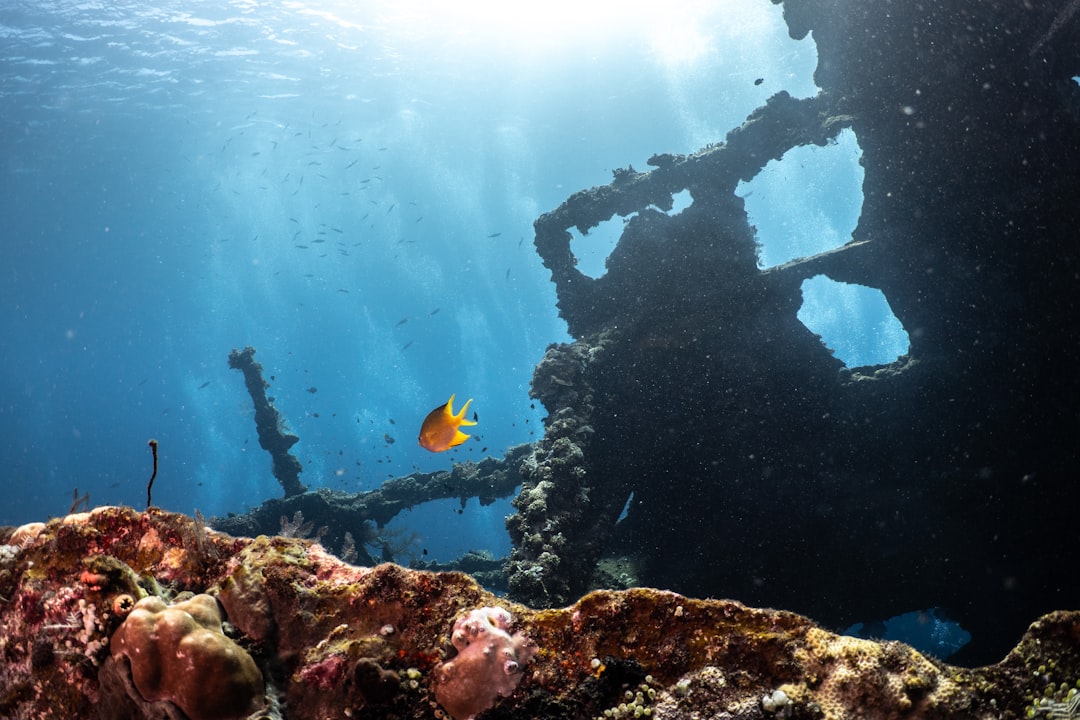
Here is my honest take on the major wrecks, ranked by how much they deliver relative to the effort and certification required:
Okikawa Maru (10 to 26 metres, Open Water): This is the only major wreck that an Open Water diver can properly explore, and it happens to be one of the best. A 160-metre oil tanker sitting upright with its deck at 10 to 16 metres, the Okikawa Maru is covered in hard and soft corals, with batfish, lionfish, and groupers living in and around the hull. You can swim along the deck and peer into cargo holds without penetrating, and the shallow deck depth means you get long bottom time. If you do one wreck dive in Coron, make it this one.
Akitsushima (22 to 36 metres, Advanced Open Water): This is the only true warship in the bay, a 118-metre seaplane tender lying on its port side at around 35 metres. The aircraft crane is still recognisable on the deck, and the scale of the ship is genuinely impressive. This is a legitimate Advanced dive, and it is the point where the arithmetic tightens: at 35 metres, no-decompression time is short, gas consumption is high, and the interesting parts are the overhead sections. Worth every minute if you have the certification.
Irako (28 to 43 metres, Advanced plus Deep Specialty): The deepest and most challenging of the regularly dived wrecks, the Irako is a refrigeration ship with massive swim-throughs and an engine room that experienced wreck divers love. The visibility here can be stunning in the dry season, and the large groupers and soft corals on the hull add marine life to the history. But this is not a dive for someone who just got their Advanced card last month. Real current, narcosis depth, and overhead sections mean you want wreck penetration training and a deep specialty before you commit.
Kogyo Maru (22 to 34 metres, Advanced plus Wreck Specialty): A cargo ship where you can explore holds still containing construction materials, including cement bags and a bulldozer. The penetration opportunities are good but silt-out risk is real. Worth doing if you are doing multiple dive days, but not the first wreck I would book.
Olympia Maru (15 to 30 metres, Open Water to Advanced): A 122-metre cargo ship sitting upright with good coral growth and decent fish life. The shallow sections are accessible to Open Water divers, but the more interesting penetration requires Advanced. A solid second or third wreck dive, not a headline.
Lusong Gunboat (2 to 10 metres, snorkellers and beginners): This is the overhyped one, at least for divers. The Lusong Gunboat is shallow enough that the stern breaks the surface at low tide, which makes it a popular snorkelling stop on island-hopping tours. For a certified diver, there is almost nothing here. The wreck is small, shallow, and crowded with snorkellers kicking above you. If you are diving, skip it. If you are snorkelling, it is a genuinely fun stop with hard corals and reef fish around the wreckage.
Siete Pecados Marine Sanctuary (3 to 24 metres, all levels): Not a wreck but a reef dive, and a good one. Turtles, clownfish, and decent coral make this a relaxing second dive to pair with a deeper wreck in the morning. El Nido’s snorkelling stops on Tour C are comparable, but Siete Pecados holds its own as a dive site.
A typical two-dive day with a Coron dive shop costs roughly ₱2,500 to ₱4,000 including equipment, boat, and guide. Most shops run morning departures to the deeper wrecks and afternoon trips to shallower sites. If you are doing three or more dive days, ask about package discounts. The wrecks are close to town, usually 30 to 60 minutes by dive boat, which means you are back on land by early afternoon.
My honest verdict on Coron diving: it is the best wreck diving in the Philippines, and one of the best concentrated wreck sites in Southeast Asia. El Nido cannot compete here. If you are a diver, Coron should be your priority in Palawan. But work backwards from your certification level. An Open Water diver has one great wreck (Okikawa Maru) and a few shallow options. An Advanced diver gains Akitsushima and Kogyo Maru. Only a diver with a deep specialty should be booking Irako. Do not let a shop talk you into a wreck that exceeds your training.
Nature: Lakes, Lagoons & Hot Springs
If you are not diving, Coron’s lakes and lagoons are your main event. These are concentrated on Coron Island itself, a jagged limestone massif that rises straight out of the bay. The scenery is dramatic, and here is where I need to be honest about the El Nido comparison: El Nido’s Bacuit Bay has more of it. More lagoons, more beaches, more limestone formations, spread across a larger area with more tour variety. Coron’s non-diving attractions are fewer but generally less crowded, and the lakes have a geological strangeness that El Nido’s lagoons do not match.
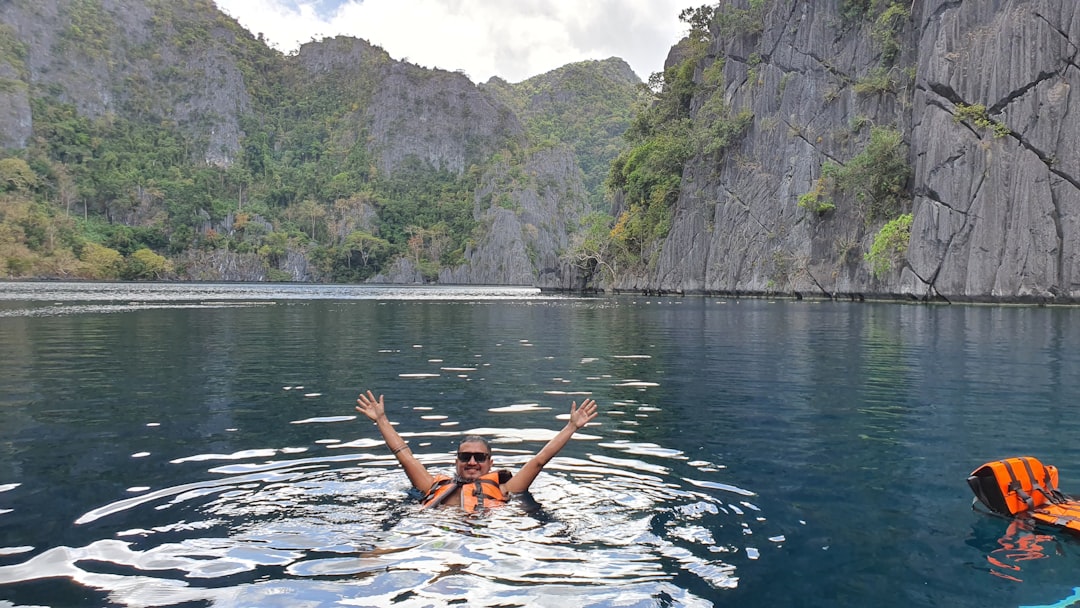
Kayangan Lake (entrance ~₱200 to ₱300): Repeatedly cited as the cleanest lake in the Philippines, Kayangan is a freshwater lake enclosed by limestone walls on Coron Island. You reach it via a 30-step staircase through the cliffs, and halfway up there is a viewpoint that looks down over Coron Bay. That viewpoint is the shot you have seen in every Philippine tourism poster. The lake itself is swimmable, with a wooden walkway leading to a platform where you can jump in. The water is clear, calm, and strangely warm. Go before 9:00 AM to beat the tour boat rush, because by mid-morning the platform gets crowded. El Nido’s Big Lagoon on Tour A is more photogenic from the water, but Kayangan Lake is cleaner, quieter if timed right, and geologically more unusual.
Barracuda Lake (entrance ~₱200 to ₱350): This is the geologically strange one, and my favourite non-diving site in Coron. Barracuda Lake sits in a flooded volcanic formation, and as you descend through the water you pass through a thermocline, a distinct layer where warm freshwater at the surface (around 38 degrees Celsius) meets cooler saltwater below. You can feel the temperature change against your skin as you swim down, and the visual effect at the boundary layer is surreal, like looking through wavy glass. Snorkellers can experience the thermocline from the surface, but divers get the full effect. The lake is reached by a short climb over limestone with your gear, which adds a sense of adventure that El Nido’s boat-access lagoons lack. This is the one site in Coron that feels genuinely unique in Palawan.
Twin Lagoon (entrance ~₱200): Two connected bodies of water separated by a limestone wall with a narrow cave passage at the base, passable at low or medium tide. You swim or pull yourself along a rope through the dark tunnel and emerge into a second lagoon ringed on all sides by sheer grey-white limestone, completely calm regardless of conditions outside. The colour contrast between the emerald outer lagoon and the more turquoise inner one is striking. At high tide the passage is underwater, and you swim through with your head barely below the surface. It is a great experience, but it is also Coron’s most crowded single stop after Kayangan. Go early.
Mount Tapyas (free): A 721-step concrete staircase leading to a viewpoint overlooking Coron Bay and the limestone islands beyond. The hike takes about 20 minutes up, and the best time to go is 30 minutes before sunset. There is a large cross at the summit and panoramic views that take in the full sweep of the Calamian Islands. It is free, it is exercise, and it is the best land-based view in Coron. El Nido has no equivalent viewpoint without chartering a private boat or hiking to Taraw Cliff (which is more difficult and has restricted access).
Maquinit Hot Springs (~₱200 to ₱300 entry): One of the few saltwater hot springs in the world, fed by geothermal activity and sitting in a mangrove clearing on the north side of Coron. The pools are hot, 38 to 40 degrees, and the setting is atmospheric at dusk. Open from 8:00 AM to 8:00 PM with entrance closing at 7:00 PM. The best time to visit is late afternoon after a day on the water, when the air is cooling and the steam rising off the pools looks golden in the low light. A tricycle from town costs ₱300 to ₱400 round trip, and the ride takes 25 to 30 minutes on a bumpy road.
Beaches & Islands: Island Hopping Tours
Coron’s island-hopping tours are organised differently from El Nido’s lettered Tour A through D, though some operators use similar naming. The key distinction is that Coron’s tours split between Coron Island sites (the lakes and lagoons) and the Calamianes islands further south (white-sand beaches). Most travellers do one of each.
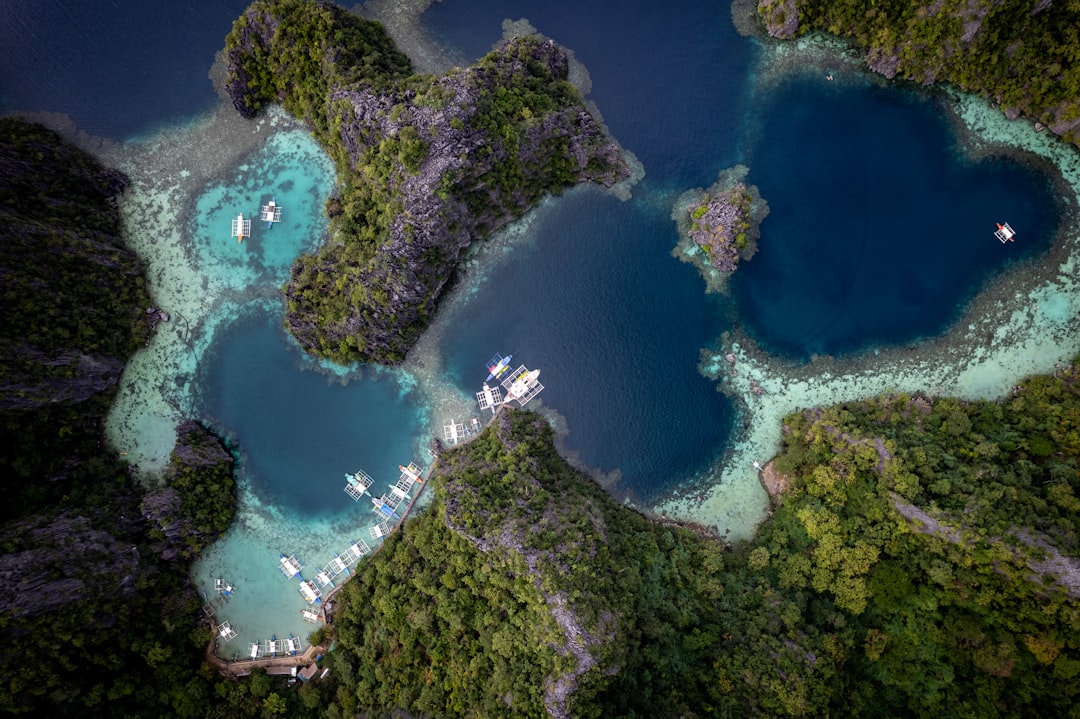
Tour A / Coron Island Loop (₱1,500 to ₱2,200 per person): Kayangan Lake, Twin Lagoon, CYC Beach, and Skeleton Wreck. This is the bucket-list circuit and the busiest water in Coron. If you only do one boat tour, this is it. Kayangan Lake and Twin Lagoon are both on this tour, and CYC Beach is a decent swimming stop with a small entrance fee of around ₱100. Skeleton Wreck is a shallow wreck you can snorkel over. This tour is Coron’s equivalent of El Nido’s Tour A, and it has the same problem: it gets crowded by mid-morning. Start early.
Tour B / Reefs & Wrecks (₱1,500 to ₱2,200 per person): Barracuda Lake, Twin Lagoon, Banul Beach, and Skeleton Wreck. A slightly quieter alternative to Tour A that swaps Kayangan Lake for Barracuda Lake and adds Banul Beach, a small cove with good shade. If you have already done Tour A or if Barracuda Lake’s thermocline sounds more interesting than Kayangan’s postcard viewpoint, this is the better pick.
Tour C / Malcapuya & Calamianes (₱1,800 to ₱2,800 per person): Malcapuya Island, Bulog Dos, and Banana Island. This is the beach tour, and it is the one where Coron competes directly with El Nido on sand quality. Malcapuya Island has powder-white sand and clear water, and it is one of the best beaches in the Calamians. The trade-off is the travel time: these islands are further from Coron Town, so the boat ride is longer. If you want pristine beaches without the El Nido crowds, this tour delivers.
Tour D / Coron Ultimate (₱1,800 to ₱2,500 per person): A greatest-hits mashup combining Kayangan Lake, Twin Lagoon, Siete Pecados, CYC Beach, and a beach stop. If you only have one day for island hopping and want to see as much as possible, this covers the most ground. It is busy, though, because it packs the headline stops into a single itinerary.
Private boat charter (₱5,000 to ₱9,000 per day): If you have a group of four to six people, a private charter costs roughly the same per head as a joiner tour, and you get to choose your stops, your timing, and your pace. This is the best way to beat the crowds at Kayangan and Twin Lagoon: leave at 7:00 AM, hit the popular sites before the joiner boats arrive, and spend the afternoon at a quieter beach. In El Nido, private charters are more expensive and more restricted by the eco-tourism management system. In Coron, a private boat is realistically the single best upgrade you can make to your trip.
One critical budget note: entrance fees are usually not included in the tour price. Expect to pay ₱600 to ₱900 per person per day in entrance fees on top of the boat cost. Kayangan Lake is ₱200 to ₱300, Twin Lagoon is ₱200, Barracuda Lake is ₱200 to ₱350, Malcapuya Island is ₱300, and smaller sites like CYC Beach and Skeleton Wreck run ₱100 to ₱150. There is also a one-time environmental or terminal fee of around ₱200 to ₱300 collected on arrival at the airport. Bring small bills; ATMs in town run dry, and most boats, fees, and small eateries are cash-only.
My honest verdict on Coron’s island hopping: the lakes and lagoons are excellent but fewer in number than El Nido’s tour circuit. If you are not diving and island hopping is your main activity, El Nido gives you more variety and more dramatic scenery across four distinct tours. Coron’s tours are less crowded, the private boat option is better value, and Malcapuya Beach rivals anything in El Nido for pure sand quality. But you will run out of new boat tours faster in Coron than in El Nido.
Where & What To Eat And Drink In Coron
Coron’s food scene is functional but less developed than El Nido’s. Where El Nido has evolved a genuine restaurant culture with wood-fired pizza, Mediterranean cafes, and heritage Filipino cooking over the last few years, Coron’s dining is still dominated by carinderias, grill houses, and a handful of mid-range spots. That is not a complaint. The local food is cheap, fresh, and honest, and if you are diving all day, you are probably too tired for a sit-down culinary experience anyway.
At the budget tier, carinderias serve rice and viands for ₱80 to ₱150 per plate. You point at steam trays of adobo, sinigang, grilled bangus, or pork tocino and get a full plate with rice. These cluster around the public market and the side streets off the main road. This is where the locals eat, and a realistic daily food budget eating carinderia meals is ₱350 to ₱500 per person.
For seafood, the evening grill scene is Coron’s best food experience. Several restaurants along the main strip set up charcoal grills in the late afternoon, and you pick your fish, squid, or prawns by weight and eat at plastic tables under the open sky. Grilled tuna belly runs about ₱100 to ₱150 per 100 grams, and a full seafood plate costs ₱400 to ₱600. The atmosphere is informal and smoky, and the fish is fresh because it came out of the bay that morning.
Mid-range restaurants run ₱200 to ₱400 per meal, with a mix of Filipino and international dishes along the main streets. A few places have invested in rooftop or waterfront seating in recent years, and dinner with a view over Coron Bay at sunset is worth the premium if you have had a good dive day. For nicer sit-down dinners, expect ₱400 to ₱800 per person.
Drinks are straightforward. San Miguel beer runs ₱55 to ₱80 at sari-sari stores and ₱80 to ₱150 at bars. Fresh buko juice costs ₱50 to ₱80. Coffee from local shops runs ₱60 to ₱100, though Coron’s cafe culture is far behind El Nido’s. If you are planning your overall budget, a comfortable daily food spend in Coron is ₱800 to ₱1,500 per person, mixing carinderia lunches with one decent dinner. Backpacking hard, ₱350 to ₱500 covers three local meals and a beer.
Shopping In Coron
Coron is not a shopping destination, and unlike El Nido, it does not pretend to be. There are no malls. The public market is the main commercial hub, and it is worth a walk-through even if you are not buying, because it gives you a sense of the town beyond the dive shops and tour operators. Fresh fish, produce, dried goods, and basic supplies are on display in the early morning, and the carinderias around the market serve the cheapest food in town.
Souvenir stalls along the main strip sell pearl jewelry, woven bags, sarongs, and bottled local products. South Sea pearl jewelry is a Palawan specialty, but quality varies enormously. If you want genuine pearls, buy from established shops, not beach vendors. Woven items made by the Tagbanua community are a more authentic and ethical buy, and some community-based tourism initiatives sell them directly.
If you are doing a Palawan loop and visiting both Coron and El Nido, save your souvenir shopping for El Nido, where the selection is better and the Sibaltan community workshops offer higher-quality woven crafts. Coron’s market is for food and practical supplies, not keepsakes.
Bars & Nightlife In Coron
Coron’s nightlife is low-key, and that suits the place. This is a town where most people wake up at 6:00 AM for a dive boat or a tour, and the after-dark scene reflects that. A handful of bars and restaurants along the main strip stay open until midnight, and the evening grill scene is as much a social gathering as a food one. You will end up at a plastic table eating grilled squid and drinking San Miguel with whoever was on your dive boat that day.
There is no club scene. There are no beach parties. If late-night drinking is your priority, you are in the wrong town, and you are definitely in the wrong part of Palawan. El Nido has a slightly more developed bar scene, particularly at Town Square and along Corong Corong, but even El Nido winds down by midnight. Coron is quieter than that. Plan a good dinner, maybe one drink, and get to bed early. The wrecks are better than any bar.
When Is The Best Time To Visit Coron?
Coron has two seasons, and the difference between them is large enough to plan around. Almost everything in Coron happens on or under the water, so sea conditions matter more than they do in a city destination. The dry season from late November to May is prime time, with calm seas and the best underwater visibility on the wrecks, reaching 15 to 25 metres in the peak months. The wet season from June to October brings rough seas, reduced visibility, and a real risk of typhoon-related tour cancellations.
| Period | Weather | Crowds | Prices | Notes |
|---|---|---|---|---|
| Nov to mid-Dec | Dry, improving, 27 to 31°C | Low to moderate | Shoulder | Best sweet spot: good weather, fewer crowds |
| Dec to Jan | Dry, 27 to 31°C | Peak (Christmas, New Year) | Peak | Reliable weather but sites are busy |
| Feb to Mar | Dry, calm seas, best visibility | High | High | Best wreck visibility; ideal for divers |
| Apr to May | Hot and dry, 30 to 35°C | Moderate (Holy Week is peak) | Shoulder to high | Good weather but uncomfortably hot by May |
| Jun to Aug | Wet, rough seas, heavy rain | Very low | Lowest | Tour cancellations likely; some resorts close |
| Sep to Oct | Typhoon season peak | Very low | Lowest | Highest risk; avoid for diving and island hopping |
February and March are the standout months for divers. The northeast monsoon brings clear skies, calm seas, and the best visibility of the year on the wrecks. If seeing the full length of a 160-metre ship’s hull matters to you, aim for these months. The trade-off is crowds and peak accommodation prices.
Mid-November to mid-December is my favourite sweet spot. The rains have eased, the seas have calmed, prices have not spiked yet, and the Christmas crowds have not arrived. You get dry-season conditions with shoulder-season crowds, and the dive sites are quieter than they will be in February.
Holy Week, which falls in March or April depending on the liturgical calendar, is the busiest week of the year across the Philippines. Resorts book out six to eight weeks in advance at a 50 to 100 percent premium. Avoid it unless you have planned months ahead.
June through October is the southwest monsoon, and this is when tours get cancelled. Coron sits in a typhoon corridor, and while it does not rain all day every day, you can lose whole days to storms. July and August are the wettest. August and September carry the highest typhoon risk. The wrecks close to Coron Bay remain accessible in moderate conditions, but visibility drops significantly, and island-hopping tours to the outer beaches become unreliable. Travel insurance is essential if you travel during this window.
My recommendation: aim for mid-November to mid-December for the best balance of weather and solitude. If wreck visibility is your priority, February or March. Avoid August through October unless you are on a strict budget and willing to gamble on the weather.
How Many Days Do You Need In Coron?
Three to four days is the sweet spot for Coron. This gives you two dive days if you are certified (four to six wreck dives), one island-hopping day for the lakes and lagoons, and a buffer day for Mount Tapyas, Maquinit Hot Springs, or weather cancellations. If you are not diving, three days is enough: two island-hopping tours and one land day. El Nido needs four to five days because it has more tours and more variety. Coron’s tighter itinerary is actually an advantage if you are short on time.
Here is the itinerary I would recommend for a four-day trip for a diver:
- Day 1: Arrive at Busuanga Airport, van to Coron Town, settle in, evening at the grill restaurants and a walk through the public market.
- Day 2: Two-tank dive day. Okikawa Maru in the morning (the best Open Water-accessible wreck) and Siete Pecados as the second dive. Afternoon at leisure, sunset hike up Mount Tapyas.
- Day 3: Two-tank dive day. Akitsushima (if Advanced certified) or Olympia Maru in the morning, plus a shallower wreck or reef dive. Evening at Maquinit Hot Springs.
- Day 4: Island-hopping Tour A or a private boat charter to Kayangan Lake, Twin Lagoon, and CYC Beach. Start early to beat the crowds.
For a non-diver, I would swap the dive days for Tour A (Coron Island Loop) and Tour C (Malcapuya and the Calamianes beaches), keeping Mount Tapyas and Maquinit Hot Springs as afternoon or evening activities. If you have five days, add Tour B for Barracuda Lake or a second private boat day to the outer islands.
If you are doing the classic Palawan loop and visiting both Coron and El Nido, I would give Coron three days and El Nido four. The ferry between them takes 3.5 hours, so you lose half a day in transit. Book the ferry in advance during peak season, because seats sell out.
Where To Stay In Coron
Coron has two main accommodation strategies: stay in Coron Town for convenience, or stay on an outlying island resort for seclusion. The choice matters more here than in El Nido, because the outlying island resorts in Coron are significantly more isolated and more expensive than El Nido’s Lio Beach or Nacpan options.
Coron Town
Coron Town is the practical choice, and for a first trip I would not base anywhere else. You can walk to the dive shops, the tour pier, the restaurants, and the public market. The town itself is grittier than El Nido’s Poblacion, with more diesel fumes and less charm, but it is functional and everything you need is within a fifteen-minute walk. The beach in town is a boat departure point, not a place you want to swim.
- Budget: Dorm beds from ₱700 to ₱1,400 per night. Family-run guesthouses near Real Street offer basic rooms with fan or cold water for ₱600 to ₱1,200.
- Mid-range: ₱2,500 to ₱5,000 per night for a clean room with air conditioning, breakfast, and a short walk to the pier.
- Upper-midrange: ₱5,000 to ₱9,000 per night for hotels with pools, bay views, and rooftop bars.
Outlying Island Resorts
If you want seclusion, a private beach, and a house reef you can snorkel off the jetty, the outlying island resorts deliver. But they come with two trade-offs: price and logistics. Every tour day starts with a 20 to 40 minute speedboat transfer back to the Coron Town pier, and you pay roughly twice what you would in town. These resorts are best as a two to three night splurge after a few days in town, not as your only base.
- Sangat Island Dive Resort: 15 minutes from town, 23 native-style chalets, and a dive operation that runs to the wrecks every morning. This is the closest island resort to the wreck sites, and for divers who want to roll out of bed and onto a dive boat, it is the best option.
- Two Seasons Coron Island Resort: On Bulalacao Island, 35 minutes by speedboat from town. 46 bungalows and casitas with a spa, jetty, and house reef. The higher-end pick for honeymooners and comfort seekers.
- Club Paradise Palawan (Discovery Coron): On Dimakya Island, much further north, inside a UNESCO Biosphere Reserve. 74 rooms, an in-house dive shop, and a house reef. The most isolated and most expensive option.
North Busuanga
A handful of quieter beach resorts sit on the north end of Busuanga Island, near Calauit Safari Park. They are less crowded and closer to the outer reef sites, but the catch is a two to three hour drive from Coron Town. This only makes sense as a second-half base after you have done your diving and island hopping from town, or if you have a specific interest in Calauit’s wildlife. For most travellers, it is too far from the action.
My recommendation: stay in Coron Town for your whole trip. You pay less, you walk to everything, and you do not lose an hour of every morning to a boat transfer. If you want a resort experience, book two nights at Sangat or Two Seasons at the end of your trip as a reward after the diving is done.
How Do You Get Around In Coron?
Coron Town is small enough to walk end to end in fifteen minutes, and most of your getting-around happens on foot or by tricycle. Tricycle fares within town run ₱15 to ₱50 per ride. To Mount Tapyas trailhead, expect ₱150. To Maquinit Hot Springs, ₱300 to ₱400 round trip. To the airport, a shared van costs ₱150 to ₱300 per person and takes 30 to 45 minutes.
Getting To Coron
Getting to Coron changed in March 2026 when Manila’s Ninoy Aquino International Airport banned turboprop operations. Since Busuanga Airport’s runway can only handle turboprop aircraft, direct flights from Manila no longer exist. Here is what that means for your journey:
If you are coming from Manila, you need to get to Clark International Airport first, which is a two to three hour bus or car ride from Manila. Philippine Airlines, Cebgo, and Sunlight Air all operate direct flights from Clark to Busuanga (USU), with flight time of about one hour. Sunlight Air runs two daily flights on this route. One-way flights cost roughly ₱2,500 to ₱6,000 depending on how far ahead you book. After landing, a shared van takes 30 to 45 minutes to reach Coron Town.
If you are coming from Cebu, the connection is simpler. PAL, Cebgo, and Sunlight Air all fly direct from Cebu to Busuanga, often at lower fares than the Clark route. If you are already in the Visayas, this is the better entry point.
If you are coming from El Nido, you have two options. The ferry is the most common: three operators (Montenegro Shipping Lines, Atienza InterIsland Ferries, and Jomalia Shipping Lines) run daily fastcraft services between Coron and El Nido. The journey takes 3.5 hours. Montenegro charges about ₱1,760 per person, while Atienza and Jomalia charge ₱2,800 to ₱2,850 for air-conditioned seating. Morning departures (6:00 to 7:30 AM) typically have calmer seas. Book in advance during peak season. There is also a short Cebgo flight between El Nido and Coron, which avoids seasickness but costs more and has limited frequency.
For most travellers arriving from outside the Philippines, the entry point is Manila. If you need to understand how much time to spend in the capital before flying out to Palawan, the Manila travel guide covers which terminal you will land at and how to get to your next connection, including the transfer to Clark for Coron flights.
A note on the 2GO ferry from Manila to Coron: this is a much longer journey, typically an overnight ferry taking 10 to 12 hours, and it is significantly cheaper than flying. Some backpackers use it, but if you are on a short trip, the time cost is rarely worth the saving. The Clark-to-Busuanga flight plus van transfer gets you to Coron in under four hours total.
For getting around once you are in town, you can also rent a motorbike for about ₱400 to ₱500 per day, which is useful if you want to explore Busuanga Island independently or ride to Maquinit Hot Springs on your own schedule. The roads are a mix of paved and unpaved, and the last stretch to Maquinit is bumpy. If you are not comfortable on mixed terrain, stick to tricycles.
Conclusion
Coron earns its place in any Palawan itinerary, but it earns it differently from El Nido. The wrecks are genuinely world-class, and if you are a certified diver, they alone justify the trip. Okikawa Maru is the must-dive wreck for Open Water divers, Akitsushima is the reward for Advanced certification, and Irako is the deep specialty challenge. The Lusong Gunboat is a snorkelling stop, not a dive, and the shops that sell it as a dive experience are padding their site count.
For non-divers, Coron’s lakes and lagoons are excellent but fewer in number than El Nido’s tour circuit. Kayangan Lake and Barracuda Lake are both worth the trip, and Barracuda’s thermocline is something you cannot experience in El Nido. Twin Lagoon is dramatic but crowded. Mount Tapyas and Maquinit Hot Springs round out a solid three to four day itinerary, and the private boat charter option is better value here than in El Nido if you have a small group.
Here is the decision framework: if you dive, Coron is your priority. If you do not dive and you want maximum scenic variety across multiple tours, El Nido gives you more. If you want fewer crowds, a rawer town, and geological oddities, Coron is the better choice. If you have time for both, give Coron three days and El Nido four, connected by the 3.5-hour ferry.
Budget realistically. A backpacker can do Coron on ₱1,200 to ₱1,800 per day with dorm beds, carinderia meals, and group tours. Mid-range travellers should plan ₱2,500 to ₱4,500 per day including a private room, restaurant meals, and group island-hopping tours. Diving adds ₱2,500 to ₱4,000 per two-dive day. Entrance fees stack up to ₱600 to ₱900 per tour day per person, and they are almost always extra. Bring cash, because ATMs run dry and most transactions in Coron are cash-only.
Have you dived the wrecks in Coron, or are you weighing it against El Nido for an upcoming trip? Drop your questions or tips in the comments. I would genuinely like to hear which wrecks lived up to the hype for you and which ones you would skip, especially if your certification level gave you a different perspective on the deeper sites. And if you are building a full Palawan itinerary, the El Nido tour guide covers the other half of the classic Coron-to-El Nido loop in the same practical detail.
Frequently Asked Questions
Which Coron wreck is best for Open Water divers?
Okikawa Maru is the only major Coron wreck suitable for Open Water divers, with its deck sitting at 10 to 16 metres. It is a 160-metre oil tanker covered in coral with good fish life, and it gives you long bottom time at that depth. Most other wrecks in Coron Bay require Advanced Open Water or deeper certifications.
How does Coron compare to El Nido for non-divers?
Coron has fewer island-hopping tours than El Nido but they are generally less crowded. Kayangan Lake and Barracuda Lake offer geological experiences El Nido cannot match, particularly Barracuda’s thermocline. However, El Nido has more dramatic limestone scenery, more tour variety, and better beaches overall. If you are not diving, El Nido gives you more to do across four or five days.
How do you get from Coron to El Nido?
Three ferry operators run daily fastcraft services between Coron and El Nido: Montenegro Shipping Lines, Atienza InterIsland Ferries, and Jomalia Shipping Lines. The journey takes about 3.5 hours. Montenegro charges around 1,760 pesos per person, while Atienza and Jomalia charge 2,800 to 2,850 pesos. There is also a short Cebgo flight between the two, which costs more but avoids seasickness.
How many days do you need in Coron?
Three to four days is the sweet spot. Divers need two dive days plus one island-hopping day and a buffer day. Non-divers can do two island-hopping tours and one land day for Mount Tapyas and Maquinit Hot Springs. If you are combining Coron with El Nido, give Coron three days and El Nido four.
What is the best time of year to visit Coron for diving?
February and March offer the best underwater visibility on the wrecks, reaching 15 to 25 metres, with calm seas and clear skies. Mid-November to mid-December is a shoulder-season sweet spot with good conditions and fewer crowds. Avoid June through October, when the southwest monsoon brings rough seas and typhoon risk that can cancel tours for days.