Battambang Travel Guide: Cambodia Beyond Angkor Wat
You are sitting on a bamboo platform bolted to a repurposed motorcycle engine, rattling down a narrow gauge railway track at 30 km/h through rice paddies and cashew orchards. There is no seatbelt, no cushion, no station. When another bamboo train comes from the opposite direction, both drivers stop, one lifts their entire contraption off the rails, and you wait while the other passes. This is the norry, Battambang’s bamboo train, and it is one of the most purely joyful things I have done in Southeast Asia.
Later that same evening, you sit on a red plastic chair at the base of Phnom Sampeau, a limestone hill 12 km outside the city. The sun is going down behind the karst. Then, from a dark slit high in the cliff face, a ribbon of bats begins to pour out. Not a few hundred. Millions. They stream in a single, twisting column across the sky for 30 to 40 minutes, heading toward Tonle Sap to hunt insects for the night. Locals set out snack stalls and plastic chairs. Kids chase each other. Nobody charges you to watch. It feels less like a tourist attraction and more like a nightly ritual the town has been sharing with the mountain for centuries.
This Battambang travel guide is for travelers who have already done Angkor Wat or are actively looking for Cambodia beyond Siem Reap. If you have more than a week in Cambodia and want to slow down somewhere that still feels lived in, this is the city. Battambang is Cambodia’s second largest urban center, but it does not behave like a tourist hub. It has no nightlife strip, no mega-malls, no air-conditioned coach convoys. What it does have is French colonial architecture, a riverside that actually invites you to sit, some of the best food in the country, and a creative scene that punches well above its weight. I wrote this guide for the kind of traveler who is happy to spend three nights in one place if the place earns it. Battambang earns it.
If you are still mapping your overall Cambodia route, our guide to the best time to visit Southeast Asia by country breaks down when to go for each destination, including Cambodia’s dry season sweet spot.
The History Of Battambang
Battambang’s story is older than Cambodia’s borders. The city sits on the Sangker River in the country’s northwest, in the heart of what locals call Cambodia’s rice bowl. The name comes from the legend of Ta Dumbong, a herder who lost his stick (dambang means “stick” in Khmer), and the folk tale is still referenced in a large statue near the old bridge into town.
For most of its early history, Battambang was a dispersed riverside settlement. That changed in the 18th and 19th centuries when the region came under Siamese control. By the late 1700s, Battambang was governed as part of a Thai-administered territory, and a fort called Kampaeng was built in 1837 to house the Lord Governor, his family, and reportedly 56 elephants. The fort was demolished in 1910, but its outline shaped the grid of streets that still defines the city center today.
The French took over in 1907, and Battambang became a key administrative and trade hub in colonial Cambodia. They brought the railway, a post office, wide boulevards, and a urban plan that strung government buildings, villas, and shophouses along the river. The French also encouraged Chinese merchant settlement, which is why you see a layer of Chinese shophouse architecture mixed in with the colonial villas near the water. By the mid-20th century, Battambang was Cambodia’s most prosperous provincial city.
Then came the Khmer Rouge. Battambang province was hit as hard as anywhere. The Killing Caves at Phnom Sampeau, where the regime pushed victims off a cliff edge into a natural shaft, are now a memorial site. The city’s population was emptied into the countryside like every other Cambodian town. After the war, people slowly returned, and Battambang rebuilt itself as an agricultural center. What survived from the pre-war era, remarkably, was much of the colonial-era building stock. About 800 heritage buildings from the French protectorate and the post-independence Sangkum Reastr Niyum period still stand in the city center, a collection that is being documented and protected under a local heritage initiative.
That layered past is what makes Battambang different from Siem Reap. Siem Reap is a temple town that grew around Angkor. Battambang is a lived-in city that happens to have extraordinary architecture, a deep food culture, and a creative arts community, all of which grew from real civic life rather than tourism demand.
Best Things To Do In Battambang
Battambang’s attractions split into two worlds: the countryside experiences (bamboo train, bat caves, hill temples) and the walkable city center (colonial architecture, cafes, galleries, markets). Most travelers try to cram everything into one day, but I think the city is better when you spread it across two full days and let the pace stay slow. Here is what to do, grouped by type.
Tourist Attractions
The Bamboo Train (Norry)
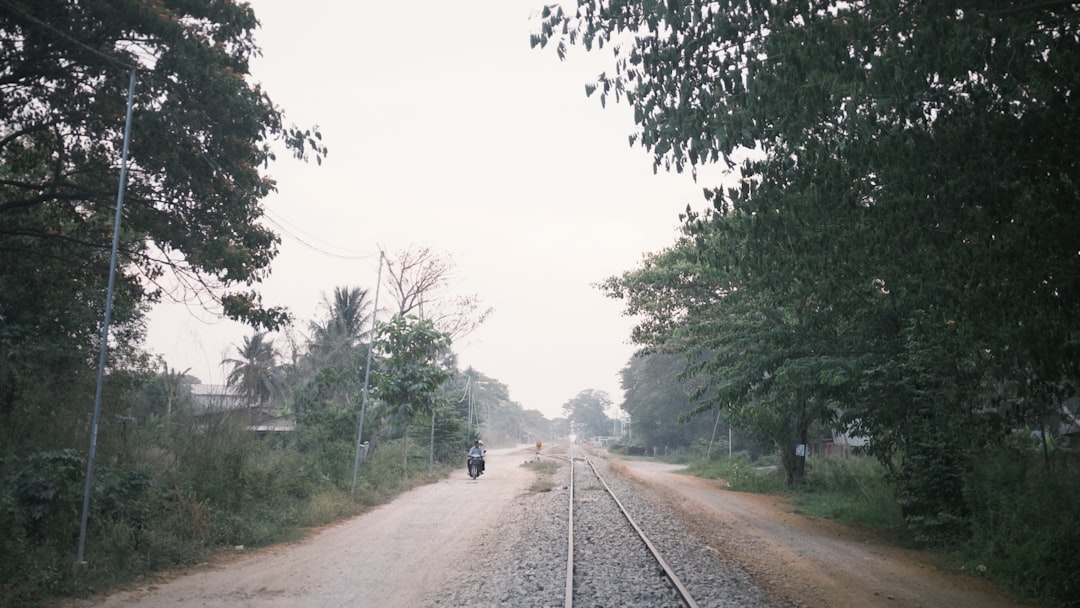
The bamboo train is the experience that puts Battambang on most travelers’ lists, and for good reason. A norry is a flat bamboo platform sitting on two axles, powered by a small engine, running on Cambodia’s narrow-gauge railway tracks. The ride rattles through rice paddies, small villages, and open countryside. When two trains meet on the single track, the lighter one is lifted off and set aside so the other can pass. It is improvised, bumpy, and absolutely worth doing.
Here is where it gets a bit complicated. There are now two bamboo train locations, and the situation has changed over the years as Cambodia rebuilds its national railway. The original norry runs in Ou Srolao village, about 13 km from the city center. A newer, more organized version operates near Phnom Banan, about 20 km south, on a purpose-built circular track. The original has the raw, anything-can-happen energy that made it famous. The Banan version is more controlled and predictable. Both charge $5 per person for a ride that lasts roughly 30 to 45 minutes. Check locally before you go, because the long-term future of both depends on railway development plans.
Practical tip: Have your tuk-tuk driver take you and wait. A round-trip tuk-tuk from the city center to the original bamboo train site costs $5 to $8. The Banan site is further out, so expect to pay more. Many drivers will combine the bamboo train with Phnom Sampeau and the bat caves in a half-day or full-day loop for $18 to $25.
Phnom Sampeau and the Bat Exodus
Phnom Sampeau is a limestone hill about 12 km southwest of Battambang along National Road 57. The hill has a summit temple, viewpoints, and the Killing Caves, a sobering Khmer Rouge memorial where a glass stupa holds the remains of victims. A moto driver at the base will take you to the top for about $1, as tuk-tuks cannot manage the steep cement road.
The main event, though, is the bats. At dusk, millions of wrinkle-lipped free-tailed bats pour out of a cave high on the north side of the cliff face. The exodus starts around 5:30 PM in the dry season and closer to 6:00 PM in the wet season. It lasts 30 to 40 minutes as a continuous black ribbon streams across the sky, looping and twisting toward Tonle Sap. Locals set out plastic chairs and sell snacks. There is a small entrance fee of $2 to $3. Get there by 5:00 PM to find a good spot.
One note: the bat population has reportedly dropped in recent decades due to hunting and habitat pressure, though the community has formed a protection group to safeguard the colony. The spectacle is still impressive, but I was told the numbers are smaller than they used to be.
Wat Banan
About 25 km south of the city, Wat Banan is an 11th-century Angkorian temple on a hilltop, reached by 358 stone steps. It is sometimes called a mini Angkor Wat, though the comparison undersells it. The temple is small and partly ruined, but the climb rewards you with wide views over the countryside, and it is almost never crowded. If you do the Banan bamboo train, combine it with the temple climb. A tuk-tuk for the full circuit (bamboo train, Wat Banan, Phnom Sampeau, bat caves) will run $25 to $35 for the day.
French Colonial Architecture Walk
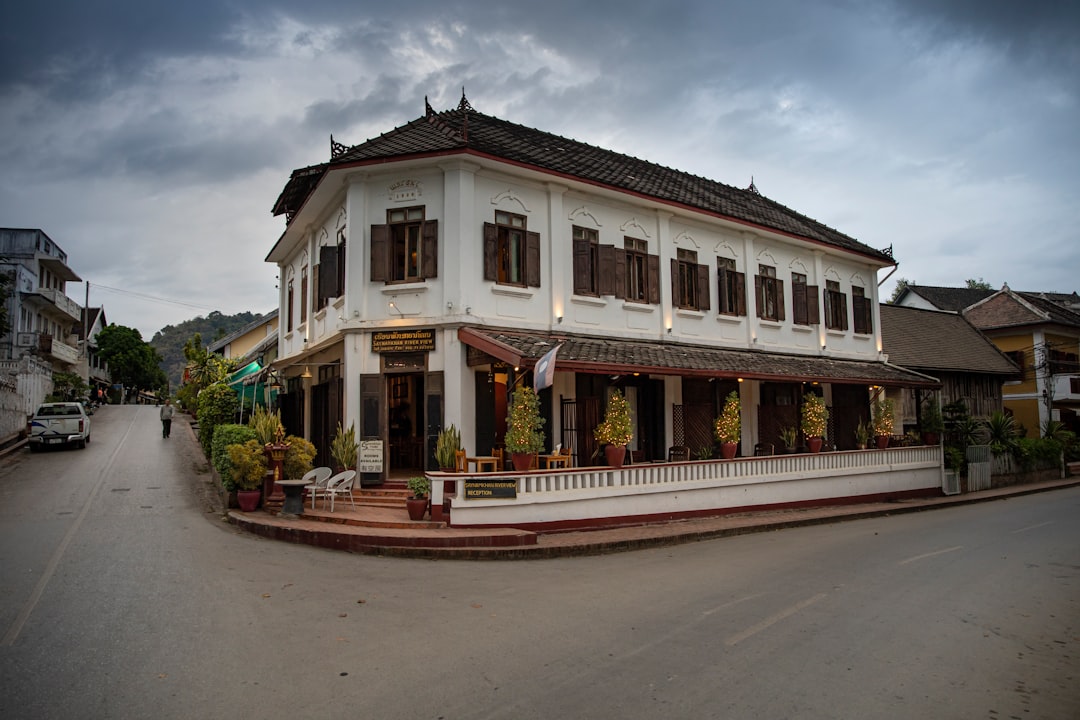
One of the best things to do in Battambang costs nothing: walk. The city center, roughly between Road 1 and Road 3, contains about 800 heritage buildings from the French protectorate and the post-independence period. The walk takes you past the Provincial Hall, a grand colonial-era building blending French and Khmer elements. The old Post Office, built between 1907 and 1926, still functions as a post office. The Governor’s Residence is a stately mansion from the same era. Psar Nath, the central market, sits in a historic building near the river.
I recommend doing this walk in the morning before the heat builds. Start at Psar Nath, follow the river south toward the old bridge, loop through the French Quarter near the Governor’s Residence, and double back along Streets 1.5 and 2. The whole loop takes about 90 minutes at a slow pace. If you want context, several local outfits run guided architectural walking tours for a small fee.
Cultural Experiences
Phare Ponleu Selpak Circus
If you do one evening activity in Battambang beyond the bats, make it the Phare Ponleu Selpak circus. Phare Ponleu Selpak means “Brightness of the Arts” in Khmer, and it is a creative school and performance space that grew out of a refugee camp art program in the 1990s. Today it trains young Cambodians in visual arts, music, and circus performance. The shows are not animal circuses. They are contemporary, story-driven performances combining acrobatics, theater, music, and visual art, often drawing on Cambodian history and everyday life.
Shows run on Mondays, Wednesdays, Thursdays, and Saturdays at 7:00 PM. Tickets are $16 for adults and $9 for children, available online or at the door. The campus is a short tuk-tuk ride from the city center. Arrive by 6:00 PM to enjoy the campus cafe and browse the student-made boutique. I found the whole experience moving, not because it is polished in a Las Vegas way, but because you can feel the human effort behind every act.
If your timing aligns, the Tini Tinou International Circus Festival is planned for November 17 to 24, 2026, with performances across both Battambang and Siem Reap. It is a biennial event bringing circus troupes from across Asia and beyond.
Wat Kor Village and Traditional Houses
Wat Kor is a village just south of the city center along the Sangker River. It is known for its traditional Khmer wooden houses, some over a century old, a few of which welcome visitors. The walk or bike ride from the city center takes about 20 minutes along the river. It is a quiet, low-key experience. You are not visiting a museum. You are walking through a living village where people still cook, farm, and raise families in homes that have survived decades of upheaval.
Romcheik 5 Art Space
For a different kind of cultural stop, Romcheik 5 is an independent art space in a converted warehouse, showcasing work by young Cambodian artists. It was featured by The Guardian in 2017 as one of Southeast Asia’s standout indie art hubs. The space runs its own curated exhibitions and also houses resident artists. Entry is about $5. It is the kind of place you stumble into and end up staying an hour longer than planned.
Nature
Countryside Cycling
Battambang’s surrounding countryside is flat, green, and crisscrossed by red-dirt paths that connect rice paddies, orchards, and small villages. Several outfits in town rent bicycles for $1 to $2 per day, including helmets. Soksabike, based in the Cafe Kinyei building on Street 1.5, rents bikes and runs guided cycling tours into the countryside. Battambang Bike on Street 2.5 does the same. Start early, carry water, and avoid the main highways. The back roads are where the real Battambang lives.
Where and What To Eat And Drink In Battambang
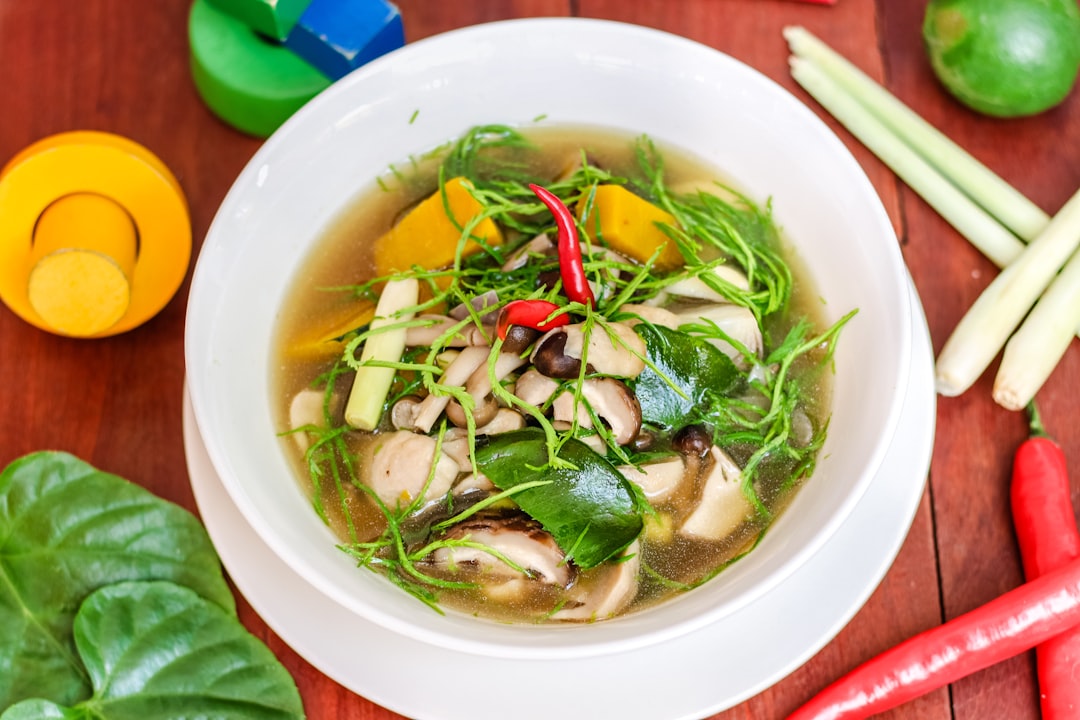
Battambang’s food scene is the main reason I would come back. The city was recognized as a UNESCO Creative City for gastronomy, and once you eat here, you understand why. The food is built around what grows nearby: fish from Tonle Sap and its tributary rivers, rice from the surrounding paddies, and produce from local orchards. It is not spicy in the Thai sense. It is layered, herbal, and deeply local.
Must-Try Local Dishes
- Amok (or hor mok): Cambodia’s most iconic dish, a coconut curry steamed in banana leaves. In Battambang, it is sometimes served in a bowl rather than the banana-leaf cup format you see in Siem Reap. The base is kroeung, a complex curry paste. Fish amok is the classic.
- Krolan: Sticky rice cooked with coconut milk inside a bamboo tube, sold by roadside vendors. It is a Battambang specialty and makes a great snack for a long tuk-tuk ride.
- Num banh chok: Rice noodle soup with a green herbal curry sauce, popular at breakfast. You will see vendors selling it from baskets slung from shoulder poles in the morning.
- Samlor: A broad category of stews, soups, and broths. Samlor machu (sour soup with tamarind) and samlor kari (coconut chicken curry soup) are both common.
- Songvak (or son vac): Sour fish cakes wrapped in banana leaf, considered at their best in Battambang.
- Prahok: Fermented fish paste that is the backbone of Khmer cooking. You will taste it in dipping sauces and curries even if you do not order it directly.
- Num pang: The Cambodian baguette sandwich, a direct legacy of French colonialism. Vendors near Psar Nath sell them loaded with pate, pickled vegetables, and herbs.
Where To Eat
The Night Market in front of Psar Nath is the easiest place to start. Stalls sell noodle dishes, soups, pate sandwiches, grilled meats, and fruit shakes. Prices are low, the food is geared for locals, and the vendors are friendly to foreigners. A similar cluster of evening food stalls sits near the Provincial Museum.
For sit-down meals, White Rose on Street 2 is a long-running local favorite for inexpensive Khmer food. Chinese Noodle Dumpling does exactly what the name promises. Nary Kitchen on Street 111 is known for its fish amok and also offers cooking classes if you want to learn to make the dish yourself. Jaan Bai on Street 2 is a more upscale option with pan-Asian sharing plates and good cocktails, run by a local children’s trust.
Coffee And Cafes
Battambang has a surprisingly good cafe scene for a city its size, concentrated in the Walking District (the few blocks between Street 121 and the market along Streets 1.5, 2, and 2.5). Cafe Kinyei on Street 1.5 is the most popular, housed in a colonial-style building and serving a locally blended coffee. Choco l’Art Cafe on Street 117 is worth visiting for desserts alone, especially the chocolate cake. Fresh Eats Cafe on Street 2.5 does Western-style breakfasts alongside local options. If you are riding around the region and want to understand coffee culture more broadly, our guide to dual-purpose motorcycles for Southeast Asia’s roads pairs well with planning countryside cafe hops.
Shopping In Battambang
Shopping in Battambang is not about malls. It is about markets, and the markets here are among the most authentic I have visited in Cambodia precisely because they are built for locals, not tourists.
Psar Nath (also written as Phsar Nath or Psar Nat) is the central market, housed in a historic building near the riverfront. It is the commercial heart of the city. Inside you will find fresh produce, dried fish, spices, household goods, textiles, and prepared food. The morning is the best time, when vendors are fully stocked and the light comes through the market structure. Outside Psar Nath, the Night Market sets up along the riverfront in the early evening with food stalls and inexpensive local goods.
Psar Boeung Chhoeuk is another market worth visiting, especially for fresh produce in the mornings and street food in the evenings. It is less central than Psar Nath and gets fewer foreigners.
For souvenirs, the student boutique at Phare Ponleu Selpak sells artwork, clothing, and crafts made by students, and the proceeds support the school. The Walking District also has a few small galleries and shops in colonial-era buildings worth browsing. The most Battambang-specific thing you can buy is krolan, the sticky rice in bamboo tubes sold by roadside vendors on the way to Wat Banan or Phnom Sampeau. It is cheap, portable, and genuinely local.
Bars and Nightlife In Battambang
Let me be honest: Battambang is not a nightlife destination. The city shuts down early. If you are looking for late-night clubs or beach bars, you will not find them here. What you will find is a small, relaxed evening scene that fits the city’s overall pace.
The Walking District, a few square blocks of colonial-era buildings between Street 121 and the market, has more than a dozen cafes and bars. Miss Wong on Street 2 is a cocktail bar with colonial decor, cane chairs, and a shophouse feel. It is the Battambang sister to a well-known Siem Reap bar and does a solid rose and lemongrass martini. Riverside Balcony Bar sits in a traditional Khmer timber house between town and Wat Kor village, and it is one of the best spots in the city for a sunset drink. Bar Libations and Vintage Wine Bar are both small, casual options in the Walking District. Madison Corner is often the last bar to close in the area, which in Battambang means maybe 11 PM.
The Bambu Hotel has a poolside bar that is popular at happy hour with a mix of expats and hotel guests. If you want to combine dinner and drinks without moving around, this is a solid one-stop option.
My honest take: do not plan a big night out in Battambang. Plan a good dinner, one drink somewhere with a riverside or colonial-room atmosphere, and then get to bed early enough to wake up for the bamboo train or a morning market walk. The city rewards early risers far more than night owls.
When Is The Best Time To Visit Battambang?
The best time to visit Battambang is November to February. This is the cool, dry season, when daytime highs sit around 30 to 33 degrees Celsius, mornings are pleasant, and rainfall is minimal. December and January are the peak months for comfort, with average lows around 21 degrees and almost no rain.
March to May is the hot season, and it gets brutal. April highs average 36 degrees Celsius and can hit 40. If you are planning temple walks or countryside cycling, this is the hardest time of year. The wet season runs from late April through October, with August and September the wettest months (over 270 mm of rain each). Rain usually falls in heavy afternoon downpours rather than all-day drizzle, so you can still travel, but roads get muddy and countryside trips are less pleasant.
The seasonal boat from Siem Reap to Battambang runs best from July to November when water levels are high. Outside that window, it can be cramped, slow, or replaced by a minibus. If the boat is on your list, time your trip accordingly and check current status before booking.
For more detail on Cambodia’s seasons and how they compare to the rest of the region, our country-by-country Southeast Asia season guide covers the full picture.
| Month | Avg High | Avg Low | Rainfall | Verdict |
|---|---|---|---|---|
| January | 32°C | 21°C | ~8 mm | Best: cool and dry |
| February | 33°C | 23°C | ~18 mm | Very good |
| March | 35°C | 25°C | ~36 mm | Getting hot |
| April | 36°C | 26°C | ~65 mm | Hottest month, avoid if heat-sensitive |
| May | 34°C | 26°C | ~151 mm | Wet season begins |
| June | 32°C | 26°C | ~235 mm | Wet, fewer crowds |
| July | 31°C | 25°C | ~247 mm | Wet |
| August | 31°C | 25°C | ~271 mm | Wettest month |
| September | 31°C | 25°C | ~271 mm | Wet, boat season starts |
| October | 30°C | 25°C | ~148 mm | Rain easing, boat season good |
| November | 30°C | 23°C | ~38 mm | Excellent: dry season returns |
| December | 30°C | 21°C | ~5 mm | Best: cool, dry, comfortable |
If I had to pick one month, I would pick December. The weather is at its most comfortable, the countryside is still green from the tail end of the wet season, and the tourist crowds have not yet peaked. November is nearly as good and slightly less busy.
How Many Days Do You Need In Battambang?
Two full days is the sweet spot for most travelers. One day feels rushed because the headline attractions (bamboo train, Phnom Sampeau, bat caves) are all in the countryside and eat up half a day. Three days lets you slow down and discover the things that make Battambang special, the cafes, the architecture walks, the cycling, the circus.
Here is how I would shape a two-day itinerary:
Day 1: Countryside day. Morning bamboo train at Ou Srolao or Banan. Afternoon at Phnom Sampeau, explore the summit and Killing Caves. Stay for the bat exodus at dusk. Tuk-tuk driver waits throughout. Back to town for dinner at White Rose or the Night Market.
Day 2: City day. Morning architecture walk through the French colonial quarter and Psar Nath market. Lunch at Jaan Bai or Nary Kitchen. Afternoon coffee at Cafe Kinyei, browse the Walking District galleries. Evening Phare circus show at 7:00 PM, with drinks at the campus cafe beforehand.
If you have a third day: Cycle to Wat Kor village in the morning to see the traditional wooden houses. Spend the afternoon at Romcheik 5 Art Space and a slow riverside walk. Have a sunset drink at Riverside Balcony Bar. This is the day where Battambang stops being a checklist and starts being a place you actually live in for a while.
Where To Stay In Battambang
Battambang’s accommodation scene is modest but adequate. There are no international chain hotels. What you get instead are family-run guesthouses, boutique properties in colonial buildings, and a few mid-range hotels that cater to the slow-travel crowd. The city center is compact, so anywhere within walking distance of Psar Nath and the Walking District works well.
Budget Options
- Family-run guesthouses along Streets 1.5 and 2 offer rooms from $10 to $20 per night, often with fan or basic AC and shared or en-suite bathrooms.
- Hostels are limited but a few dormitory options exist near the Walking District for under $10 per night.
- Book directly or through your usual platform, but do not expect the range of choices you would find in Siem Reap or Phnom Penh.
Mid-Range Options
- Bambu Hotel: A well-regarded mid-range property with a pool, poolside bar, and a social atmosphere. Popular with expats and long-stay travelers. Rooms typically run $30 to $60 per night depending on season.
- La Villa: A boutique property in a restored colonial building on Street 155, with a French-influenced restaurant. Good for travelers who want character and history in their accommodation.
- Classy Hotel and similar mid-range names on the outskirts offer larger rooms and pools if you prefer more space over central location.
Higher-End Options
- Battambang does not have true luxury hotels. The closest is Au Cabaret Vert, a French-run boutique property with a garden and pool, known for its food and personal service.
- If you want resort-style comfort, you may need to adjust expectations. Battambang’s charm is in its scale, not its grandeur.
If I were staying in Battambang for a few nights, I would base myself within walking distance of the Walking District and Psar Nath. You can reach restaurants, cafes, bars, and the morning market on foot, and arrange tuk-tuks from your guesthouse for countryside day trips.
How Do You Get Around In Battambang?
The city center is compact and walkable, but most of the headline attractions are in the countryside. You will need wheels for those. Here are the practical options.
Tuk-tuk is the most common choice for travelers. A half-day tuk-tuk with a driver who speaks some English runs $10 to $15. A full day covering the bamboo train, Phnom Sampeau, Wat Banan, and the bat caves runs $18 to $25, sometimes up to $35 for the full circuit. Most guesthouses can arrange a driver. The Grab app works in Battambang for short city rides, though you pay in cash and drivers may not have change, so carry small bills.
Scooter rental is available from The Gecko and similar outfits for about $5 to $7 per day, including a helmet. The countryside roads are mostly flat, which makes riding manageable if you have Southeast Asia experience. However, I would only recommend self-riding if you are already comfortable with Cambodian traffic. The roads around Battambang have deteriorated since the pandemic, with potholes common. If you ride out to Phnom Sampeau for the bats, you will be riding back in the dark, so make sure your headlight works and you are confident on the road.
Bicycle rental is cheap ($1 to $2 per day) and excellent for the flat countryside paths. Soksabike and Battambang Bike both rent bikes and offer guided tours. Start early, carry water, and stick to the back roads. For motorcycle travelers carrying their own bike, our Southeast Asia travel safety tips cover the broader road-safety context you should know before riding in Cambodia.
Getting To Battambang
From Siem Reap: The most common route is by bus or minivan, taking 3 to 4 hours and costing $7 to $12. Multiple companies run daily departures. The seasonal boat ($20 to $35) takes 7 to 10 hours and is scenic when water levels are high, generally July to November, but can be cramped and slow outside peak season. A private taxi runs about $55 to $70 per car.
From Phnom Penh: Buses take 5 to 6 hours and cost $5 to $12 depending on the company. There is also a daily train that departs Phnom Penh at 6:40 AM and arrives in Battambang around 1:00 PM, costing about $8. The train is slower than the bus but offers better views and a more comfortable ride, with fans and open windows. No air conditioning, but the breeze helps.
From Thailand via Poipet: If you are crossing from Bangkok or eastern Thailand, Battambang is a logical first stop. Poipet to Battambang takes 2.5 to 3 hours by bus or taxi. Border days are exhausting, so do not plan a full sightseeing circuit on the same day. Get to town, eat, and save the countryside for the next morning.
One infrastructure note: Battambang has an airport, but it does not currently serve useful commercial flights. Plan on road transport. Roads in and around the city are rougher than they were before the pandemic, with potholes on both main roads and footpaths. Allow more time than mapping apps suggest, especially in the wet season.
Conclusion
Battambang is the city I recommend to travelers who have already seen Angkor Wat and want a different side of Cambodia, or to anyone who has the time to go deeper than the standard Siem Reap to Phnom Penh route. It is not a place that impresses you with spectacle at every turn. It impresses you slowly: the rattling of the bamboo train, the bat ribbon streaming against the dusk sky, a bowl of num banh chok eaten on a plastic stool while the market wakes up around you, a colonial villa lit by the last of the afternoon light. These are the moments that make Battambang worth the detour.
Be honest with yourself about the limitations. The roads are rough, the nightlife is quiet, and the tourist infrastructure is thinner than Siem Reap. That is the trade-off for authenticity. If you are the kind of traveler who values a real city over a polished one, Battambang is one of the best stops in Cambodia.
Have you been to Battambang? Drop your tips in the comments. I would love to hear your experience, especially if you found a food stall or cafe that I missed. And if you are still building your Cambodia route, start with our Southeast Asia season guide to match your timing to the weather, then come back here to plan the slow days.
Frequently Asked Questions
Is the bamboo train in Battambang still running?
Yes, as of early 2026 the bamboo train still operates. There are two locations: the original norry in Ou Srolao village about 13 km from the city, and a newer organized version near Phnom Banan about 20 km south. Both charge around $5 per person for a 30 to 45 minute ride. Check locally before visiting, as the situation can change with railway development plans.
How do I get from Siem Reap to Battambang?
The most common route is by bus or minivan, which takes about 3 to 4 hours and costs $7 to $12. A seasonal boat runs from Siem Reap to Battambang between July and November when water levels are high, taking 7 to 10 hours and costing $20 to $35. Private taxis are also available for roughly $55 to $70 per car.
What is the best time of day to see the bats at Phnom Sampeau?
The bat exodus begins around 5:30 PM during the dry season and closer to 6:00 PM in the wet season. Arrive by 5:00 PM to find a good viewing spot. The spectacle lasts 30 to 40 minutes as millions of bats stream out of the cave in a continuous ribbon.
How many days should I spend in Battambang?
Two full days is the sweet spot for most travelers. Day one covers the bamboo train, Phnom Sampeau, and the bat exodus. Day two explores the colonial walking district, local cafes, and an evening Phare circus show. Add a third day if you want to cycle to Wat Kor village or visit Wat Banan.
Is Battambang safe for travelers?
Yes, Battambang is generally safe and has a relaxed, small-city atmosphere. The main precautions are road safety (potholes and unlit streets after dark) and standard Southeast Asia awareness. The city center is walkable during the day, but use a tuk-tuk for countryside trips and evening travel.