Hanoi Travel Guide: Your Northern Vietnam Base Camp
I stepped out of Noi Bai Airport at 11 PM, and the humidity hit me like walking into a wall. The taxi line was chaos, my phone wouldn’t connect to the airport Wi-Fi, and I had no Vietnamese dong in my pocket. But within an hour I was sitting on a tiny plastic stool in the Old Quarter, eating bun cha at a place with no sign, no menu, and no other tourists in sight. That first night in Hanoi hooked me. This was not just another Southeast Asian capital to check off a list. It was the place I’d keep coming back to as a staging point for everything northern Vietnam has to offer.
This Hanoi travel guide is written for the traveler who’s using Hanoi as a base camp, not just a destination. You’re here because you want to see Ha Long Bay, trek Sapa, cycle through Ninh Binh, and maybe tackle the Ha Giang Loop on a motorbike. Hanoi is your hub for all of it. I’ll cover how to navigate the city, where to stay, what to eat, and how to stage your onward adventures with honest timing advice so you don’t cram too much into too few days.
Hanoi as Your Northern Vietnam Base Camp
Hanoi works as a base camp because northern Vietnam’s best destinations all radiate outward from it. Ha Long Bay is a 2.5-hour drive east. Ninh Binh is under two hours south by train or bus. Sapa is an overnight train ride northwest. The Ha Giang Loop starts a five-hour bus ride north of the city. Every tour operator, train ticket office, and motorbike rental shop you need is concentrated here, and the infrastructure for independent travelers is better than anywhere else in the north.
The first time I used Hanoi as a launchpad, I made the classic mistake of trying to do Ha Long Bay, Sapa, and Ha Giang in the same week. I spent more time on buses than at any actual destination. Since then, I’ve learned to treat Hanoi the way mountaineers treat base camp: a place to acclimatize, resupply, and plan the next push. Spend three or four days in the city itself before heading out, and when you return between trips, it feels like coming home rather than passing through.
If you’re planning a broader Southeast Asia route that includes Vietnam as one leg, Hanoi makes a natural entry point from Laos via the northern border crossings, or as the finale of an overland journey through Thailand, Cambodia, and Laos. I’ve written about that Thailand Cambodia Laos Vietnam itinerary in detail elsewhere, and Hanoi is where that route delivers its payoff: the cool highlands, the street food culture, and the intensity of a city that’s been inhabited for over a thousand years.
Navigating Hanoi: Old Quarter Chaos to West Lake Calm
Getting around Hanoi is half the experience and half the challenge. The city’s traffic is legendary, and for good reason. Motorbikes flow like water around obstacles, intersections have no discernible rules, and crosswalks are suggestions. But once you understand the rhythm, it becomes manageable. Here’s how I move through the city.
Getting from the Airport to the City
Noi Bai International Airport is about 27 km north of the city center. You have three solid options. The cheapest is public bus route 86, an express service designed for travelers that runs between the airport and the Old Quarter. It costs roughly 9,000 VND (about $0.40) and takes 45-60 minutes depending on traffic. The bus is air-conditioned, has luggage racks, and departs every 20-30 minutes. I’ve used it multiple times and it’s reliable, though service thins out after 10 PM.
Grab (Southeast Asia’s Uber equivalent) is the option I use most. A Grab car from the airport to the Old Quarter costs around 250,000-350,000 VND ($10-15) depending on demand and time of day. The app works in English, you see the fare upfront, and you don’t have to negotiate. Download it before you land and pick up a SIM card at the airport so you have data immediately. Viettel has the best coverage in northern Vietnam, especially in rural areas like Ha Giang.
Taxis are fine if you use the right companies. Mai Linh and Taxi Group are the reputable operators with meters that actually work. Avoid anyone who approaches you inside the terminal offering a “fixed price” ride. Those fares are routinely three to five times what Grab charges.
Getting Around the City
Within Hanoi, I walk everywhere in the Old Quarter and Hoan Kiem areas. The streets are narrow, distances are short, and walking is the only way to catch the details: the woman grilling corn on a charcoal brazier, the temple tucked between two coffee shops, the barbershop that’s been on the same corner for forty years. For longer distances, Grab motorbike rides cost 15,000-30,000 VND ($0.60-1.30) per trip. They’re fast, cheap, and honestly fun once you get used to weaving through traffic on the back of someone’s Honda Wave.
If you’re planning to rent a motorbike to explore northern Vietnam, Hanoi is where you’ll pick it up. Rental shops along Hang Bac and Luong Ngoc Quyen streets in the Old Quarter offer semi-automatic and manual bikes for $5-10 per day. But think hard before riding in the city itself. Hanoi traffic is not where you want to learn. My advice: rent the bike the day you’re leaving Hanoi, not the day you arrive. Get comfortable on the open road first. And make sure your paperwork is in order. An International Driving Permit is essential for legal riding in Vietnam, and I’ve written a full guide to the IDP that covers what you need, which version to get, and how enforcement actually works on the ground.
Where to Stay: Neighborhood Guide
Where you stay in Hanoi shapes your entire experience of the city. The Old Quarter is intense, loud, and endlessly fascinating, but you’ll wake up to motorbike horns at 6 AM. West Lake (Tay Ho) is calm, leafy, and expat-friendly, but you’re a Grab ride away from the action. Here’s how I’d choose based on your travel style.
| Neighborhood | Vibe | Best For | Budget (per night) |
|---|---|---|---|
| Old Quarter | Chaotic, historic, street food everywhere | First-timers, backpackers, photographers | $10-40 (hostels to mid-range) |
| Hoan Kiem (French Quarter) | Walkable, slightly calmer, colonial architecture | Couples, short stays, business travelers | $30-80 |
| West Lake (Tay Ho) | Quiet, leafy, expat cafes, lake views | Long stays, families, digital nomads | $25-100 |
| Ba Dinh | Government district, embassies, wide boulevards | Quieter base, embassy visits, work trips | $25-70 |
| Dong Da | Local residential, fewer tourists, good food | Budget travelers wanting local feel | $10-30 |
My personal preference is the Old Quarter for the first two nights, because the sensory overload is part of why you came to Hanoi. Then I move to West Lake or Ba Dinh for the remainder, where I can actually sleep and plan my onward trips without constant noise. Hostels in the Old Quarter like Vietnam Backpacker Hostels and Old Quarter View are social hubs where you’ll meet other travelers heading the same direction. That’s where I found my Ha Giang Loop crew on my second trip.
Hanoi’s Must-Do Experiences (That Aren’t Just Checking Boxes)
Hanoi rewards slow exploration, not itinerary-ticking. The experiences that stuck with me weren’t the ones I planned. They were the ones I stumbled into while wandering. That said, there are a few things you absolutely should not skip, and a few that are overhyped. Let me be honest about both.
Hoan Kiem Lake at Dawn
If you do one thing in Hanoi, wake up before sunrise and walk to Hoan Kiem Lake. By 5:30 AM, the lakeside promenade fills with locals doing tai chi, badminton, aerobics, and ballroom dancing. Old men walk caged birds. Women in matching tracksuits circle the lake in groups. The light is soft, the air is (relatively) clean, and the city feels like it belongs to the people who live here, not the tourists. I’ve done this walk on every visit to Hanoi, and it never gets old. The red bridge leading to Ngoc Son Temple glows in the early light, and the turtle tower in the middle of the lake looks almost mystical in the mist.

Train Street: Reality vs Instagram
Train Street is the narrow alley in the Old Quarter where the railway runs inches from people’s front doors. On Instagram, it looks thrilling and cinematic. In reality, it’s become a victim of its own popularity. The trains come through a few times a day, and the scene is often more about crowds of tourists jostling for position than any authentic moment. Authorities have periodically closed it to tourists, and cafes along the tracks get shut down and reopen depending on enforcement mood. If you go, check whether it’s currently accessible and time your visit for an actual train passing (schedules change, so ask locally). But manage your expectations. This is one of those spots where the photo is better than the experience.
Temple of Literature
The Temple of Literature, built in 1070, is Vietnam’s first university and one of Hanoi’s most beautiful complexes. Walking through the five courtyards, you move from busy streets into increasingly serene spaces of stone paths, lotus ponds, and altars. The stele pavilions, where turtle sculptures carry stone tablets inscribed with the names of scholars who passed royal exams, are remarkable. Go early morning or late afternoon to avoid tour groups. I spent two hours here on my first visit and could have stayed longer. It’s the kind of place that makes you understand the depth of Vietnamese intellectual history in a way no museum can.
Hoa Lo Prison
Known to Americans as the “Hanoi Hilton,” Hoa Lo Prison is a heavy but essential stop. The museum focuses on the French colonial period when Vietnamese political prisoners were held here in brutal conditions, and then covers the Vietnam War era when American POWs including John McCain were incarcerated. The perspective is distinctly Vietnamese, which is exactly the point. You’re getting the narrative as the country tells it, and that’s valuable regardless of what you already know. Budget 1-2 hours. The French guillotine room and the underground cells are the most affecting sections.
Why Hanoi Feels Different from Saigon
People who’ve visited both Hanoi and Ho Chi Minh City always ask me about the difference. It’s more than geography. Hanoi is the political and cultural capital, the seat of the Communist Party, and a city that’s been continuously inhabited for over a millennium. Saigon is the economic engine, faster, louder, more commercial, and more outward-looking. Hanoi feels older, more deliberate, more Chinese-influenced in its architecture and Confucian in its social rhythms. Saigon feels like a Southeast Asian boomtown with a French colonial veneer.
The accents are different. Northern Vietnamese has six tones (compared to the south’s five), and the pronunciation is sharper, more clipped. When I first arrived, I couldn’t tell the difference. After a few weeks, the northern accent sounded distinctly more formal to my ear, like the difference between received pronunciation and a regional English accent. The pace of life is slower in Hanoi, too. People sit on sidewalks for hours over a single cup of tea. The cafe culture runs deep, and it’s not about caffeine. It’s about occupying space and watching the world go by.
And then there’s the French colonial layer. The wide boulevards of the French Quarter, the yellow facades with green shutters, the Opera House, and the persistent presence of baguettes and coffee all trace back to decades of French rule. Unlike Saigon, where the colonial architecture feels like one layer among many, in Hanoi it sits side by side with ancient temples and Soviet-era housing blocks in a way that makes the city feel like a palimpsest of three empires.
Eating Your Way Through Hanoi: Street Food That Defines the City
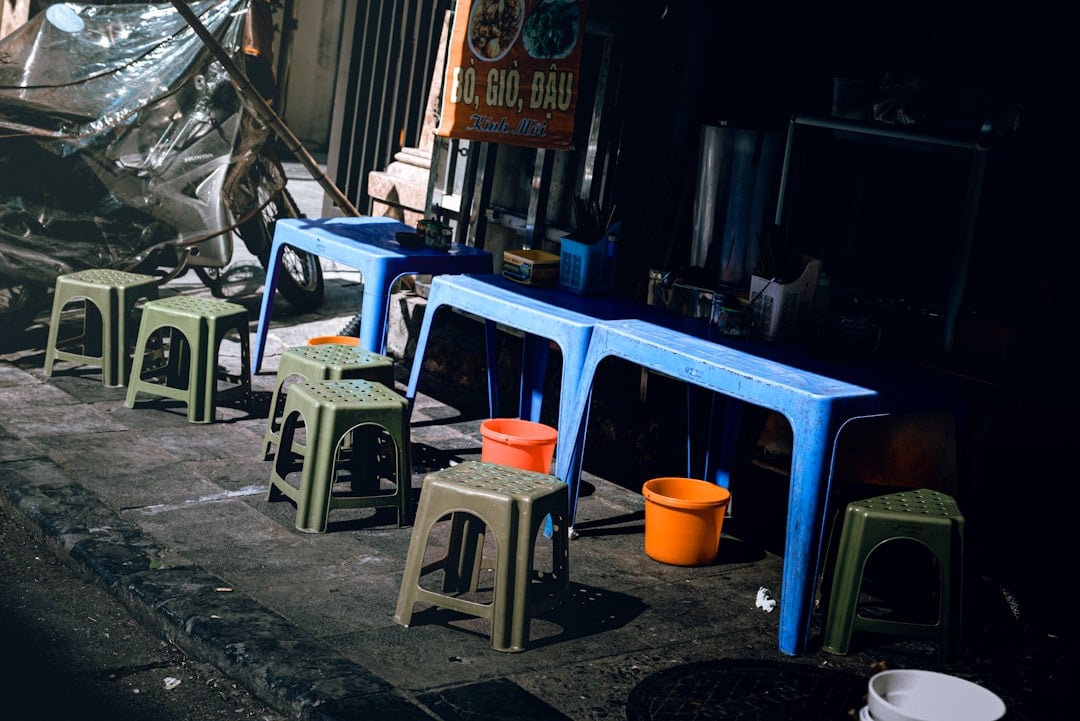
Hanoi’s street food is not a novelty. It’s the foundation of daily life. Most Hanoians don’t cook at home for every meal. They eat on the sidewalk, on plastic stools, at stalls that specialize in one dish and have been making it the same way for generations. This is where you eat the best food in the city, and it costs less than what you’d pay for a coffee back home.
Bun Cha: The Dish I Dream About
Bun cha is grilled pork patties and belly served in a sweet-savory nuoc cham sauce with cold rice noodles and a pile of herbs. You assemble it yourself, dipping noodles into the sauce and adding greens. The pork is grilled over charcoal, and the smoke from a good bun cha stall can be smelled from a block away. The most famous spot is Bun Cha Huong Lien, where Obama and Anthony Bourdain ate in 2016. It’s good, but it’s not the best in my opinion. I prefer the stalls around Hang Quat street in the Old Quarter, where there are no menus in English and the pork has a deeper char. A bowl costs 40,000-60,000 VND ($1.60-2.50).
Pho: The Northern Way
Northern pho is different from what you find in the south, and it’s different from what most Westerners know. The broth is clearer and less sweet. The noodles are wider. The garnish plate is minimal: maybe some lime, chili, and saw-leaf herb, but not the massive plate of bean sprouts and Thai basil you get in Saigon. The focus is on the broth, which should taste of beef bones simmered for hours with ginger, star anise, and cinnamon.
Pho Gia Truyen, on Bat Dan street, is the stall I argue about with locals. Some say it’s overrated. I say the broth is the cleanest and most balanced I’ve had in Hanoi. The line is long but moves fast. Order the “tai nam” (rare beef and well-done brisket) and eat it the way locals do: with a side of quay (fried dough sticks) to dip in the broth. Go before 10 AM, because they sell out and close by early afternoon.
Banh Cuon: Breakfast of Champions
Banh cuon is steamed rice flour rolls filled with minced pork and wood-ear mushrooms, topped with crispy fried shallots and served with nuoc cham and Vietnamese ham. It’s a breakfast dish, delicate and light, and it’s the thing I crave most when I leave Hanoi. The best banh cuon is made fresh, steamed to order on a cloth stretched over a pot of boiling water. You’ll find stalls all over the Old Quarter in the morning. Look for steam rising and a queue of locals on motorbikes waiting for takeaway.
Egg Coffee: Hanoi’s Gift to the World
Egg coffee (ca phe trung) was invented in Hanoi in the 1940s when milk was scarce. Someone whipped egg yolks with sugar into a thick, golden foam and poured it over strong Vietnamese coffee. The result tastes like liquid tiramisu. Cafe Giang, where it was invented, is a cramped spot down an alley in the Old Quarter. It’s touristy now, but the coffee is still the real thing. I prefer Cafe Dinh, just around the corner, which has a quieter upstairs room overlooking the street and arguably a better egg coffee. Either way, sit for an hour. That’s the point.
Eating Street Food Safely in Hanoi
I’ve eaten street food all over Vietnam for weeks at a time and never gotten seriously sick. The key is simple: eat where there’s high turnover. A stall with a line of locals means ingredients are fresh and food moves fast. Avoid places that look empty during peak meal times. Here are my ground rules:
- Go to busy stalls. A crowd is the best endorsement.
- Watch the vendor handle money and food. Good stalls have one person handling cash and another handling food.
- Stick to cooked food. Grilled, boiled, and fried items are safe. Raw herbs are generally fine if washed, but skip them if you have a sensitive stomach.
- Drink bottled or filtered water only. Ice in drinks at busy stalls is usually made from filtered water, but if you’re worried, order drinks without ice.
- Carry hand sanitizer and use it before eating, since most street food is eaten with chopsticks and your hands.
Northern vs Southern Vietnamese Food
The food difference between north and south Vietnam is real and noticeable. Northern cuisine is subtler, less sweet, and more reliant on clear broths and simple seasonings. The north has fewer fresh herbs and less coconut than the south. Southern food is bolder, sweeter, and more heavily spiced, with tropical ingredients like coconut milk, palm sugar, and tamarind featuring prominently. If you’ve only eaten Vietnamese food in the West, you’ve probably had southern-style food, because most Vietnamese diaspora restaurants are run by people from the south.
In Hanoi, the dishes to focus on are the ones that don’t travel well: pho bac (northern pho), bun cha, bun thang (a complex noodle soup with shredded chicken, egg, and pork), cha ca (turmeric fish with dill, pan-fried at your table), and banh cuon. These are dishes that taste fundamentally different in Hanoi than anywhere else, because the water, the herbs, and the cooking technique matter. Save the banh mi and the southern-style dishes for when you’re in Saigon.
Day Trips and Multi-Day Routes from Hanoi
This is where Hanoi earns its keep as a base camp. Every major northern Vietnam destination is accessible from here, and the logistics are straightforward once you understand the options. The mistake most travelers make is trying to do too many of these in one trip. Here’s my honest breakdown of each route, how long it takes, and whether it’s worth your time.
Ha Long Bay: 1-2 Nights
Ha Long Bay is the most famous destination in northern Vietnam, and it deserves the reputation. Limestone karsts rise from emerald water in a seascape that’s genuinely unlike anywhere else. But here’s the honest take: a day trip is not enough. You’ll spend four hours on a bus each way for two hours on a boat, and you’ll be herded through with hundreds of other day-trippers. Book an overnight cruise, ideally two nights if your schedule allows.

Most cruises depart from Tuan Chau Marina, about 2.5 hours from Hanoi by shuttle bus (usually included in the cruise price). The cruise takes you through the bay, with stops for kayaking, cave visits, and swimming. Two-night cruises venture further into the bay and reach the quieter, less touristy areas like Lan Ha Bay, which I actually prefer to the main Ha Long Bay. Book 2-3 weeks ahead, especially from October to April. Prices range from $100-150 per person for a mid-range two-day, one-night cruise, up to $300+ for luxury boats.
One important caveat: Ha Long Bay’s water quality has declined in recent years due to tourism pressure and industrial activity. The outer areas and Lan Ha Bay are cleaner. Don’t expect pristine water in the main bay near the harbor. If you’re choosing between Ha Long Bay and a more off-the-beaten-path alternative, consider Bai Tu Long Bay, which is further northeast and sees far fewer boats.
Ninh Binh and Tam Coc: 1-2 Days
Ninh Binh is called “Ha Long Bay on land,” and while the nickname is a cliche, it’s accurate. Limestone karsts rise from rice paddies instead of ocean, and you explore the area by boat, bicycle, and motorbike. The two main attractions are Tam Coc, where rowboat operators take you through three caves along a river, and Trang An, a similar but larger boat route through a series of caves and grottoes. Both are beautiful, but I prefer Trang An for the variety of landscapes and the longer route.
Getting to Ninh Binh from Hanoi is easy. Trains depart from Hanoi station and take about 2.5 hours to Ninh Binh town (around 70,000-250,000 VND depending on class). From the station, take a taxi or motorbike taxi to Tam Coc or Trang An. You can do this as a long day trip, but I’d recommend one night so you can explore by bicycle in the late afternoon when the crowds thin and the light turns golden. The climb up Mua Cave for the panoramic view over the karst landscape is worth the sweat, especially at sunset.
Sapa: Overnight Train
Sapa is the trekking capital of northern Vietnam, set in the Hoang Lien Son mountains near the Chinese border. The rice terrace landscapes are stunning, and the region is home to ethnic minority groups including the Hmong, Dao, and Tay people. The trekking here ranges from easy day walks to multi-day homestay treks through valley villages.
The overnight train from Hanoi to Lao Cai (the nearest station to Sapa) is the classic way to get there. It departs Hanoi station around 9-10 PM and arrives in Lao Cai around 5-6 AM. From Lao Cai, it’s a 45-minute minibus ride up the mountain to Sapa town. Book a soft sleeper berth (around 500,000-800,000 VND) for a reasonably comfortable night. The train rocks and clanks, so bring earplugs and an eye mask. I’ve done this ride three times and slept decently each time, but I know people who didn’t sleep at all. Set expectations accordingly.
Spend at least two full days in Sapa for trekking. A homestay in a village like Ta Van or Ban Ho gives you a far deeper experience than staying in Sapa town, which has become quite commercialized. The best months for trekking are September to November (harvest season, golden rice terraces) and March to May (clear skies, green fields). Avoid June to August, when rain makes trails slippery and views disappear into fog.
The Ha Giang Loop: 3-4 Days
The Ha Giang Loop is the motorcycle adventure that’s put northern Vietnam on the map for overlanders. It’s a 3-4 day ride through the most dramatic mountain scenery in Vietnam, winding along cliff-edge roads, through ethnic minority villages, and over passes that drop away into deep valleys. The highlight is the Ma Pi Leng Pass, where the road clings to a cliff face above the Nho Que River. It’s one of the most spectacular motorcycle roads I’ve ever ridden.

To stage the Ha Giang Loop from Hanoi, take a night bus or private transfer to Ha Giang city (about 5-6 hours). From there, you can rent a motorbike or join an organized tour with an easy-rider (a local guide who drives you on the back of their bike). If you’re riding yourself, you need experience. These are mountain roads with drop-offs, loose gravel in places, and occasional fog. A 125cc semi-automatic bike is the standard rental, and it costs about 150,000-200,000 VND per day.
The standard loop is 3 days: Ha Giang to Yen Minh to Dong Van to Meo Vac and back to Ha Giang, with an overnight in Dong Van and another in Meo Vac. If you can spare a 4th day, add the detour to Du Gia, which has a beautiful waterfall homestay and far fewer tourists. The permit to enter the Dong Van Karst Plateau Geopark costs 80,000 VND and is arranged at the checkpoint in Tam Son.
Honest Timing Advice: Don’t Cram Everything
Here’s the advice I wish someone had given me before my first trip to northern Vietnam. If you have one week, pick two destinations maximum. Ha Long Bay plus Ninh Binh is a great combination. Or Sapa plus one day in Ninh Binh. If you have two weeks, you can do Ha Long Bay, Sapa, and the Ha Giang Loop, with Hanoi days in between. But do not try to do Ha Long and Ha Giang in the same week unless you have at least 10 days, because the travel time between them will eat your schedule alive.
The biggest mistake I see is travelers trying to do Ha Long Bay, Ninh Binh, Sapa, and Ha Giang all in one week. That’s four destinations with significant transit between each one. You’ll spend half your trip on buses and trains, see each place in a exhausted blur, and remember none of it. Northern Vietnam rewards slow travel. Pick fewer destinations and spend more time in each.
| Destination | Travel Time from Hanoi | Recommended Duration | Best Transport | Vibe |
|---|---|---|---|---|
| Ha Long Bay / Lan Ha Bay | 2.5 hrs by bus | 1-2 nights | Cruise shuttle bus | Iconic seascape, touristy |
| Ninh Binh / Tam Coc | 2.5 hrs by train | 1-2 days | Train + bicycle | Karst countryside, peaceful |
| Sapa | 8 hrs overnight train | 2-3 days | Overnight train to Lao Cai | Rice terraces, trekking |
| Ha Giang Loop | 5-6 hrs by bus | 3-4 days | Motorbike (rent in Ha Giang) | Mountain roads, remote |
If you’re planning to continue south after northern Vietnam, the overnight Reunification Express train from Hanoi to Da Nang is one of the great rail journeys in Southeast Asia. It takes about 16 hours, and the coastal scenery between Hue and Da Nang, where the tracks hug the cliff above the sea, is worth the ticket alone. From Da Nang, you can explore the Marble Mountains, ride the Hai Van Pass, and wander the lantern-lit streets of Hoi An. Those central Vietnam destinations deserve their own guides, and I’ll be writing about them soon. For now, just know that Hanoi is the natural starting point for a north-to-south Vietnam journey.
Planning Your Hanoi Base Camp
Hanoi is not a city you pass through. It’s a city you return to between adventures, each time with a slightly better understanding of its rhythms. The first visit is sensory overload. The second is when you start to find your favorite pho stall, your preferred cafe, the alley that’s quiet at 6 AM. By the third visit, you feel like you know the place, and it still surprises you.
Here’s my recommended structure for a northern Vietnam trip using Hanoi as base camp. Arrive in Hanoi and spend 2-3 days acclimatizing: eat, walk, get your SIM card, sort out your onward bookings, and let the city’s energy pull you in. Then head out for your first adventure, whether that’s Ha Long Bay or Ninh Binh. Come back to Hanoi for a night, do laundry, eat more street food, and rest. Then push further: Sapa or the Ha Giang Loop. Return to Hanoi for a final day before flying out or taking the train south.
Have you used Hanoi as a base for northern Vietnam? Or are you in the planning stages and trying to figure out which destinations to prioritize? Drop your questions and your own tips in the comments. I’d genuinely love to hear how your trip unfolds, especially if you found food stalls or routes I haven’t covered. Every trip to northern Vietnam teaches me something new, and the region keeps evolving as infrastructure improves and new destinations open up.
Frequently Asked Questions
How many days should I spend in Hanoi before heading out to northern Vietnam?
Three to four days in Hanoi itself is ideal. That gives you time to explore the Old Quarter, eat at multiple street food stalls, visit the Temple of Literature and Hoa Lo Prison, and sort out your onward bookings for Ha Long Bay, Ninh Binh, Sapa, or the Ha Giang Loop without rushing.
What is the best way to get from Hanoi airport to the Old Quarter?
The best options are Grab car (about $10-15), public bus route 86 (about $0.40), or a metered taxi from reputable companies like Mai Linh or Taxi Group. Avoid unofficial drivers offering fixed-price rides inside the terminal, as they overcharge significantly.
Can I do Ha Long Bay, Sapa, and the Ha Giang Loop in one week?
Do not try to do Ha Long Bay, Ninh Binh, Sapa, and the Ha Giang Loop in one week. With one week, pick two destinations maximum. With two weeks, you can do Ha Long Bay, Sapa, and the Ha Giang Loop. Northern Vietnam rewards slow travel, and transit times between destinations are significant.
What is the difference between northern and southern Vietnamese food?
Northern Vietnamese food is subtler, less sweet, and more focused on clear broths. Pho in Hanoi has a clearer broth and wider noodles than southern pho, with fewer garnishes. Key northern dishes to try include bun cha, banh cuon, cha ca, and egg coffee, which was invented in Hanoi.
Do I need a motorbike license to ride the Ha Giang Loop from Hanoi?
You need an International Driving Permit (ideally the 1968 Vienna Convention version) and a valid motorcycle license. Bike rentals in Hanoi cost $5-10 per day. Do not ride in Hanoi city traffic if you are inexperienced; pick up the bike when you are ready to leave and ride on open roads first.