George Town Penang Travel Guide: Local Food & Heritage
The first thing that hits you in George Town, Penang is the smell. Not a single smell, but layers of it: charcoal smoke from a wok, shrimp paste sizzling in oil, incense drifting from a Taoist temple doorway, and the faint salt of the sea from the Weld Quay waterfront. I have travelled through much of Southeast Asia, and no other city compresses this much cultural and culinary density into a walkable heritage core the way George Town does. This George Town Penang travel guide is written from the perspective of a Malaysian who has been eating at these hawker stalls and wandering these heritage streets for years, not someone who flew in for a long weekend.
Whether you are a KL local escaping for the weekend or an international traveller working your way down the Malaysia trail from Kuala Lumpur, George Town rewards the curious. The trick is knowing which famous food stalls are genuinely worth the queue, which heritage sites go deeper than the Instagram murals, and how to move around the island without wasting half your day in traffic. That is what this guide covers.
The History Of George Town, Penang
George Town was founded in 1786 when Captain Francis Light of the British East India Company established a free port on Penang Island, claiming it for King George III. Light landed on what is now the Esplanade and opened the port to global trade, attracting merchants from China, India, the Malay Archipelago, and the Arab world. What grew from that trading post was not a British colonial city in the way of Singapore or Hong Kong. It was a mercantile crossroads where Malay, Chinese, Indian, and European communities settled side by side, each building their own places of worship, trading houses, and food traditions.
The result is a city where 37 places of worship, including mosques, Chinese temples, Indian temples, and churches, sit within a 109-hectare core zone, many of them on a single stretch of road. Jalan Masjid Kapitan Keling, running through the heart of the heritage area, is known as the Street of Harmony because the Kapitan Keling Mosque, the Goddess of Mercy Temple, Sri Maha Mariamman Temple, and St. George’s Church all face each other along it. This is not a curated multicultural showcase. It is the organic product of 240 years of coexistence, and it is the reason UNESCO inscribed George Town as a World Heritage Site in 2008, jointly with Melaka, under criteria recognizing its exceptional multicultural trading heritage.
George Town’s history is also the history of the Peranakan, or Baba-Nyonya, community. These were early Chinese immigrants, predominantly Hokkien, who settled in the Straits Settlements and intermarried with local Malays, creating a hybrid culture with its own language, cuisine, clothing, and customs. Penang Peranakan culture differs from its Melacca counterpart in that it carries a stronger Thai influence in its cooking, with sweeter, more sour notes, and the community primarily spoke Hokkien mixed with Malay vocabulary rather than adopting a Malay patois. The Pinang Peranakan Mansion on Church Street is the best place to understand this heritage, a restored 19th-century mansion of Kapitan Cina Chung Keng Kwee filled with over 1,000 Baba-Nyonya antiques.
When you walk through George Town today, you are moving through layers of this history. The clan jetties at Weld Quay, where Chinese immigrant clans built stilt houses over the sea in the late 19th century, are still inhabited. The shophouses, with their distinctive five-foot ways and ornate facades, have been restored but remain in use as cafes, workshops, and family businesses. The city declined economically after its free port status was revoked in 1969, and it was that decline, paradoxically, that preserved much of the old architecture from redevelopment. The UNESCO listing in 2008 reversed that trajectory, bringing tourism and investment back to the heritage core.
Best Things To Do In George Town, Penang
George Town’s attractions fall into two broad categories: the heritage zone itself, which is best experienced on foot, and the wider island, which includes Penang Hill, temples, and beaches that require a bus or Grab ride. If I had to rank them, I would put the walking experience of the heritage core first, because that is where George Town is most unlike anywhere else in Malaysia. But the hill and the temples are worth the trip out.
Cultural Experiences: The UNESCO Heritage Core
The heritage zone is a 109-hectare core area with a 150-hectare buffer zone surrounding it, containing over 5,000 historic buildings. You do not need a plan to explore it. Pick a street, any street, and walk. The best streets for first-time visitors are Armenian Street (Lebuh Armenian), Cannon Square (Lebuh Cannon), and the Street of Harmony along Jalan Masjid Kapitan Keling.
Armenian Street is where you will find the famous mural of two children on a bicycle by Lithuanian artist Ernest Zacharevic, part of the 2012 “Mirrors George Town” project. The street itself is one of the oldest in the city, lined with restored shophouses that now host cafes, galleries, and the Yap Kongsi clan house. It gets crowded by mid-morning, so go early if you want to actually see the architecture without a queue of people posing in front of every mural.
Lebuh Cannon and the adjacent Cannon Square are where you will find Khoo Kongsi, the most elaborate Chinese clan house in Penang. The Khoo clan built this temple-ancestral hall complex in 1906, and the dragon carvings, granite columns, and detailed roof work make it one of the finest examples of clan architecture outside China. The entrance fee is small, and the interior courtyard is stunning in late afternoon light. This is the one heritage building in George Town that I tell people not to skip.
The Street of Harmony is a single road where four major religious sites sit within a few hundred metres of each other: the Kapitan Keling Mosque (built 1801), the Goddess of Mercy Temple (built 1800, the oldest Chinese temple in Penang), Sri Maha Mariamman Temple (built 1833), and St. George’s Church (built 1818, the oldest Anglican church in Southeast Asia). Walking this street is the fastest way to understand what makes George Town culturally distinct. If you are visiting any of these places of worship, dress modestly, cover your shoulders and knees, and remove your shoes before entering temple and mosque interiors.
The Clan Jetties At Weld Quay
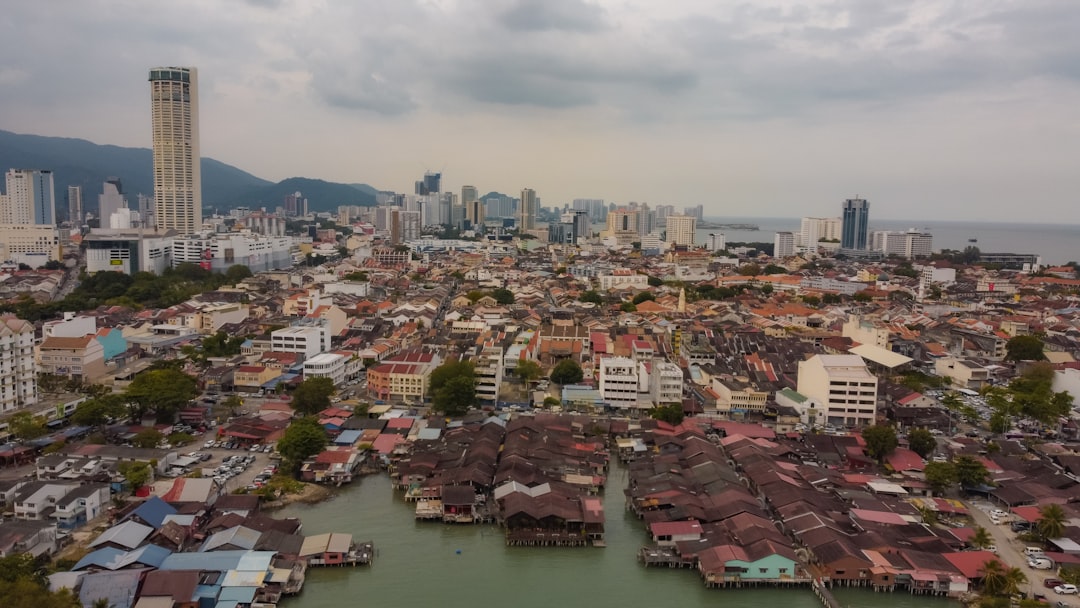
The clan jetties are a row of water villages on stilts along Weld Quay, built by Chinese Hokkien immigrant clans in the late 19th century. Each jetty is named after a clan surname: Chew, Lim, Tan, Yeoh, Lee, and others. The Chew Jetty is the largest, with about 75 resident families, a 200-metre boardwalk, and a Guan Di temple at the end overlooking the water. It is part of the UNESCO core zone and free to enter, though donations are welcome.
What I want to stress is that these are residential communities, not museum exhibits. People live here, and the residents of Chew Jetty have politely requested that visitors come between 9 AM and 9 PM. Do not arrive in large tour groups, do not photograph people without asking permission, and do not smoke on the jetty. The wooden structures are fragile. Walk quietly, look at the temple, and take in the view of the channel. The jetties are a short walk from the Weld Quay bus terminal and the ferry terminal, so they are easy to slot into a walking route through the heritage zone.
Tourist Attractions: Penang Hill And Kek Lok Si
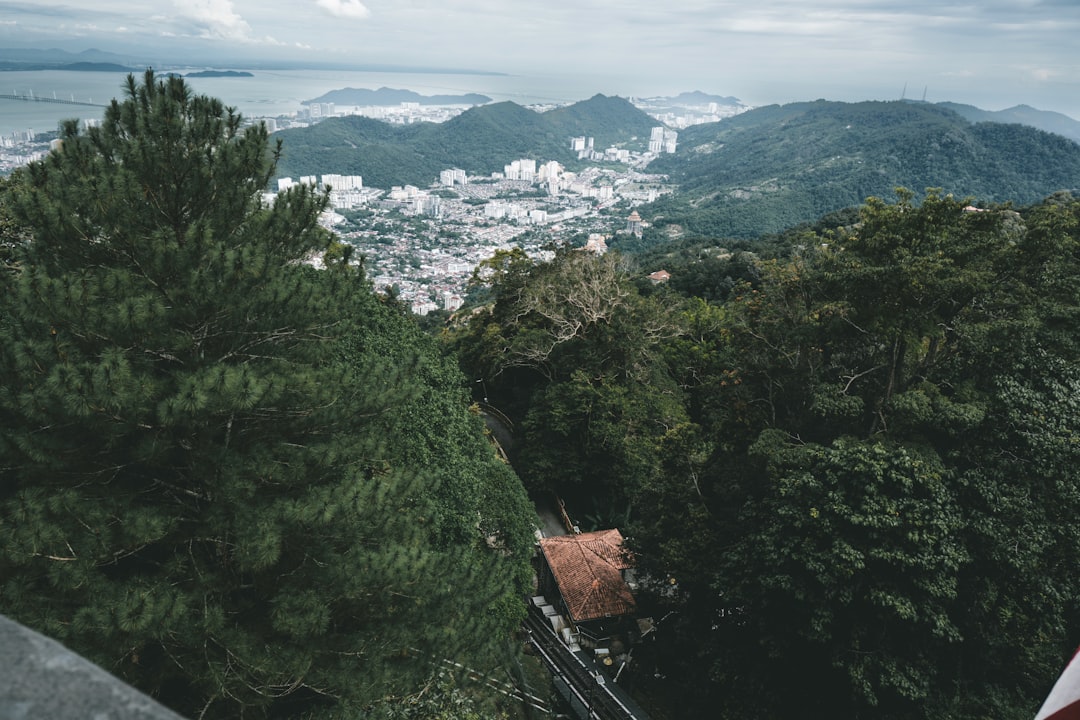
Penang Hill, known locally as Bukit Bendera, is the highest point on Penang Island at about 821 metres above sea level. The funicular railway, operating since 1923 (the current system was upgraded in 2011), takes you to the top in about five minutes. The view from the upper station sweeps across George Town, the channel, and the mainland, and on a clear day you can see the mountains of Kedah.
As of May 2024, the funicular ticket prices for international visitors are RM 30 for a return adult ticket in the normal lane and RM 80 for the express lane. MyKad holders pay RM 16 for the normal lane. Children aged 4 to 12 pay RM 15 (tourist rate, normal lane). There is also a sunrise rate for early arrivals. I recommend buying tickets online at least one day before your visit through the Penang Hill Corporation website, because the normal lane queue can take over an hour during weekends and public holidays. The express lane is expensive but worth it if you are short on time.
At the top, the main attractions are the Habitat rainforest walk, which has a canopy walkway and treetop viewing platforms, and David Brown’s Restaurant, a colonial-era hill station restaurant where you can have tea with a view. The air is noticeably cooler, about 5 to 7 degrees lower than at sea level, which makes this a genuinely refreshing break from the George Town heat.
Kek Lok Si, the largest Buddhist temple in Malaysia, sits at the foot of Penang Hill in Air Itam. The temple complex is built into the hillside over multiple levels, with a 30-metre bronze statue of the Goddess of Mercy (Kuan Yin) and a seven-tier pagoda that combines Chinese, Thai, and Burmese architectural styles. Entry is free, though there is a small fee for the inclined lift to the upper levels. Pair Kek Lok Si with a visit to the Air Itam laksa stalls nearby, which I cover in the food section below.
Nature: Beaches And The Northern Coast
George Town itself is not a beach destination, but the northern coast of Penang Island, about 20 minutes by car from the heritage zone, has a stretch of beaches from Tanjung Bungah to Batu Ferringhi. Batu Ferringhi is the main resort area, with a long sandy beach, water sports, and a night market. The water clarity is not on the level of the Perhentian or Tioman islands, but for a quick beach afternoon after a few days of heritage walking, it does the job.
If you want nature without the resort crowds, the Penang National Park at Teluk Bahang is the smallest national park in Malaysia but has jungle trails leading to secluded beaches like Monkey Beach and Turtle Beach. The trek to Monkey Beach takes about 45 minutes to an hour and requires decent footwear. Rapid Penang bus 101 goes from Weld Quay to Teluk Bahang for a few ringgit.
Where And What To Eat And Drink In George Town, Penang
This is the section you came for. George Town is widely regarded as the food capital of Malaysia, and I am not going to argue with that reputation. The city’s food is a product of the same multicultural history that shaped its architecture: Hokkien, Teochew, Cantonese, Hakka, Malay, Indian Muslim, and Peranakan cooking traditions all exist within a few blocks of each other, and several of these stalls have been run by the same families for decades.
Here is my honest ranking of the hawker food stalls I keep going back to, with specific names, what to order, and where to find them. I am not including every Michelin-listed stall, because some of them are good but not the best version of their dish. I am including the ones that consistently deliver.
Char Kway Teow: Jin Kor vs. Barefoot vs. No. 5
Char kway teow, flat rice noodles stir-fried over high heat with prawns, blood clams, lap cheong (Chinese sausage), and bean sprouts, is the dish Penang is most associated with, and the competition is fierce. Three stalls stand out.
Penang Road Famous Jin Kor Char Kuey Teow has earned back-to-back Michelin Bib Gourmand listings in 2024 and 2025, and it deserves them. The stall has been operating for nearly 40 years, and the wok hei (that smoky, charred quality from a screaming-hot wok) is the real thing. Order it with duck egg and extra chilli. The duck egg adds a richer, more custardy texture, and the extra chilli sharpens the whole plate. The standard version already comes with shrimp, blood clams, pork sausage, and bean sprouts. Cash only, no bookings, go early. Located near Lebuh Keng Kwee, close to the famous cendol stall.
Barefoot Char Koay Teow at Pasar Lebuh Cecil (Cecil Street Market) is the purist’s choice. The elderly vendor still fries over a charcoal flame, barefoot, and the smoky flavour is more intense than any gas-fired stall can produce. This is a no-frills market stall, not a restaurant. Go for breakfast or early lunch, because the queue builds by mid-morning.
No. 5 Char Koay Teow on Jalan Macalister (near the junction with Jalan Pintal Tali) is the stall I send people to for a more comfortable sit-down experience. The chef cooks each plate individually to order, which means you wait, but the consistency is worth it. The portion is generous and the prawns are fresh. Expect a queue during lunch.
Assam Laksa: Air Itam vs. Penang Road
Assam laksa is Penang’s other signature noodle dish: thick rice noodles in a spicy, sour fish broth made from mackerel and tamarind, topped with shredded fish, pineapple, cucumber, onion, and a spoonful of thick sweet prawn paste (hae ko). It is pungent, complex, and unlike anything else in Malaysian cuisine.
The Air Itam laksa stalls, located at the foot of Kek Lok Si temple, are the most legendary. There are actually three stalls here, and the differences matter. The famous corner stall beside the wet market is the one Anthony Bourdain visited in 2012 and called one of the best soups in the world. Uncle Seong, who ran it for decades, sadly passed away in April 2026, but the stall continues. It opens only on weekends, typically three weekends a month, from about 10:30 AM to 7 PM. The broth is dark, thick, and aggressively flavoured. Expect a long queue and limited seating in a cramped, hot space. A bowl costs around RM 6.
Inside the Air Itam Market annex is Laksa Bisu, established in 1948 and the oldest of the three stalls. The broth here is lighter and brighter, with the aroma of torch ginger (bunga kantan) coming through more clearly. This is the insider choice if you want to avoid the Bourdain-driven crowds. It opens daily except Tuesday and Wednesday, 10 AM to 5 PM.
2828 Asam Laksa, opposite De View Hotel on Jalan Pasar, is the newest of the three (about 15 years old) but holds its own. The difference is that they add generous chunks of fish fillet on top rather than fully flaking the fish into the soup. It also has proper roofed seating, which makes the experience more comfortable. If the spice gets intense, order a cendol here.
For a weekday option in the heritage zone itself, Penang Road Famous Laksa at 5-7 Lebuh Keng Kwee has a Michelin Bib Gourmand and has been operating since 1970. The broth is well-balanced, and the location is convenient if you are walking the heritage core. Open 9 AM to 5:30 PM, closed Wednesdays.
Hokkien Mee (Prawn Noodle Soup)
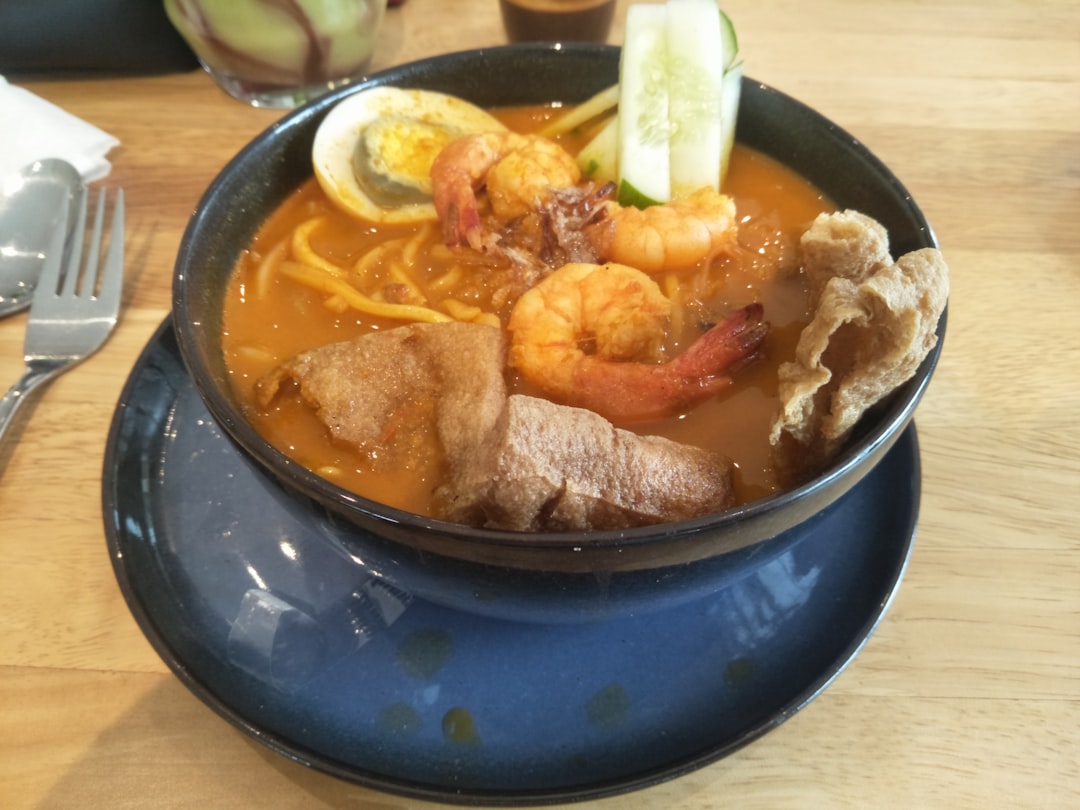
In Penang, what most of Malaysia calls “prawn mee” is called Hokkien mee, and it is a bowl of yellow noodles and rice noodles in a rich prawn-shell broth, topped with prawns, pork slices, bean sprouts, and fried shallots. 888 Hokkien Mee on Lebuh Presgrave has been operating for 30 years and earned Michelin Plate recognition in 2024 and 2025. The broth has a deep red colour from the prawn shell reduction and a sweet-umami flavour that is more layered than most. On a first visit, order the base bowl. On a return, add braised pork ribs.
Bridge Street Prawn Noodle is another solid option, also in the heritage zone area. Go in the morning, because these stalls sell out by early afternoon.
Koay Teow Th’ng: Lum Lai And Super Star
Koay teow th’ng is a deceptively simple dish: flat rice noodles in a clear broth. The quality lives entirely in the stock. Lum Lai Duck Meat Koay Teow Th’ng at Pasar Lebuh Cecil slow-simmers whole ducks, pork bones, pig’s intestines, and pork loin for at least two hours, producing a broth with depth that contradicts its clear, pale appearance. The Michelin Bib Gourmand listing is earned. Order the koay teow th’ng with duck meat and ask for the soy sauce with cut red chillies on the side.
Super Star Koay Teow Soup at 78 Lebuh Kimberley has been operating since 1960 and is now run by the third generation. Another Bib Gourmand stall, it serves koay teow soup with chicken, pork, fish balls, and pork liver. The chicken feet braised in spiced soy marinage are the sleeper hit here. Order them as a side.
Nasi Kandar: Line Clear
Nasi kandar is Penang’s signature Indian-Muslim dish: steamed rice with your choice of curries and side dishes ladled over it. Nasi Kandar Line Clear, operating from a narrow alley off Penang Road since the 1940s, is the most famous nasi kandar spot in Penang, and it lives up to the reputation. The alley is cramped, the tables are shared, and the queue moves fast. Point at what you want: fried chicken, squid curry, mutton curry, fish head curry. Then say “kuah campur” or “banjir,” which means flood the rice with all the curry gravies mixed together. That is how locals eat it. Open nearly 24 hours, though I prefer it after 10 PM when the crowd thins and the curry flavours have had time to deepen.
Cendol And Dessert
Penang Road Famous Teochew Chendul at 27 and 29 Lebuh Keng Kwee has been serving cendol since 1936, when founder Tan Teik Fuang set up a pushcart in the alley. The original stall is still there, though the brand has since expanded to 30 outlets nationwide. The original location is the one to visit. A bowl of shaved ice with green jelly noodles, coconut milk, palm sugar, and red beans, eaten standing in the alley, is the quintessential Penang dessert stop. Open 9 AM to 6:30 PM daily. The assam laksa stall is right next door, so you can do both in one stop.
Other Must-Try Dishes
Sister Yao’s Char Koay Kak, operating since 1963 and another Michelin Bib Gourmand stall, serves fried rice cakes with egg, bean sprouts, and preserved radish, all singed with serious wok hei. This dish is harder to find than char kway teow, and Sister Yao’s is the benchmark. Located on the roadside in the heritage zone.
For Nyonya (Peranakan) food, which fuses Chinese cooking techniques with Malay ingredients and Thai flavour profiles, look for restaurants rather than hawker stalls. Nyonya dishes like assam pedas (sour-spicy fish), kiam chye ark (duck with salted mustard greens), and lor bak (five-spice meat rolls) are best at sit-down Nyonya restaurants in the heritage zone. I will not name a specific one because quality fluctuates with the chef, and the best approach is to ask a local for their current recommendation. The key point is that Penang Nyonya food is sweeter and more sour than its Melacca equivalent, owing to the Thai influence.
For cafe culture, George Town has a thriving scene in restored heritage shophouses. The area around Lebuh Muntri and Stewart Lane has several good coffee spots. If you need a break from hawker food, an afternoon coffee in an air-conditioned heritage shophouse is a perfectly valid George Town experience.
Shopping In George Town, Penang
Shopping in George Town is less about malls and more about markets, heritage trades, and food souvenirs. The big shopping centres, like Gurney Plaza and Queensbay Mall, are outside the heritage zone and cater more to locals than tourists. For visitors, the interesting shopping is in the old city.
Chowrasta Market on Jalan Penang is the main wet market in the heritage area. The ground floor sells fresh produce, meat, and fish, but the upper level is where you find dried goods, Chinese medicinal herbs, and Penang food souvenirs like dried nutmeg, belacan (shrimp paste), and tau sar pneah (mung bean pastries). This is where I buy snacks to bring back to KL. Go in the morning when the stalls are fully stocked.
Campbell Street (Lebuh Campbell) was once the red-light district of George Town and is now a street of antique shops, textile stores, and Chinese medicine halls. Little India, centred on Lebuh Pasar and Market Street, is the place to buy Indian spices, sarees, and gold jewellery. The smell of cardamom and cloves hits you half a block before you see the shops.
For traditional crafts, the heritage zone still has working artisans: joss stick makers, songkok (Malay cap) makers, and rattan weavers operating from shophouses. These are not souvenir shops. They are traditional trades that have survived because the families kept them going. You will stumble on them while walking the side streets off Armenian Street and Cannon Square.
Bars And Nightlife In George Town, Penang
George Town’s nightlife is quieter than Kuala Lumpur’s or Bangkok’s. Malaysia is a Muslim-majority country, and while Penang has a large Chinese community and alcohol is available, the bar scene is modest compared to the food culture. That said, there are a few good spots.
The area around Stewart Lane and Lebuh Muntri has a handful of bars in restored shophouses, offering craft cocktails in heritage settings. These are low-key, atmospheric places where you can have a drink and a conversation, not clubbing venues. The rooftop bar at The Top at KOMTAR offers panoramic views of the city, though it leans more touristy.
For late-night energy, skip the bars and go to the hawker centres. The hawker stalls at Lebuh Cecil and the nasi kandar spots like Line Clear stay open late, and the real after-dark social life of George Town happens at plastic tables under fluorescent lights, not in cocktail bars. Grab a teh tarik (pulled milk tea) and a plate of char kway teow at 11 PM, and you are experiencing Penang nightlife the way locals do.
When Is The Best Time To Visit George Town, Penang?
George Town has a tropical rainforest climate, which means it is hot and humid every month of the year. Daytime temperatures sit above 30 degrees Celsius and rarely drop below 25 at night. The question is not whether it will be hot, but when the rainfall is least disruptive.
The best time to visit is January through April, when rainfall is at its lowest and the city gets the most sunshine. January and February are the warmest months but also the driest, and this is when Chinese New Year and Thaipusam fall, making it the most culturally rewarding period. The southwest monsoon from May to September brings more regular afternoon rain, though it is not constant. October and November are the wettest months, with heavy downpours that can last hours.
| Period | Weather | Highlights | Drawbacks |
|---|---|---|---|
| Jan to Feb | Driest, warmest (31 to 34 degrees) | Chinese New Year, Thaipusam | Peak crowds, higher hotel rates |
| Mar to Apr | Dry, hot | Good for outdoor sightseeing | Heat can be intense by afternoon |
| May to Sep | Southwest monsoon, afternoon storms | Fewer tourists, lower rates | Heavy rain possible, humidity high |
| Oct to Nov | Wettest months | Deepavali (Oct or Nov) | Frequent heavy rain, flooding possible |
| December | Wet but improving | Year-end festive atmosphere | Still rainy, crowded at attractions |
My recommendation: aim for late January through March. You get the driest weather, the biggest cultural festivals, and a city operating at full energy. If you cannot make those months, May through July is a decent compromise with fewer tourists and lower accommodation rates, as long as you are okay with afternoon thunderstorms. Avoid October and November if you can.
How Many Days Do You Need In George Town, Penang?
Three full days is the sweet spot. You can see the heritage zone highlights in two days, but three gives you room to eat properly, take the funicular up Penang Hill, visit Kek Lok Si, and still have time for a beach afternoon or a night market without rushing. Here is how I would shape a three-day itinerary.
Day one: Heritage core on foot. Start early at Armenian Street before the crowds, walk the Street of Harmony, visit Khoo Kongsi, browse Little India and Chowrasta Market, and eat your way through the Lebuh Keng Kwee cluster (assam laksa, char kway teow, cendol). End the day at the Clan Jetties for sunset over the water.
Day two: Penang Hill and Kek Lok Si. Take Rapid Penang bus 204 to Penang Hill in the morning, ride the funicular, do the Habitat canopy walk, have lunch at David Brown’s. Come down and walk to Kek Lok Si temple in Air Itam. Eat Air Itam laksa at one of the three stalls. Head back to George Town for dinner at Line Clear nasi kandar.
Day three: Food deep-dive and northern coast. Spend the morning at Pasar Lebuh Cecil eating Barefoot char kway teow and Lum Lai koay teow th’ng. Take bus 101 to Batu Ferringhi or Teluk Bahang National Park for a beach or nature afternoon. Return for a final hawker dinner and a walk through the heritage zone at night, when the shophouses are lit and the streets are quieter.
If you have a fourth or fifth day, use it for a slower food crawl through streets you missed, a visit to the Pinang Peranakan Mansion, or a day trip to Balik Pulau on the western side of the island, which has a completely different rural character and some of the best durian on the peninsula during season.
Where To Stay In George Town, Penang
Where you base yourself in George Town comes down to whether you want to be inside the heritage zone or slightly outside it. The heritage core is walkable to almost everything, but accommodation there is pricier and the streets can be noisy at night. Here are the areas I would consider.
Heritage Zone: Inside The UNESCO Core
Staying inside the heritage zone puts you walking distance from the hawker stalls, the clan jetties, the Street of Harmony, and all the major heritage sites. Many accommodations here are restored shophouses or heritage boutique hotels, and the atmosphere is unmatched. The trade-off is higher prices and potential noise from street traffic and late-night eateries.
- Budget: Hostels and guesthouses on Lebuh Chulia and Lebuh Muntri (RM 50 to 120 per night)
- Mid-range: Heritage boutique hotels on Stewart Lane and Armenian Street (RM 200 to 400 per night)
- Splurge: Restored mansion hotels like the Blue Mansion on Lebuh Muntri (RM 500 and up)
Gurney And Tanjung Tokong: Outside The Core
If you prefer modern hotel facilities, sea views, and proximity to the Gurney Drive hawker centre and Gurney Plaza mall, the Gurney and Tanjung Tokong area about 10 minutes north of the heritage zone is a good alternative. You will need Grab or a bus to get into the heritage core, but the accommodation is often better value for the quality.
- Mid-range: Business hotels near Gurney Drive (RM 180 to 350 per night)
- Splurge: Seafront five-star properties (RM 450 and up)
Batu Ferringhi: Beach Resort Area
If your trip is more about relaxation than heritage walking, Batu Ferringhi has the major beach resorts and a night market. It is about 20 to 30 minutes from the heritage zone by car, so I would only recommend it if you plan to split your time between the beach and the city, or if you have already visited George Town before.
How Do You Get Around In George Town, Penang?
George Town is one of the most walkable cities in Malaysia inside the heritage zone, but for getting to Penang Hill, the beaches, or the airport, you need to know the transport options.
Walking
The heritage core is compact and flat, and walking is the best way to experience it. Most streets are narrow, lined with shophouses, and full of things you would miss from a car. The heat is the main obstacle. Plan your walking for early morning (before 10 AM) and late afternoon (after 4 PM), and use the middle of the day for indoor attractions, eating, or a cafe break.
Rapid Penang Buses
Rapid Penang operates 47 routes across the George Town conurbation as of 2025, with 26 routes within George Town itself. Fares are cheap, generally RM 1 to RM 4 per trip. The most useful routes for visitors are route 204 (Weld Quay to Penang Hill, connecting to the funicular), route 101 (Weld Quay to Teluk Bahang via Batu Ferringhi), and route 102 (airport to Teluk Bahang via the heritage zone).
The free CAT bus (Central Area Transit) is a shuttle that loops between Weld Quay and KOMTAR through the heritage zone, running from 6 AM to 11:40 PM at roughly 15 to 20 minute intervals. It is completely free, no ticket required, and is the easiest way to get across the heritage core if you are tired of walking. Look for Rapid Penang buses bearing the “Free CAT Bus” sign. There are about 20 stops along the route, covering Little India, Campbell Street, St. George’s Church, Fort Cornwallis, and KOMTAR.
Grab And Ride-Hailing
Grab is the dominant ride-hailing app in Penang and works reliably across the island at almost any hour. A Grab car ride within the heritage zone costs around RM 8 to RM 15, and a ride from the heritage zone to Penang Hill or Batu Ferringhi is around RM 20 to RM 35. Grab is faster and more comfortable than the bus for longer distances, but during peak hours and rainy periods, surge pricing applies and wait times increase. Motorcycle Grab is also available and is faster in traffic, though less comfortable in the heat or rain.
Trishaws
Trishaws (bicycle rickshaws) are a heritage feature of George Town, decorated with flowers and playing music from speakers. They are found around the heritage zone, particularly near Fort Cornwallis and the Esplanade. They are expensive relative to Grab (expect RM 30 to RM 50 for a short ride), and they are more of a tourist experience than a practical transport option. If you want a slow, decorative ride through the heritage streets, it is a fun way to see the architecture. Just agree on the price before you get in.
Penang Ferry
The Penang ferry connects Weld Quay on the island with Pengkalan Sultan Abdul Halim terminal in Butterworth on the mainland. The ferry is slower than the bridges but is a scenic crossing, especially at sunset. It is also the way you arrive if you are coming by train, as the nearest KTM station is in Butterworth. Fares are a few ringgit for foot passengers.
Motorcycle Travel
If you are riding a motorcycle into Penang, either crossing from the mainland via the Penang Bridge or arriving by ferry, you need a valid licence. For international visitors, that means a valid International Driving Permit. I have written a full guide to the International Driving Permit that covers what you need for legal riding in Malaysia. Riding on the island is manageable outside the heritage core, but inside the zone the streets are narrow, one-way systems are confusing, and parking is limited. Park outside the core and walk in.
Conclusion
George Town, Penang is a city that rewards slowing down. The heritage zone is small enough to walk in a day, but the depth of its food, history, and cultural layering means you could spend a week here and still find new stalls, new side streets, and new layers of the story. The UNESCO listing preserved the architecture, but what makes George Town worth visiting is not the buildings. It is the people still cooking in them, still praying in them, and still living in them.
My advice is simple. Skip the obvious tourist food clusters if you can, and seek out the stalls where the wok hei is real. Walk the Street of Harmony early in the morning before the heat arrives. Take the funicular up Penang Hill for the cooler air and the view. Eat nasi kandar at midnight in a narrow alley off Penang Road. Give it at least three days, and if you are planning a wider trip through Malaysia, check out my guides to Kuala Lumpur and the best day trips from KL to round out your itinerary.
Have you been to George Town? Found a hawker stall I should know about, or a heritage corner I missed? Drop your tips in the comments. I would love to hear your experience and add more stops to my own list for the next trip north.
Frequently Asked Questions
What is the best hawker food to try in George Town, Penang?
The must-try dishes are char kway teow (try Jin Kor or Barefoot stall), assam laksa (the Air Itam stalls or Penang Road Famous Laksa), Hokkien mee (888 Hokkien Mee on Lebuh Presgrave), nasi kandar (Line Clear off Penang Road), and cendol (Penang Road Famous Teochew Chendul since 1936). Several of these stalls hold Michelin Bib Gourmand listings.
How many days do you need in George Town, Penang?
Three full days is the sweet spot. Day one covers the heritage core on foot, day two goes to Penang Hill and Kek Lok Si temple, and day three is a food deep-dive with a beach or nature afternoon. You can see highlights in two days, but three gives you time to eat properly and explore without rushing.
Is the free CAT bus in George Town still operating?
Yes, the free CAT bus (Central Area Transit) loops between Weld Quay and KOMTAR through the heritage zone, running from 6 AM to 11:40 PM at roughly 15 to 20 minute intervals. No ticket is required. As of September 2025, it is the only remaining CAT route on the island.
When is the best time to visit George Town, Penang?
The best time is January through April, when rainfall is lowest and sunshine hours are highest. January and February are warmest but driest, and coincide with Chinese New Year and Thaipusam. Avoid October and November, which are the wettest months with frequent heavy rain.
How much does the Penang Hill funicular cost for tourists?
As of May 2024, international visitors pay RM 30 for a return adult ticket in the normal lane and RM 80 for the express lane. Children aged 4 to 12 pay RM 15 (normal lane). MyKad holders pay RM 16 for a return adult ticket. Buy online at least one day before your visit through the Penang Hill Corporation website.